Category
Manufacturer
Model
Rooney
FAQ:
What is a Rooney can seamer and what is it used for?
A Rooney can seamer is a mechanical seaming machine designed to create airtight double seams on metal cans, securing lids to can bodies so the contents are protected from contamination, oxidation, and spoilage. The double-seam process involves two distinct seaming operations performed in sequence: the first operation hooks the lid curl under the can flange, and the second operation tightens and flattens that seam to create a hermetic seal. This sealing method is the industry standard for both food and beverage canning and is required to meet food safety regulations in most markets.
Rooney seamers have historically been associated with small to mid-scale canning operations, making them a practical choice for craft breweries, small food processors, specialty beverage producers, and similar operations that need reliable seaming without the footprint or cost of large industrial canning lines. Models range from manual bench-top units suited for very low volumes to semi-automatic configurations capable of meaningfully higher throughput. The semi-automatic 603-diameter model, for example, is built for operations that need consistent seam quality at a moderate production pace without a fully automated line.
What does the 603 diameter designation mean on a Rooney can seamer?
Can diameter designations follow a standardized industry coding system where the numbers represent the diameter in inches and sixteenths of an inch. The code "603" means 6 and 3/16 inches in diameter, which corresponds to a large-format can size commonly used in institutional food packing, bulk product canning, and certain commercial food service applications. This is a significantly larger can than the 202 or 211 sizes typically associated with standard beverage cans or smaller food tins.
Buyers evaluating a 603-diameter seamer should confirm that this size matches their specific production needs before purchasing. Can seaming equipment is generally not universal across diameter sizes, meaning a machine set up for 603 cans will require retooling or different seaming rolls and chucks to run smaller diameters. If your operation uses a different can size, it is worth consulting with the equipment seller to understand whether the tooling can be changed and what that process involves. Verifying compatibility upfront prevents costly mismatches after the machine arrives.
What is the difference between a manual, semi-automatic, and automatic Rooney can seamer?
Manual Rooney seamers require the operator to position the can, lower the seaming head, and drive the seaming rolls by hand or with a hand crank. They are the most affordable option and are well-suited for very low-volume applications like home canning, farmers market producers, or small-batch specialty foods where throughput is measured in dozens of cans per session rather than hundreds. The trade-off is operator fatigue over longer runs and less consistency in seam quality compared to powered models.
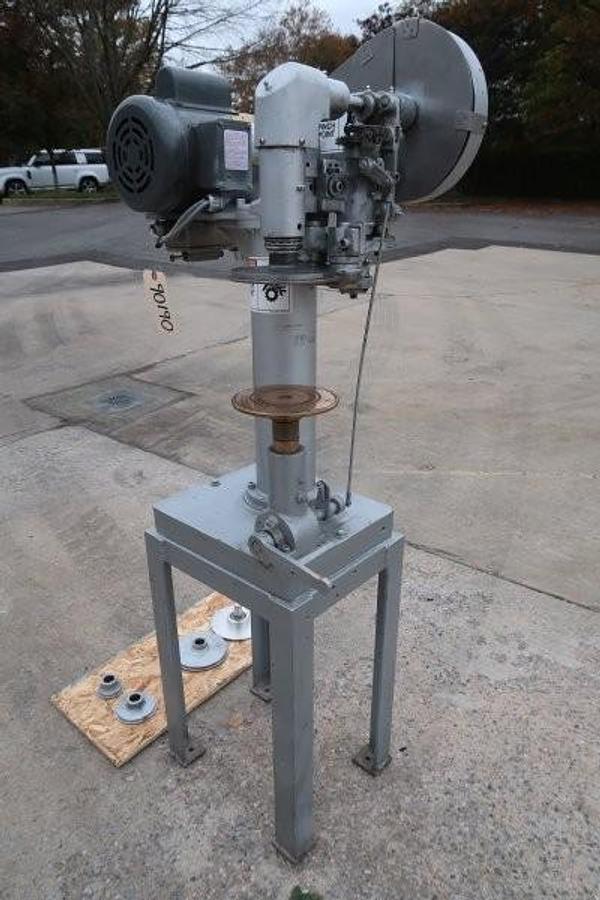
Semi-automatic seamers, like the Rooney 603 model available on the used market, motorize the seaming operation while still requiring an operator to load and unload cans. This dramatically improves throughput and seam consistency compared to manual units, making semi-automatic machines the practical choice for small craft breweries, regional food producers, and similar operations running regular production shifts. Fully automatic seamers integrate into a conveyor line and require minimal human intervention per cycle, but they come with significantly higher cost and complexity. For many small to mid-scale producers, a semi-automatic unit hits the right balance between output and operational simplicity.
How many cans per minute can a semi-automatic Rooney can seamer typically process?
Semi-automatic can seamers in the Rooney class are generally capable of seaming anywhere from 6 to 20 cans per minute depending on the specific model, the can size being run, and the skill level of the operator loading and unloading the machine. Larger-diameter cans like the 603 size tend to run at the lower end of that range simply because they take more time to position and the seaming cycle itself covers more surface area. Smaller-diameter beverage cans on a semi-automatic machine can approach the higher end of that range with an experienced operator.
For context, a small craft brewery or food producer running a single shift could seal several thousand cans in a day with a semi-automatic seamer, which is more than sufficient for many small-scale operations. Buyers planning to purchase a used semi-automatic Rooney seamer should ask the seller about the machine's production history and, if possible, request a video demonstration of the seaming cycle so they can observe the speed and seam quality firsthand. Actual throughput on a specific used unit may vary based on the machine's age, condition, and any wear on the seaming rolls or chuck.
What can sizes is a Rooney can seamer compatible with?
Rooney can seamers are not universally compatible with all can sizes. Each machine is configured with specific seaming rolls, chucks, and base plates that correspond to a particular can diameter and sometimes a specific can height range. The industry uses a standardized numbering system for can diameters, with common sizes including 202 (used for standard beverage cans), 211 (common for beer and some food cans), 300, 401, and 603 (a large-format size used in institutional and commercial food packing). A seamer set up for one diameter will generally not produce a proper double seam on a different diameter without changing the tooling.
Buyers should identify their required can diameter and height before evaluating any used Rooney seamer. When reviewing a listing, confirm the diameter designation listed (such as 603) and ask the seller whether additional tooling for other sizes is included or available. Some used machines are sold with multiple sets of tooling, which adds flexibility. If the machine has been in production recently, the seller may be able to provide information about what can specifications it was last running, which is a useful reference point for buyers trying to match equipment to their own packaging requirements.
Is a used Rooney can seamer suitable for a craft brewery or small food producer?
Used Rooney can seamers are a reasonable fit for craft breweries, small beverage producers, and specialty food companies that need reliable seaming equipment without the capital outlay of purchasing a large automated canning line. Semi-automatic models in particular offer a practical middle ground: they produce consistent double seams that meet food safety standards, they require only one or two operators to run, and they occupy a relatively small footprint compared to fully integrated canning systems. Many small producers start with a used semi-automatic seamer and scale up as volume grows.
That said, buyers should think carefully about can size compatibility before committing to a specific used machine. A 603-diameter seamer, for example, is sized for large-format institutional cans and would not be the right fit for a craft brewery packaging 12-ounce or 16-ounce beverage cans. Matching the seamer to your actual can format is the most important technical consideration. Portability is another factor worth evaluating: some small producers who sell at farmers markets or events need equipment they can move between locations, and bench-top semi-automatic units are generally easier to transport than larger floor-standing models. Reviewing the machine's physical dimensions and weight before purchase helps avoid logistical surprises.
What should a buyer inspect when evaluating a used Rooney can seamer?
The most critical components to inspect on a used can seamer are the seaming rolls and chuck. These parts make direct contact with the can and lid during the double-seam operation, and wear on these surfaces directly affects seam quality. Look for flat spots, grooves, or uneven wear patterns on the rolls, and check that the chuck surface is smooth and free of pitting or damage. Worn seaming rolls are replaceable, but the cost and availability of replacement parts for older Rooney models should be factored into the purchase decision.
Beyond the seaming tooling, buyers should examine the drive motor and gearbox for signs of excessive wear, check that the base plate and can lifter mechanism operate smoothly, and look for any cracks or repairs in the machine's frame. If the seller offers a video inspection or in-person viewing, ask to see the machine cycle through its seaming operation so you can observe whether the motion is smooth and consistent. Keep in mind that most used equipment dealers do not have the permitting or production setup to run actual product through the machine during an inspection, so the evaluation will focus on mechanical condition rather than a live production test. Consulting with a can seaming technician or the machine's manufacturer about what to look for on a specific model can also be valuable before making a purchase.
What maintenance does a Rooney can seamer require?
Regular maintenance on a Rooney can seamer focuses on lubrication, adjustment, and inspection of the seaming rolls, chuck, and drive components. Seaming rolls and the chuck should be cleaned after each production run to remove residue from can lids and seaming compound. Lubrication points on the seaming head, cam followers, and drive shaft bearings need to be greased on a schedule that matches the machine's usage level, with more frequent lubrication required for higher-volume operations. Neglecting lubrication is one of the most common causes of premature wear on seaming equipment.
Seam quality should be checked periodically using a seam micrometer and by performing teardown inspections on sample cans to verify that the double seam dimensions fall within specification. If seam measurements drift out of tolerance, the seaming rolls typically need adjustment or replacement. On a used machine, it is worth checking whether the rolls and chuck are at or near the end of their service life before purchase, since these are wear items that will need attention regardless of how well the machine was maintained previously. Sourcing replacement parts for Rooney seamers, particularly older models, may require contacting specialty parts suppliers or the manufacturer directly, so confirming parts availability before buying is a practical step.
How does buying a used Rooney can seamer work, and what should buyers expect from the purchase process?
Purchasing a used Rooney can seamer from a reputable used equipment dealer typically begins with reviewing the machine listing for specifications like model, can diameter, and condition notes, then contacting the dealer to ask questions and request an inspection. Most established used equipment dealers will accommodate in-person inspections at their facility or at the plant where the machine is currently located. For buyers who cannot travel, video inspections are commonly available, where the dealer captures footage of the machine and its key components so the buyer can assess condition remotely. Selecting a dealer with a long track record of selling food and beverage processing equipment is important, since specialized dealers are better positioned to provide accurate condition assessments and answer technical questions.
Payment terms for used equipment purchases typically require full payment before the machine is shipped, though some dealers extend terms to repeat customers. Shipping costs will depend on the machine's size and weight, the level of packaging or crating required to protect it in transit, and whether specialized rigging is needed for loading and unloading. Larger floor-standing seamers may require a forklift or crane at both the origin and destination, which adds to the total landed cost. Buyers should ask the dealer for a complete breakdown of packaging, freight, and rigging costs before finalizing the purchase so there are no surprises. Used equipment is generally sold as-is, so thorough inspection and due diligence before committing are the buyer's primary protection.
What is the typical price range for a used Rooney can seamer?
Pricing for used Rooney can seamers varies considerably based on the model, the level of automation (manual versus semi-automatic), the can diameter the machine is configured for, and the overall condition of the unit. Manual bench-top seamers at the lower end of the market can be found for a few hundred to a couple thousand dollars, while semi-automatic models in good working condition typically command prices in the range of several thousand dollars. Larger-format or higher-capacity semi-automatic units, like a 603-diameter seamer, may price higher depending on condition and what tooling is included.
Buyers should think about total acquisition cost rather than just the listed price. Shipping, rigging, and any crating required to safely transport the machine can add meaningfully to the final cost, particularly for heavier floor-standing units. If the seaming rolls, chuck, or other wear parts need replacement shortly after purchase, that cost should be factored in as well. Comparing prices across multiple used equipment listings gives a useful sense of the market range, but condition and included tooling matter as much as the sticker price when evaluating value. Reaching out directly to sellers to discuss the machine's history and condition is the best way to assess whether a listed price reflects the actual state of the equipment.