Category
Manufacturer
Model
Rondo
Rondo is a prominent manufacturer of dough processing equipment, primarily serving the bakery industry. They are well-known for their sheeters and dough dividers, which enhance the quality and consistency of baked goods.
FAQ:
What types of Rondo dough processing equipment are commonly available on the used market?
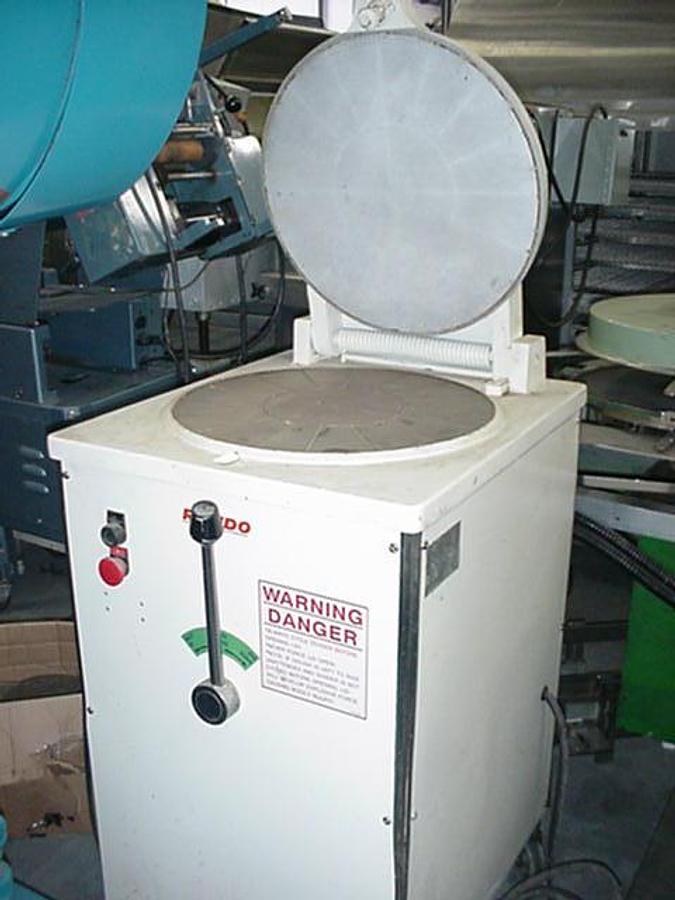
Rondo produces a broad range of dough processing equipment, and the used market reflects that variety fairly well. The most frequently traded machines include dough sheeters, croissant lines, laminating lines, dough dividers, rounders, and fully automated makeup lines. Sheeters and dividers tend to be the most common, partly because they are essential to so many bakery operations and partly because they have long service lives that make them attractive as used purchases. Portable dough dividers, for example, appear regularly and are popular with smaller operations that need flexibility on the production floor.
Beyond the core sheeting and dividing equipment, buyers sometimes find complete laminating lines and croissant-forming systems, which are more specialized but highly sought after by artisan and industrial bakeries alike. Rondo's product range spans compact tabletop sheeters suited to small or artisan bakeries all the way up to large-scale automated lines designed for high-volume production facilities. When shopping the used market, it helps to know which specific model or category you need before you start, since availability varies and the right machine for a small patisserie looks very different from what a high-output industrial bakery would require.
What is the difference between a Rondo dough sheeter, a laminator, and a makeup line?
These three machine categories each serve a distinct role in dough processing, though they are sometimes confused because they all involve working dough into sheet form. A dough sheeter is the most straightforward of the three. It passes dough through a pair of rollers to reduce it to a consistent thickness, and it is used across a wide range of products from pizza bases to pie crusts. Rondo sheeters are known for precise thickness control, which matters enormously when you need uniform results across a full production run.
A laminator is a more specialized machine designed specifically for layered doughs like croissants and puff pastry. It alternates dough and fat layers through a series of folding and sheeting cycles, a process that requires very tight tolerance control to achieve the right number of layers without tearing or overworking the dough. A makeup line, on the other hand, is a complete production system that integrates sheeting, cutting, filling, and forming into a single continuous process. Makeup lines are typically found in high-volume industrial bakeries where manual handling between steps would create bottlenecks. When evaluating used Rondo equipment, understanding which category fits your production needs will save considerable time and help you avoid purchasing a machine that is either under- or over-specified for your operation.
What dough types can Rondo equipment handle?
Rondo equipment is designed to handle a wide spectrum of dough types, which is one of the reasons the brand has such a strong presence across different bakery segments. Laminated doughs like croissant dough and puff pastry are arguably where Rondo machines are best known, since the precision required for consistent layering demands the kind of roller accuracy and tension control that Rondo builds into its sheeters and laminators. These doughs are notoriously sensitive to overworking and temperature, so the machine's ability to apply even, controlled pressure makes a real difference in the finished product.
Beyond laminated doughs, Rondo equipment handles pizza dough, bread dough, cookie dough, pie and tart dough, strudel dough, and various filled pastry doughs. The range of compatible dough types does depend on the specific machine model, since a compact tabletop sheeter has different capacity and roller gap specifications than an industrial laminating line. Buyers shopping for used Rondo equipment should confirm that the specific model they are considering is rated for the dough type and hydration level they work with most. Consulting the manufacturer's documentation for that model, or reaching out to Rondo directly, can help clarify compatibility before a purchase is made.
Is buying used Rondo dough processing equipment a reliable option for a bakery?
Used Rondo equipment has a solid reputation in the bakery industry, largely because Rondo machines are built to demanding standards using food-grade stainless steel and components designed for continuous commercial use. A well-maintained Rondo sheeter or divider can deliver many years of additional service life after its first owner is done with it, which is why these machines hold their value and remain in demand on the secondary market. The key word there is well-maintained. The condition of any specific used machine depends entirely on how it was operated and serviced during its working life, so condition varies considerably from one listing to the next.
Buyers should approach used Rondo equipment with due diligence rather than assuming that the brand name alone guarantees a trouble-free purchase. Selecting a reputable dealer who specializes in bakery and food processing equipment is important, as is taking full advantage of any inspection opportunities offered. Used equipment is typically sold as-is, so the burden of assessing condition falls on the buyer. Requesting a video inspection or arranging an in-person visit to see the machine in its current state, whether it is still in production at a facility or has been decommissioned, gives you a much clearer picture than photos alone. It is also worth contacting Rondo directly to ask about parts availability and technical support for the specific model you are considering, since the age of a machine can affect what resources are still accessible.
What should buyers inspect when evaluating used Rondo dough processing equipment?
A thorough inspection of used Rondo equipment covers both mechanical condition and practical usability. On the mechanical side, the rollers are the most critical component to examine. Look for scoring, uneven wear, or any surface damage that could affect dough thickness consistency. The drive system, belts, and conveyor components should also be checked for wear, and any hydraulic or pneumatic systems should be tested for leaks or sluggish response. Control panels and electrical components deserve close attention too, since sourcing replacements for older electronic parts can sometimes be challenging.
Beyond the mechanical check, buyers should assess the overall hygiene condition of the machine. Rondo equipment is built with cleaning in mind, featuring stainless steel construction and designs that meet international hygiene standards, but years of use can leave residue in hard-to-reach areas or cause wear to seals and gaskets that affect food safety compliance. Dealers will typically accommodate in-person inspections, video walkthroughs, or recorded video of the machine in operation. Keep in mind that most equipment dealers do not have the permitting required to run actual production, so a full product test is usually not possible. The goal of the inspection is to get an accurate, honest picture of the machine's current mechanical and cosmetic condition so you can make an informed buying decision.
Are replacement parts and technical support available for used Rondo machines?
Parts availability for Rondo equipment is generally considered good compared to many other dough processing brands, which is one of the practical advantages of buying into the Rondo ecosystem. The company has been manufacturing equipment for over 70 years and has a global distribution network, which means many standard components remain in circulation. That said, availability is not uniform across all models and all ages of machines. Older or discontinued models may have limited factory support, and some components may need to be sourced through third-party suppliers or fabricated to spec.
Before committing to a used Rondo machine, it is worth contacting Rondo or an authorized service provider to ask specifically about parts and support for that model. Provide the model number and serial number if possible, as this gives the manufacturer's team the information they need to give you an accurate answer rather than a general one. Technical support, including service manuals and wiring diagrams, is another area where availability can vary by model age. A reputable used equipment dealer who specializes in bakery machinery will often have practical knowledge about which models are well-supported and which may present sourcing challenges, so their input can be a useful part of your research process.
What are the typical space and electrical requirements for Rondo dough processing equipment?
Space and electrical requirements for Rondo equipment vary significantly across the product range, so there is no single answer that applies universally. Compact tabletop sheeters designed for artisan bakeries have a relatively small footprint and can often operate on standard single-phase power, making them accessible to smaller operations with limited floor space and basic electrical infrastructure. At the other end of the spectrum, full laminating lines and automated makeup systems can require substantial dedicated floor space, three-phase power connections, and in some cases compressed air or hydraulic supply lines.
When evaluating a specific used Rondo machine, the technical data sheet for that model is the most reliable source for exact dimensions, weight, power draw, and utility requirements. If the original documentation is not available through the dealer, Rondo's published specifications for that model are usually accessible through the manufacturer. It is also worth factoring in clearance space around the machine for operation and cleaning access, as well as any rigging requirements for moving the equipment into position. Larger machines may need professional rigging for both loading at the point of origin and unloading at your facility, which adds to the total landed cost and should be factored into your budget before you finalize a purchase.
How does used Rondo equipment compare to buying from a manufacturer in terms of cost and value?
The price difference between used and manufacturer-direct Rondo equipment can be substantial, often ranging from 40 to 70 percent less for a used machine depending on age, condition, and model. For bakeries that need professional-grade sheeting or laminating capability but cannot justify the capital outlay of a manufacturer-direct purchase, the used market opens up access to equipment that would otherwise be out of reach. This is particularly relevant for Rondo, which is positioned as a premium brand and priced accordingly at the manufacturer level.
The trade-off is straightforward. A manufacturer-direct purchase comes with full factory support, current software or control systems, and the assurance of known condition from day one. A used machine comes at a lower price but as-is, meaning the buyer takes on the responsibility of assessing condition and managing any repairs or upgrades needed to bring the machine up to their production standards. For buyers who do their homework, select a reputable dealer, and conduct a proper inspection, used Rondo equipment can represent excellent value. The brand's reputation for durability means that a well-maintained machine can deliver reliable performance for years after its initial sale, which is why experienced bakery operators often seek out used Rondo equipment specifically rather than settling for a less established brand.
What should buyers expect regarding shipping and payment when purchasing used Rondo equipment?
Shipping costs for used Rondo dough processing equipment depend on the size and weight of the machine, the distance between the seller's location and the buyer's facility, and the level of packaging required to protect the equipment in transit. Smaller machines like tabletop sheeters may ship on standard pallets with appropriate blocking and bracing, while larger floor-standing sheeters, laminators, and makeup lines often require custom crating to prevent damage. Rigging costs for loading at the origin and unloading at the destination are typically additional and should be confirmed with the dealer upfront. Getting a clear breakdown of all freight, rigging, and packaging costs before finalizing a purchase is the best way to understand the true landed cost of the equipment.
On the payment side, most used equipment dealers require full payment before a machine ships. This is standard practice in the industry and reflects the nature of used equipment transactions where the dealer needs to confirm funds before releasing inventory. Some dealers may offer payment terms to established repeat customers, but buyers making a first purchase should generally plan for full payment upfront. Wire transfer is the most common payment method for transactions of this size. Confirming all payment expectations with the dealer early in the process avoids surprises and keeps the transaction moving smoothly once you have decided on a machine.
How should a buyer choose a reputable dealer for used Rondo dough processing equipment?
Choosing the right dealer matters as much as choosing the right machine, especially with used equipment where condition and accurate representation are everything. A dealer who specializes in bakery and food processing equipment will have a much better understanding of Rondo machines specifically than a general industrial equipment reseller. Specialization means the dealer is more likely to accurately describe the condition of what they are selling, know the relevant model history, and understand what questions a serious buyer needs answered. Years in business is another meaningful indicator. Dealers with a long track record have built their reputation on repeat business and referrals, which gives them a strong incentive to represent their inventory honestly.
Beyond specialization and longevity, look at how a dealer handles the inspection process. A trustworthy dealer will offer in-person visits, video calls, or recorded video of the machine so you can assess its condition before committing. They should be willing to answer technical questions about the specific machine and be transparent about any known issues or wear. Be cautious of dealers who are vague about condition, reluctant to facilitate inspections, or unable to provide basic documentation like model and serial numbers. The used equipment market rewards buyers who ask thorough questions and take the time to vet both the machine and the seller before any money changes hands.