Category
Manufacturer
Model
FAQ:
What types of equipment does Ron Ungar Engineering manufacture?
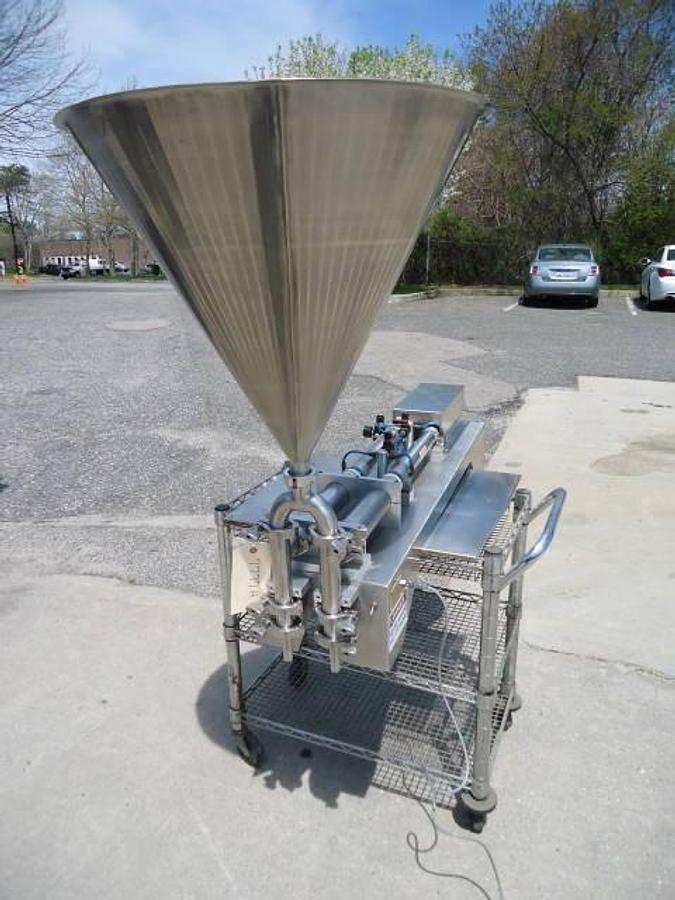
Ron Ungar Engineering is known for producing specialized filling and packaging machinery, with the Twin Piston Filler being one of the more recognized models in their lineup. The Twin Piston Filler is an air-operated machine designed for precise liquid or semi-liquid filling applications, making it a practical choice for production lines that require consistent fill volumes across a range of product viscosities. This type of equipment is commonly found in food and beverage, cosmetics, pharmaceutical, and chemical manufacturing environments where accuracy and repeatability in filling are critical to operations.
Beyond filling equipment, Ron Ungar Engineering has built a reputation as a niche manufacturer, meaning their total product range tends to be more focused than larger industrial equipment brands. Because the company occupies a specialized segment of the market, used Ron Ungar machines appear on the market less frequently than equipment from higher-volume manufacturers. When listings do surface, they tend to attract attention from buyers who are already familiar with the brand or who have a specific application in mind that the equipment is well-suited for.
What industries use Ron Ungar Engineering filling equipment?
Ron Ungar Engineering filling machines, including their air-operated Twin Piston Filler, are used across a range of process-intensive industries where liquid or semi-liquid products need to be dispensed accurately into containers. Food and beverage producers, cosmetic manufacturers, and personal care product companies frequently rely on piston-style fillers for products like sauces, lotions, gels, creams, and similar formulations. The ability to handle varying viscosities makes this type of equipment versatile enough to move between different production applications with relatively minor adjustments.
Pharmaceutical and nutraceutical facilities also use piston fillers for products like syrups, ointments, and supplements, where dosing accuracy is not just a quality concern but often a regulatory one. Chemical manufacturers filling lubricants, adhesives, or cleaning compounds represent another common use case. Buyers from any of these industries looking at used Ron Ungar equipment should verify that the specific model and configuration they are considering matches their product type, container size, and production volume requirements before committing to a purchase.
How does an air-operated twin piston filler work?
An air-operated twin piston filler uses compressed air to drive two pistons that draw product from a hopper or supply tank and push it through a nozzle into a container below. The twin-piston design allows for a continuous or near-continuous fill cycle, with one piston drawing product while the other is dispensing, which improves throughput compared to single-piston designs. Fill volume is typically controlled by adjusting the stroke length of the pistons, and the air pressure settings influence the speed and force of the fill cycle. This mechanical simplicity is one reason piston fillers have remained a preferred choice in many production environments for decades.
The air-operated mechanism eliminates the need for an electric motor drive on the fill head itself, which can simplify maintenance and reduce certain failure points. However, it does require a reliable compressed air supply at the appropriate pressure and volume to operate consistently. For used machines, buyers should pay close attention to the condition of the pistons, cylinders, seals, and valves, as these are the components most subject to wear over time. Checking for scoring on cylinder walls or deteriorated seals is an important part of any pre-purchase inspection.
What should I look for when inspecting used Ron Ungar Engineering equipment?
Inspecting used filling equipment like a Ron Ungar Twin Piston Filler requires a methodical approach to understanding both the mechanical condition of the machine and its history in production. Start with the wear components: pistons, cylinder bores, seals, o-rings, and any product-contact surfaces should be examined closely for signs of wear, scoring, corrosion, or damage from improper cleaning. On air-operated machines, the pneumatic components including valves, fittings, and air lines should also be checked for leaks or deterioration. If the machine has been sitting idle for an extended period, seals may have dried out or become brittle, which will require replacement before the machine can run reliably.
Beyond mechanical condition, ask the dealer about the machine's production history, including what products were run through it and how frequently it was used. This context matters because certain products, particularly acidic formulations or abrasive materials, accelerate wear on internal components. Reputable used equipment dealers will typically accommodate in-person inspections or arrange video walkthroughs of the machine so buyers can assess condition before purchasing. Keep in mind that most equipment dealers do not have the permitting or facilities to run actual production tests, so the inspection will focus on visual and mechanical assessment rather than a live fill demonstration.
Are parts and technical support available for used Ron Ungar Engineering machines?
Parts availability for used Ron Ungar Engineering equipment depends largely on the age and model of the specific machine. Because Ron Ungar operates in a specialized niche of the filling equipment market, buyers should contact the manufacturer directly before purchasing a used unit to confirm whether replacement parts are still produced or stocked for that particular model. This step is especially important for wear items like seals, o-rings, pistons, and pneumatic components that will eventually need replacement regardless of the machine's current condition. A machine that runs well today but has no available replacement parts for critical components carries a meaningful long-term risk.
For older models where manufacturer support may be limited, buyers sometimes have success sourcing compatible components from industrial seal suppliers or pneumatic component distributors, since many piston filler designs use standard-size parts that are not proprietary. A qualified millwright or industrial mechanic familiar with filling equipment can often identify compatible aftermarket parts by measuring existing components. Before purchasing, it is worth asking the dealer whether any documentation, manuals, or parts lists are available for the specific machine, as this information can significantly simplify future maintenance and repairs.
Where can I find used Ron Ungar Engineering equipment for sale?
Used Ron Ungar Engineering equipment surfaces periodically through specialized used industrial machinery dealers who focus on packaging and filling equipment. Because Ron Ungar is a niche manufacturer, listings are less common than for higher-volume brands, and inventory availability at any given time tends to be limited. Buyers who have a specific need for this equipment are generally better served by working directly with established used machinery dealers who specialize in packaging and filling equipment, as these dealers are more likely to have knowledge of the machines and the ability to provide meaningful condition assessments.
When a listing does appear, acting promptly is advisable since used Ron Ungar equipment does not turn over frequently on the market. Before reaching out to any dealer, it helps to have a clear picture of your application requirements, including the product type, target fill volume, container size, and production speed, so you can quickly evaluate whether a specific machine fits your needs. A dealer who specializes in filling and packaging equipment will generally be better positioned to answer technical questions about a Ron Ungar machine than a general surplus dealer who may have limited familiarity with the equipment.
What is the typical price range for used Ron Ungar Engineering filling equipment?
Pricing for used Ron Ungar Engineering equipment varies based on the model, age, condition, and configuration of the specific machine. Piston fillers in general, depending on their size, fill range, and level of automation, can range from a few thousand dollars for basic benchtop or semi-automatic units to tens of thousands for larger, more automated production-grade machines. Ron Ungar's Twin Piston Filler, being a purpose-built production machine, will typically be priced in line with comparable used filling equipment from other specialty manufacturers, adjusted for condition and any included accessories or tooling.
Buyers should factor in the full landed cost of the equipment, not just the listed price. Rigging, crating or palletization, freight, and any required reconditioning or seal replacement can add meaningfully to the total investment. Requesting a detailed breakdown of these costs from the dealer before committing to a purchase is a standard and reasonable step. Comparing the total cost against the price of comparable used machines from other manufacturers, as well as the cost of buying a similar machine through other channels, will help buyers make a well-informed decision.
What are the shipping and logistics considerations for used filling equipment?
Shipping used industrial filling equipment requires more planning than standard freight because these machines are heavy, often have precision-machined components, and can be damaged by improper handling during transit. Dealers will typically palletize or crate machines prior to shipment, and the level of packaging required depends on the size and fragility of the equipment. Heavier or larger machines may require rigging services for both loading at the dealer's facility and unloading at the buyer's location. Buyers should ask the dealer specifically about what packaging is included, what rigging will be needed, and whether the buyer is responsible for arranging unloading at the destination.
Shipping costs can vary significantly based on the weight and dimensions of the machine, the distance between origin and destination, and the freight service used. For larger machines, LTL (less-than-truckload) or full truckload freight with appropriate equipment, such as a flatbed or liftgate truck, is often required. Buyers should request a complete cost breakdown that includes palletization or crating fees, rigging charges, and freight costs so they have a clear picture of the total landed cost before finalizing the purchase. International shipments introduce additional considerations including customs documentation, import duties, and compliance with the destination country's equipment import requirements.
What payment terms are standard when buying used industrial equipment from a dealer?
Most used industrial equipment dealers require full payment before a machine is released for shipment. This is standard practice in the industry and reflects the nature of used equipment transactions, where dealers are not typically in a position to extend credit to first-time buyers. Payment is commonly accepted by wire transfer, and some dealers may accept other forms of verified payment depending on the transaction size and their internal policies. Buyers should confirm accepted payment methods with the dealer early in the process to avoid delays once a purchase decision is made.
For buyers with an established relationship with a particular dealer, some flexibility on payment terms may be available, though this is at the dealer's discretion and not a standard offering. Buyers who are new to a dealer and want to minimize financial risk should focus on the inspection process as their primary due diligence tool, since payment protections are limited once funds are transferred. Verifying the dealer's track record, length of time in business, and specialization in the relevant equipment category are practical ways to assess the reliability of the seller before committing to a purchase.
Can I inspect used Ron Ungar Engineering equipment before buying?
Reputable used equipment dealers will generally accommodate inspection requests before a purchase is finalized. Depending on the dealer and the location of the machine, this may be an in-person visit to the dealer's facility, a virtual walkthrough conducted over video call, or a set of detailed video recordings and photographs provided on request. In some cases, equipment that has not yet been removed from its production facility may be inspectable at the plant where it is currently installed, which can provide additional context about how the machine was used and maintained. Buyers should always request the most thorough inspection the dealer can accommodate, given that used equipment is typically sold as-is.
For a machine like the Ron Ungar Twin Piston Filler, a useful inspection will cover the condition of the pistons and cylinders, the state of the seals and o-rings, the integrity of the pneumatic components, and the overall cleanliness and corrosion status of the machine. Even if a live production test is not possible, a dealer who is knowledgeable about filling equipment should be able to demonstrate basic mechanical function, such as the movement of the pistons under air pressure, during an inspection. Buyers who cannot inspect in person should request video of the machine operating under air and close-up footage of the product-contact components and any areas showing visible wear.