Category
Manufacturer
Model
FAQ:
What is a wire hooder and what does it do in a sparkling wine bottling line?
A wire hooder is a piece of specialized packaging equipment used in sparkling wine and Champagne production to apply a wire cage, known as a muselet, over a cork-stoppered bottle. The muselet holds the cork firmly in place against the internal pressure of the carbonated wine, which can reach 5 to 6 atmospheres in a standard Champagne bottle. Without this wire cage secured correctly, the cork could be forced out during storage or handling, creating both a safety hazard and a product loss problem.
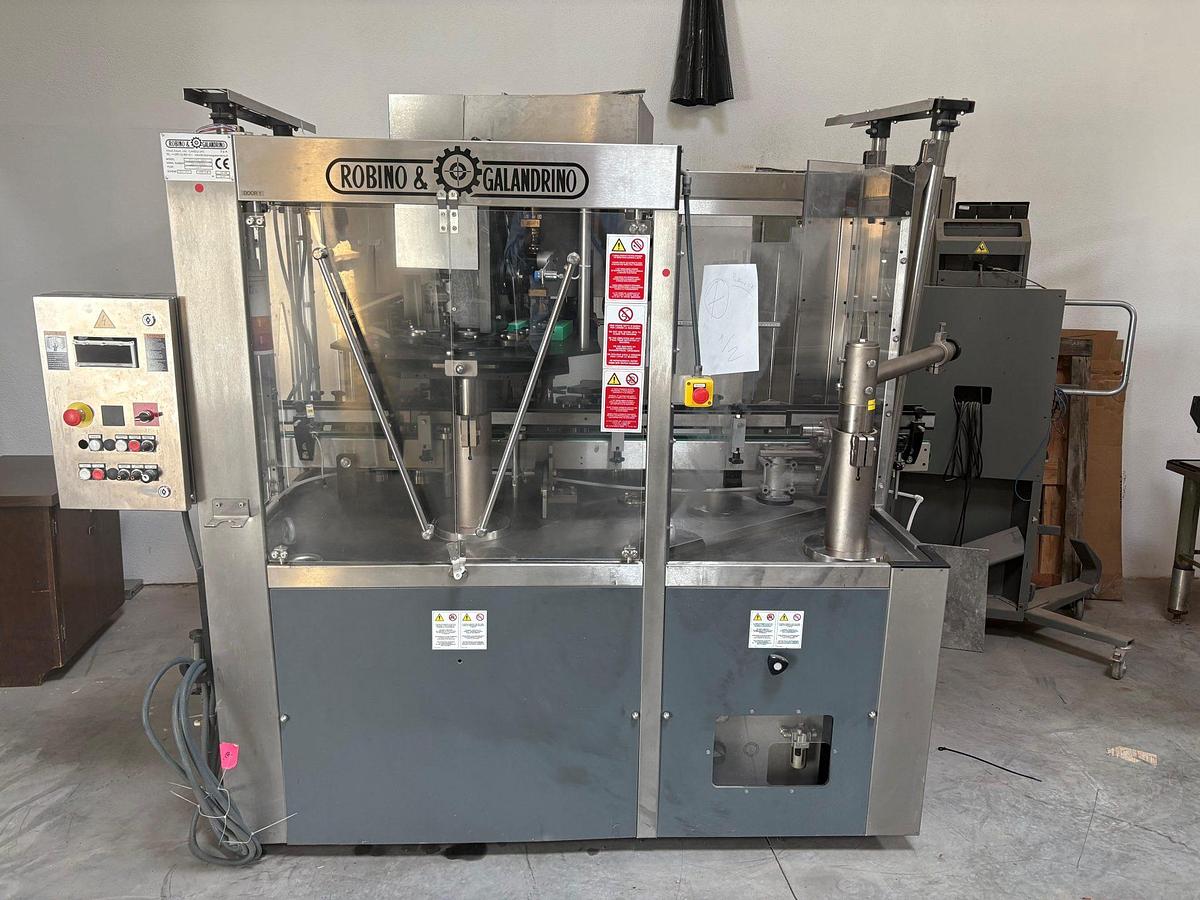
The machine works by receiving a pre-formed wire hood from a magazine or hopper, positioning it over the bottle neck and cork, then twisting and crimping the wire to lock it tightly in place. This process, done manually, is slow and inconsistent. A dedicated wire hooding machine brings repeatability and speed to the process, making it practical at commercial production volumes. The hood magazine dispenser, which is a key component on many models including those made by Robino Galandrino, automatically feeds hoods into the application station so the line can run continuously without manual loading of individual hoods.
Who is Robino Galandrino and what is the company known for in the beverage equipment industry?
Robino Galandrino is an Italian manufacturer with a long-standing reputation in the sparkling wine and beverage packaging equipment sector. The company is based in Italy, a country with deep roots in both winemaking and precision industrial manufacturing, and has built its name around engineering equipment specifically designed for the unique demands of sparkling wine production. Their product lineup focuses on the finishing stages of the bottling process, particularly wire hooding and related closure equipment.
The brand is recognized in the industry for precision engineering and mechanical reliability, qualities that matter considerably when equipment is running thousands of bottles per shift in a production environment. Robino Galandrino machines are used by wineries and beverage producers across Europe and internationally, from boutique sparkling wine producers to large-scale commercial operations. When a used Robino Galandrino machine comes to market, it carries the reputation of a well-regarded manufacturer behind it, which is one reason these machines hold their value and remain sought after in the secondary equipment market.
What is the difference between semi-automatic and fully automatic Robino Galandrino wire hooder models?
Semi-automatic wire hooders require an operator to be present and involved in part of the cycle, typically feeding bottles into the machine, initiating the hooding cycle, or removing finished bottles. These models are generally more compact, lower in cost, and well suited to small and mid-size wineries that produce at volumes where a fully automated line is not yet justified. They offer consistent muselet application without the full infrastructure investment of an automated system, and they can often be operated as a standalone station rather than integrated into a conveyor-based line.
Fully automatic models are designed to run as part of a continuous bottling line, receiving bottles from an upstream conveyor, applying the wire hood without operator intervention, and passing the finished bottle downstream to labeling or packaging stations. These machines handle significantly higher throughput, with industrial-grade systems capable of processing several thousand bottles per hour. The fully automatic configuration also typically includes more sophisticated hood magazine systems that hold larger quantities of hoods to reduce the frequency of reloading. For a buyer evaluating a used Robino Galandrino wire hooder, understanding which category the specific machine falls into is essential for matching the equipment to the intended production volume and line configuration.
What production speeds can be expected from a Robino Galandrino wire hooder?
Production speeds vary considerably across the range of Robino Galandrino wire hooder models. Entry-level and semi-automatic units are typically rated in the range of a few hundred bottles per hour, which suits small winery operations or producers running limited-edition sparkling wines. Mid-range models step up significantly from there, and fully automated industrial configurations can reach several thousand bottles per hour, making them practical for large commercial Champagne and sparkling wine producers who need the hooding station to keep pace with the rest of a high-speed bottling line.
For buyers considering a used machine, the rated speed of the specific model is an important specification to verify, but actual throughput in practice will also depend on factors like bottle format, the condition of the machine, and how well it has been maintained over its service life. A used machine that has been well maintained and serviced regularly can perform close to its rated capacity. Buyers are encouraged to request as much documentation as available about the machine's history and, where possible, arrange an inspection to observe the equipment in operation or review video of it running before completing a purchase.
What bottle formats and neck finishes is the Robino Galandrino wire hooder compatible with?
Robino Galandrino wire hooders are built around the standard profiles used in sparkling wine production, with compatibility centered on the classic Champagne-style bottle neck finish that accepts a standard cork and muselet. The 750ml bottle is the primary format these machines are designed around, as it is by far the dominant format in sparkling wine production globally. Many models also accommodate larger formats such as magnums (1.5 liters) and other bottle sizes common in the sparkling wine segment, though the specific formats supported will vary by model and configuration.
Format changeovers on these machines typically involve adjusting or swapping guide components and tooling to match the neck diameter and profile of the bottle being run. On some models this is a straightforward mechanical adjustment; on others it may require dedicated change parts. For a buyer purchasing a used machine, it is worth confirming which bottle formats the machine is currently set up for and whether any additional change parts are included with the sale. This detail can affect the total cost and readiness of the machine for the buyer's specific production needs.
Can a used Robino Galandrino wire hooder be integrated into an existing bottling or packaging line?
Yes, Robino Galandrino wire hooders, particularly the fully automatic models, are designed to function as part of a complete bottling line rather than as isolated standalone units. They are built to accept bottles from an infeed conveyor and discharge finished bottles to a downstream conveyor, making integration into an existing line a matter of matching conveyor heights, belt speeds, and physical footprint. The machines communicate with upstream and downstream equipment through standard line control signals, and most industrial models include the necessary electrical interfaces for this kind of integration.
That said, integrating any used machine into an existing line requires careful planning. Conveyor height compatibility, the physical space available in the production facility, electrical supply requirements, and the overall line speed all need to be evaluated before assuming a used machine will drop into place without modification. Buyers are advised to share their line specifications with a knowledgeable equipment dealer and, where possible, bring in a qualified technician to assess integration requirements before finalizing a purchase. A used machine in excellent mechanical condition can still require meaningful installation work to function correctly within a specific facility's line layout.
What should a buyer inspect when evaluating a used Robino Galandrino wire hooder?
A thorough inspection of a used wire hooder should cover both the mechanical and electrical condition of the machine. On the mechanical side, key areas to examine include the condition of the wire twisting and crimping heads, the hood magazine feed mechanism, the bottle handling guides and starwheels, and the drive components including chains, gears, and belts. These are the parts that experience the most wear in normal operation, and their condition gives a reliable indication of how the machine has been maintained and how much service life remains. Wear on the twisting heads in particular can affect the quality and consistency of the muselet application.
On the electrical side, buyers should look at the condition of the control panel, sensors, and any pneumatic components if the machine uses air-actuated mechanisms. Reputable used equipment dealers will typically accommodate in-person inspections, virtual walkthroughs, or video captures of the machine so the buyer can assess its current condition before committing to a purchase. Some machines may still be in active production at a facility, which can allow observation of the machine running under real conditions. Keep in mind that most equipment dealers do not have the permits or infrastructure to run actual production, so testing with live product is generally not possible at a dealer's location.
What does a hood magazine dispenser do on a wire hooding machine?
A hood magazine dispenser is the component of a wire hooding machine that stores a supply of pre-formed wire hoods (muselets) and feeds them automatically into the hooding station one at a time. Without this mechanism, an operator would need to manually place each hood over the bottle neck before the machine could twist and crimp it into place, which would dramatically slow the process and introduce inconsistency. The magazine allows the machine to run continuously, with the operator's role reduced to periodically replenishing the hood supply in the magazine rather than attending to each individual bottle.
The capacity of the hood magazine varies by machine model. Higher-speed, fully automated machines tend to have larger magazine capacities to reduce the frequency of reloading and minimize line stoppages. The design and condition of the magazine feed mechanism is an important aspect to inspect on a used machine, as misfeeds or jams in this component can interrupt production and affect output quality. On the Robino Galandrino wire hooder models that include a hood magazine dispenser as part of the configuration, this feature is a significant practical advantage for any operation running at meaningful production volumes.
What are the typical shipping and logistics considerations when purchasing a used wire hooding machine?
Wire hooding machines vary in size and weight depending on the model, and shipping requirements should be factored into the total cost of acquisition before a purchase decision is made. Smaller semi-automatic units may ship on a standard pallet with appropriate blocking and bracing, while larger fully automatic machines typically require custom crating to protect precision components during transit. The cost of palletization or crating will vary based on the machine's size and the level of protection required for the specific shipment, and buyers should ask the dealer for a detailed breakdown of packaging costs upfront.
For heavier machines, rigging equipment such as forklifts or cranes may be needed for loading at the origin and unloading at the destination, and these costs are generally the responsibility of the buyer to arrange at their facility. Freight costs will depend on the origin and destination locations, the carrier used, and whether the shipment moves by ground or ocean freight for international purchases. Most used equipment dealers require full payment prior to releasing a machine for shipment. Buyers should request a complete landed cost estimate that includes the machine price, packaging, freight, and any applicable import duties or fees before finalizing the transaction.
What level of parts and technical support should a buyer expect for a used Robino Galandrino wire hooder?
The availability of spare parts and technical support for a used Robino Galandrino wire hooder depends significantly on the age and specific model of the machine. Robino Galandrino, as an established Italian manufacturer with a long presence in the industry, has historically maintained parts availability for machines across multiple generations of their product line. However, the level of support a buyer can realistically expect will vary based on how current the machine's model is and whether the manufacturer still actively supports that particular configuration. Buyers are encouraged to contact Robino Galandrino directly before purchasing a used machine to understand what parts and technical documentation are available for that specific model.
Used equipment is sold as-is, which places the responsibility for due diligence squarely on the buyer. This makes pre-purchase research into parts availability particularly important. Common wear items like twisting heads, feed components, and drive parts are the most likely to need replacement over time, so confirming that these are obtainable before purchase is a practical step. Some buyers also work with third-party mechanical shops experienced in packaging machinery to source or fabricate replacement parts when manufacturer supply is limited. Consulting with the selling dealer about what spare parts, if any, are included with the machine can also add practical value to the purchase.