Category
Manufacturer
Model
FAQ:
What is a Roaring Fork canning line and what types of beverage producers use it?
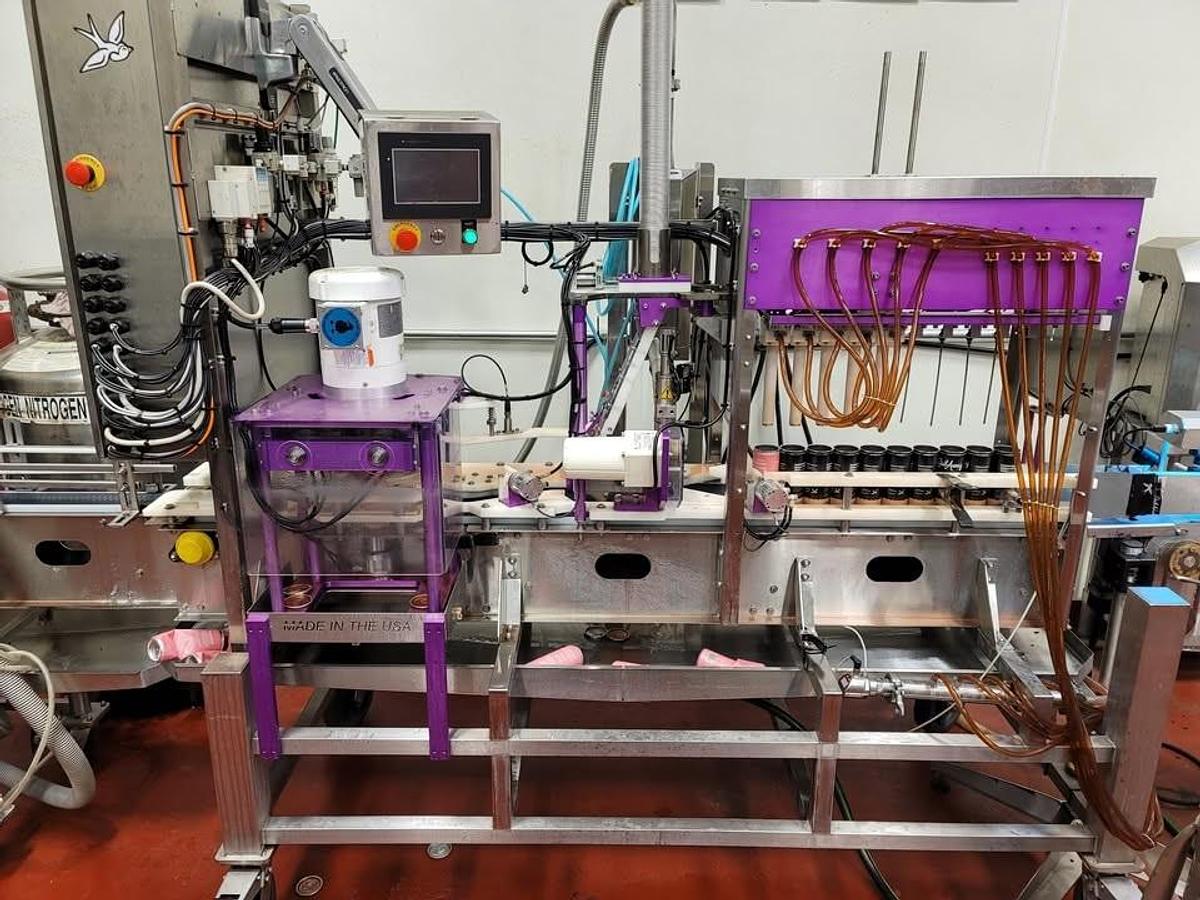
Roaring Fork canning lines are compact, semi-automatic to fully automatic canning systems designed primarily for small to mid-size craft beverage producers. The brand has built a reputation in the craft segment for offering lines that fit the footprint and throughput needs of breweries, cideries, hard seltzer producers, kombucha brands, and juice companies that are not yet running at large commercial volumes. These systems typically include a filler, seamer, and various ancillary components that can be configured based on the producer's specific output goals.
Because of their practical fit for smaller operations, Roaring Fork lines are commonly sought on the used equipment market by startups and growing craft brands looking to bring canning in-house without the capital outlay of purchasing a large-scale line. Used units are available through specialized machinery dealers and can represent a cost-effective path to in-house canning capability, provided the buyer carefully evaluates the machine's condition, service history, and configuration before purchasing.
What production capacity can you expect from a Roaring Fork canning line?
Roaring Fork canning lines are generally positioned in the lower-to-mid throughput range, which suits their target market of craft and startup beverage producers. Entry-level configurations typically operate in the range of 30 to 60 cans per minute (CPM), while more fully configured or higher-spec models can push toward 100 to 120 CPM depending on the specific setup, can size, and how well the line has been maintained. Actual throughput in a production environment will also depend on operator experience, product viscosity, and line efficiency.
When evaluating a used Roaring Fork line, buyers should ask the dealer for the rated CPM of that specific model and, where possible, request documentation or video of the machine running. Keep in mind that a used line's real-world output may differ from its rated capacity depending on wear, component condition, and whether any parts have been replaced or modified over its service life. Understanding the gap between rated and realistic throughput is an important part of calculating whether a particular unit fits your production plan.
What can sizes and formats does a Roaring Fork canning line support?
Most Roaring Fork canning lines are designed to handle standard aluminum beverage can formats, with 12 oz (355 ml) being the most common. Many configurations also support 16 oz (473 ml) cans, which are popular in the craft beer and hard seltzer markets. Compatibility with slim cans, sleek cans, or smaller formats like 8 oz depends on the specific model and whether the line was originally set up with the appropriate change parts for those formats.
When purchasing a used Roaring Fork canning line, it is important to confirm exactly which can sizes are included with the machine and whether change parts for additional formats are part of the sale. Change parts, which include format-specific components for the filler, seamer, and conveyor, can be expensive to source separately. Buyers should ask the dealer to clearly document which sizes the machine is currently set up for and whether any additional tooling is available.
What is nitrogen purging on a canning line, and why does it matter for beverage quality?
Nitrogen purging is a process used during canning to displace oxygen from the can before and during filling. Dissolved oxygen (DO) pickup is one of the most significant quality concerns in beverage canning, particularly for beer, hard seltzer, and other oxygen-sensitive drinks. Even small amounts of oxygen introduced during filling can accelerate staling, cause off-flavors, and dramatically shorten shelf life. Nitrogen purging, sometimes combined with CO2 pre-purging, is the standard method used to minimize DO pickup and protect product quality.
A Roaring Fork canning line configured with nitrogen purge capability is specifically equipped to address this concern, making it a more suitable choice for producers of beer, craft seltzer, cider, and similar beverages where shelf stability is critical. When evaluating a used line with this feature, buyers should verify that the purge system components, including valves, manifolds, and nozzles, are intact and functional. Asking the dealer for a video inspection of the purge system in operation is a reasonable step before committing to a purchase.
Is a Roaring Fork canning line a good fit for a small craft brewery or beverage startup?
For small craft breweries and beverage startups, a Roaring Fork canning line can be a practical choice, particularly when purchased on the used market at a lower price point than a large-scale commercial system. The throughput range of these lines aligns well with production volumes common at taproom-focused breweries, small regional brands, and startups that are scaling from contract canning to in-house production. Bringing canning in-house eliminates per-can fees paid to co-packers and gives the producer direct control over quality and scheduling.
That said, a startup should go into the purchase with a clear-eyed assessment of total cost of ownership. The purchase price of the used equipment is only one part of the equation. Installation, electrical and utility hookups, operator training, consumables like lids and CO2 or nitrogen, and ongoing maintenance all add to the real cost. Buyers should also factor in the learning curve involved in operating a canning line, since staffing and training time can affect how quickly the line reaches efficient production output.
What beverages can be processed on a Roaring Fork canning line?
Roaring Fork canning lines are primarily designed for carbonated beverages, with beer, hard seltzer, and cider being the most common products run on these systems. The nitrogen purge and counter-pressure filling technology found on many configurations is particularly well-suited to carbonated drinks that are sensitive to oxygen exposure. Craft breweries and cideries have historically been the core users of this equipment, and the line's design reflects those production priorities.
That said, producers of non-carbonated beverages like cold brew coffee, juice, kombucha, and energy drinks have also used similar canning line formats, though the specific filling technology and seaming requirements may differ. Before running a non-carbonated or high-particulate product on a used Roaring Fork line, buyers should confirm that the filler head configuration and valve type are compatible with that product. Consulting with a canning equipment technician or the machine's manufacturer about product compatibility is a worthwhile step, especially for beverages outside the standard carbonated beer and seltzer profile.
What components are typically included in a complete Roaring Fork canning line?
A complete Roaring Fork canning line generally includes a can filler, a seamer, and a conveyor system to move cans through the process. Higher-spec configurations may also include a can rinser or inverter to clean cans before filling, a lid feeder, a nitrogen doser, a date coder, and a can warmer or tunnel pasteurizer depending on the product. Some setups may also include a depalletizer for automated can feeding, though this component is more common on larger commercial lines.
When purchasing a used Roaring Fork line, buyers should request a detailed inventory of every component included in the sale. Used lines are sometimes sold with missing or substituted parts, and the cost of sourcing replacement components can add up quickly. It is also worth asking whether the line was previously run as a complete integrated system or whether components were added from different sources, since mixed configurations can sometimes create compatibility or timing issues that require additional setup work before the line runs efficiently.
What should buyers know about parts and technical support for a used Roaring Fork canning line?
Parts and technical support availability is one of the most important factors to research before purchasing any used canning line, and Roaring Fork equipment is no exception. The age and model of the specific machine will have a direct bearing on what support is available from the manufacturer. Older models may have limited parts availability or may require custom fabrication for certain wear components. Contacting Roaring Fork directly before completing a purchase is a practical step to understand what service, parts, and technical documentation they can provide for the specific unit in question.
Buyers should also ask the selling dealer about the machine's service history, including any repairs, part replacements, or modifications that were made during its working life. A dealer who specializes in beverage and canning equipment will typically be better positioned to answer these questions accurately than a general industrial machinery reseller. Since used equipment is sold as-is without manufacturer warranties, the buyer's due diligence during the inspection and evaluation phase is the primary protection against purchasing a machine with unknown mechanical issues.
How should buyers inspect a used Roaring Fork canning line before purchasing?
Inspecting a used canning line before purchase is critical, and reputable dealers will typically accommodate in-person inspections, video walkthroughs, or video captures of the machine. If the equipment is still installed at a production facility, it may be possible to arrange an inspection while the line is operational, which gives the buyer a direct view of how the machine runs under real conditions. If the line has been decommissioned, a thorough visual inspection of all major components, including the filler, seamer, conveyor, and purge system, should still be conducted.
Buyers should pay particular attention to wear on high-contact components like seaming rollers, filler valves, and conveyor belts, since these parts affect both product quality and ongoing maintenance costs. It is also worth asking for any available documentation, including manuals, maintenance logs, and records of past repairs. Keep in mind that most used equipment dealers do not have the permitting or facilities to run actual production test fills, so verifying mechanical function through visual inspection and direct questioning is the practical standard. Engaging an independent canning equipment technician to assist with the inspection is a reasonable investment for a significant purchase.
What are the typical shipping and payment considerations when buying a used Roaring Fork canning line?
Canning lines involve multiple components and can be substantial in size and weight, which makes shipping logistics an important part of the total purchase cost. Machinery should be carefully packaged, palletized, or crated to prevent damage in transit, and the level of packaging required will affect shipping costs. Larger or heavier components may require professional rigging for safe loading and unloading, which adds to the overall landed cost of the equipment. Buyers should ask the dealer specifically about how the equipment will be packaged, what rigging is involved, and what the estimated freight costs are before finalizing the purchase.
On payment terms, most used equipment dealers require full payment prior to shipping. Some dealers may offer extended terms to repeat customers, but this is not standard practice across the industry. Buyers should clarify payment expectations early in the negotiation process and factor all shipping, rigging, and handling costs into their budget alongside the purchase price. Getting a clear picture of the full landed cost, meaning the total amount spent to get the machine operating at your facility, is essential for an accurate return-on-investment calculation.