Category
Manufacturer
Model
Risco
Risco is a well-established name in the meat and dairy processing sectors, known for its comprehensive range of equipment including slicers, fillers, and vacuum packaging machines. Their technology is designed to enhance product quality and operational efficiency.
FAQ:
What types of Risco meat processing equipment are commonly available on the used market?
Risco produces a broad range of meat and dairy processing machinery, and used examples of most of their major product lines surface regularly through specialized equipment dealers. The most sought-after categories include vacuum stuffers from the RS series, sausage linkers, portioning attachments, horizontal paddle blenders, clipping machines, slicers, fillers, and vacuum packaging machines. Fully automated sausage production lines also appear on the used market, though less frequently than individual machines.
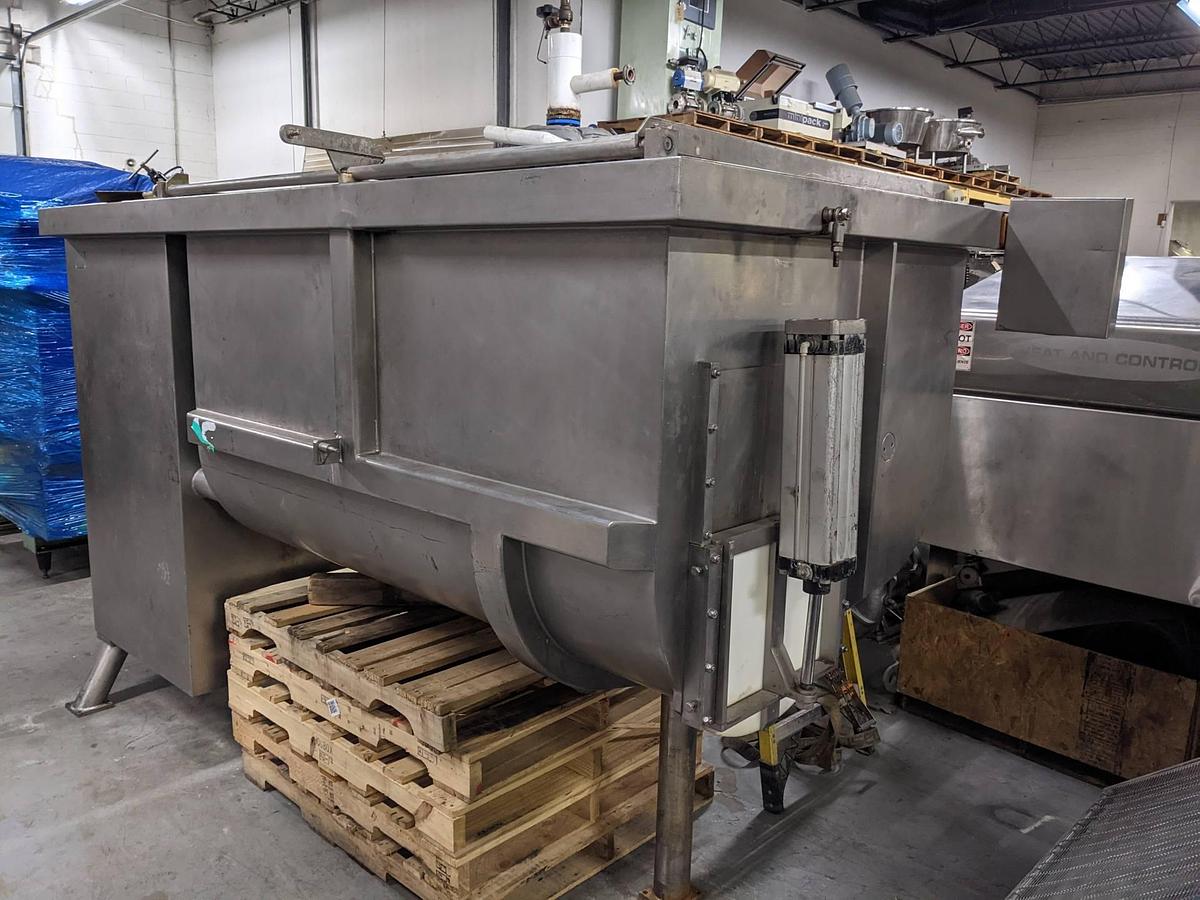
Specific models like the RS2200 Horizontal Paddle Blender illustrate the kind of heavy-duty, production-grade equipment that changes hands in the secondary market. Risco's product lineup spans both artisan-scale and industrial-scale applications, so buyers searching for used equipment will find machines suited to a range of throughput requirements. Because Risco has been manufacturing for decades and their machines are built to last, well-maintained used units can represent strong value compared to purchasing comparable machinery at full retail pricing.
What is Risco's reputation in the meat processing industry?
Risco is an Italian manufacturer widely regarded as one of the premium brands in meat processing equipment, particularly for vacuum stuffing and sausage production systems. The company has built its reputation on engineering precision, hygienic design, and the ability to serve both small artisan butcher shops and large industrial processing facilities with the same product lines. Their machines are frequently cited for consistent portioning accuracy, durable stainless steel construction, and compliance with hygiene standards including HACCP and CE marking.
In professional meat processing circles, Risco vacuum stuffers are especially well-regarded because of their ability to eliminate air pockets during the filling process. Air pockets in sausage and cased meat products are a significant quality problem, causing texture inconsistencies, premature spoilage, and poor appearance at the retail level. Risco's vacuum technology addresses this directly, which is a primary reason their equipment commands strong demand on the used market even after years of production use. Buyers evaluating used Risco equipment are generally acquiring machines with a solid engineering foundation and an established global service and parts network.
What is the difference between Risco vacuum stuffers and standard (non-vacuum) stuffers?
The core difference comes down to what happens to the air inside the meat mixture during the filling process. A standard stuffer forces product through a nozzle into a casing without actively removing trapped air. This means air pockets can form inside the finished product, which weakens the casing, creates voids in the texture, and accelerates oxidation that shortens shelf life. For high-volume or quality-focused production, this is a meaningful limitation.
Risco vacuum stuffers apply a vacuum to the product chamber before and during filling, drawing out trapped air before the meat paste is extruded into the casing. The result is a denser, more uniform product with better texture, improved color retention, and a longer shelf life. This matters especially for products like fine-ground sausages, emulsified meats, and any application where appearance and consistency at the point of sale are critical. The vacuum system also reduces the mechanical stress on casings, which can lower breakage rates on high-speed production lines. These performance advantages explain why Risco vacuum stuffers are consistently preferred over basic stuffers in both artisan and industrial settings, and why used Risco vacuum stuffers tend to hold their value well in the secondary market.
Are used Risco machines suitable for small butcher shops, or are they designed only for large industrial facilities?
Risco has intentionally designed their product range to span a wide spectrum of production scales, which is one of the reasons the brand is found in environments as different as a neighborhood butcher and a large-scale sausage manufacturer. Their modular approach means that many machines can be configured with different attachments and throughput settings to match the volume needs of a smaller operation. Entry-level and mid-range RS series stuffers, for example, are regularly used in artisan and retail butcher environments where production runs are measured in hundreds of kilograms per day rather than tens of thousands.
For a small butcher shop considering used Risco equipment, the key considerations are machine capacity, footprint, and whether the specific model suits the types of products being made. A used Risco stuffer or blender acquired through a reputable dealer can give a small operation access to industrial-grade build quality and hygiene standards that would otherwise require a much larger capital investment. Buyers should ask dealers for the production specifications of any specific used model they are evaluating to confirm it fits their actual throughput requirements, since the Risco lineup includes machines with very different capacity ratings.
What should buyers know about purchasing used Risco equipment without a manufacturer warranty?
Used meat processing equipment, including Risco machines, is typically sold on an as-is basis by equipment dealers. Manufacturer warranties are generally tied to the sale of equipment directly from the manufacturer or an authorized distributor and do not transfer through the secondary market. This places the responsibility for assessing a machine's condition squarely on the buyer, which makes the choice of dealer and the quality of the pre-purchase inspection critically important.
Buyers should prioritize dealers who specialize in food processing or meat processing equipment specifically, as they are better positioned to accurately describe a machine's condition and history. Before committing to a purchase, request an in-person inspection or, at minimum, a detailed video walkthrough of the machine in its current state. It is also worth contacting Risco directly to ask about parts availability and technical support for the specific model and approximate age of the machine being considered, since older or discontinued models may have more limited support options. Selecting a dealer with a long track record in the industry adds a meaningful layer of assurance even in the absence of a formal warranty.
What maintenance does Risco sausage stuffing and blending equipment typically require?
Risco equipment is designed with stainless steel construction and disassembly-friendly components specifically to support the rigorous daily cleaning that meat processing environments require. Routine maintenance for stuffers and blenders generally includes thorough cleaning and sanitization after each production run, inspection and lubrication of moving parts on a scheduled basis, and regular checks of seals, gaskets, and vacuum components that wear over time. For vacuum stuffers in particular, the vacuum pump and associated seals are components that require consistent attention since degraded seals will reduce vacuum performance and product quality.
On used machines, buyers should factor in the likelihood that wear components such as seals, blades, and drive belts may need replacement depending on how heavily the machine was used in its previous production environment. Asking the dealer for any available service history or maintenance records is worthwhile, even if such records are not always available for used equipment. Risco maintains a parts and service network, and buyers should verify with the manufacturer that parts are still readily available for the specific model they are purchasing. Establishing a relationship with a qualified technician familiar with Risco equipment before the machine arrives is a practical step that can reduce downtime during commissioning.
Can buyers get replacement parts and technical support for used Risco equipment?
Risco, as an established manufacturer with a global customer base, generally supports their equipment lines with parts and technical documentation for a significant period after production. However, the level of support available for a specific used machine depends heavily on its age and model. Buyers should contact Risco or their regional distributor directly before purchasing a used machine to confirm that replacement parts are currently available and to understand what technical support resources exist for that model. This step is especially important for older machines that may be approaching or past the end of their supported service life.
Used equipment dealers who specialize in meat processing machinery can also be a practical resource for sourcing parts, since they sometimes carry spare components for the brands they sell. When evaluating a used Risco machine, it helps to identify which components are most likely to need replacement in the near term, such as vacuum pump seals, stuffing tubes, or portioning attachments, and to confirm availability and approximate cost before finalizing the purchase. Having clarity on parts access before buying avoids the frustrating and costly situation of acquiring a machine that cannot be kept running due to unavailable components.
What capacity options exist across the Risco meat processing equipment lineup?
Risco produces machines across a considerable range of output capacities, which is a significant part of their appeal in markets ranging from small-scale artisan production to high-throughput industrial processing. Vacuum stuffers in the RS series, for example, are available in configurations suited to operations filling a few hundred kilograms per hour up to continuous-feed industrial systems capable of processing several thousand kilograms per hour. Blending equipment like the RS2200 Horizontal Paddle Blender is built around a 30HP motor, indicating the kind of heavy-duty throughput capacity that supports serious production volumes. Portioning attachments and linkers similarly vary in their cycle rates and portion-weight ranges.
For buyers evaluating used Risco equipment, capacity is one of the most important specifications to verify before purchasing. A machine that is oversized for an operation's actual production volume adds unnecessary cost and can be harder to justify maintaining, while an undersized machine creates production bottlenecks. Dealers should be able to provide the original manufacturer specifications for any machine listed for sale, including rated throughput, hopper capacity, and motor specifications. Cross-referencing those figures against current and projected production requirements is a basic but essential step in selecting the right used Risco machine for a specific facility.
What should buyers expect regarding shipping and logistics when purchasing used Risco processing equipment?
Meat processing equipment like Risco blenders, stuffers, and packaging machines ranges considerably in size and weight, and the logistics involved in moving used machinery are more complex than standard freight shipments. Smaller tabletop units may ship on standard pallets with appropriate blocking and bracing, while larger floor-standing machines often require custom crating to prevent damage in transit. Buyers should ask the dealer specifically what packaging method will be used and whether crating costs are included in the listed price or billed separately, since this can meaningfully affect the total landed cost of the equipment.
For heavier Risco machines, rigging may be required at both the origin and destination to safely load and unload the equipment. Rigging costs are typically the buyer's responsibility and should be arranged in advance, particularly if the receiving facility does not have a loading dock or forklift access. Getting a clear picture of all costs involved, including freight, rigging, and any required installation or commissioning services, before finalizing a purchase helps avoid budget surprises. Most used equipment dealers require full payment prior to shipping, so confirming all cost components upfront is especially important.
How should buyers inspect used Risco equipment before purchasing?
Inspecting used meat processing equipment thoroughly before committing to a purchase is one of the most important steps a buyer can take, given that used machines are sold without warranties and condition varies significantly based on prior use and maintenance history. Reputable dealers will typically accommodate in-person inspections at their facility, or can arrange video inspections and provide detailed photo documentation of the machine's current condition. In some cases, a machine may still be installed and operating at the facility where it was used, in which case the dealer can often coordinate an on-site visit between the buyer and the current owner.
During an inspection, buyers should look closely at wear components like seals, blades, stuffing tubes, and vacuum pump condition on Risco stuffers, as well as the overall condition of stainless steel surfaces, welds, and any electronic controls or displays. Keep in mind that dealers generally cannot run production tests, since operating a food processing machine in a production capacity requires permits and a compliant facility that most equipment dealers do not maintain. The inspection is therefore focused on mechanical condition, completeness of components, and visible evidence of wear or damage rather than a live production trial. For high-value purchases, some buyers choose to engage an independent equipment appraiser or technician familiar with Risco machinery to conduct or accompany the inspection.