Category
Manufacturer
Model
FAQ:
What types of Richpeace machinery are commonly available on the used market?
Richpeace Group Co., Ltd. produces a broad range of industrial textile and garment manufacturing equipment, and many of these machine types circulate regularly on the used market. The most commonly available categories include computerized embroidery machines, automatic sewing systems, quilting machines, spreading and cutting machines, and garment CAD/CAM systems. Face mask manufacturing lines have also appeared on the used market in recent years following increased production demand during the pandemic period. Richpeace's product catalog spans equipment suited to garment manufacturing, home textile production, automotive upholstery, and footwear manufacturing, so buyers from a wide range of industries may find relevant equipment.
When shopping for used Richpeace machinery, it pays to be specific about the model series and configuration you need, since capabilities can vary significantly across generations and product lines. Computerized embroidery machines, for example, range from single-head units suited to smaller operations all the way to large multi-head systems designed for high-volume production. Spreading and cutting machines similarly come in varying widths and automation levels. Knowing your production requirements before you start searching will help you filter listings more efficiently and avoid purchasing a machine that technically works but does not fit your workflow.
What industries use Richpeace industrial machinery?
Richpeace equipment is used across a surprisingly wide range of manufacturing sectors. The most common application is apparel and garment production, where the company's automatic sewing systems, embroidery machines, and CAD/CAM cutting solutions are staples on factory floors. Home textile manufacturers rely on Richpeace quilting machines for bedding, pillows, and upholstered goods. The automotive industry uses the brand's sewing and cutting equipment for seat covers, door panels, and headliners. Footwear manufacturers also use Richpeace machinery for upper assembly and stitching operations.
Beyond these core sectors, Richpeace equipment has found its way into technical textile production, personal protective equipment manufacturing (including face mask lines), and luggage and bag production. The brand's geographic reach is substantial, with machinery exported to over 100 countries, which means used units appear in markets across Asia, Europe, the Americas, and beyond. Buyers sourcing used equipment should verify that the specific machine model they are considering is appropriate for their material type and production volume, since some Richpeace models are optimized for light fabrics while others are built for heavier industrial materials.
How does Richpeace compare to European industrial sewing and embroidery machine brands?
Richpeace occupies a mid-to-high range position in the global industrial textile machinery market. Compared to premium European brands like Tajima, ZSK, or Barudan in the embroidery segment, or Gerber and Lectra in the cutting and CAD space, Richpeace machines are generally priced lower while still offering computerized controls, automation features, and reasonable build quality. This positioning has made the brand popular in markets where capital budgets are tighter but production demands still require reliable automated equipment. Many manufacturers in developing markets have built entire production lines around Richpeace equipment precisely because it delivers technology at a more accessible price point.
On the used market, this price-to-capability ratio becomes even more favorable. A used Richpeace embroidery machine or quilting system can represent significant savings compared to a used European equivalent with similar specifications. The trade-off to consider is parts availability and technical support infrastructure, which tends to be more developed for European brands in Western markets. Buyers sourcing used Richpeace equipment should check with the manufacturer or local distributors about parts availability for the specific model and production year before committing to a purchase, since older or discontinued models may have limited support regardless of brand.
What should a buyer inspect when purchasing a used Richpeace machine?
Buying used industrial machinery requires a more thorough due diligence process than buying new equipment, and Richpeace machines are no exception. The inspection should cover mechanical condition, electronic and software systems, and the physical state of wear components. On sewing and embroidery machines, key areas to examine include needle bar assemblies, hook timing, thread tension mechanisms, and the condition of drive belts and motors. On cutting and spreading machines, buyers should check blade drive systems, vacuum table function, and the accuracy of the cutting head movement. For any computerized Richpeace machine, verifying that the control software is operational and that the machine responds correctly to programmed commands is essential.
Reputable used equipment dealers typically accommodate in-person inspections at their facility, or they can arrange video walkthroughs and recorded demonstrations for remote buyers. Some machines may still be installed at an active production facility, in which case the dealer can coordinate a plant visit so the buyer can see the equipment running under real production conditions. Keep in mind that most equipment dealers are not set up to run full production tests, since that requires different permitting and operational infrastructure. The goal of any inspection is to get an accurate, honest picture of the machine's current working condition. Buyers who cannot travel should request detailed video of the machine powering on, running through its operating cycle, and demonstrating any specific functions critical to their application.
Are spare parts available for used Richpeace machinery?
Parts availability for Richpeace machinery depends heavily on the model, the production year, and the buyer's geographic location. Because Richpeace is an active manufacturer with a global distribution network spanning over 100 countries, parts for current and recent model lines are generally accessible through authorized distributors. The company produces a wide range of machine types, and consumable parts like needles, bobbins, belts, and cutting blades are often available through third-party industrial suppliers as well, since many components are standardized across the industry.
For older or discontinued Richpeace models, the situation becomes more complex. Before purchasing a used machine, buyers are strongly advised to contact Richpeace directly or reach out to regional distributors to confirm whether replacement parts and technical documentation are still available for that specific model and serial number range. The age of the machine matters: a unit that is five years old is far more likely to have full parts support than one that is fifteen years old and has been out of production for a decade. Asking the seller for the machine's model number, serial number, and production year before committing to a purchase gives buyers the information they need to do this research proactively rather than discovering a parts shortage after the machine is already on their floor.
What is the typical price range for used Richpeace embroidery and sewing machines?
Pricing for used Richpeace machinery varies widely based on machine type, age, configuration, and condition. A used Richpeace single-head embroidery machine in working condition might sell for a few thousand dollars, while a large multi-head computerized embroidery system in good working order can command prices ranging from $10,000 to $40,000 or more depending on the number of heads and the complexity of the control system. Quilting machines, spreading and cutting systems, and automated sewing lines tend to carry higher price tags due to their size and mechanical complexity, with some complete production lines valued well into six figures.
Buyers should factor in more than just the purchase price when budgeting for used Richpeace equipment. Shipping costs for large industrial machines can be substantial, particularly for international shipments that require professional crating, rigging, and freight forwarding. Import duties and local taxes add to the landed cost in many markets. Installation and commissioning, which may require a qualified technician familiar with the specific machine type, is another expense to account for. Getting a clear picture of the total cost to have the machine running in your facility, not just the sticker price, is the right way to evaluate whether a particular used unit represents good value.
How is used Richpeace machinery typically shipped, and what are the logistics considerations?
Shipping industrial Richpeace machinery, particularly larger systems like multi-head embroidery machines, quilting lines, or cutting tables, requires careful planning and professional handling. Machines need to be properly disassembled where applicable, secured against movement, and packaged in appropriate crating or palletized enclosures to prevent damage during transit. The level of packaging required depends on the machine's size, fragility of its components, and the shipping method being used. Buyers should ask the seller for detailed information about how the machine will be packaged before agreeing to terms, since inadequate packaging is one of the most common causes of transit damage on used industrial equipment.
For large or heavy machines, professional rigging is typically required for both loading at the origin facility and unloading at the destination. Rigging costs are usually separate from freight charges and should be clarified upfront. International shipments add additional complexity, including customs documentation, import permits for machinery in some countries, and potential inspections at the port of entry. Most used equipment dealers require full payment before a machine is released for shipment. Buyers should request a complete breakdown of all costs, including packaging, rigging, freight, and any insurance options, to understand the true landed cost before finalizing the purchase.
What payment terms do used equipment dealers typically offer for Richpeace machinery?
The standard practice among used industrial equipment dealers is to require full payment before a machine is released for shipment. This applies to Richpeace machinery just as it does to any other brand of used industrial equipment. The reasoning is straightforward: once a machine leaves the dealer's facility, the seller has limited recourse if payment issues arise, and used equipment transactions do not carry the same buyer protections as consumer retail purchases. Wire transfer is the most common payment method for large industrial machinery purchases, though some dealers also accept credit cards for smaller transactions, often with a processing fee.
Some dealers extend more flexible terms to repeat customers with an established purchasing history, but buyers making a first purchase from a particular dealer should expect to pay in full upfront. For buyers concerned about the risk of paying before receiving the equipment, the best protection is selecting a dealer with a verifiable track record in the industry, checking references from past customers, and arranging a thorough inspection before payment is made. Conducting a pre-purchase inspection, whether in person or via video, is the most practical way to reduce risk in a full-payment-upfront transaction.
What is a Richpeace face mask manufacturing line, and what does it include?
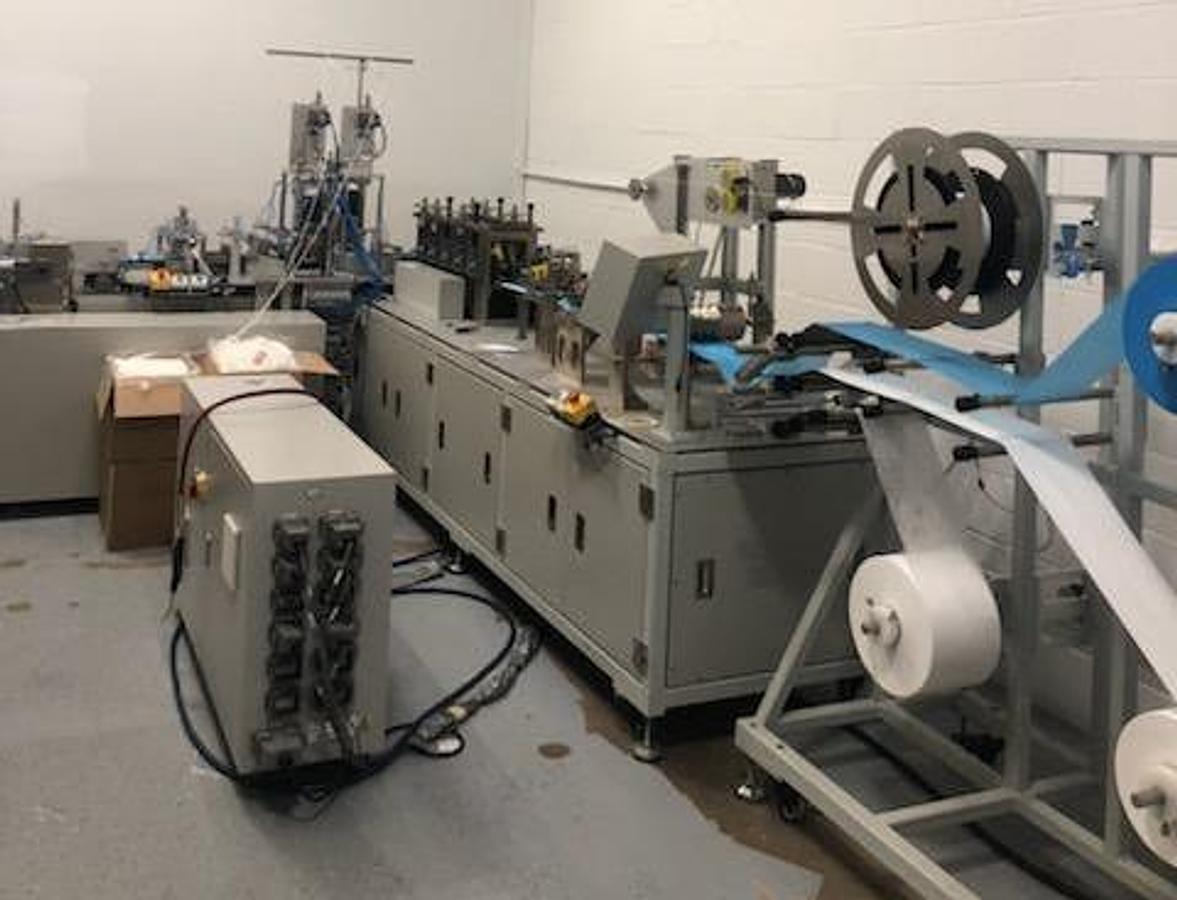
A Richpeace face mask manufacturing line is an automated production system designed to produce disposable or non-woven face masks at industrial scale. These lines typically integrate multiple automated processes into a single production flow, including material unwinding, nose wire feeding and insertion, ear loop welding or attachment, edge trimming, and finished mask output. Richpeace developed and expanded its mask line offerings significantly in response to global demand for personal protective equipment, and complete lines from this period have appeared on the used market as production demand normalized.
The specific capabilities of a used Richpeace mask line depend on the model and configuration. Some lines are designed for flat surgical-style masks, while others produce three-dimensional cup-style or KN95-type respirators. Output capacity varies by model, with some lines capable of producing several hundred masks per minute under optimal conditions. Buyers considering a used mask manufacturing line should verify which mask types the equipment is configured for, what materials it is designed to process, and whether the control systems and tooling are complete and functional. As with any used production equipment, a thorough inspection before purchase is the most important step in evaluating the machine's actual condition and production readiness.
How should a buyer evaluate a used equipment dealer selling Richpeace machinery?
The quality of the dealer matters as much as the condition of the machine itself when buying used industrial equipment. Since used Richpeace machinery is sold without manufacturer warranty coverage, the buyer's primary protection comes from choosing a dealer with a credible reputation and a track record of honest, accurate machine descriptions. Key things to look for include how long the dealer has been in business, whether they specialize in textile and garment manufacturing equipment (as opposed to general industrial machinery dealers with limited domain knowledge), and whether they can provide references from past buyers of similar equipment.
A reputable dealer will be transparent about a machine's condition, provide clear photos and video, accommodate inspection requests, and answer technical questions accurately rather than evasively. They should be able to provide the machine's model number, serial number, and production year, and they should have a clear process for packaging and shipping equipment safely. Buyers should also independently consult with Richpeace or its regional distributors to understand what level of technical support and parts availability they can expect for the specific model they are considering, since the dealer's role ends at the point of sale and ongoing support will depend on the manufacturer's network.