Category
Manufacturer
Model
Rheon
Rheon specializes in manufacturing food processing equipment, focusing on the bakery and snack food industries. Their machines, such as dough sheeters and forming systems, are known for their precision and versatility.
FAQ:
What is a Rheon encrusting machine and how does it work?
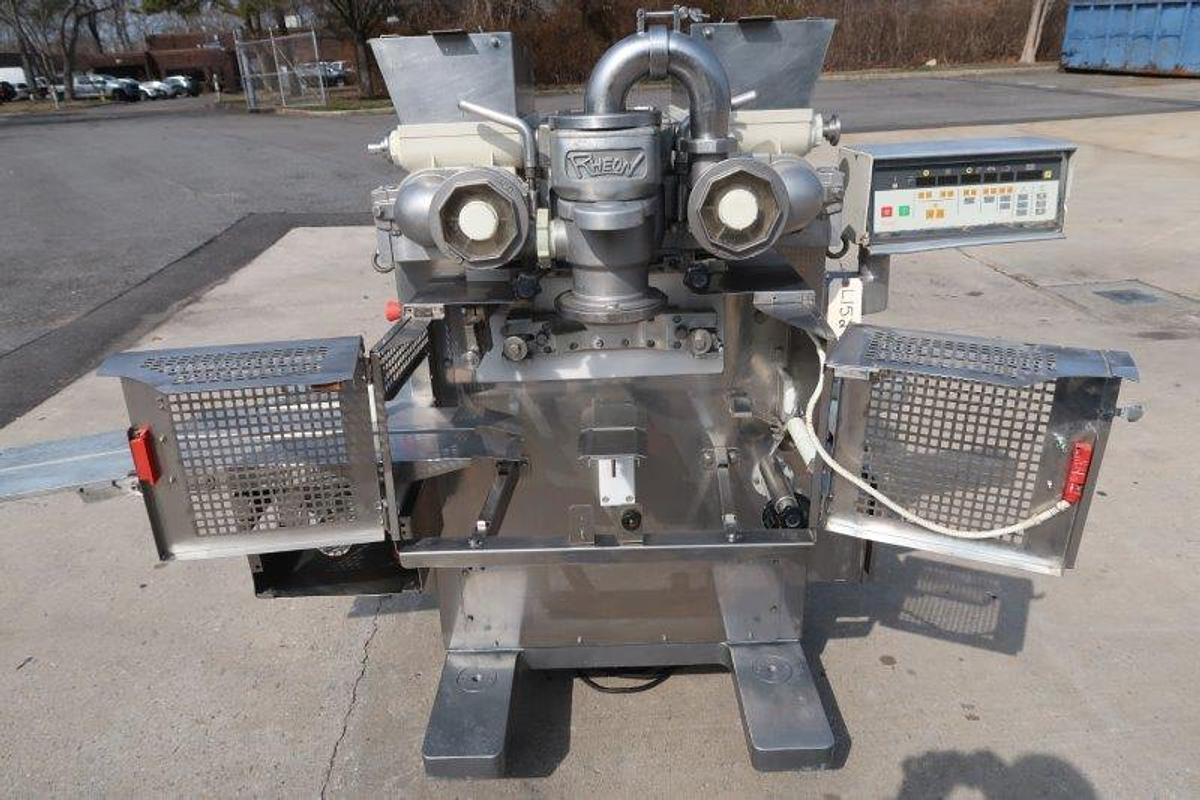
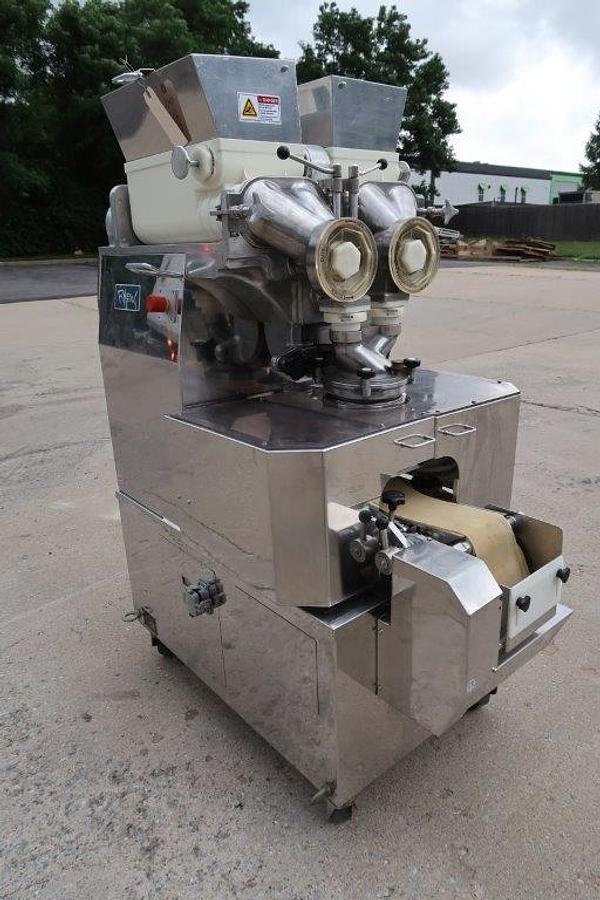
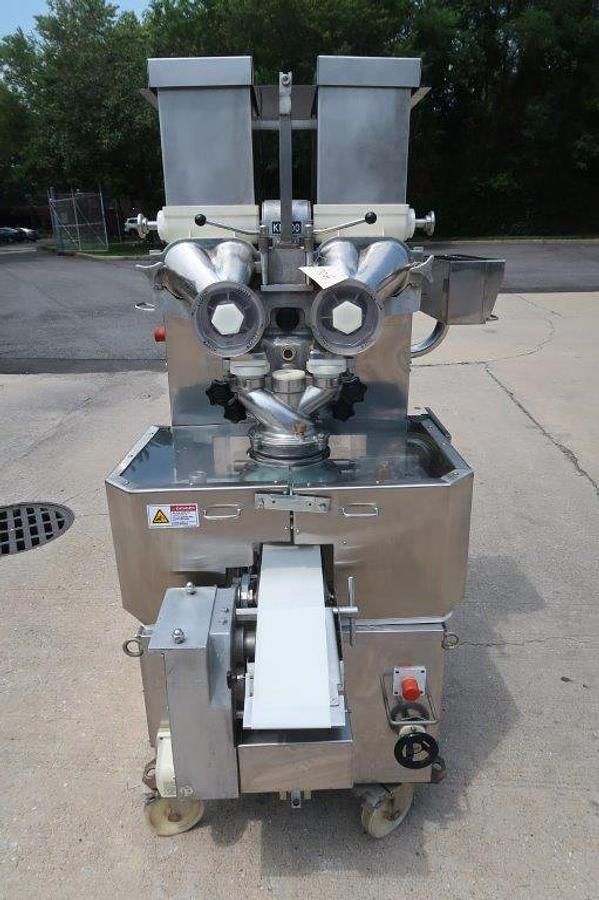
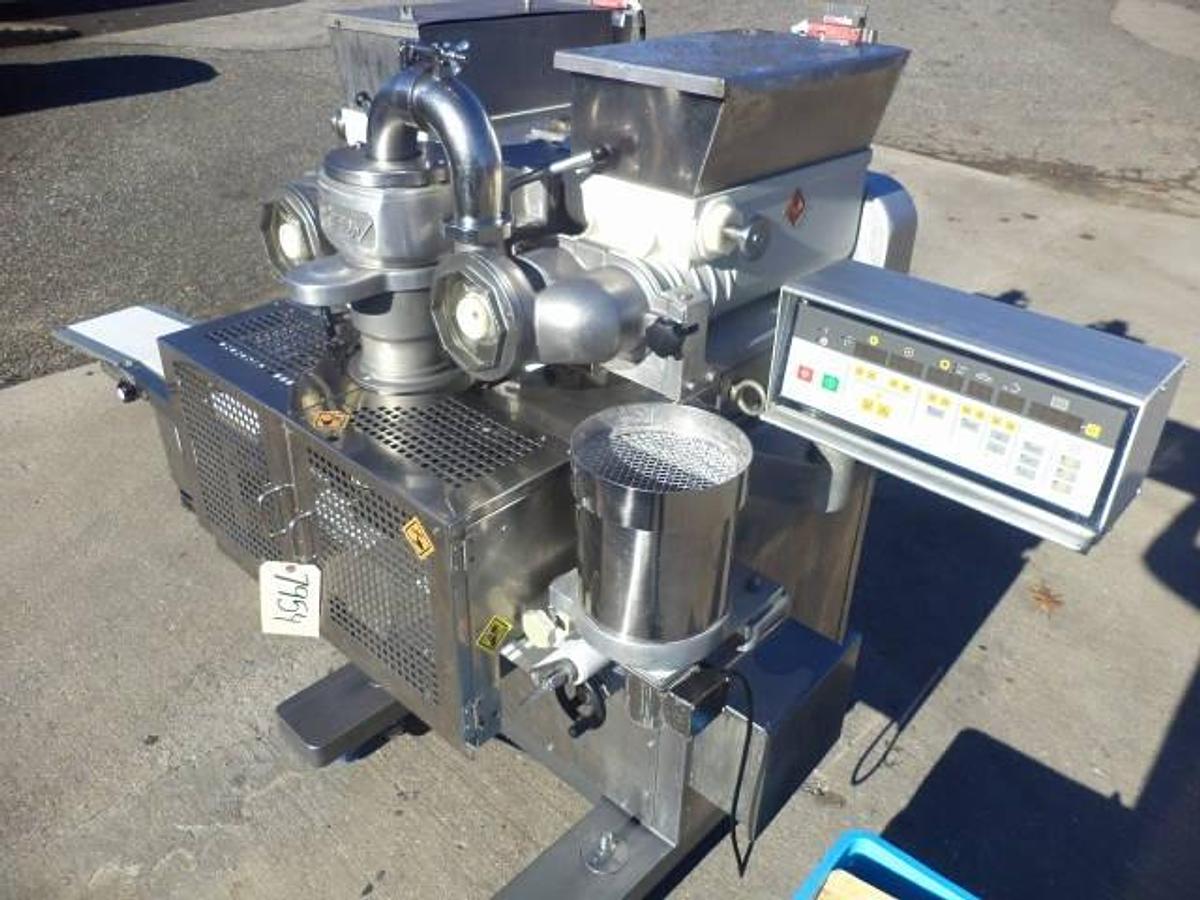
A Rheon encrusting machine is a food processing device that simultaneously forms an outer dough or pastry shell around an inner filling, producing a finished, shaped piece in a single continuous operation. The machine feeds two separate materials, the outer dough and the inner filling, through a co-extrusion nozzle system that wraps the shell evenly around the core before cutting and sealing each piece. Rheon's KN series machines are built around a stress-free dough handling principle, meaning the dough is moved and shaped with minimal mechanical stress, which preserves gluten structure and results in a better finished texture compared to conventional forming equipment.
These machines are used across bakery, confectionery, and food manufacturing to produce a wide range of filled products including mochi, mooncakes, bread rolls, meat pies, stuffed buns, and filled cookies. The encrusting process is fully automated, which reduces labor costs and delivers consistent piece weight, shape, and filling ratio across an entire production run. Because the outer and inner portions are fed independently, operators can adjust the ratio of shell to filling without stopping production, giving food manufacturers significant flexibility across different product formats.
What models of Rheon encrusting machines are commonly available on the used market?
The most frequently traded Rheon encrusting models on the used equipment market are from the KN series, which spans a range of production capacities and physical footprints. The KN200 Cornucopia is a compact, portable unit well suited to smaller bakeries or operations with limited floor space. The KN300 Cornucopia sits in the mid-range, offering more throughput while still being manageable for medium-scale production. The KN400 is one of the most widely recognized models in the series, available in both standard and portable configurations, and is capable of producing around 60 pieces per minute depending on product type and settings. The KN550 is a larger portable unit designed for higher-volume applications.
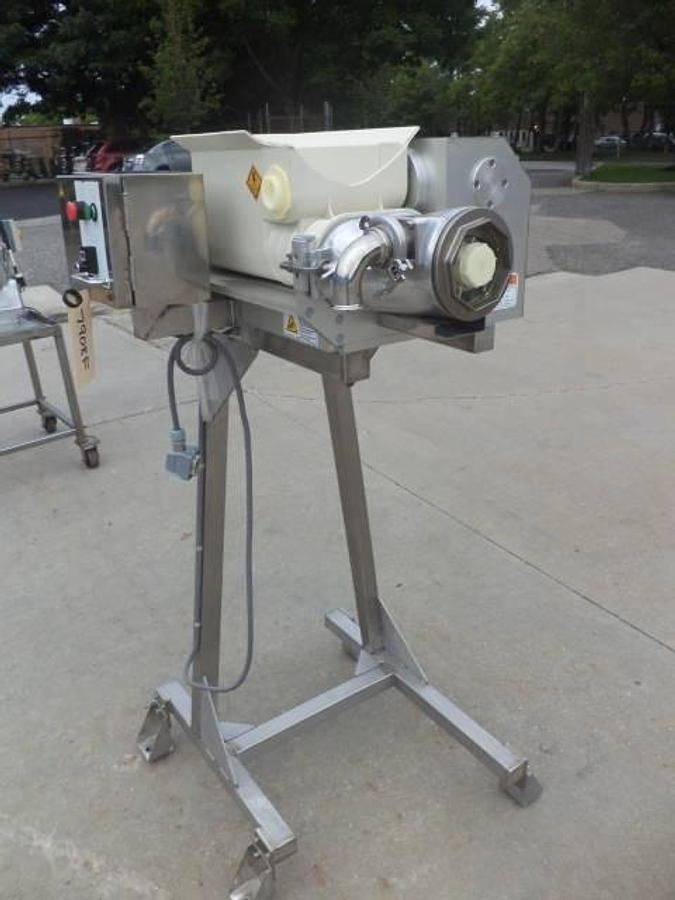
Beyond the core encrusting machines, ancillary equipment such as the Rheon Double Filling Feeder Screw Assembly also appears on the used market. This type of accessory allows operators to run dual fillings or more complex filling configurations through compatible encrusting machines. When shopping for used Rheon equipment, buyers will also occasionally find machines listed as parts units, which are machines that may not be fully operational but can serve as a valuable source of components for maintaining other machines of the same model. Understanding the distinction between a fully operational unit, a portable unit, and a parts machine is important before making a purchase decision.
What types of food products can be made with a Rheon encrusting machine?
Rheon encrusting machines are capable of producing a remarkably broad range of filled food products across both sweet and savory categories. On the sweet side, common applications include mochi, mooncakes, filled doughnuts, anpan (sweet bean buns), cream-filled pastries, chocolate-centered cookies, and various confectionery items with jam, fruit paste, or ganache cores. Savory applications are equally varied and include meat pies, stuffed bread rolls, cheese-filled buns, and similar products where a protein or vegetable filling is encased in a dough or pastry shell.
The versatility of these machines comes from their ability to handle a wide spectrum of filling viscosities and textures. Bean paste, cheese, ground meat, chocolate, cream, and jam can all be run through the filling feed system with appropriate setup and tooling. The outer shell material is similarly flexible, accommodating soft yeast doughs, rice-based doughs, short pastry, and other formulations depending on the model and configuration. This cross-category capability makes Rheon encrusting equipment attractive to food manufacturers who produce multiple product lines on the same production floor, since a single machine can often be adapted to handle different products by adjusting settings and swapping out nozzle components.
What is the production capacity of Rheon encrusting machines?
Production capacity varies considerably across the Rheon KN model range, and it also depends on the specific product being made, including piece weight, dough type, and filling ratio. At the lower end of the range, compact models like the KN200 are designed for smaller-scale or artisan production environments where output volume is secondary to flexibility and footprint. Mid-range models step up throughput meaningfully while remaining practical for medium-sized bakeries or food manufacturers. The KN400, one of the most common models found on the used market, is capable of producing approximately 60 pieces per minute under appropriate operating conditions, which translates to roughly 3,600 pieces per hour.
Larger industrial configurations within the KN series can achieve significantly higher outputs, and some multi-lane or high-speed setups are designed to produce thousands of pieces per hour in continuous operation. When evaluating a used Rheon machine, buyers should look closely at the rated capacity for the specific model and then factor in realistic production conditions, including changeover time, cleaning cycles, and operator proficiency. A machine running at 60 pieces per minute on a simple round bun format may run at a lower effective rate on a more complex product with a softer filling. Prospective buyers should ask sellers for documentation or prior production records where available to get a realistic picture of what throughput to expect.
What should buyers look for when inspecting a used Rheon encrusting machine?
Inspecting a used Rheon encrusting machine requires attention to both the mechanical condition and the completeness of the unit. Key areas to examine include the condition of the pump gears and auger assemblies, which are the components most subject to wear during normal production. The nozzle and die sets should be checked for damage or excessive wear, as these directly affect piece shape and consistency. Belts, conveyor surfaces, and sealing mechanisms should also be reviewed since worn or cracked components in these areas can affect product quality and may require immediate replacement. Electrical panels and control systems, particularly on older models, should be assessed to confirm they are functional and that replacement parts or service support are still accessible.
Used equipment dealers will typically offer in-person inspections, virtual walkthroughs, or video captures of the machine to give buyers an accurate view of its current condition. Some machines may still be in active production at a facility, which can actually be an advantage since the buyer can observe the machine running. Keep in mind that most dealers do not have the production permits required to run actual food product during an inspection, so functional testing is usually limited to confirming mechanical operation rather than full product trials. Buyers should also contact Rheon directly to understand what level of technical support, spare parts availability, and service documentation exists for the specific model and age of machine they are considering, since older models may have more limited manufacturer support.
What is the typical price range for used Rheon encrusting machines?
Pricing for used Rheon encrusting machines varies based on model, age, condition, and included accessories. Compact portable models like the KN200 tend to be priced lower than larger-capacity units, and machines listed as parts units will generally carry a significantly reduced price compared to fully operational machines. Mid-range models such as the KN300 and KN400 in good working condition typically represent the bulk of the used market inventory and are priced to reflect their production capability and the relatively high cost of equivalent equipment purchased directly from the manufacturer.
Because Rheon is a Japanese manufacturer known for precision engineering, even used machines in aged condition often retain meaningful resale value compared to lower-cost competing brands. Buyers should factor in the full landed cost of the equipment, not just the listed price. Shipping, rigging, crating, and any refurbishment or spare parts needed after delivery can add substantially to the total investment. Requesting a detailed quote from the seller that covers packaging, freight, and any applicable import duties is a practical step before committing to a purchase. Comparing the total landed cost against the cost of production downtime or the alternative of purchasing a less capable machine is a useful way to frame the buying decision.
How does Rheon's stress-free dough handling technology differ from conventional encrusting equipment?
Conventional dough forming and encrusting equipment typically uses mechanical pressure, rollers, or aggressive auger systems that compress and tear the dough structure during processing. This mechanical stress damages the gluten network, can cause uneven gas cell distribution, and often results in a denser, tougher finished product. Rheon's stress-free dough handling system, which is the foundation of the KN series machines, was designed specifically to move dough through the forming process without applying the kind of compressive force that degrades its structure. The system uses a gear pump mechanism that gently and continuously feeds dough at a consistent rate, maintaining the integrity of the gluten network throughout the encrusting process.
The practical benefit for bakers and food manufacturers is a finished product that more closely resembles hand-made quality in terms of texture, crumb structure, and volume. For yeast-leavened products in particular, preserving the gas cells and gluten structure during forming directly affects oven spring and final product height. For rice-based doughs used in products like mochi, the gentle handling prevents tearing and maintains the smooth, elastic exterior that defines a well-made piece. This technological differentiation is a significant reason why Rheon machines command a premium on both the new and used equipment markets, and why buyers in the bakery and confectionery industries specifically seek out Rheon equipment over less specialized alternatives.
Can used Rheon encrusting machines be integrated into an existing production line?
Rheon encrusting machines are designed to function as standalone units or as components within a larger automated production line. The output conveyor on most KN series machines can feed directly into downstream equipment such as proofers, ovens, fryers, or packaging lines, depending on the product. Many food manufacturers purchase a used Rheon encrusting machine as the centerpiece of a line and build the surrounding equipment around it, which is a practical approach given that the encrusting step is often the most technically demanding part of producing filled baked goods at scale.
Integrating a used machine into an existing line does require some planning around conveyor heights, belt speeds, and timing to ensure smooth product handoff between stations. Buyers should have accurate dimensional specifications for the machine before attempting to fit it into an existing layout. Rheon's modular design philosophy across the KN series means that accessories such as the Double Filling Feeder Screw Assembly can be added to expand capability without replacing the base machine. When purchasing used equipment for line integration, it is worth confirming with the seller which accessories and ancillary components are included in the sale, since missing parts can affect the machine's ability to perform specific functions that the buyer may be counting on.
What are the shipping and logistics considerations when buying a used Rheon encrusting machine?
Rheon encrusting machines, particularly the larger KN400 and KN550 models, are precision food processing machines that require careful handling during transit to avoid damage to sensitive mechanical components, control systems, and forming tooling. Sellers will typically palletize or crate the machine depending on the level of protection required for the shipping method and distance. The cost of packaging can vary significantly based on whether the machine is shrink-wrapped on a pallet, partially crated, or fully enclosed in a custom wooden crate, and buyers should ask for specifics on what packaging is included in the quoted price.
Larger machines may require forklift access or specialized rigging equipment for loading at the origin and unloading at the destination, which adds to the total shipping cost. Buyers should request a fully itemized freight quote that covers packaging, rigging, freight carrier charges, and any applicable fuel or delivery surcharges. For international purchases, import duties, customs brokerage fees, and compliance with food equipment import regulations in the destination country are additional cost factors that should be researched before finalizing a purchase. Getting a clear picture of the total landed cost, meaning the machine price plus every cost required to get it operational at the buyer's facility, is essential for making an accurate comparison between available options.
What payment terms are typical when purchasing used Rheon encrusting machines from a dealer?
Most used equipment dealers require full payment before a machine is released for shipping. This is standard practice in the used machinery industry and reflects the fact that once a machine has been shipped, the dealer has limited recourse if a buyer disputes the transaction. Payment is typically accepted by wire transfer, and buyers should confirm acceptable payment methods with the dealer early in the process to avoid delays. Some dealers extend credit terms or installment arrangements to established customers with a prior purchase history, but first-time buyers should generally expect to pay in full upfront.
Buyers should also be aware that the purchase price quoted by the dealer typically covers the machine itself, and that shipping, rigging, and crating costs are often billed separately once a freight quote has been obtained. Clarifying exactly what is and is not included in the purchase price before issuing payment prevents misunderstandings about what will be delivered. For higher-value machines, some buyers choose to use an escrow arrangement or work through a freight forwarder who can coordinate inspection and payment release, though this depends on the dealer's policies and the buyer's comfort level with the transaction. Selecting a dealer with a documented history of selling food processing equipment and verifiable past transactions is one of the most reliable ways to reduce risk when purchasing used machinery.