Category
Manufacturer
Model
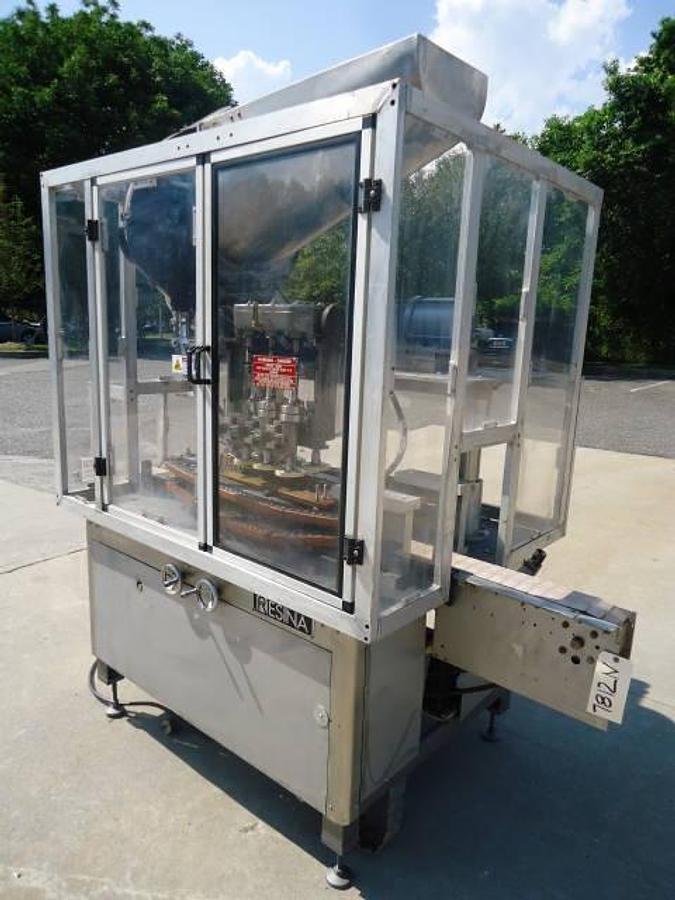
Resina
Resina specializes in manufacturing resin and plastic processing equipment, serving the automotive and consumer goods sectors. Their machines are recognized for their innovative designs that improve production efficiency.
FAQ:
What types of Resina equipment are commonly available on the used market?
Resina produces a range of capping and sealing machines that show up regularly on the used equipment market. The most commonly listed models include rotary capping machines like the U-50 and U-60, as well as multi-spindle screw capping machines such as the NRU30 six-spindle model, which is capable of running up to 150 caps per minute. These machines are built for high-volume production environments and are recognized for their precision torque application and ability to handle a wide variety of cap sizes and container types.
Beyond capping machines, Resina's broader catalog covers resin and plastic processing equipment used across automotive and consumer goods manufacturing. On the used market, availability changes frequently based on what facilities are decommissioning or upgrading, so buyers looking for a specific model should check with dealers regularly or set up alerts. Machines in good working condition from reputable dealers can offer significant cost savings compared to sourcing equivalent production capacity through other means.
What industries use Resina capping and sealing equipment?
Resina capping equipment is widely used across several manufacturing sectors where consistent, high-speed cap application is critical. The pharmaceutical, food and beverage, cosmetic, and chemical industries are the primary users, largely because Resina machines are engineered for precision torque control, which is essential when sealing containers that must meet tamper-evident or product-integrity standards. In regulated industries like pharmaceuticals, buyers should also verify whether a specific machine meets FDA and GMP compliance requirements before integrating it into a production line.
Beyond those core sectors, Resina's plastic and resin processing equipment serves automotive and broader consumer goods manufacturing. The brand's reputation for durable construction and relatively straightforward changeover procedures makes its machines attractive to any facility running multiple SKUs or switching between different bottle and cap formats on a regular basis. Used Resina equipment is particularly appealing to mid-sized operations that need reliable, proven machinery without the lead times associated with sourcing new production equipment.
What should I look for when buying used Resina equipment?
Condition assessment is the most important step when purchasing any used Resina machine. Buyers should request detailed photos, video walkthroughs, or an in-person inspection to evaluate the mechanical state of the equipment, including spindle condition, torque clutch wear, and the integrity of any conveyor or transfer components. Reputable used equipment dealers will typically accommodate in-person visits or virtual inspections, and in some cases the machine may still be running in an active production facility, which allows buyers to see it operating under real conditions.
Beyond the physical inspection, it is worth contacting Resina directly to understand what level of manufacturer support is available for the specific model and serial number in question. Older models or discontinued variants may have limited parts availability, which can affect long-term serviceability. Buyers should also confirm whether the machine's electrical configuration matches their facility's power supply, and whether any tooling or change parts needed for their specific cap and container sizes are included in the sale. Getting clarity on all of these details before committing to a purchase reduces the risk of unexpected costs after the machine arrives.
Does used Resina equipment come with a warranty?
Used equipment is typically sold on an as-is basis, which is standard practice across the used machinery industry. Warranties are generally only offered by equipment manufacturers on machines sold directly through their authorized channels. When purchasing through a used equipment dealer, the responsibility for evaluating the machine's condition falls on the buyer, which is why thorough pre-purchase inspections are so important.
To reduce risk, buyers should prioritize dealers with a long track record of selling industrial machinery and, where possible, those who specialize in packaging or processing equipment. A dealer's willingness to facilitate detailed inspections, provide accurate condition disclosures, and answer technical questions is a strong indicator of their credibility. Consulting with Resina's manufacturer support team about parts availability and service documentation for a specific model is also a practical step that helps buyers understand what they are taking on before finalizing a purchase.
How do I inspect a used Resina machine before buying?
Most used equipment dealers offer at least one of three inspection options: an in-person visit, a live video call walkthrough, or a recorded video of the machine. Each has its advantages. An in-person inspection is the most thorough option and is particularly valuable for complex capping machines where spindle alignment, clutch adjustment, and conveyor tracking are difficult to assess through video alone. If the machine is still installed at a production facility, the dealer may be able to arrange access so the buyer can observe it running under actual production conditions.
It is worth keeping in mind that most equipment dealers do not have the permits or infrastructure to run full production tests with actual product. A dealer can demonstrate that a machine powers on, that mechanical components move freely, and that controls respond correctly, but verifying output quality with a specific cap and container combination typically requires integration into the buyer's own facility. Buyers should use the inspection to focus on wear indicators, the condition of tooling and change parts, cleanliness, and any signs of prior damage or makeshift repairs. Bringing a qualified technician to the inspection, or having one review inspection videos, adds another layer of confidence before committing to a purchase.
Are replacement parts and technical support available for used Resina machines?
Parts availability for Resina equipment varies depending on the model and how long it has been in production. For widely used models like the U-50 and U-60 rotary cappers, there is generally a reasonable supply of wear components such as spindle wheels, torque clutches, and change parts available through the manufacturer and third-party suppliers. Less common or older models may have more limited support, which is why it is advisable to contact Resina directly before purchasing a used machine to get a clear picture of what is still stocked or can be fabricated.
Technical support is another area worth investigating before purchase. Resina, like most established equipment manufacturers, typically provides documentation and may offer service support, but the level of assistance available can depend on the age of the machine and whether it falls within a currently supported product line. Some buyers also work with independent packaging equipment technicians who are familiar with Resina's mechanical designs and can service machines without relying solely on the manufacturer. Factoring in the realistic cost of ongoing maintenance and parts sourcing is an important part of evaluating the total cost of ownership for any used capping machine.
What are the maintenance requirements for Resina capping machines?
Resina capping machines, like most rotary and multi-spindle cappers, require regular attention to a handful of key systems to maintain reliable performance. Spindle wheels and drive belts are wear items that need periodic inspection and replacement depending on run hours and the type of caps being applied. Torque clutches require calibration checks to ensure they are delivering consistent torque values, which is especially critical in pharmaceutical and food applications where under- or over-torquing can create compliance or product safety issues. Lubrication of bearings and drive components should follow the manufacturer's recommended schedule, which is typically outlined in the machine's service manual.
For used machines, it is common to perform a more thorough assessment at the time of purchase to identify any deferred maintenance before putting the equipment into production. This might include replacing worn spindle wheels, checking belt tension, cleaning and inspecting the cap feed system, and verifying that all safety guards and interlocks are functional. Resina's machines are generally regarded as mechanically straightforward, which makes them accessible to in-house maintenance teams with general packaging equipment experience. Having the OEM service manual on hand, which dealers or the manufacturer may be able to provide, is a significant advantage when setting up a preventive maintenance program for a used machine.
How does Resina equipment handle different cap and container formats?
One of the practical advantages of Resina capping machines is their changeover design. Models like the rotary cappers in the U-series are built to accommodate a range of cap sizes and container types through the use of interchangeable tooling and change parts. Operators can switch between formats by swapping out spindle wheels, guide rails, and cap chute components, which is a relatively straightforward process compared to some older capping equipment designs. This flexibility makes Resina machines well-suited to facilities running multiple product lines or contract packaging operations handling varied SKUs.
When purchasing a used Resina machine, buyers should confirm exactly which change parts are included in the sale, since tooling for specific cap and container sizes can be a meaningful added cost if it needs to be sourced separately. It is also worth verifying the machine's cap size range and torque specifications against the buyer's actual production requirements before purchase. A machine that handles the right cap diameter range and delivers torque within the required specification eliminates the need for costly modifications after delivery.
What are typical shipping and delivery considerations for used Resina equipment?
Shipping used capping and processing equipment requires more planning than standard freight because these machines are heavy, often have precision-machined components, and can be damaged if not properly secured for transit. Dealers will typically palletize or crate equipment before shipment, and the level of packaging required affects the overall shipping cost. Larger or heavier machines may need specialized rigging for loading at the dealer's facility and unloading at the buyer's location, which adds to the landed cost. Buyers should ask for a detailed breakdown of packaging, rigging, and freight charges before finalizing a purchase so there are no surprises.
Delivery timelines vary depending on the dealer's location, the buyer's facility, and the freight carrier used. Domestic shipments for smaller capping machines can sometimes move within a week or two of payment, while larger or more complex equipment requiring custom crating may take longer to prepare. International buyers face additional considerations including customs documentation, import duties, and compliance with local electrical standards. Clarifying all of these logistics with the dealer before purchase is the most reliable way to set accurate expectations for when the equipment will arrive and what it will cost to get it operational.
What payment terms should I expect when buying used Resina equipment from a dealer?
The standard practice among used equipment dealers is to require full payment before a machine is released for shipment. This applies to most transactions, particularly for first-time buyers. Some dealers extend payment terms to established customers with whom they have a prior purchasing history, but this is the exception rather than the rule and is typically arranged on a case-by-case basis. Buyers should not assume that financing or deferred payment options are available unless they have confirmed this directly with the dealer.
Accepted payment methods vary by dealer but commonly include wire transfer, which is the most widely used method for machinery transactions given the dollar amounts involved. Buyers should also factor in any applicable sales tax or use tax obligations based on their location, as these can add meaningfully to the total cost of acquisition. Getting a clear written quote that itemizes the equipment price, packaging and rigging fees, freight costs, and any applicable taxes before sending payment is a straightforward way to avoid misunderstandings and ensure both parties are aligned on the full transaction details.