Category
Manufacturer
Model
FAQ:
What types of Readco equipment are commonly available on the used market?
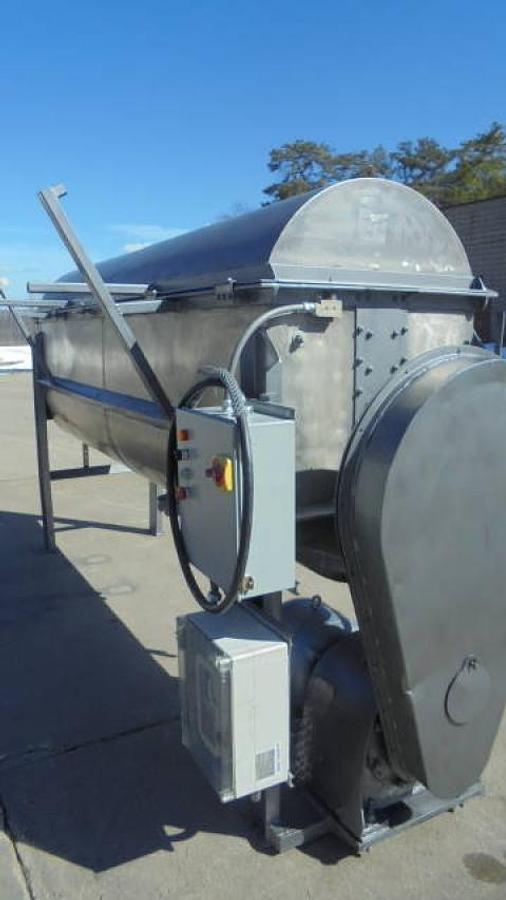
Readco Kurimoto manufactures a range of industrial mixing and processing equipment, and the used market reflects that variety. The most frequently available machines include continuous processors (twin-screw mixers), ribbon blenders, and batch mixers in various capacities. Ribbon blenders, for example, are available in sizes ranging from a few cubic feet up to 50 cubic feet or more, constructed in stainless steel for food-grade and pharmaceutical applications. Continuous processors show up regularly as well, particularly as manufacturers upgrade production lines or consolidate facilities.
Buyers will also encounter different configurations depending on the intended application, including single-shaft and double-ribbon designs, as well as machines with varying horsepower ratings and material contact surfaces. Stainless steel construction is common across most Readco equipment, which is part of why these machines hold up well over time and remain sought after on the secondary market. Checking listings carefully for model numbers and specifications is the best way to match available inventory to a specific processing need.
What industries use Readco continuous processors and mixers?
Readco equipment has found a home across a wide range of industries, largely because its continuous processor and twin-screw designs handle viscous, difficult-to-mix materials that other equipment struggles with. Food processing is one of the largest end-use sectors, where Readco machines are used for mixing doughs, pastes, batters, and other high-viscosity products. Pharmaceutical manufacturers rely on them for blending active ingredients with excipients, particularly in applications where consistent, repeatable mixing is critical to product quality.
Beyond food and pharma, Readco equipment is commonly found in chemical processing, adhesives manufacturing, plastics compounding, and battery materials production. The ability to handle both wet and dry inputs, combined with the continuous throughput design, makes these machines attractive anywhere that batch processing creates bottlenecks or inconsistency. This cross-industry demand is one reason used Readco equipment tends to move quickly when it becomes available, and why buyers in niche applications often seek out specific models rather than general-purpose alternatives.
Can Readco continuous processors handle both wet and dry mixing applications?
Yes, one of the defining characteristics of Readco continuous processors is their ability to handle both wet and dry materials, and to blend them together in a single pass through the machine. The twin-screw design creates intense mechanical action that disperses liquids into dry powders or incorporates dry ingredients into viscous carriers with a level of consistency that batch mixing often cannot match. This makes continuous processors especially useful for applications like slurry preparation, paste formation, and the incorporation of binders into dry blends.
The flexibility extends to a fairly wide viscosity range. Readco machines have been used for materials as thin as light pastes and as thick as stiff doughs or rubber compounds. That said, the specific screw configuration, barrel design, and motor size of a given machine will determine what viscosity range it handles best. Buyers evaluating used continuous processors for a specific application should review the machine's original design parameters and, where possible, consult with the manufacturer to confirm compatibility with their material and throughput requirements.
What should buyers inspect when evaluating used Readco equipment?
The most wear-prone components on Readco continuous processors and mixers are the barrel, screw elements, seals, drive motor, and gearbox. When evaluating a used machine, these are the areas that deserve the closest attention. Barrel wear affects mixing efficiency and can allow material to bypass the screws, reducing throughput and consistency. Screw elements should be examined for erosion, chipping, or uneven wear patterns, all of which indicate how hard the machine worked and what materials it processed. Seals and gaskets are relatively inexpensive to replace but their condition signals how well the machine was maintained.
The drive motor and gearbox represent a more significant cost if they need repair or replacement, so buyers should ask for any available maintenance records and request a powered demonstration where possible. Many used equipment dealers can arrange in-person or video inspections, and some machines may still be installed at the production facility where they last operated, allowing for a live demonstration. Keep in mind that most dealers do not have the permitting or infrastructure to run actual production trials, so inspections typically focus on mechanical condition rather than output quality. Buyers with specific performance requirements may want to involve a process engineer in the evaluation.
Does used Readco equipment come with a warranty?
Used industrial equipment, including Readco machines, is almost universally sold on an as-is basis by secondary market dealers. Warranties are typically only offered by equipment manufacturers on machines they produce and sell directly. When a machine changes hands through the used market, the buyer takes on the responsibility of assessing its condition prior to purchase, which is why a thorough inspection is so important.
Because there is no warranty safety net, selecting a reputable dealer with a long track record in industrial machinery is one of the most important decisions a buyer can make. Dealers who specialize in processing equipment tend to have a better understanding of what to look for in machines like Readco processors and can provide more accurate condition assessments than generalist surplus sellers. Buyers should also contact Readco Kurimoto directly to understand what parts and technical support are available for the specific model and age of machine they are considering, since older models may have limited parts availability.
What is the typical price range for used Readco equipment?
Pricing for used Readco equipment varies considerably based on machine type, size, age, condition, and configuration. Smaller ribbon blenders in the 5 to 20 cubic foot range tend to sell for a few thousand to tens of thousands of dollars, while larger capacity units or continuous processors with more complex drive systems can command significantly higher prices. A well-maintained 50 cubic foot stainless steel ribbon blender, for example, represents a meaningful capital investment even on the secondary market, reflecting both the machine's original cost and its remaining useful life.
Continuous processors and twin-screw systems generally carry higher price tags than batch blenders of comparable capacity, owing to their more complex mechanical design and the precision required in their manufacture. Buyers should factor in not just the purchase price but also shipping, rigging, any refurbishment needed, and installation costs to get an accurate picture of total landed cost. Getting quotes from multiple dealers and comparing machines at similar specifications is the most reliable way to gauge whether a given asking price is reasonable for the current market.
How does the continuous processor design compare to batch mixing for industrial applications?
Batch mixing processes one discrete load at a time, which means production is interrupted between cycles for loading, mixing, and discharging. Continuous processors like those made by Readco feed material in at one end and discharge finished product at the other in an uninterrupted stream. For high-volume production environments, this translates to significantly higher throughput without the downtime associated with batch changeovers. It also tends to produce more consistent output because every unit of material passes through the same mechanical action under the same conditions.
Batch processing still has its place, particularly for small runs, highly variable formulations, or applications where the entire batch needs to be held for quality testing before release. But for manufacturers running the same formulation at high volume, the continuous approach often reduces labor, energy consumption per unit of output, and variability in the finished product. This is why Readco continuous processors are so prevalent in industries like food, pharmaceuticals, and chemicals, where both throughput and consistency are non-negotiable. When evaluating used equipment, buyers should consider which processing model fits their production workflow before committing to either a continuous processor or a batch blender.
Are replacement parts available for older Readco machines?
Parts availability for used Readco equipment depends on the age and model of the machine. Readco Kurimoto, as an active manufacturer, does support many of its equipment lines, but older or discontinued models may have limited availability for certain components. Wear parts like screw elements, barrel liners, and seals are the items most frequently needed, and sourcing them becomes more challenging as machines age. Before purchasing a used Readco processor or blender, it is worth contacting the manufacturer directly to ask about parts support for that specific model and serial number.
In some cases, third-party machining shops can fabricate replacement wear components to original specifications, which extends the serviceable life of older machines. The gearbox and drive motor are typically sourced through industrial drivetrain suppliers rather than the equipment manufacturer, so those components are generally easier to address. Buyers should treat parts availability as a key due diligence item, not an afterthought, since a machine that cannot be maintained is only as good as its current condition at the time of purchase.
What are the typical shipping and logistics considerations for purchasing used Readco equipment?
Readco equipment, particularly larger continuous processors and ribbon blenders, is heavy industrial machinery that requires careful handling from the moment it leaves the seller's facility. Proper packaging is essential to prevent damage in transit. Depending on the size and configuration of the machine, this may involve custom crating, blocking and bracing within a container, or specialized skidding. The level of packaging required directly affects shipping costs, and buyers should ask for a detailed breakdown of palletization or crating charges before agreeing to a purchase.
Larger machines typically require professional rigging for both loading at the origin and unloading at the destination. Rigging involves cranes, forklifts, and experienced personnel, and it represents an added cost that is easy to overlook when comparing equipment prices. Buyers should request a full landed cost estimate that includes the equipment price, packaging, freight, and rigging at both ends. For international shipments, customs documentation and import duties add another layer of complexity. Most reputable dealers can help coordinate logistics or provide referrals to freight specialists experienced with industrial machinery.
What payment terms should buyers expect when purchasing used Readco machinery?
Most used industrial equipment dealers require payment in full before a machine is released for shipping. This is standard practice across the secondary market and reflects the dealer's need to confirm funds before committing to the logistics of preparing and shipping a large piece of equipment. Payment is typically accepted by wire transfer, though some dealers may accept other forms depending on the transaction size and the buyer's relationship with the seller.
Repeat customers or buyers with an established history with a particular dealer may occasionally be offered extended terms, but this is the exception rather than the rule for first-time transactions. Buyers should plan for full payment upfront and factor that into their cash flow planning. It is also worth clarifying the payment timeline relative to inspection, since most buyers prefer to complete their inspection and confirm the machine's condition before releasing funds. Discussing the sequence of inspection, payment, and shipment with the dealer at the outset helps avoid misunderstandings and ensures both parties are aligned before the transaction proceeds.