Category
Manufacturer
Model
Rauch
Rauch provides a diverse range of manufacturing equipment, focusing on the beverage and food industries. They are known for their innovative filling systems and packaging solutions that cater to various production needs.
FAQ:
What types of Rauch manufacturing equipment are available on the used market?
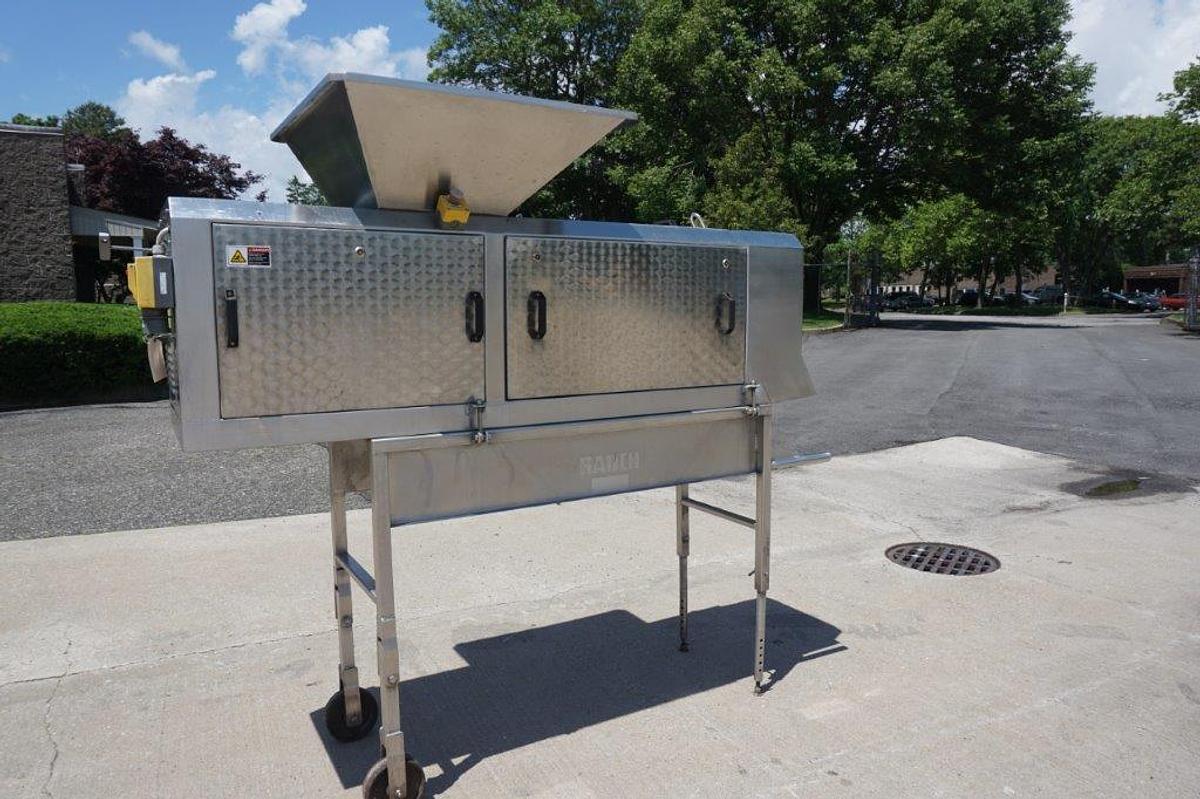
Rauch produces a range of equipment focused primarily on the beverage and food processing industries. Their product line includes filling systems, packaging solutions, and processing machinery designed for various production scales. One example commonly found on the used market is the Rauch A12 Grape Destemmer/Crusher, a portable unit suited for winery and fruit processing operations. Rauch's filling and packaging systems are also well-regarded in beverage production environments, making them a recurring find among used industrial machinery dealers who specialize in food and beverage equipment.
Because Rauch manufactures across several product categories, buyers searching the secondary market should be specific about which product line they need. A dealer specializing in food and beverage processing equipment will generally have a more curated and relevant selection than a general industrial auction house. Availability of specific models fluctuates depending on what facilities are decommissioning or upgrading their lines, so checking with specialized used equipment dealers regularly is the best way to find a particular Rauch machine.
What industries use Rauch manufacturing equipment?
Rauch manufacturing equipment is primarily designed for the food and beverage processing industries. Their filling systems and packaging machinery are used by beverage producers, bottling operations, and food manufacturers who need reliable, high-throughput processing solutions. Equipment like the Rauch A12 Grape Destemmer/Crusher points to a strong presence in the wine and fruit processing sector as well, where portable and durable processing units are essential during harvest seasons.
Beyond beverage and food applications, Rauch's broader manufacturing portfolio has served agricultural and industrial processing environments. Buyers from craft wineries, juice producers, commercial bottling facilities, and food packaging plants are among the most frequent purchasers of used Rauch equipment. The brand's reputation for German engineering quality and durability makes its machinery attractive across any production environment where precision and longevity matter.
Does used Rauch equipment come with a warranty?
Warranties on used manufacturing equipment are generally not offered by third-party dealers. Used machinery is typically sold as-is, which places the responsibility of evaluating condition squarely on the buyer. This is standard practice across the used equipment industry, regardless of brand. The manufacturer's original warranty does not transfer through secondary sales, and buyers should not assume any coverage is in place unless explicitly stated in writing by the seller.
Given this reality, selecting a reputable used equipment dealer with a long track record in food and beverage machinery is critical. Before purchasing, buyers should request a thorough inspection, either in person or via video, to assess the machine's current working condition. It is also worth contacting Rauch directly to understand what level of support, parts availability, and technical documentation they provide for the specific model and age of equipment being considered, as older models may have more limited manufacturer support.
How should buyers inspect used Rauch equipment before purchasing?
Inspections are one of the most important steps in purchasing any used manufacturing equipment, and Rauch machinery is no exception. Reputable dealers will typically offer in-person inspections, virtual walkthroughs, or detailed video captures of the machine's current state. For equipment still installed at a production facility, the dealer can often arrange access to the site so the buyer can observe the machine in its actual environment, whether it is still running or has been decommissioned. This kind of access gives buyers a much clearer picture of wear, operational condition, and any visible damage.
Buyers should keep in mind that most used equipment dealers are not set up to run full production tests, since operating a machine at production capacity requires permits and facilities that a typical dealer does not have. The inspection should focus on mechanical condition, signs of wear on key components, completeness of parts, and the availability of manuals or documentation. Requesting photos of serial number plates is also useful for verifying model specifications and contacting Rauch about parts or service history for that particular unit.
What is the typical price range for used Rauch manufacturing equipment?
Pricing for used Rauch equipment varies considerably depending on the type of machine, its age, condition, and how specialized the application is. Portable or smaller units like a grape destemmer/crusher will generally fall at a lower price point than a full filling line or integrated packaging system. Rauch's reputation for German-engineered durability tends to support stronger resale values compared to lesser-known brands, so buyers should expect to pay a premium relative to generic alternatives of similar age.
Total cost of ownership is an important consideration beyond the listed sale price. Buyers should factor in potential refurbishment costs, replacement parts, freight and rigging expenses, and any integration work needed to fit the machine into an existing production line. Requesting a detailed condition report from the dealer and getting quotes on any known repairs before finalizing a purchase helps avoid budget surprises after delivery. Comparing prices across multiple specialized dealers is advisable to get a realistic sense of current market value for a specific model.
Are spare parts and service support available for used Rauch equipment?
Parts availability for used Rauch equipment depends largely on the model and how long ago it was manufactured. Rauch, like most established European equipment manufacturers, has historically supported its machinery with spare parts through authorized service channels, but older or discontinued models may have limited availability directly from the manufacturer. Buyers should contact Rauch before completing a purchase to confirm whether parts, technical documentation, and service support are still accessible for the specific model they are considering.
For models where manufacturer support is limited, specialized used equipment dealers and third-party parts suppliers can often source components. It is worth asking the selling dealer whether they have any spare parts included with the machine or know of reliable parts sources. Having access to a service manual is particularly valuable for older equipment, as it allows in-house technicians or local service contractors to maintain and repair the machine without relying solely on the manufacturer. Factoring parts availability into the purchase decision is just as important as evaluating the machine's current condition.
How does shipping and delivery work for used Rauch manufacturing equipment?
Shipping used manufacturing equipment requires careful planning, and costs can vary significantly based on the size, weight, and configuration of the machine. Smaller portable units like a grape destemmer/crusher are relatively straightforward to palletize and ship via standard freight carriers. Larger filling systems or packaging lines may require custom crating, heavy-duty rigging for loading and unloading, and flatbed or specialized transport, all of which add to the total landed cost. Buyers should ask the dealer for a detailed breakdown of packaging, rigging, and freight costs before committing to a purchase.
Rigging charges at both the origin and destination are a common expense that buyers sometimes overlook. If the machine is being removed from a production facility, there may be additional costs for disconnecting utilities, dismantling, and preparing the equipment for transport. At the buyer's facility, a forklift or crane may be needed for unloading and placement. Getting all of these costs itemized upfront gives a much more accurate picture of what the equipment will actually cost by the time it is operational.
What payment terms are typical when buying used Rauch equipment from a dealer?
Most used equipment dealers require payment in full before a machine is released for shipping. This is standard practice in the industry and applies to most buyers, particularly those purchasing for the first time from a given dealer. Payment is typically accepted via wire transfer, though some dealers may accommodate other methods. Buyers should confirm accepted payment forms and the exact timeline for when payment is due relative to the shipping schedule.
Some dealers extend payment terms to repeat customers or for larger transactions, but this is at the dealer's discretion and not a standard offering. Buyers looking for financing options should explore equipment financing through third-party lenders, as banks and specialty finance companies do sometimes fund used machinery purchases. Leasing arrangements are less common for used equipment but may be available through certain financing partners. Clarifying all payment expectations before signing any purchase agreement helps avoid misunderstandings at the time of sale.
What should buyers know about the condition grading of used Rauch machinery?
Condition grading is a useful framework for evaluating used manufacturing equipment, though grading systems are not universally standardized across dealers. Some dealers use letter grades (A, B, C) or descriptive terms like "excellent," "good," or "fair" to indicate a machine's overall state. These grades typically reflect factors such as visible wear, hours of use, completeness of components, and whether the machine was recently serviced. Buyers should always ask what specific criteria the dealer uses for their grading system, since the same label can mean different things from one seller to the next.
A condition grade is a starting point, not a substitute for a proper inspection. Even a machine rated in good condition may have wear on specific components that will require attention before it can be put back into production. Requesting detailed photos, inspection reports, and any available service records gives a fuller picture than a grade alone. For higher-value Rauch systems, hiring an independent equipment appraiser or sending a knowledgeable technician to inspect the machine in person is a worthwhile investment before finalizing the purchase.
Why does Rauch equipment hold its value well on the secondary market?
Rauch has built a reputation over decades for producing durable, precision-engineered equipment, particularly in the food and beverage processing sector. Equipment built to German manufacturing standards tends to have longer operational lifespans and tighter tolerances than comparable machinery from regions with less stringent production standards. This durability means that Rauch machines often remain productive well past the point at which they are sold off by their first owners, which sustains demand and supports resale prices.
The brand's focus on filling systems and packaging solutions for the beverage industry also means that used Rauch equipment is sought after by a consistent buyer pool, including craft beverage producers, contract bottlers, and growing food manufacturers who want reliable machinery without the cost of buying from a manufacturer. Strong demand relative to supply, combined with the equipment's longevity, keeps secondary market prices firm. Buyers should factor this into their budget expectations and recognize that well-maintained Rauch machinery is unlikely to be found at steep discounts.