Category
Manufacturer
Model
FAQ:
What is RAS process equipment?
RAS stands for Recirculating Aquaculture System. RAS process equipment refers to the collection of mechanical, biological, and chemical treatment components that work together to filter, oxygenate, and recirculate water within a closed-loop fish farming environment. Rather than continuously drawing in fresh water or relying on open ponds, a RAS continuously treats and reuses the same water, which allows fish to be raised at high densities in a controlled indoor setting.
The defining characteristic of RAS technology is water efficiency. A properly configured RAS can recycle up to 95 to 99 percent of the water used in production, which makes it far more resource-efficient than flow-through raceways or pond-based aquaculture. This also gives operators precise control over temperature, dissolved oxygen, pH, and ammonia levels, all of which directly affect fish health and growth rates. Because of this level of control, RAS is used commercially to raise salmon, tilapia, trout, shrimp, bass, and many other species year-round regardless of outdoor climate.
What components are typically included in a complete RAS process equipment package?
A complete RAS setup is made up of several interconnected subsystems, each handling a specific water treatment function. The core components typically include mechanical filtration (such as drum filters or settling tanks to remove solid waste), biological biofilters (which house bacteria that convert toxic ammonia into less harmful nitrate), UV sterilizers (to control pathogens and algae), oxygenation or aeration systems, degassing units to remove carbon dioxide, water pumps, and water quality monitoring sensors. In more advanced systems, automated controls tie these components together so that operators can monitor and adjust conditions remotely.
Beyond the primary filtration and oxygenation equipment, a full RAS may also include heat exchangers or chillers to regulate water temperature, backup power systems, sludge treatment equipment, and specialized tanks or raceways designed to match the target species. When evaluating used RAS process equipment, buyers should clarify exactly which components are included in a listing, since some sellers offer individual pieces (such as a single jacketed pressure kettle or reactor) while others list full system packages. Understanding what is and is not included upfront helps avoid gaps in the production setup.
What species of fish and aquatic animals can be raised using RAS process equipment?
RAS technology is species-agnostic in the sense that the equipment can be configured and tuned to support a wide range of aquatic animals. Atlantic salmon and rainbow trout are among the most commercially significant species raised in large-scale RAS facilities, particularly because these cold-water fish are difficult to farm in warmer climates without precise temperature control. Tilapia, catfish, perch, and bass are also commonly raised in RAS environments, as are shrimp and other crustaceans in specialized saltwater or brackish-water systems.
The choice of species heavily influences the equipment specifications required. Cold-water species like salmon demand chillers and high dissolved oxygen levels, while warm-water species like tilapia tolerate a wider range of conditions and are generally less demanding on the system. Stocking density, feed conversion ratios, and water chemistry targets all shift depending on the species being raised. Buyers sourcing used RAS process equipment should factor in whether the equipment they are evaluating was originally configured for their target species, and whether the existing biofilter media, oxygenation capacity, and temperature control systems align with their production goals.
What water quality parameters does RAS process equipment monitor and control?
Water quality management is the central function of any RAS, and the equipment is designed to continuously track and regulate a specific set of parameters. The most critical are dissolved oxygen (DO), ammonia and nitrite concentrations, pH, carbon dioxide levels, temperature, and turbidity or total suspended solids. Ammonia in particular is the primary metabolic waste product of fish and is toxic at elevated concentrations, which is why biological biofilters are such a foundational component of any RAS design.
In practice, each parameter interacts with the others. For example, warmer water holds less dissolved oxygen, so temperature increases may require adjustments to aeration or pure oxygen injection. Carbon dioxide buildup can suppress pH and stress fish even when ammonia levels appear acceptable. Modern RAS installations often use automated sensor arrays and programmable logic controllers (PLCs) to monitor these parameters in real time and trigger corrective actions automatically. When purchasing used RAS process equipment, buyers should assess the condition and compatibility of any included monitoring and control hardware, since outdated or missing sensors can create significant blind spots in day-to-day operations.
How do you determine the right size RAS process equipment for a specific fish production goal?
Sizing a RAS correctly starts with working backward from a production target, typically expressed in kilograms of fish harvested per year. From that target, operators calculate the standing biomass required at any given time, which then determines the total water volume, filtration capacity, and oxygenation throughput needed to support that biomass safely. A commonly used benchmark is the carrying capacity of the system, measured in kilograms of fish biomass per cubic meter of water. This figure varies by species, but many commercial RAS designs target somewhere between 50 and 100 kg per cubic meter for finfish.
Beyond biomass density, equipment sizing must account for feed loading rates (since feed input drives ammonia production and therefore biofilter sizing), peak oxygen demand, and the hydraulic retention time of the filtration system. Undersizing any single component creates a bottleneck that can compromise water quality and fish health across the entire system. For buyers looking at used RAS equipment, it is worth consulting with a systems engineer or the equipment manufacturer to confirm that the capacity of available used components matches the intended production scale, since mixing undersized and oversized components from different systems can create inefficiencies that are difficult to correct after installation.
What are the ongoing maintenance requirements for RAS process equipment?
RAS process equipment requires consistent, hands-on maintenance to keep water quality stable and fish healthy. Daily tasks typically include checking sensor readings, inspecting drum filter screens for debris buildup, monitoring feed systems, and removing accumulated sludge from settling zones. Biological biofilters require careful attention because the bacterial colonies that drive ammonia conversion are sensitive to chemical disruptions, sudden temperature swings, and oxygen deprivation. Any lapse in biofilter performance can lead to rapid ammonia spikes that stress or kill fish.
Longer-interval maintenance tasks include cleaning UV sterilizer sleeves (which foul over time and reduce disinfection efficiency), inspecting pump impellers and seals, calibrating water quality sensors, and servicing heat exchangers or chillers. The maintenance burden scales with system size and complexity. For buyers purchasing used RAS process equipment, it is particularly important to evaluate the service history and wear condition of high-cycle components like pumps, blowers, and drum filter drive systems, since these parts accumulate the most wear and are often the first to require replacement. Consulting with the equipment manufacturer about parts availability for a specific model and age of machine is a practical step before finalizing any purchase.
What should buyers look for when inspecting used RAS process equipment before purchasing?
Inspecting used RAS process equipment carefully is essential because these machines operate in wet, corrosive environments that accelerate wear on seals, gaskets, welds, and electrical components. During an inspection, buyers should look closely at the condition of tank linings and welds for corrosion or cracking, check pump and blower housings for wear or cavitation damage, examine filter screens and membranes for tears or fouling that cannot be cleaned, and review the condition of any included control panels or sensor arrays. Stainless steel components, like jacketed reactors or pressure kettles, should be examined for pitting or weld failures that could compromise structural integrity under pressure.
Reputable used equipment dealers typically offer in-person inspections, virtual walkthroughs, or video captures of the equipment so buyers can assess condition before committing to a purchase. In some cases, equipment may still be installed and operating at a production facility, which allows buyers to see it running under real conditions. Keep in mind that most dealers do not have the permitting or infrastructure to run full production tests, so buyers should use inspection opportunities to gather as much visual and operational information as possible. Consulting with the equipment manufacturer about the specific model's known wear points, parts availability, and support options for that age of machine is also a practical step that many buyers overlook.
How does energy consumption factor into the total cost of operating RAS process equipment?
Energy is consistently cited as one of the largest ongoing costs in RAS production, often accounting for 20 to 40 percent of total operating expenses depending on the system design and local electricity rates. The primary energy consumers in a RAS are water pumps, aeration blowers or pure oxygen systems, UV sterilizers, and temperature control equipment such as chillers or heat exchangers. In larger facilities running continuously, these loads add up quickly, which is why energy efficiency is a major consideration when evaluating any RAS equipment.
Equipment featuring variable frequency drives (VFDs) on pumps and blowers can significantly reduce energy consumption by adjusting motor speed to match actual demand rather than running at full capacity continuously. Smart automation systems that adjust oxygenation and circulation based on real-time biomass and feeding data also help cut unnecessary energy use. When evaluating used RAS process equipment, buyers should ask about the age and efficiency ratings of motors and drives, since older fixed-speed equipment can carry substantially higher operating costs than more recent variable-speed alternatives. Factoring in these long-term energy costs alongside the purchase price gives a more accurate picture of the true cost of ownership.
What is a jacketed agitated pressure kettle or reactor, and how is it used in RAS process applications?
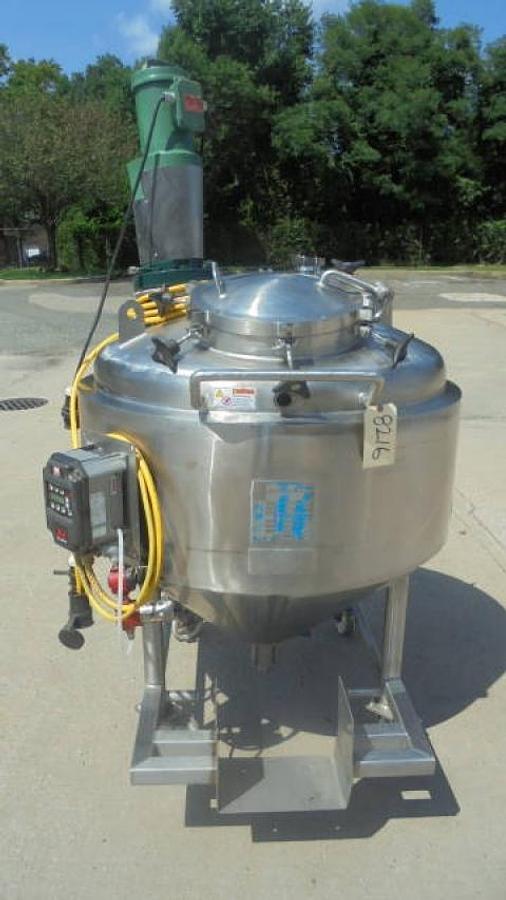
A jacketed agitated pressure kettle, sometimes called a jacketed reactor, is a vessel designed to process materials under controlled temperature and pressure conditions. The jacket is a secondary outer layer surrounding the main vessel through which a heating or cooling medium (such as steam, hot water, or glycol) circulates to regulate the temperature of the contents inside. The agitator, typically a motorized impeller or paddle system mounted inside the vessel, keeps the contents mixed uniformly throughout the process. In stainless steel construction, particularly 316SS, these vessels are well suited for applications involving corrosive or food-contact materials.
In RAS and related process applications, jacketed reactors and pressure kettles are used for tasks such as chemical dosing preparation, feed ingredient processing, water treatment chemical mixing, or other controlled-reaction steps that require precise temperature management and homogeneous mixing. A cone-bottom design, like the 150-gallon 316SS unit available in the used equipment market, facilitates complete drainage and makes cleaning easier between batches, which is particularly valuable in aquaculture and food processing environments where sanitation standards are high. Buyers evaluating used jacketed reactors should inspect the jacket integrity, agitator shaft seals, and internal surface finish to confirm the vessel meets their process requirements.
What should buyers expect regarding shipping and payment when purchasing used RAS process equipment?
Used RAS process equipment varies widely in size and weight, from compact individual components to large multi-tank systems, and shipping logistics should be planned carefully before purchase. Smaller components may be palletized and shipped via standard freight carriers, while larger vessels, reactors, or full system assemblies often require specialized rigging for loading and unloading. The cost of rigging, crating, and freight can add meaningfully to the total landed cost of the equipment, so buyers should request a detailed breakdown of all shipping-related charges from the seller before finalizing a purchase.
On payment terms, most used equipment dealers require full payment prior to releasing equipment for shipment. Some dealers extend terms to repeat customers, but buyers purchasing for the first time should plan for payment in full upfront. To protect their interests, buyers should complete any inspections (in person, virtual, or via video) before payment is made, since used equipment is typically sold as-is without manufacturer warranties. Understanding the full landed cost (purchase price plus rigging, crating, freight, and any unloading requirements at the destination) is essential for accurate budgeting.