Category
Manufacturer
Model
Ra Jones
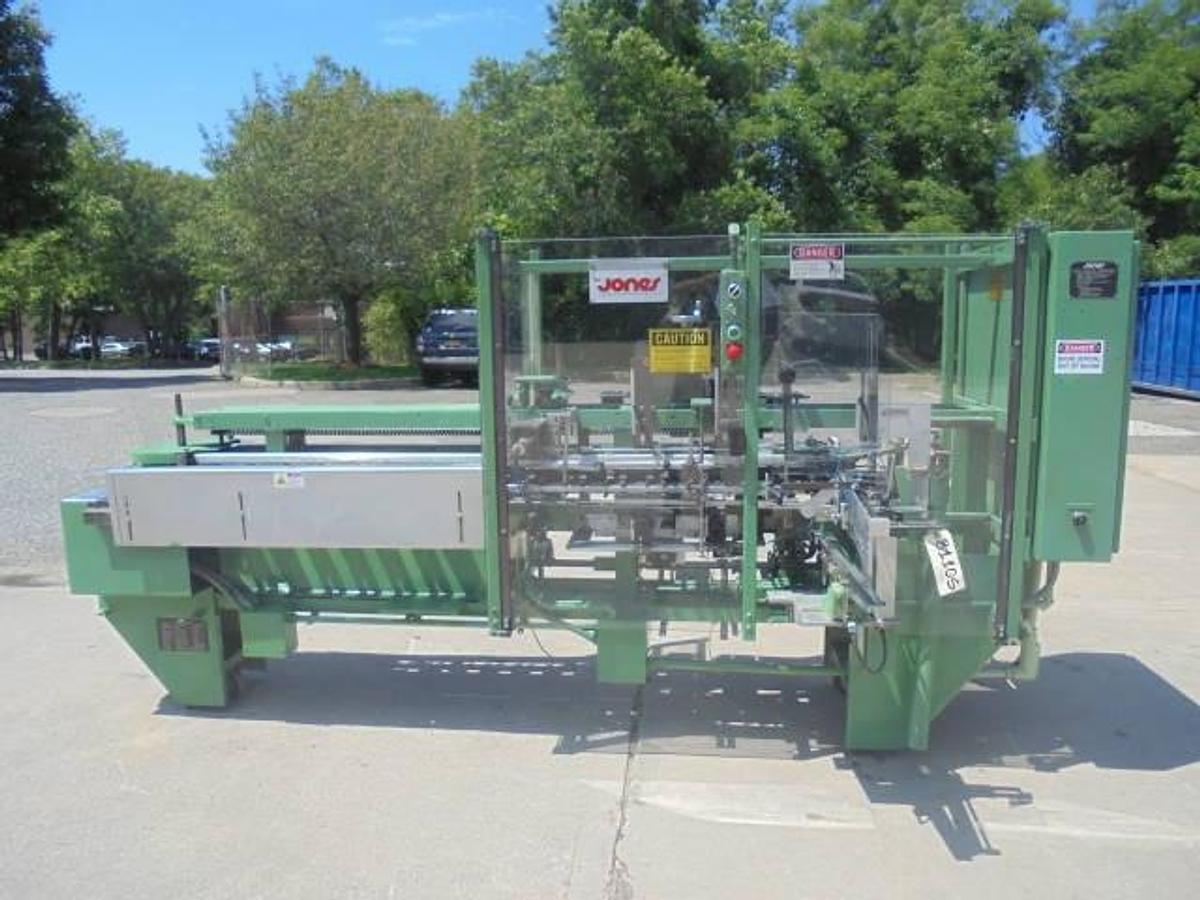
Ra Jones is a well-established manufacturer of packaging machinery, primarily serving the food and beverage industry. They are known for their innovative packaging solutions, including automated case packing and palletizing systems that enhance production line efficiency.
FAQ:
What types of Ra Jones packaging machines are commonly available on the used market?
Ra Jones built a broad line of packaging machinery over its history, with cartoners being the most recognized product category. The brand is particularly well known for horizontal cartoners, including the Criterion, Marksman, and Keynote series, all of which appear regularly in the secondary market. Vertical cartoners, such as the IMV-5 Intermittent Motion Vertical Cartoner, also surface for sale. Beyond cartoning, Ra Jones produced automated case packing and palletizing systems designed to integrate into full production lines, and these too can be found through used equipment dealers.
Because Ra Jones machines were built to last, a healthy supply of used units circulates through the market at any given time. Buyers in the food, beverage, pharmaceutical, and consumer goods sectors tend to search for specific models based on carton size range, motion type (intermittent vs. continuous), and line speed. When shopping for a used Ra Jones machine, it helps to know the exact model series you need, since each was engineered for different output rates and product types. A reputable used equipment dealer specializing in packaging machinery will typically carry multiple Ra Jones models and can help match a machine to a specific production requirement.
What industries is Ra Jones packaging machinery best suited for?
Ra Jones packaging machinery was designed with high-volume, regulated, and fast-moving production environments in mind. The brand built a strong reputation in the pharmaceutical industry, where precise, consistent cartoning of folding cartons around bottles, blister packs, and tubes is critical. Food and beverage manufacturers have also relied heavily on Ra Jones cartoners for products like cereal, snack foods, frozen items, and beverage multipacks. Consumer goods companies producing personal care products, household items, and over-the-counter health products represent another major segment of the Ra Jones customer base.
The common thread across all these industries is the need for reliable, high-speed secondary packaging that can handle repetitive carton loading with minimal downtime. Ra Jones machines were engineered for exactly that kind of demanding production environment, which is why they retain value and remain in active use long after their initial installation. Buyers from any of these sectors evaluating used Ra Jones equipment should verify that the machine's carton size range and throughput specifications align with their specific product dimensions and line speed targets before purchasing.
What is the typical production speed of a used Ra Jones cartoning machine?
Ra Jones cartoners span a wide range of output rates depending on the model and configuration. Intermittent motion models, which stop briefly to load and close each carton, typically run at speeds ranging from around 40 to 150 cartons per minute. Continuous motion models, built for higher-volume lines, can exceed 200 cartons per minute in some configurations. The IMV-5 Intermittent Motion Vertical Cartoner is an example of a mid-range machine suited to operations that need consistent output without the mechanical complexity of continuous motion equipment.
When evaluating a used Ra Jones machine, it is important to understand that published speed ratings reflect optimal conditions with a machine in good mechanical condition running a well-dialed-in product format. A used machine may need mechanical servicing, timing adjustments, or change parts to reach rated speeds on a new product. Buyers should ask the seller for any available production records and request a video inspection or in-person inspection to observe the machine running if possible. Speed capability is only one part of the picture; the condition of the carton magazine, loading section, and gluing or tucking mechanisms all affect real-world throughput.
How does Ra Jones relate to Barry-Wehmiller, and what does that mean for used equipment buyers?
Ra Jones was acquired by Barry-Wehmiller Companies, a global supplier of packaging and processing equipment. Following the acquisition, Ra Jones product lines were integrated into Barry-Wehmiller's portfolio of packaging brands. This means that for buyers of used Ra Jones equipment, technical support, parts inquiries, and service documentation now generally route through Barry-Wehmiller rather than through a standalone Ra Jones organization. Barry-Wehmiller maintains engineering resources for legacy packaging machinery, so support is not entirely unavailable, but the level of assistance can vary depending on the age and specific model of the machine in question.
Buyers considering a used Ra Jones machine should contact Barry-Wehmiller directly before purchasing to ask about parts availability and technical support for the specific model and serial number they are evaluating. Older or discontinued models may have limited factory support, which makes the condition of the machine at the time of purchase even more important. A thorough inspection, access to the machine's manuals and electrical schematics, and a clear understanding of which wear parts may need replacement in the near term are all things a buyer should address before committing to a purchase.
Are replacement parts available for used Ra Jones packaging machines?
Parts availability for Ra Jones machinery depends significantly on the model, its age, and how it fits into the current Barry-Wehmiller parts ecosystem. For popular series like the Criterion and Marksman, there is a reasonable aftermarket supply of components, and some third-party suppliers manufacture compatible parts for common wear items such as belts, guides, glue system components, and chain assemblies. For older or less common models, sourcing parts can require more effort, including working directly with Barry-Wehmiller, locating used parts from decommissioned machines, or having components fabricated.
Before purchasing any used Ra Jones machine, it is worth taking inventory of the machine's current condition and identifying which components are likely to need attention in the short term. Consulting with Barry-Wehmiller about parts availability for the specific model and serial number is a practical step that can save significant headaches after the sale. Some used equipment dealers who specialize in packaging machinery maintain their own inventory of Ra Jones spare parts or can connect buyers with reliable parts sources. Factoring parts availability and cost into the total cost of ownership is an important part of evaluating any used packaging machine purchase.
What should a buyer inspect when evaluating a used Ra Jones cartoner?
A thorough inspection of a used Ra Jones cartoner should cover both the mechanical and electrical condition of the machine. On the mechanical side, key areas include the condition of the carton magazine and erecting section, the loading and product infeed components, the tucking or gluing station, and the discharge conveyor. Chain wear, belt condition, and the state of any cam-driven mechanisms are important indicators of overall machine health. Guides, rails, and change parts should be examined for wear and verified to be included with the machine, since missing change parts for specific carton sizes can add significant cost after purchase.
On the electrical side, buyers should ask about the age of the control system, the availability of replacement electrical components, and whether the machine's documentation including electrical schematics and operating manuals is available. Reputable used equipment dealers will typically offer in-person inspections, virtual walkthroughs, or video captures of the machine to help buyers assess its condition. Some Ra Jones machines may still be in production at a facility, which can allow for an inspection while the machine is running product, giving the clearest picture of its actual operating condition. Keep in mind that most equipment dealers do not have the permitting or production infrastructure to run actual product through a machine at their facility, so video of the machine in its previous production environment is often the most practical alternative.
What is the typical price range for used Ra Jones packaging machinery?
Used Ra Jones cartoners and packaging systems vary considerably in price based on model, age, configuration, and condition. Smaller or older intermittent motion cartoners in basic condition can sell for anywhere from a few thousand dollars up to around $30,000 to $50,000. Higher-speed continuous motion models, machines with more recent control systems, or units that come with a full set of change parts and documentation can command prices well above that range. Complete integrated systems that include infeed, cartoning, case packing, and palletizing components are priced accordingly based on the scope of the line.
Because used packaging machinery pricing is driven heavily by condition, completeness, and market demand at any given time, it is difficult to give a single number that applies across the board. Buyers are best served by getting quotes from multiple reputable used equipment dealers and understanding exactly what is included in the price, since change parts, electrical documentation, and ancillary components can significantly affect the value of a machine. It is also worth factoring in the cost of shipping, any rigging required for loading and unloading, and any reconditioning or service work the machine may need after arrival.
What are the electrical and utility requirements for Ra Jones packaging machines?
Ra Jones cartoners and packaging systems were manufactured over many decades, and electrical specifications vary by model and the era in which the machine was built. Most industrial Ra Jones machines were designed for three-phase electrical service, commonly at 460V/60Hz in North American configurations, though some models were built for 380V/50Hz for international markets. Compressed air is typically required for pneumatic actuators used in carton erecting, product loading, and tucking or gluing functions. The specific air pressure and volume requirements depend on the model and how many pneumatic functions are active.
Buyers should request the machine's electrical specifications and utility requirements from the seller before purchase and verify that their facility can accommodate them. Older machines may have control systems that are no longer supported by the original component manufacturers, which can complicate troubleshooting and repairs. If a machine is being imported from a different country or was built for a different electrical standard, voltage conversion and frequency considerations add cost and complexity. A qualified electrical contractor or machine installation specialist familiar with packaging equipment can help assess what facility modifications, if any, are needed before the machine is put into service.
How does the inspection process work when buying a used Ra Jones machine?
Used equipment dealers handling Ra Jones machinery generally offer buyers several options for inspecting a machine before purchase. In-person inspections at the dealer's facility or at the location where the machine is currently stored are the most thorough option, allowing a buyer or their technician to physically examine the machine, check for wear, verify that all components are present, and review documentation. Virtual inspections conducted via video call are increasingly common and can be a practical alternative when travel is not feasible. Many dealers can also provide detailed video footage of the machine, including close-ups of key mechanical areas and, where available, footage of the machine operating in its previous production environment.
It is worth understanding that most used equipment dealers do not operate as production facilities, so running actual product through a machine at a dealer's warehouse is generally not possible. The goal of any inspection, whether in person or virtual, is to get an accurate picture of the machine's current mechanical and electrical condition. Buyers with limited packaging machinery experience may want to bring in an independent machine technician or a packaging line integrator to assist with the evaluation. Taking the time to conduct a proper inspection before purchase is especially important with used equipment, where the machine is typically sold as-is and the buyer bears responsibility for verifying its condition.
What should buyers know about shipping and payment when purchasing a used Ra Jones machine?
Shipping a used Ra Jones cartoner or packaging system requires careful planning, particularly for larger machines that involve significant weight and footprint. Proper packaging is essential to prevent damage in transit, and the level of crating or palletization required will affect shipping costs. Smaller machines may ship on a standard pallet with shrink wrap and blocking, while larger or more complex systems typically require custom wooden crating. Heavier machines may also require specialized rigging equipment for loading at the origin and unloading at the destination, which is an additional cost that buyers should factor into the total landed price. Buyers should ask the dealer for a detailed breakdown of packaging, rigging, and freight costs before finalizing a purchase.
On the payment side, most used equipment dealers require full payment before a machine is released for shipping. This is standard practice in the industry, and buyers should be prepared for this requirement. Some dealers may offer payment terms to established customers with a prior purchasing history, but this is not the norm for first-time transactions. Wire transfer is the most common payment method for used industrial machinery purchases. Understanding the full cost picture, including the machine price, shipping, rigging, and any reconditioning needed after delivery, helps buyers make accurate comparisons and budget appropriately.