Category
Manufacturer
Model
FAQ:
What types of process equipment does R.A.S. manufacture?
R.A.S. is known for producing industrial process equipment used across chemical, pharmaceutical, food and beverage, and specialty manufacturing applications. Their product line includes jacketed agitated pressure kettles, mixing vessels, and related fluid handling and processing systems. These units are typically fabricated in 316 stainless steel or other corrosion-resistant alloys suited for sanitary or chemically aggressive environments. Cone-bottom designs are common in their kettle lineup, as this geometry facilitates complete drainage and is favored in pharmaceutical and food processing settings where residue control matters.
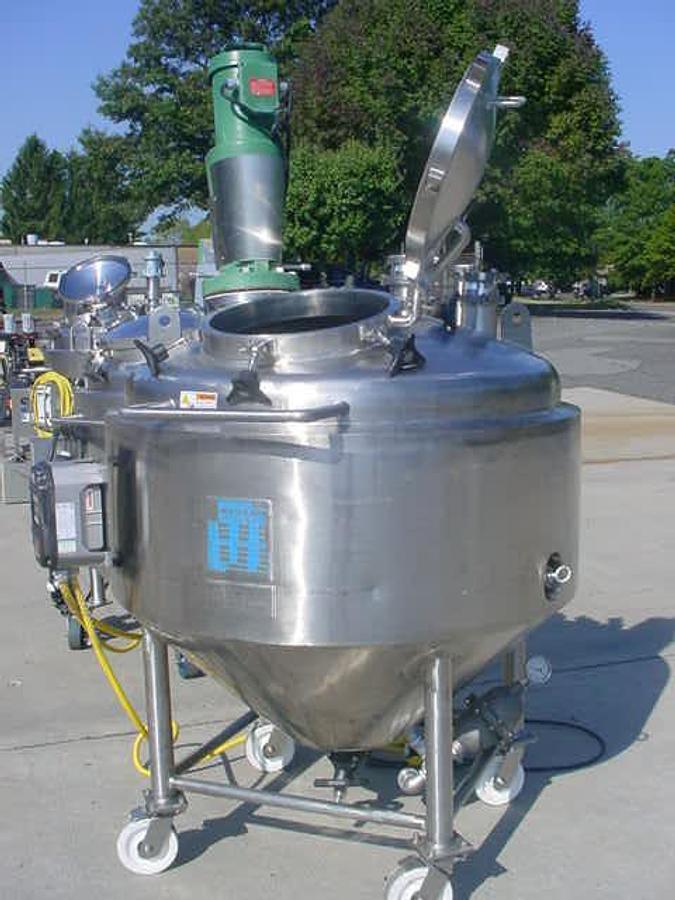
Buyers sourcing R.A.S. equipment on the used market will encounter a range of vessel sizes and configurations. A 150-gallon jacketed agitated pressure kettle with a cone bottom and 316 stainless steel construction is one example of the type of unit that surfaces on the used equipment market. These vessels are built for processes that require temperature control through jacketing, mechanical agitation for mixing or blending, and pressure-rated containment. The combination of these features makes R.A.S. equipment a practical choice for batch processing operations across multiple industries.
What industries commonly use R.A.S. jacketed agitated pressure kettles?
Jacketed agitated pressure kettles from R.A.S. are used across a broad range of process industries where precise temperature control, mixing, and pressure containment are required in a single vessel. Pharmaceutical manufacturers rely on them for API synthesis, extraction, and formulation steps that demand sanitary construction and repeatable batch conditions. Food and beverage producers use similar equipment for cooking, blending, emulsification, and pasteurization applications where stainless steel contact surfaces and full drainage are essential.
Beyond pharma and food, these kettles appear in specialty chemical manufacturing, cosmetics, nutraceuticals, and adhesives production. The jacketed design allows heating or cooling media to circulate around the vessel wall, giving operators tight control over reaction or process temperatures. Agitation ensures uniform mixing and prevents settling or scorching. Pressure-rated construction extends the range of processes the vessel can handle, including those involving volatile solvents or elevated-temperature reactions that generate internal pressure. This versatility is a key reason these units hold their value on the used equipment market.
What should buyers inspect when evaluating a used R.A.S. jacketed agitated pressure kettle?
A thorough inspection of a used jacketed pressure kettle should cover both the mechanical condition and the process-contact surfaces. Start with the interior vessel lining and the cone bottom for signs of pitting, corrosion, weld repairs, or surface damage that could affect product purity or structural integrity. Check the jacket for any evidence of leaks, scale buildup, or prior repairs, since a compromised jacket affects heat transfer efficiency. The agitator shaft, seal, and drive assembly should be examined for wear, runout, and proper alignment. If the unit is still connected to utilities at a facility, a live run observation is valuable.
Documentation is equally important. Request any available maintenance records, prior inspection reports, pressure vessel certifications, and the original equipment manual if it exists. ASME code stamps on pressure vessels indicate the unit was built to a recognized safety standard, and verifying that stamp is still legible and intact matters for compliance purposes in regulated industries. Reputable used equipment dealers will typically facilitate in-person or video inspections, and some machines may still be in active production at the seller's facility, allowing buyers to observe the equipment running under actual process conditions. Keep in mind that dealers generally cannot run production trials, so buyers should plan their inspection strategy accordingly.
What certifications or compliance standards are relevant for used R.A.S. process kettles?
Pressure vessels used in industrial processing are subject to design and fabrication standards that govern their safe operation. In North America, the ASME Boiler and Pressure Vessel Code (BPVC) is the primary standard, and vessels built to this code carry an ASME stamp along with a data plate specifying the maximum allowable working pressure (MAWP), design temperature, and year of manufacture. Buyers in regulated industries such as pharmaceuticals or food processing should verify that the vessel's code stamp is present and legible, and confirm the rated parameters align with their intended process conditions.
For facilities operating in hazardous areas or exporting to European markets, ATEX and CE marking may also be relevant depending on the drive components and instrumentation attached to the kettle. When purchasing used equipment, buyers should request copies of any original certification documentation that accompanied the vessel. If records are unavailable, a third-party inspection by a qualified pressure vessel inspector can assess current condition and help determine whether re-certification or hydrostatic testing is warranted before putting the unit back into service. Consulting with the equipment manufacturer about parts availability and any model-specific compliance considerations is also advisable, particularly for older units.
Why do buyers choose used R.A.S. process equipment over purchasing a comparable unit from a fabricator?
Lead time is one of the most compelling reasons. A fabricator building a jacketed agitated pressure kettle to specification can take anywhere from several months to over a year depending on shop capacity, material availability, and the complexity of the design. A used unit that matches the buyer's process requirements can be purchased, shipped, and installed in a fraction of that time. For operations that need to expand capacity quickly or replace failed equipment without a lengthy shutdown, the used market offers a practical alternative.
Cost is the other major factor. Used process kettles and vessels typically sell at a significant discount to fabricated replacement cost, even when accounting for any refurbishment, shipping, and installation expenses. Buyers with flexible specifications, meaning those who can adapt their process to an available vessel size rather than requiring a custom build, tend to find the best value on the used market. 316 stainless steel jacketed vessels in particular retain meaningful resale value because the base material cost is high, which means a used unit in good condition represents a genuine capital savings. Selecting a dealer who specializes in process equipment and has a verifiable track record helps buyers avoid condition surprises and ensures they are getting an accurate representation of what they are purchasing.
How does the cone-bottom design on a jacketed pressure kettle affect its performance and suitability for specific processes?
A cone-bottom vessel drains more completely than a flat or dish-bottom design, which is a practical advantage in batch processes where full product recovery matters. In pharmaceutical manufacturing, even small amounts of residual product left in a vessel between batches can create cross-contamination risks or represent significant financial loss if the material is high-value. The sloped cone geometry directs liquid toward a central outlet at the lowest point of the vessel, minimizing heel volume and simplifying cleaning validation. This makes cone-bottom kettles a preferred configuration in GMP-regulated environments.
Beyond drainage, the cone bottom also affects agitator design. Agitators in cone-bottom vessels are often configured with angled or pitched blades that follow the vessel geometry to prevent dead zones where solids might accumulate. For processes involving slurries, suspensions, or crystallization steps, this matters considerably. When evaluating a used cone-bottom kettle, buyers should inspect the cone section carefully for corrosion, weld quality at the cone-to-shell transition, and the condition of the bottom outlet valve or nozzle. These areas can be prone to stress concentration and are worth close attention during any inspection.
What factors affect the price of used R.A.S. process equipment?
Several variables drive pricing on the used process equipment market. Vessel size is the most straightforward factor, as larger units command higher prices due to greater material content and fabrication complexity. Construction material matters significantly as well. A 316 stainless steel jacketed kettle will price higher than a comparable carbon steel unit because of the raw material cost differential and the broader range of applications stainless steel supports. Age and overall condition play a role too, though a well-maintained older vessel can still carry a strong price if its documentation and mechanical condition hold up to inspection.
Configuration and features add to value incrementally. Agitation systems with variable speed drives, pressure-rated jackets with higher MAWP ratings, sanitary fittings, and integrated instrumentation all contribute to a higher asking price compared to a bare vessel. Market demand also shifts pricing. Equipment suited for pharmaceutical or food processing applications tends to attract more buyers and therefore holds value better than highly specialized units with narrower application ranges. Buyers should factor in total landed cost, including shipping, rigging, and any reconditioning needed, rather than evaluating purchase price alone when comparing options.
Are replacement parts available for used R.A.S. process equipment?
Parts availability for used process equipment depends on the age of the unit, the specific model, and whether the manufacturer is still actively supporting that product line. For mechanical components like agitator seals, drive units, and instrumentation, many parts are sourced from third-party suppliers rather than the original equipment manufacturer, which can extend availability even for older machines. Standard fittings, gaskets, and fasteners in common sizes are generally straightforward to source regardless of equipment age.
Buyers should contact R.A.S. directly before purchasing a used unit to ask about parts availability for the specific model under consideration. Manufacturers can often indicate whether a particular model is still supported, what components are proprietary versus industry-standard, and whether technical documentation is available. This conversation is worth having early in the evaluation process, since parts availability and manufacturer support can meaningfully affect long-term operating costs and downtime risk. A used equipment dealer with deep experience in process equipment can also be a useful resource for identifying compatible aftermarket parts sources.
What documentation should buyers request when purchasing used process equipment?
Documentation significantly affects how quickly a used vessel can be put into service and how confidently it can be operated. The most important items to request include the original equipment manual, any available maintenance and repair records, pressure vessel data reports (such as the ASME Form U-1 for code-stamped vessels), and any prior inspection or hydrostatic test records. P&IDs (piping and instrumentation diagrams) and utility connection drawings are valuable for planning installation. In regulated industries, prior cleaning validation records or material contact certifications may also be relevant.
In practice, documentation completeness varies widely on the used market. Equipment that was decommissioned from a well-run facility with good record-keeping practices may come with a full package. Equipment acquired through liquidation or plant closure may have minimal paperwork. When records are sparse, buyers can sometimes obtain partial documentation directly from the manufacturer using the vessel's serial number, or commission a third-party inspection to establish a current baseline condition assessment. Factoring in the cost of any missing documentation or required re-certification is part of evaluating the true acquisition cost of a used unit.
What should buyers understand about shipping and rigging costs for used process kettles?
Process kettles and pressure vessels are heavy, often awkwardly shaped, and require careful handling to avoid damage to nozzles, agitator assemblies, and surface finishes during transit. Shipping costs for this type of equipment are not fixed and depend on vessel size and weight, the distance between origin and destination, the level of crating or palletization required to protect the unit, and whether specialized rigging is needed for loading and unloading at either end. A 150-gallon kettle is manageable with standard forklift handling, but larger vessels may require crane service or specialized transport equipment, which adds meaningful cost.
Buyers should ask the selling dealer for a detailed breakdown of packaging, rigging, and freight costs before finalizing a purchase. Understanding the full landed cost, not just the equipment price, is essential for an accurate cost comparison. Some dealers will quote freight separately after confirming the buyer's delivery address and site access conditions. Buyers with limited unloading equipment at their facility should communicate that upfront so the dealer can factor in appropriate delivery logistics. Damage claims on freight are difficult to resolve after the fact, so proper crating and documented pre-shipment condition photos are worth requesting as part of the transaction.