Category
Manufacturer
Model
Quadrel
Quadrel specializes in labeling and coding equipment, primarily for the packaging industry. Their systems are designed to enhance product traceability and compliance with regulatory standards.
FAQ:
What types of labeling equipment does Quadrel manufacture?
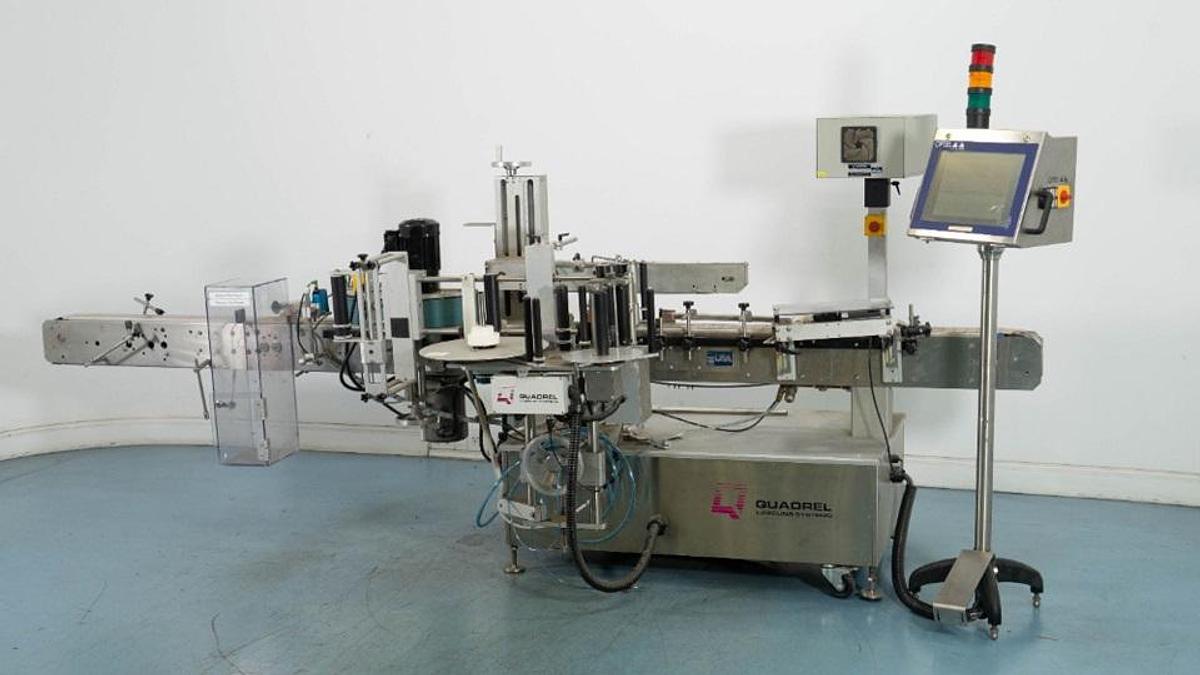
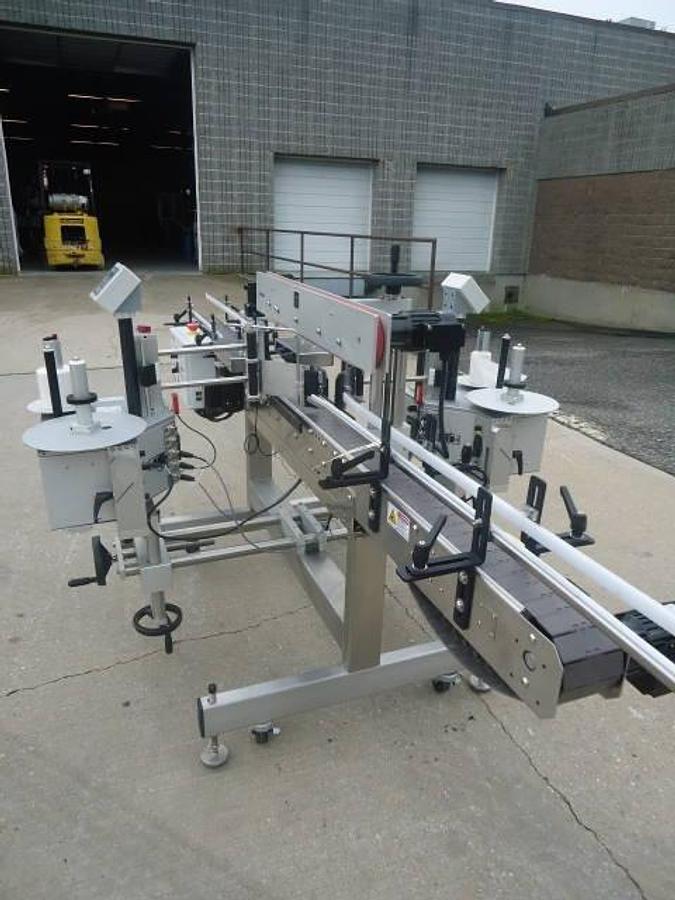
Quadrel produces a broad range of pressure-sensitive labeling systems designed for the packaging industry. Their lineup includes wraparound labelers, front and back labelers, spot labelers, top labelers, and tabletop labeling machines. The VersaLine series handles both spot and wraparound applications, while the Moduline series covers automatic wraparound and front-and-back labeling for higher-volume production environments. This variety makes Quadrel equipment applicable across a wide range of container shapes, label formats, and production speeds.
Beyond standard configurations, Quadrel systems are built with product traceability and regulatory compliance in mind, which is why they are popular in regulated industries. Their machines are generally designed for ease of changeover, meaning operators can switch between different product sizes or label formats without excessive downtime. This flexibility is a key reason Quadrel equipment holds its value well on the used machinery market and remains in demand long after the original production run.
What industries use Quadrel labeling equipment?
Quadrel labeling systems are used across a wide range of industries, with the heaviest concentration in food and beverage, pharmaceutical, nutraceutical, personal care, and chemical manufacturing. In these sectors, accurate and consistent label placement is not just a quality concern but often a regulatory requirement. Pharmaceutical and nutraceutical producers, for example, rely on Quadrel equipment to meet labeling standards set by agencies like the FDA, where label positioning, readability, and traceability are subject to strict guidelines.
Food and beverage operations use Quadrel machines to handle everything from glass bottles and plastic containers to cans and jars at high throughput rates. Personal care and chemical companies value the equipment for its ability to apply labels cleanly to cylindrical, tapered, and irregular containers. Because Quadrel machines are built for demanding production environments, used units sourced from any of these industries tend to be industrial-grade equipment that was designed for continuous operation, which is worth factoring in when evaluating a used machine's condition and remaining service life.
How fast can Quadrel labeling machines apply labels?
Quadrel labeling systems are built for high-volume production, and many models are capable of applying labels to hundreds of containers per minute depending on the specific machine, label size, container type, and line configuration. Automatic models like those in the Moduline series are designed for continuous production environments where throughput and consistency are critical. Speed performance varies by model, so buyers evaluating used Quadrel equipment should review the original specifications for the specific unit they are considering to understand its rated output.
It is worth noting that actual throughput in a production setting depends on factors beyond the labeler itself, including infeed and outfeed conveyor speeds, container handling, and the overall line layout. When inspecting a used Quadrel machine, asking the dealer about the production environment it came from can give useful context about how it was run and at what speeds. Machines that operated at or below their rated capacity for most of their service life are generally in better condition than those that ran at maximum output continuously.
Are Quadrel labeling machines suitable for small businesses or only large operations?
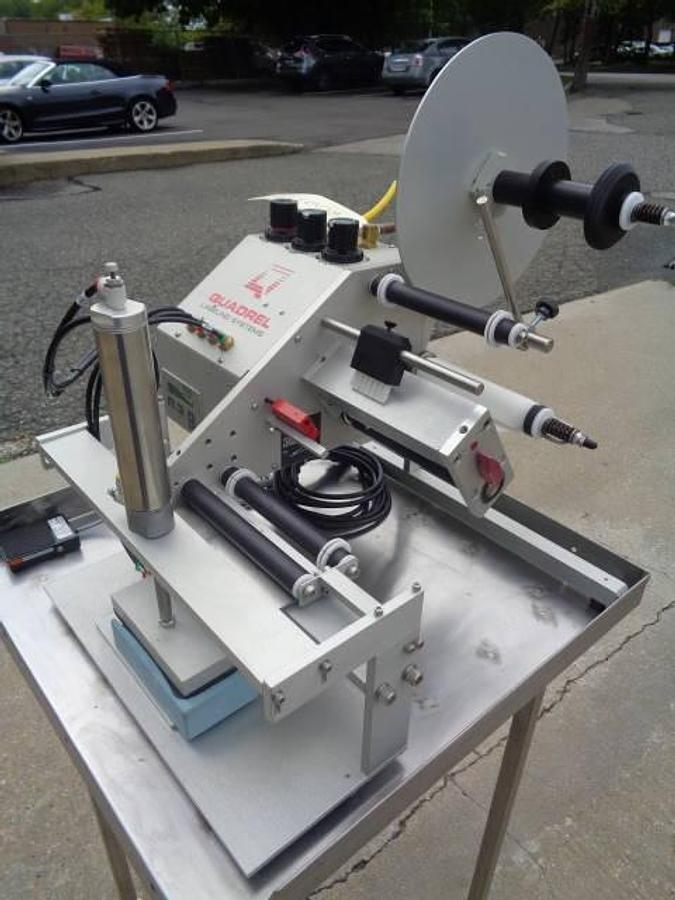
Quadrel offers equipment across a spectrum of scales. Their tabletop pressure-sensitive labeling machines are designed for lower-volume applications and are well suited to smaller operations, craft producers, or businesses that need reliable label application without committing to a full industrial line. These compact units are a practical option for small manufacturers, contract packagers, or startups that want professional-grade label placement without the footprint or cost of a full automatic system.
At the other end of the range, Quadrel's automatic inline systems like the Moduline series are built for high-speed, high-volume production and are better matched to mid-size and large manufacturing facilities. On the used equipment market, buyers from smaller operations often find that purchasing a used Quadrel tabletop or semi-automatic machine gives them access to commercial-quality equipment at a fraction of what a comparable unit would cost. The key is matching the machine's rated capacity and configuration to the actual production requirements before purchasing.
What is the difference between a spot labeler and a wraparound labeler?
A spot labeler applies a single label to one face or surface of a container, such as the front panel of a bottle or the top of a lid. This type of application is common when the label does not need to encircle the container, or when a separate back label is applied by a different head. Spot labeling is frequently used for flat, square, or rectangular containers, as well as for products where only a portion of the container surface needs to be covered.
A wraparound labeler, by contrast, applies a single label that wraps partially or fully around a cylindrical container. This is the standard approach for round bottles, jars, and cans where one continuous label covers the full circumference. Some systems, like Quadrel's VersaLine, are designed to handle both spot and wraparound applications from the same platform, which adds flexibility when a production line handles multiple container formats. On the used market, understanding which application type a specific machine is configured for is essential before purchasing, since converting between application types may require additional components or adjustments.
What should buyers look for when inspecting used Quadrel labeling equipment?
When evaluating a used Quadrel labeling machine, the most important areas to assess are the condition of the label dispensing mechanism, the drive belts and rollers, the sensor systems, and any print-and-apply components if the unit includes coding or printing functionality. Wear on these parts directly affects label placement accuracy and machine reliability. Buyers should also check the condition of the electrical controls and any touchscreen or operator interface panels, since these can be costly to repair or source parts for on older models.
Reputable used equipment dealers will typically accommodate in-person inspections or provide detailed video walkthroughs of the machine so buyers can assess its current condition. Some machines may still be in production at the facility where they are being sold, allowing for a live operational inspection. It is also worth contacting Quadrel directly to ask about parts availability and technical support for the specific model being considered, since older machines may have limited parts support. Understanding the full picture before purchase is especially important with used equipment, as machines are generally sold as-is without manufacturer coverage.
Can used Quadrel labeling machines be integrated into an existing production line?
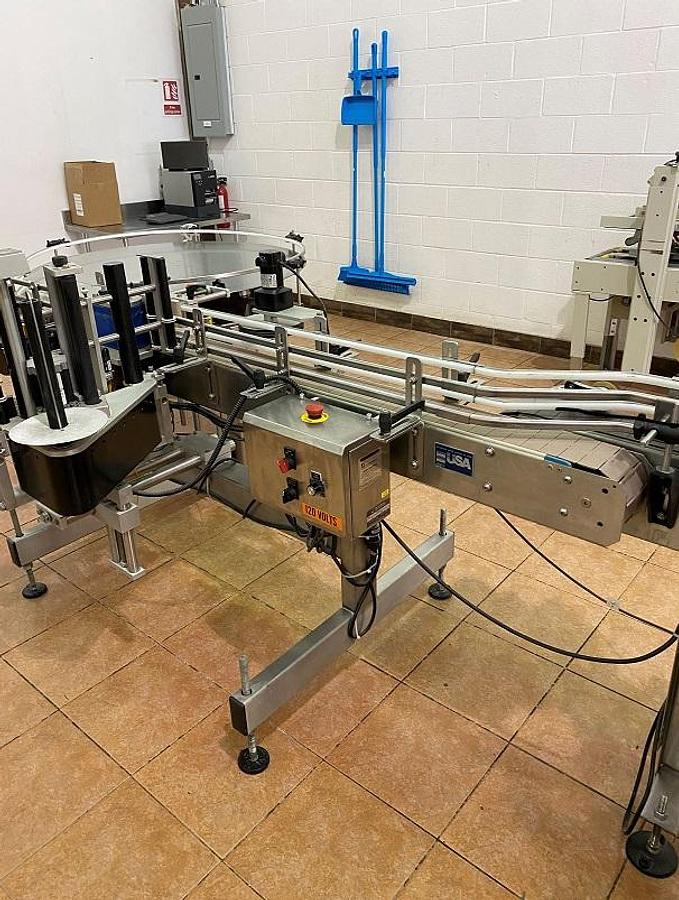
Quadrel's automatic inline labelers are designed to integrate with conveyor-based production lines, and most models include standard infeed and outfeed conveyor sections or are built to accept them. The Moduline series, for example, is an automatic system intended to run as part of a larger packaging line alongside fillers, cappers, and coders. Integration typically requires matching the labeler's conveyor height, speed range, and container handling specifications to the existing line equipment.
For buyers adding a used Quadrel machine to an existing setup, it is worth reviewing the machine's original technical documentation to confirm conveyor dimensions, electrical requirements, and any control interface options. Some machines include PLC controls that can be tied into a line's master control system, while others operate as standalone units. A qualified packaging equipment technician can assess compatibility and handle the mechanical and electrical integration work. Dealers can often provide available documentation for the specific unit being sold, which helps buyers and their technical teams plan the integration before the machine arrives on site.
What is a pressure-sensitive labeler and how does it work?
A pressure-sensitive labeler applies pre-cut labels that are carried on a release liner, similar to a standard peel-and-stick label. The machine feeds the liner through a dispensing mechanism that peels the label away from the backing at a sharp angle, known as a peel plate or dispensing edge. As the label separates from the liner, it is pressed onto the container by a wipe-down brush, roller, or air jet, depending on the machine design. The container moves past the dispensing point on a conveyor or turntable, and the label is applied in a controlled, repeatable position.
Pressure-sensitive labeling is one of the most widely used methods in commercial packaging because it works with a broad range of label materials, including paper, film, foil, and specialty substrates, and does not require heat or moisture to activate the adhesive. This makes it adaptable to a wide variety of products and container materials. Quadrel has built its product line around pressure-sensitive technology, and their machines are designed to handle high-speed application while maintaining consistent label placement accuracy, which is why their equipment is found in regulated industries where label positioning tolerances are tight.
How should used Quadrel labeling equipment be shipped, and what costs should buyers anticipate?
Shipping a used Quadrel labeling machine requires careful preparation to prevent damage in transit. Smaller units like tabletop labelers can typically be palletized and stretch-wrapped with appropriate blocking and bracing. Larger automatic inline systems, such as the Moduline series, are heavier and more complex, and may require custom crating to protect conveyor sections, electrical enclosures, and precision components. The level of packaging required will directly affect shipping costs, so buyers should ask the dealer specifically about how the machine will be prepared and what that preparation costs.
For larger machines, loading and unloading may require a forklift or specialized rigging, which adds to the total landed cost. Freight rates vary based on machine weight, dimensions, origin, and destination, and whether liftgate service is needed at delivery. Buyers should request a complete breakdown of packaging, rigging, and freight costs from the dealer before finalizing a purchase so there are no surprises. Understanding the full landed cost, including any site preparation needed to receive the equipment, is an important part of evaluating the total investment in used machinery.
What payment terms are typical when purchasing used labeling equipment?
Most used equipment dealers require payment in full before a machine is released for shipping. This is standard practice in the used machinery industry and applies regardless of the equipment type or purchase price. Accepted payment methods commonly include wire transfer and, in some cases, credit card for smaller purchases. Buyers who are working with a dealer for the first time should expect to pay in full upfront, as extended payment terms are generally reserved for established repeat customers with a prior purchasing history with that dealer.
For buyers concerned about making a large payment before receiving the equipment, the best protection is a thorough pre-purchase inspection. Taking advantage of in-person or video inspection options before committing to a purchase allows buyers to verify the machine's condition and confirm it matches the listing description. Selecting a dealer with a long track record in packaging and labeling equipment specifically, rather than a general machinery reseller, also reduces risk, since specialized dealers are more likely to accurately represent the condition and capabilities of the equipment they sell.