Category
Manufacturer
Model
FAQ:
What types of equipment did Pulverizing Machinery Company manufacture?
Pulverizing Machinery Company (PMC) was a well-regarded American manufacturer of industrial size-reduction equipment, and their product lines covered a broad range of milling and pulverizing applications. Key equipment categories historically associated with PMC include Raymond-style roller mills, hammer mills, attrition mills, and disc pulverizers. Each type is designed for a specific range of material hardness, moisture content, and target particle size, so buyers typically match the machine type to their processing requirements before searching for a specific model.
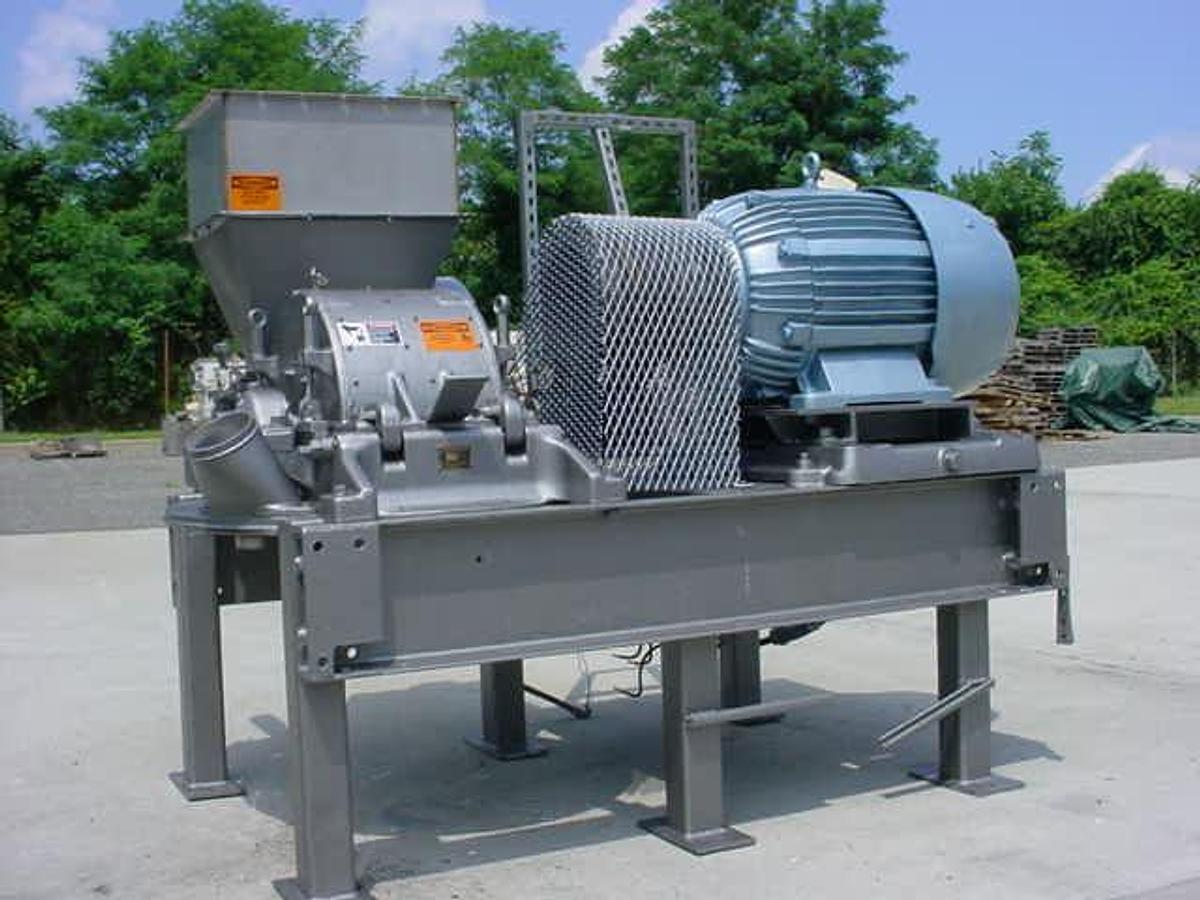
Hammer mills like the Mikro 4th Pulverizer are among the more commonly available PMC units on the used market. These machines use high-speed rotating hammers to reduce particle size through impact, and they are well suited for friable materials that need to be reduced to a fine powder. Roller mills, by contrast, apply compressive grinding force and are often preferred for harder or more abrasive materials. Understanding which PMC machine type fits a given application is the first step in evaluating any used listing.
What industries commonly use Pulverizing Machinery Company mills and pulverizers?
PMC equipment has historically served a wide range of process industries, which is one reason their machines retain strong demand on the used market. Chemical processing, pharmaceutical manufacturing, food processing, mineral processing, and plastics compounding are among the most common industries where PMC mills and pulverizers are found. In pharmaceutical and food applications, the ability to achieve a consistent, fine particle size distribution is critical, and PMC equipment has a long track record of meeting those requirements.
Mineral and chemical processors often favor PMC roller mills and disc pulverizers for their ability to handle harder or more abrasive feed materials without excessive wear. Plastics recyclers and compounders use hammer mills and attrition mills to reduce pellets, regrind, or scrap to a controlled particle size for reprocessing. Because the same basic machine can often be adapted for different materials with liner changes or screen swaps, used PMC equipment appeals to buyers across multiple sectors, and a single unit may have served more than one industry over its operating life.
What should I look for when evaluating used Pulverizing Machinery Company equipment?
When reviewing a used PMC mill or pulverizer, the most important starting point is the full equipment specification sheet. Key data points to request include motor horsepower, feed size capacity, output particle size range, rotor or roller configuration, and drive arrangement. The Mikro 4th Pulverizer, for example, is available with a 75hp motor, and knowing the motor size helps buyers estimate throughput capacity and utility requirements before the machine ever arrives on site. Incomplete specifications are a red flag, and a reputable dealer should be able to supply this information or direct a buyer to the manufacturer for clarification.
Beyond specifications, the physical condition of wear parts is a major cost consideration. Hammers, liners, screens, and grinding elements are consumable components that may need replacement regardless of the machine's overall age. Asking for photos or video of the interior grinding chamber, rotor, and drive components gives a clearer picture of remaining service life. If the machine is still installed at a production facility, an in-person or video inspection can reveal whether it has been well maintained. Buyers should also ask about the machine's last known application, since processing abrasive or corrosive materials can accelerate wear in ways that are not always visible from the outside.
What is the condition of used Pulverizing Machinery Company equipment listed for sale?
Used PMC equipment is sold in a range of conditions, from recently decommissioned production units that have been well maintained to older surplus machines that have been in storage for years. Condition varies significantly from one listing to the next, and buyers should not assume uniformity across the used market. Some machines may still be in active production at the time of sale, which allows for a live operational inspection. Others may be decommissioned and available for inspection in a warehouse or on a plant floor, but without the ability to run product through them.
It is worth noting that used equipment dealers generally do not have the permitting or production infrastructure to run actual material through a machine as part of a sales demonstration. Inspections are therefore focused on mechanical condition, visual wear assessment, and documentation review rather than live production testing. Buyers should factor this into their due diligence process and, where possible, consult with the equipment manufacturer to understand what parts are still available for a given model and what level of technical support they can expect after purchase. Selecting a dealer who specializes in size-reduction and milling equipment adds an additional layer of confidence, since they are better positioned to accurately represent a machine's condition and history.
Does used Pulverizing Machinery Company equipment come with a warranty?
Warranties on used industrial equipment are not standard practice in the used machinery market. Manufacturers typically only extend warranty coverage on equipment they sell directly, and that coverage does not transfer to subsequent owners. Used equipment dealers almost universally sell machinery on an as-is basis, which places the responsibility for assessing condition squarely on the buyer. This is true regardless of the brand or how reputable the original manufacturer may be.
Because of this, buyers are strongly encouraged to conduct thorough inspections before committing to a purchase. Reputable dealers will accommodate in-person visits, video walkthroughs, or detailed photo documentation to help buyers form an accurate assessment of a machine's current state. It is also worth contacting PMC or the current manufacturer support network directly to understand parts availability and technical support for the specific model being considered, since older or less common models may have limited aftermarket support. Choosing a dealer with a long track record in the size-reduction equipment space is one of the most practical ways to reduce risk when buying used.
How do inspections work when buying used Pulverizing Machinery Company equipment?
Inspections are a standard part of the used industrial equipment buying process and can take several forms depending on where the machine is located and whether it is still in service. In-person inspections allow a buyer or their appointed technician to physically examine the machine, check wear components, review maintenance records, and assess overall mechanical condition. This is generally the most thorough option and is worth arranging for higher-value purchases. Dealers will typically coordinate access to the machine, whether it is located at their own facility or at a third-party plant where the equipment is being sold out of production.
For buyers who cannot travel, video inspections and detailed photo packages are widely offered as alternatives. A good video inspection should cover the exterior of the machine, the drive and motor, interior grinding components such as hammers or rollers and liners, and any visible wear or damage. Keep in mind that even an in-person inspection has limits. Most dealers are not set up to run production through a mill, so inspections focus on mechanical and visual assessment rather than live output testing. Buyers who need process validation may want to factor in time and budget for a post-purchase test run at their own facility before committing the machine to full production.
How do I find replacement parts for Pulverizing Machinery Company mills and pulverizers?
Finding replacement parts for PMC equipment starts with identifying the exact model and any available serial number documentation. With that information in hand, buyers can contact the manufacturer or their authorized service network to check current parts availability. Age and model play a significant role here. Machines that are still within a supported product generation are more likely to have readily available wear parts like hammers, screens, liners, and bearings. Older or discontinued models may require sourcing from aftermarket suppliers or having custom parts fabricated to the original specifications.
For common wear items like hammer mill screens and grinding elements, third-party industrial parts suppliers often carry compatible components for well-known PMC models. It is a good practice to verify parts availability before finalizing the purchase of any used mill, since the cost and lead time for replacement parts can meaningfully affect the total cost of ownership. Asking the selling dealer about the parts history of a specific machine can also be useful. If the previous owner kept maintenance records or had a standing supply arrangement for wear parts, that information can save a buyer significant time during commissioning and early operation.
What materials can Pulverizing Machinery Company pulverizers process?
PMC equipment was designed to handle a wide range of materials, and the specific capabilities depend on the machine type and configuration. Hammer mills like the Mikro Pulverizer series are well suited for processing friable, dry materials including chemical compounds, pharmaceutical powders, food ingredients, spices, sugar, starch, and certain plastics. These machines work by impact, so they perform best on materials that fracture cleanly rather than deforming or smearing under force. Screen size selection controls the output particle size, giving operators flexibility across different product specifications.
Roller mills and disc pulverizers in the PMC lineup are better suited for harder or more abrasive materials, including minerals, pigments, and certain industrial chemicals. The key variables to evaluate when matching a PMC machine to a specific material are feed particle size, target output fineness, moisture content, bulk density, and abrasiveness. Materials that are hygroscopic, heat-sensitive, or prone to explosion risk may require additional equipment considerations such as jacketed housings, inert gas purging, or explosion-proof motor configurations. Buyers should confirm that a used machine's existing configuration is appropriate for their intended material before purchase, since retrofitting for a different application can add cost and complexity.
What are the shipping and freight considerations for large Pulverizing Machinery Company equipment?
Shipping industrial milling equipment requires more planning than standard freight, and costs can vary considerably based on machine size, weight, and the level of preparation required before loading. Smaller bench-top or pilot-scale PMC units may ship on a standard pallet with appropriate blocking and bracing, while larger production mills often require custom crating to protect precision components during transit. The degree of palletization or crating directly affects shipping costs, and buyers should ask dealers for a clear breakdown of packaging charges before agreeing to a purchase price.
For heavier equipment, rigging is an additional cost factor that buyers sometimes overlook. Loading a large mill onto a flatbed or into a container may require a crane or forklift with sufficient capacity, and unloading at the destination site carries the same requirement. Buyers should confirm their receiving facility has the equipment and clearance to accept a large industrial machine before the shipment departs. Freight carriers experienced with heavy industrial equipment are generally preferable to standard LTL carriers for this type of machinery. Asking the dealer for a fully landed cost estimate, including packaging, rigging, freight, and any applicable fuel surcharges, gives a more accurate picture of the total investment before finalizing the transaction.
What payment terms are typical when purchasing used Pulverizing Machinery Company equipment?
Payment practices in the used industrial equipment market are fairly consistent across dealers. Most sellers require full payment before a machine is released for shipping or pickup. This applies whether the buyer is purchasing a single small pulverizer or a larger production mill. The rationale is straightforward: used equipment transactions involve significant logistics coordination, and dealers generally will not commit to rigging, packaging, and freight scheduling until funds have cleared. Wire transfer is the most common payment method for transactions of this size, though some dealers accept other forms of verified payment.
Term arrangements, such as net-30 or installment payment structures, are occasionally available but are typically reserved for established customers with a prior transaction history with the dealer. First-time buyers should plan for full prepayment as the default expectation. Buyers who have concerns about paying in full before inspection should prioritize arranging a thorough inspection, whether in person or by video, before submitting payment. Understanding the payment timeline and any applicable holding fees for machines that require extended storage before shipment is also worth clarifying upfront to avoid surprises at the close of the transaction.