Category
Manufacturer
Model
Pulva
Pulva specializes in pulverizing equipment, catering to industries such as food, chemical, and minerals. They are known for their high-quality pulverizers and grinding mills that enhance material processing efficiency.
FAQ:
What industries commonly use Pulva pulverizers?
Pulva pulverizers are used across a broad range of industries that require consistent, controlled particle size reduction. Common applications include plastics recycling, rubber processing, food production, pharmaceuticals, chemical manufacturing, and minerals processing. The machines are well-suited for any operation where material needs to be ground to a fine, uniform powder without generating excessive heat or contamination.
The disc-style pulverizing mechanism that Pulva machines are known for produces a consistent particle size distribution, which is a critical requirement in industries like pharmaceuticals and food processing where product uniformity directly affects quality. In plastics and rubber recycling, Pulva pulverizers handle tough, high-volume grinding tasks that demand durable equipment capable of sustained production runs. This cross-industry versatility is one reason these machines hold their value well on the used equipment market.
What is a Pulva Pulvette, and what is it used for?
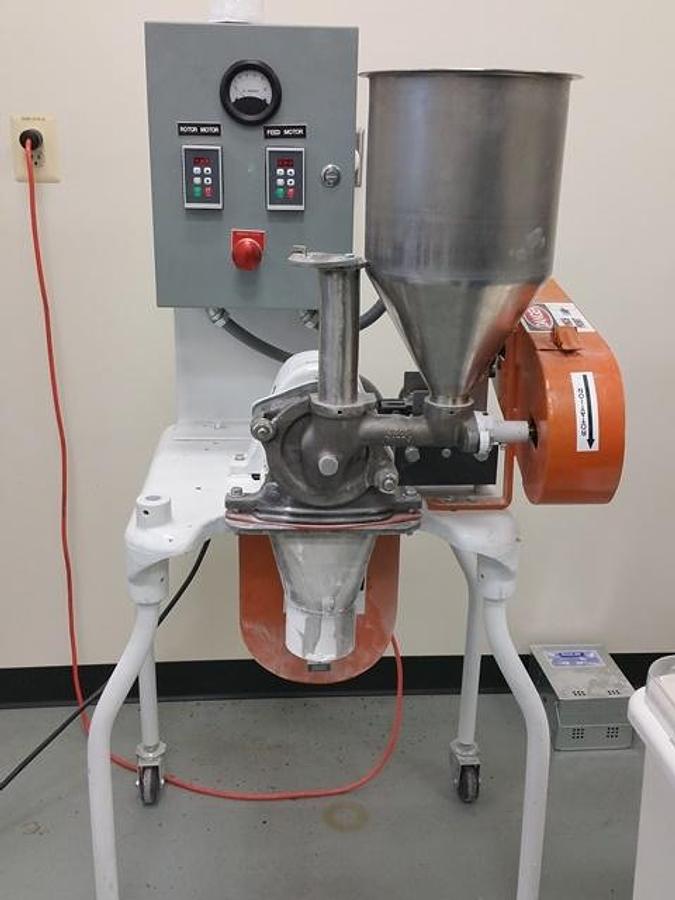
The Pulva Pulvette is a pilot plant pulverizer and hammermill designed for smaller-scale or laboratory-level material processing. It is commonly used for testing, product development, and small batch production runs where a full-size industrial pulverizer would be impractical. The Pulvette allows operators to evaluate how a specific material responds to pulverizing before committing to a larger production setup.
Pulvette units are available in stainless steel configurations, making them suitable for food-grade, pharmaceutical, and chemical applications where material purity and cleanability are important. Because of their compact size and versatility, used Pulvette machines are popular purchases for research facilities, universities, contract manufacturers, and companies scaling up a new product line. Finding a used Pulvette in good condition can offer significant cost savings compared to purchasing a full-scale production pulverizer.
What materials can Pulva pulverizers process?
Pulva pulverizers are capable of processing a wide variety of materials, including thermoplastics, thermosets, rubber, salt, sugar, spices, resins, pigments, minerals, and various chemical compounds. The specific model and disc configuration determine the hardness range and particle size achievable, so material compatibility should be confirmed when evaluating a particular used machine.
Some materials require special disc materials or coatings to prevent contamination or excessive wear. Stainless steel contact parts, as found on models like the Pulvette, are preferred for food and pharmaceutical applications. Buyers processing abrasive minerals or certain chemicals should pay close attention to the condition of the grinding discs and liners on any used machine they consider purchasing, since wear on these components directly affects output quality and throughput capacity.
What sizes and horsepower options are available for used Pulva pulverizers?
Pulva manufactures pulverizers across a range of sizes, from small pilot plant units like the Pulvette up to large-scale production machines designed for continuous high-volume grinding. Horsepower ratings vary considerably depending on the model, with smaller lab-scale units typically running in the range of a few horsepower and larger production models reaching 100 horsepower or more. The right size depends on the material being processed, the required output rate, and the target particle size.
On the used equipment market, availability at any given time depends on what has come off production lines or out of facilities. Buyers with specific throughput requirements should check the nameplate data and any available documentation on a used machine to confirm motor size and disc diameter before purchasing. A reputable used equipment dealer can help match the right model to a buyer's production needs based on the specifications of machines currently in inventory.
How long do Pulva pulverizers typically last, and what maintenance do they require?
Pulva pulverizers are built for industrial durability and are known for long service lives when properly maintained. In many production environments, these machines run for decades with regular upkeep. The primary wear components are the grinding discs and liners, which need periodic inspection and replacement depending on the abrasiveness of the material being processed and the volume of production. Bearings, seals, and screens are also routine maintenance items.
For a used machine, understanding its maintenance history is valuable but not always possible. Buyers should inspect the condition of the discs, liners, and housing for signs of uneven wear, cracking, or corrosion. Even a machine with significant hours can represent a solid investment if the major components are in good condition and replacement wear parts are still available for that model. Consulting the manufacturer about parts availability for a specific model and serial number is a practical step before finalizing a purchase.
Are replacement parts and wear components available for used Pulva machines?
Parts availability is one of the most important factors to research before buying any used pulverizer, and Pulva is generally regarded as a manufacturer with good long-term parts support. Grinding discs, liners, screens, and bearings are the most commonly replaced components, and sourcing these is critical to keeping a machine running efficiently. Buyers should contact the manufacturer directly to confirm whether parts are still available for the specific model and approximate age of the machine they are considering.
Age and model generation can affect what level of support is available. Older or discontinued models may have limited parts availability, which can increase downtime and repair costs. Some aftermarket suppliers also produce compatible wear parts for popular Pulva models, which can be an alternative source. Factoring in parts availability and lead times before purchase helps avoid situations where a machine sits idle waiting for components that are difficult to source.
What should buyers inspect when evaluating a used Pulva pulverizer?
A thorough inspection of a used Pulva pulverizer should cover several key areas. The grinding discs and liners are the heart of the machine and should be examined for uneven wear, chipping, or excessive erosion. The housing and feed throat should be checked for cracks or weld repairs that might indicate past overloading or material jams. Bearings should be assessed for play or noise, and the motor should be confirmed to be in working order with nameplate specifications intact.
Reputable used equipment dealers typically accommodate in-person inspections, video walkthroughs, or recorded video captures of the machine so buyers can assess condition before committing. Some machines may still be installed and operational at the facility where they were used, allowing a more thorough evaluation in a production context. Keep in mind that most dealers are not set up to run actual product through a machine during an inspection, since production-level testing requires different permitting and facility capabilities. Getting as much visual documentation as possible, including close-up footage of wear surfaces, is the best way to make an informed buying decision remotely.
What does buying a used Pulva pulverizer cost compared to purchasing one new from the manufacturer?
Used Pulva pulverizers are typically priced significantly below what a comparable machine would cost through the manufacturer's sales channel. The actual price depends on the model, size, age, condition, and current market demand. Smaller pilot plant units like the Pulvette tend to be more affordable, while larger production-scale machines with higher horsepower ratings command higher prices even on the used market. Pricing can range from a few thousand dollars for compact units to well over $50,000 for large, well-maintained production machines.
Buyers should factor in the full landed cost when evaluating a used machine, not just the purchase price. Shipping, rigging, crating, and any refurbishment or parts replacement needed after arrival can add meaningfully to the total investment. That said, even with those added costs, a used Pulva pulverizer in good condition often represents substantial savings compared to buying through a manufacturer, making the used market an attractive option for operations looking to add grinding capacity without a full capital expenditure.
How are used Pulva pulverizers typically shipped, and what should buyers expect for freight costs?
Shipping a used industrial pulverizer requires careful planning to prevent damage in transit. Depending on the size and weight of the machine, it may need to be palletized, crated, or secured to a skid before loading. Larger machines often require heavy-duty rigging equipment for loading at the seller's facility and unloading at the buyer's location, which adds to the overall shipping cost. Buyers should ask the dealer specifically about how the machine will be packaged and what rigging will be required at both ends.
Freight costs for used pulverizers vary based on machine weight, dimensions, origin, destination, and the level of packaging required. Getting a full breakdown of all shipping-related charges before finalizing a purchase is important for understanding the true landed cost. Some dealers work with freight brokers who specialize in industrial machinery and can provide competitive rates, but buyers are also free to arrange their own carriers if preferred. Confirming insurance coverage during transit is another practical step worth discussing with the dealer.
What payment terms do used equipment dealers typically offer for Pulva pulverizers?
Most used industrial equipment dealers require payment in full before a machine is released for shipping. This is standard practice in the used machinery industry and applies regardless of the machine's value. Accepted payment methods commonly include wire transfer, certified funds, or other secure payment instruments. Credit card payments, if accepted at all, are usually limited to smaller purchases due to processing fees.
Some dealers may offer extended payment terms to established customers with a track record of prior purchases, but this is not the norm for first-time buyers. Buyers who need financing should explore third-party equipment financing options, as several lenders specialize in used industrial machinery loans and leases. Arranging financing in advance allows buyers to move quickly when the right machine becomes available, which matters on the used market where desirable models can sell quickly.