Category
Manufacturer
Model
Pulsa-Feeder
Pulsa-Feeder is known for its innovative feeding systems, primarily serving the plastics and food industries. Their equipment is designed to ensure accurate and consistent material flow in production processes.
FAQ:
What is a Pulsa-Feeder and what is it used for?
Pulsa-Feeder (also styled as Pulsafeeder) is a brand under IDEX Corporation that specializes in chemical metering and dosing pump systems. These pumps are designed to deliver precise, repeatable volumes of liquid chemicals into a process stream, making them a go-to choice in applications where accuracy and consistency are critical. Common uses include chlorination, pH adjustment, fluoride dosing, and the controlled addition of acids or caustics in water treatment and industrial settings. The brand also has a strong presence in the plastics and food processing industries, where consistent material flow directly affects product quality.
At their core, Pulsa-Feeder metering pumps work by using a diaphragm or piston mechanism to displace a fixed volume of fluid with each stroke, allowing operators to dial in precise dosing rates regardless of fluctuations in system pressure. This level of control is especially important in municipal water treatment, where under- or over-dosing a chemical like sodium hypochlorite can have serious consequences for water quality and regulatory compliance. The equipment is built to handle aggressive chemicals, which is why wetted material selection, flow rate range, and pressure rating are all key factors buyers evaluate before purchasing.
What types of Pulsa-Feeder metering pumps are available on the used equipment market?
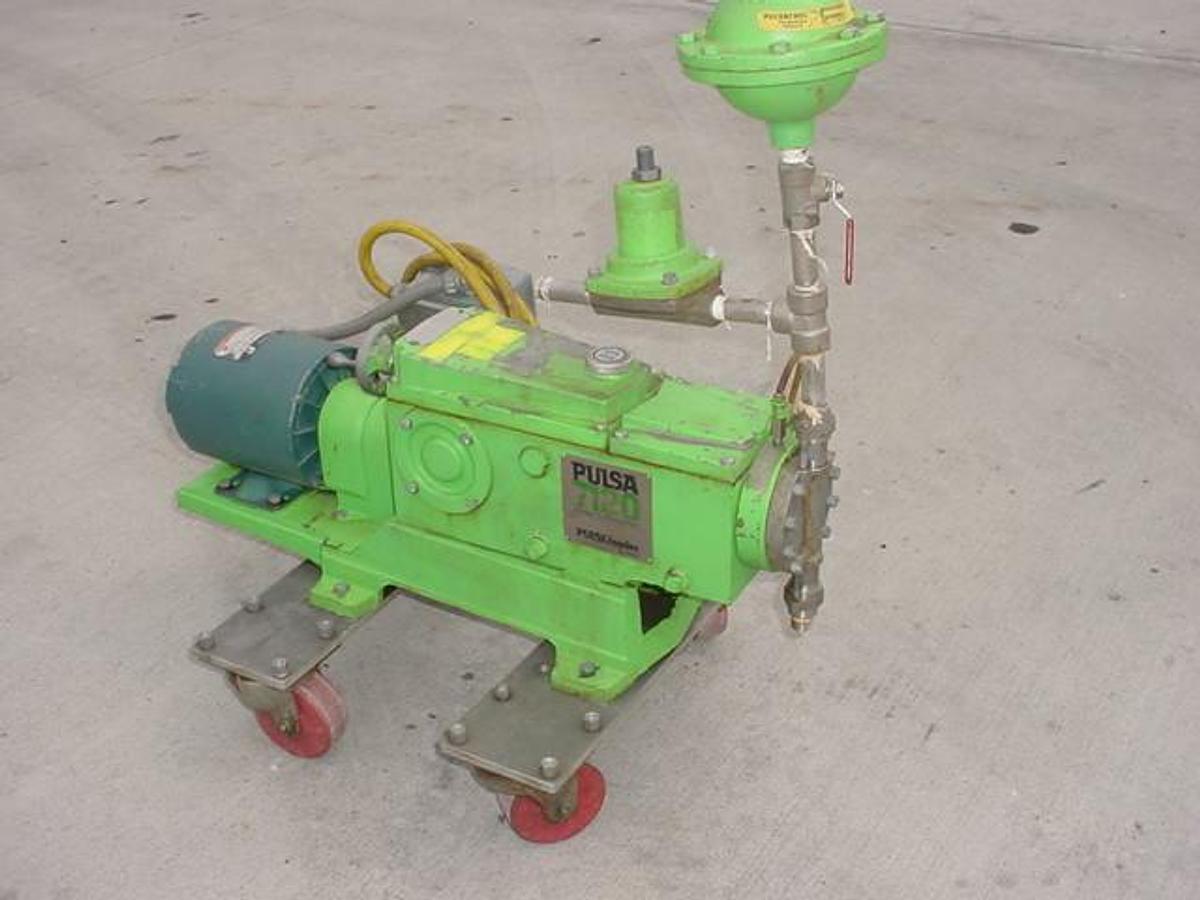
The Pulsa-Feeder product line spans several distinct series, and used units from multiple generations of the product line appear regularly on the secondary market. The Pulsar series covers diaphragm metering pumps suited for a wide range of chemical dosing applications, while the ProSeries models are geared toward higher-demand industrial environments. Chem-Tech models round out the lineup and are often found in water treatment and chemical feed skid applications. A specific example of what turns up on the used market is the Pulsa-Feeder "Pulsa" 7120 Metering Pump, a 1/2 HP unit that represents the kind of mid-range industrial metering equipment commonly sought after by facilities looking to replace or supplement existing chemical dosing systems.
Buyers shopping the used market should take note of the model number and series, since each has different flow rate capabilities, pressure ratings, and compatible wetted materials. Older models may also have varying levels of manufacturer parts and support availability, so it is worth contacting Pulsafeeder directly to confirm what service resources exist for a specific unit before purchasing. Used equipment dealers who specialize in industrial process equipment are generally the best source for these machines, as they are more likely to have accurate specifications and condition details compared to general surplus auction platforms.
What flow rates and pressure ratings should buyers expect from Pulsa-Feeder pumps?
Pulsa-Feeder metering pumps cover a broad performance envelope, which is part of why they show up in such a wide variety of applications. Flow rates across the product line range from less than 1 gallon per day (GPD) on the low end, suitable for precise micro-dosing, up to several hundred GPD for higher-volume chemical feed requirements. Discharge pressure ratings vary similarly by model, with many units rated anywhere from 25 PSI up to 150 PSI or more depending on the series and configuration. This range makes it possible to match a specific pump to the system backpressure it will be working against, which is critical for dosing accuracy.
For buyers evaluating a used Pulsa-Feeder unit, it is important to confirm that the pump's rated flow range and maximum discharge pressure align with the intended application before purchasing. A pump running at the extreme low or high end of its rated range may not deliver the accuracy it would at mid-range settings. Buyers should request the model number and any available documentation from the seller so they can cross-reference the manufacturer's published specifications. If original documentation is unavailable, Pulsafeeder's published product literature and technical support can often help identify a unit's performance parameters based on the model designation.
What wetted materials are available in Pulsa-Feeder pumps, and why does it matter?
Wetted materials refer to the components inside the pump that come into direct contact with the chemical being dosed, and choosing the right material is one of the most consequential decisions in selecting a metering pump. Pulsa-Feeder pumps are available in several wetted material configurations, including PVC, PVDF (polyvinylidene fluoride), and stainless steel. PVC is a cost-effective choice for many common chemicals, while PVDF offers superior resistance to highly aggressive substances like concentrated sodium hypochlorite, hydrochloric acid, and other oxidizing or corrosive chemicals. Stainless steel configurations are typically used where metal construction is required by the application or where certain solvents or high-temperature fluids are involved.
For buyers purchasing a used Pulsa-Feeder pump, verifying the wetted material configuration of the specific unit is essential. A pump with PVC wetted parts should not be used with chemicals that would degrade PVC, even if the overall pump model is rated for aggressive chemical service in a different material variant. Sellers should be able to provide the model number, which typically encodes the wetted material configuration. If there is any uncertainty, consulting the manufacturer's compatibility charts for the specific chemical and concentration being dosed is the safest approach before committing to a purchase.
Can Pulsa-Feeder metering pumps be used in drinking water or potable water applications?
Pulsa-Feeder pumps are widely used in potable water treatment, including municipal chlorination systems, fluoride addition, and pH correction. For these applications, NSF/ANSI 61 certification is a key compliance requirement, as it confirms that the materials used in the pump do not leach harmful substances into the drinking water supply. Many Pulsa-Feeder models have been designed and certified to meet this standard, which is why the brand has a strong footprint in municipal water treatment facilities across the country.
Buyers considering a used Pulsa-Feeder pump for a potable water application should verify that the specific model and wetted material configuration carries the appropriate NSF/ANSI 61 certification for their use case. Certification status can change between product generations, and a used unit may predate a particular certification or may have been configured for industrial rather than potable water service. It is advisable to check with the manufacturer directly to confirm the certification status of a specific model before deploying it in a regulated drinking water system. Local regulatory requirements may also dictate additional compliance documentation beyond NSF/ANSI 61, so consulting with the relevant water authority is a prudent step.
Are used Pulsa-Feeder units reliable, and what should buyers check before purchasing?
Used Pulsa-Feeder metering pumps can be a reliable and cost-effective option, particularly for facilities that need to replace a failed unit quickly or are looking to add chemical dosing capacity without the lead time associated with ordering equipment through distribution channels. Pulsafeeder has a long-standing reputation for building durable, well-engineered pumps, and many units have service lives that extend well beyond what a single facility uses them for. That said, the reliability of any used pump depends heavily on how it was maintained, what chemicals it handled, and how many hours it logged in service.
Before purchasing, buyers should request an inspection of the unit, either in person or via a detailed video walkthrough provided by the seller. Key things to evaluate include the condition of the diaphragm or piston assembly, signs of chemical attack or corrosion on wetted components, the state of the drive mechanism and motor, and whether the stroke adjustment mechanism operates smoothly across its full range. Reputable used equipment dealers who specialize in industrial process equipment will typically accommodate inspection requests and can provide accurate information about the machine's condition. Buyers should also contact Pulsafeeder directly to assess parts availability for the specific model, since older or discontinued units may have limited support from the manufacturer.
Does the Pulsa-Feeder come with a warranty when purchased from a used equipment dealer?
Manufacturer warranties are tied to the purchase of equipment through authorized channels and are specific to the purchasing entity. Used equipment, by its nature, is sold outside that chain, and manufacturer warranty coverage does not typically transfer to secondary buyers. Used equipment dealers generally sell machinery on an as-is basis, which places the responsibility for assessing condition squarely on the buyer. This is standard practice in the used industrial equipment market and is not unique to Pulsa-Feeder or any particular dealer.
Given this reality, buyers should approach a used Pulsa-Feeder purchase with due diligence rather than relying on warranty protection. Selecting a dealer with a long track record in industrial process equipment, requesting a thorough inspection before purchase, and contacting the manufacturer to understand parts and service availability for the specific model are all practical ways to reduce risk. Pulsafeeder's technical support team can often advise on the serviceability of a particular model and what replacement parts are still available, which is useful information for estimating the long-term viability of a used unit.
What is the typical availability and lead time for used Pulsa-Feeder equipment?
Availability of used Pulsa-Feeder equipment depends on what has recently come off-line from industrial facilities, water treatment plants, and chemical processing operations. Unlike ordering through a distributor, there is no predictable lead time with used equipment. A specific model may be available immediately from a dealer's existing inventory, or it may take weeks or months before a suitable unit becomes available on the secondary market. Buyers with urgent needs are generally better served by casting a wide net across reputable used equipment dealers who specialize in process and chemical handling equipment.
For buyers who are not under time pressure, the used market can be a patient person's advantage. Waiting for the right model, configuration, and condition to become available often results in significant savings compared to purchasing through standard distribution. It is worth contacting dealers directly and describing the specific model, wetted material configuration, and flow rate range needed, since some dealers maintain want lists or can source equipment through their network before it appears publicly. Buyers should also factor in shipping and rigging time when planning around a used equipment purchase, as larger or heavier units may require freight coordination that adds days or weeks to the delivery timeline.
How does shipping work for used Pulsa-Feeder metering pumps?
Shipping costs and logistics for used metering pumps vary based on the size and weight of the unit, the destination, and the level of packaging required to protect the equipment in transit. Smaller Pulsa-Feeder units like the 1/2 HP 7120 model can often be palletized and shipped via standard LTL (less-than-truckload) freight, while larger or more complex configurations may require custom crating to prevent damage during handling. The cost of packaging, whether basic palletization or full crating, is typically factored into the shipping quote and can vary meaningfully depending on the dealer's packaging standards.
Buyers should ask the selling dealer for a detailed breakdown of all costs involved in getting the equipment to their facility, including packaging, freight, and any rigging fees for loading at the origin. Heavier industrial equipment may require a forklift or crane for loading, which can add to the total landed cost. It is also worth confirming whether the buyer's receiving facility has the equipment needed to unload the shipment safely, since some units may arrive on a pallet that requires a forklift or lift gate truck for unloading. Getting a clear picture of the full landed cost before committing to a purchase avoids surprises and makes it easier to compare the total cost of a used unit against other options.
What are the typical payment terms when buying used Pulsa-Feeder equipment from a dealer?
Most used industrial equipment dealers require full payment before a machine is released for shipping. This is standard practice in the industry and applies broadly regardless of the type of equipment being purchased. The reasoning is straightforward: used equipment inventory is finite, and dealers need assurance that the transaction is complete before committing to packaging, rigging, and freight coordination. Payment is typically accepted by wire transfer, though some dealers may accept other forms of payment depending on the transaction size and their internal policies.
For buyers with an established relationship with a particular dealer, some flexibility on payment terms may be available, though this is generally extended on a case-by-case basis to repeat customers rather than as a standard offering. First-time buyers should expect to pay in full prior to shipment. It is also worth clarifying with the dealer exactly when title to the equipment transfers and what the process looks like if the equipment is damaged in transit, so both parties have a clear understanding of responsibilities before the transaction is finalized.