Category
Manufacturer
Model
Proctor & Schwartz
Proctor & Schwartz is known for its advanced manufacturing solutions in the pharmaceutical sector, focusing on tablet compression and coating machines. Their equipment is designed to meet the stringent requirements of pharmaceutical production while maximizing output.
FAQ:
What types of Proctor & Schwartz equipment are typically available on the used market?
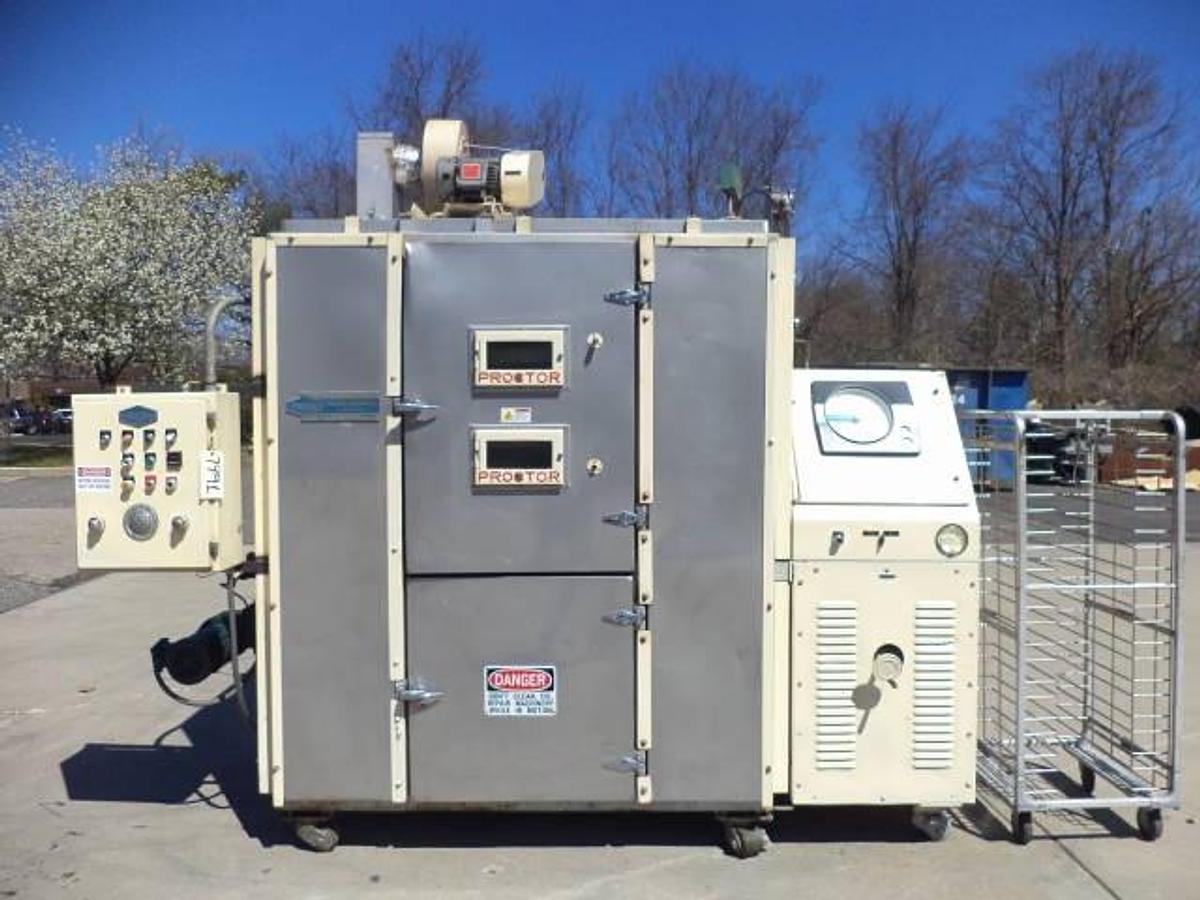
Proctor & Schwartz built a wide range of industrial drying, curing, and heating equipment over its history, and used units from several product categories still appear regularly on the secondary market. Common machine types include continuous conveyor belt dryers, gas-fired batch roasters and dryers, textile finishing ranges, screen printing dryers, industrial curing ovens, and curing chambers. Each category serves distinct production applications, so buyers should clearly define their process requirements before evaluating any specific unit.
Beyond dryers and ovens, Proctor & Schwartz also produced equipment used in pharmaceutical manufacturing, including tablet compression and coating machines designed to meet strict production standards. Because the brand spans so many industries and machine types, it helps to work with a used equipment dealer who specializes in industrial processing machinery and can match the right configuration to your application rather than simply listing available inventory.
What industries use Proctor & Schwartz drying and heating equipment?
Proctor & Schwartz equipment has historically served a broad cross-section of manufacturing industries. Textile and apparel manufacturers have long relied on their finishing ranges and curing ovens for fabric treatment processes. Food processing operations use their batch roasters and conveyor dryers for drying, roasting, and heat-treating food products at scale. Chemical and industrial manufacturers use their ovens and dryers for curing coatings, drying powders, and processing specialty materials.
Pharmaceutical production is another significant application area, where Proctor & Schwartz machines have been used for tablet coating and related processes that require precise temperature control and consistent output. Screen printing and graphics operations also commonly use their conveyor dryers to cure inks on textiles and other substrates. This cross-industry versatility is part of why used Proctor & Schwartz equipment remains in demand long after the machines leave active production lines.
Is Proctor & Schwartz still in business, and does that affect parts availability for used machines?
Proctor & Schwartz has gone through several ownership changes over the decades, and the current status of direct manufacturer support can vary depending on which product line or era of machine you are dealing with. For buyers of used equipment, this is a practical consideration worth investigating before purchase. Parts availability for legacy machines depends heavily on the model year, the specific configuration, and whether any successor company has maintained inventory or documentation for that line.
Before purchasing a used Proctor & Schwartz machine, it is worth contacting the current manufacturer or any authorized service network to ask directly about parts and technical support for that specific model. Older machines from the 1980s and 1990s may require sourcing components through specialty parts suppliers or fabricating certain items to spec. A reputable used equipment dealer can often provide guidance on what level of support to expect based on the machine's age and model, which helps buyers factor ongoing maintenance costs into their purchasing decision.
How do I verify the condition of a used Proctor & Schwartz machine before buying?
Condition verification is one of the most important steps in any used equipment purchase, and reputable dealers typically offer several options to help buyers assess a machine's current state. In-person inspections are the most thorough approach and allow a buyer or their technician to physically examine the unit, check for wear, review electrical and mechanical components, and evaluate the overall build condition. Many dealers also accommodate virtual inspections via video call or provide detailed video walkthroughs of the machine for buyers who cannot travel to the location.
It is worth noting that most used equipment dealers are not set up to run full production tests, since operating a machine at production capacity requires different permitting and facility infrastructure than a dealer typically maintains. Some machines may still be installed at an active plant where a working demonstration can be arranged between the dealer and the facility owner. In cases where the equipment has been decommissioned, a thorough physical inspection combined with any available maintenance records gives the clearest picture of what the machine's condition actually is. Buyers should ask specifically about the machine's operational history, any known repairs, and whether documentation such as manuals or service logs is available.
What should I look for in the maintenance history of a used Proctor & Schwartz dryer or oven?
A machine's maintenance history tells you a lot about how it was operated and what condition its key components are likely to be in. For Proctor & Schwartz dryers and ovens, the most critical areas to investigate include the heating system (burners, heat exchangers, or heating elements depending on fuel type), the conveyor belt and drive mechanism, temperature control systems, airflow components like fans and ductwork, and any seals or insulation that affect thermal efficiency. Regular maintenance on these systems generally indicates a machine that was taken care of during its working life.
Ask the seller for any available service logs, inspection records, or documentation of past repairs. Even partial records are useful. If records are not available, a detailed physical inspection by a qualified technician familiar with industrial drying equipment can often reveal signs of neglect or heavy wear, such as uneven belt wear, corrosion in the heat chamber, or control systems that have been modified or bypassed. Machines that were used in food or pharmaceutical applications may also have cleaning and sanitation records that speak to how the equipment was maintained between production runs.
How does the age of a Proctor & Schwartz machine affect its value and reliability?
Proctor & Schwartz equipment has a reputation for heavy-duty construction, and many units from the 1980s and 1990s still appear on the used market in functional condition. The brand's build quality means that age alone does not determine reliability. A well-maintained older machine can outperform a newer unit that was poorly serviced, and for straightforward drying or curing applications, older designs often deliver consistent results without the complexity of modern control systems.
That said, age does affect a few practical considerations. Older machines may use control systems or electrical components that are harder to source if they fail. Energy efficiency is another factor, since equipment designed decades ago may consume more fuel or electricity than current standards would require for the same output. Buyers should weigh the lower purchase price of an older unit against the potential cost of electrical upgrades, control system modernization, or parts sourcing challenges. A thorough pre-purchase inspection helps quantify those trade-offs before committing to a specific machine.
What is the typical price range for used Proctor & Schwartz equipment?
Pricing for used Proctor & Schwartz equipment varies considerably depending on the machine type, size, age, configuration, and overall condition. Smaller units like screen printing conveyor dryers may be priced in the low thousands of dollars, while large continuous belt dryers or industrial finishing ranges with significant belt width and production capacity can run into the tens of thousands. Gas-fired batch roasters and specialty pharmaceutical equipment tend to fall somewhere in between, depending on their specifications and how recently they were last in service.
Beyond the asking price, buyers should account for the full landed cost of the equipment. Shipping, rigging, crating, and freight charges can add meaningfully to the total, particularly for large or heavy machines that require specialized loading equipment. Asking the dealer for a detailed breakdown of packaging, rigging, and freight costs before finalizing a purchase gives a clearer picture of what the equipment will actually cost to get into your facility.
What are the shipping and rigging considerations for purchasing used Proctor & Schwartz equipment?
Industrial drying and heating equipment from Proctor & Schwartz ranges from relatively compact conveyor units to large continuous-process machines that can span dozens of feet in length and weigh several tons. Shipping requirements vary significantly based on machine size and weight. Smaller units may be palletized and shipped via standard freight carriers, while larger machines often require flatbed trucking, custom crating, and heavy-duty rigging for both loading at the seller's location and unloading at the buyer's facility.
Buyers should ask the dealer specifically what packaging and rigging services are included in the quoted price and what costs are additional. Rigging fees for loading a large industrial oven or finishing range can be a meaningful expense, and if the buyer's facility lacks a loading dock or forklift capacity, unloading costs should be planned for in advance. Getting a complete breakdown of all logistics costs before purchase avoids surprises and helps accurately compare the total cost of different machines that may be located at varying distances from the buyer's site.
What payment terms are standard when buying used Proctor & Schwartz equipment from a dealer?
Used industrial equipment dealers generally require payment in full before a machine is released for shipping. This is standard practice across the industry and reflects the nature of used equipment transactions, where the dealer needs to confirm funds before committing to packaging, rigging, and freight scheduling. Payment is typically accepted via wire transfer, though some dealers may accept other forms depending on the transaction size and the buyer's relationship with the dealer.
Buyers who have an established purchasing history with a particular dealer may find that some flexibility on payment timing is available, but first-time buyers should expect to pay in full upfront. It is worth clarifying payment terms, accepted methods, and any deposit requirements early in the negotiation process so there are no delays once a purchase decision is made. Understanding the full payment timeline also helps coordinate internal purchasing approvals and cash flow planning on the buyer's side.
What questions should I ask a used equipment dealer before buying a Proctor & Schwartz machine?
Going into a used equipment purchase with a clear list of questions helps avoid costly surprises. Start with the basics: what is the machine's model and serial number, what year was it manufactured, and what was it last used for? Knowing the production environment it came from (food processing, textiles, pharmaceuticals, etc.) gives context for how it was operated and what cleaning or decontamination history it may have. Ask whether any maintenance records, service logs, or manuals are available, and find out if the machine is currently installed and operational or has been decommissioned.
From there, ask about inspection options. Can you visit in person, or is a video inspection available? Is the machine still at an active facility where a live demonstration might be possible? Get a full breakdown of shipping, rigging, and crating costs so you know the total landed price. Ask about lead time from payment to shipping, and clarify what documentation (bill of sale, any available compliance records) will be provided with the purchase. Choosing a dealer with a long track record in industrial processing equipment and a willingness to answer these questions thoroughly is itself a strong signal that you are working with a trustworthy source.