Category
Manufacturer
Model
FAQ:
What is a pressure chamber and what is it used for?
A pressure chamber is a sealed vessel engineered to contain gases or liquids at pressures significantly above or below atmospheric pressure. They are built to withstand extreme internal forces without deforming or failing, making them critical components in testing, processing, and research environments. Depending on the design, they can handle pressures ranging from a few hundred PSI all the way to 150,000 PSI or more in highly specialized configurations.
Industries that rely on pressure chambers include oil and gas, aerospace, defense, pharmaceutical manufacturing, food processing, and laboratory research. In oil and gas, they are used for simulating downhole conditions. In food processing, high-pressure chambers are used for pasteurization without heat. In laboratory and research settings, they allow scientists to study material behavior under controlled pressure conditions. The range of applications is broad, which is why pressure chambers come in so many sizes, pressure ratings, and material configurations.
What industries commonly use Pressure Products pressure chambers?
Pressure Products Industries has built a reputation serving some of the most demanding industrial and scientific sectors. Their chambers are found in oil and gas facilities for simulating reservoir conditions and testing downhole equipment, in aerospace and defense programs for environmental simulation and component testing, and in pharmaceutical and biotech labs where sterile, high-pressure processing is required. Food and beverage manufacturers also use their equipment for high-pressure processing (HPP), a method of preserving food without chemical additives.
Beyond those core markets, Pressure Products chambers show up in university and government research labs, chemical processing plants, and materials testing facilities. The common thread across all these industries is the need for a vessel that performs reliably under pressure, meets applicable safety codes, and can be configured to match specific process requirements. Because of this diversity, buyers in the used equipment market often find that a chamber originally built for one industry translates well into another application, provided the pressure rating, material compatibility, and dimensions align with the intended use.
What sizes of pressure chambers are available on the used market?
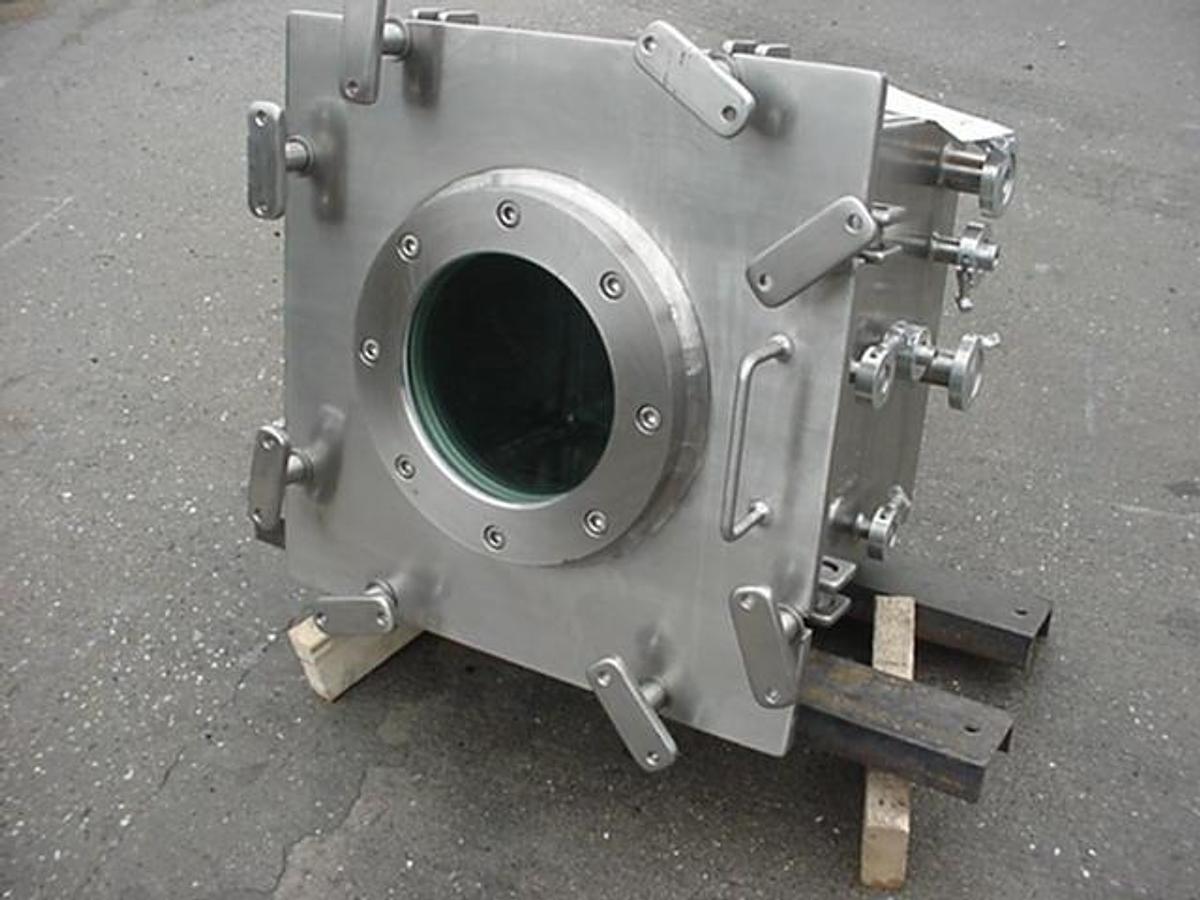
Pressure chambers from Pressure Products Industries are manufactured across a wide range of internal dimensions, from compact laboratory-scale units to large industrial vessels. On the used market, buyers frequently encounter chambers with internal dimensions measured in inches across all three axes, such as 16-inch by 16-inch by 16-inch configurations, which are well-suited for bench-scale testing or mid-volume processing applications. Larger units with internal volumes measured in cubic feet are also available, depending on what has come off-line from industrial facilities.
When evaluating size, buyers should think beyond just the internal chamber dimensions. Wall thickness, overall exterior footprint, inlet and outlet port sizing, and the clearance required for loading and unloading samples or product all factor into whether a particular unit fits a given application. Used equipment listings typically specify internal dimensions and sometimes overall exterior dimensions, so it is worth requesting full dimensional drawings from the seller before committing to a purchase, especially if the chamber needs to fit within an existing facility layout or tie into existing piping.
What pressure ratings should buyers expect from used Pressure Products chambers?
Pressure Products Industries is known for manufacturing vessels across an exceptionally wide pressure range. Entry-level research and process chambers often carry ratings in the hundreds to low thousands of PSI, while mid-range industrial models commonly operate between 10,000 and 60,000 PSI. Specialized high-pressure research vessels can be rated well beyond 100,000 PSI, with some models reaching 150,000 PSI or higher. The pressure rating is stamped or marked on the vessel nameplate and is one of the first specifications buyers should verify.
On the used market, it is important to distinguish between the vessel's rated design pressure and its current condition. A chamber that was rated at 30,000 PSI when it left the factory may have been subjected to pressure cycles, chemical exposure, or physical wear that affects its current safe operating capacity. Buyers should request any available maintenance records, inspection reports, or hydrostatic test documentation. Consulting with a qualified pressure vessel inspector before putting a used chamber back into service is a standard practice in industries where ASME compliance and safety are non-negotiable.
Are Pressure Products pressure chambers built to ASME standards?
Pressure Products Industries designs and fabricates their vessels in accordance with ASME Boiler and Pressure Vessel Code (BPVC) standards, primarily Section VIII, which governs the construction of pressure vessels. Division 1 of Section VIII covers vessels designed using standard design rules, while Division 2 applies to vessels built to more rigorous alternative rules that allow for higher stress allowances and more precise engineering analysis. Many Pressure Products chambers are built to one of these two divisions depending on the application and pressure range involved.
For buyers in regulated industries, ASME compliance is not just a preference but a legal and insurance requirement. When purchasing a used pressure chamber, it is critical to verify that the original ASME certification documentation, including the U-stamp or UD-stamp, is still associated with the vessel. The nameplate should indicate the applicable code, maximum allowable working pressure (MAWP), design temperature, and the year of manufacture. If the vessel has been modified after manufacture, those modifications need to have been performed by a certified shop to maintain code compliance. Buyers should raise these documentation questions directly with the seller before finalizing any purchase.
What materials are used in the construction of Pressure Products pressure chambers?
Pressure Products chambers are most commonly fabricated from stainless steel, which offers a strong combination of corrosion resistance, strength, and compatibility with a wide range of process media. Stainless steel construction is particularly common in pharmaceutical, food processing, and laboratory applications where cleanliness and chemical inertness are priorities. High-strength alloy steels are also used in chambers designed for extreme pressure ratings, where the material needs to maintain structural integrity under very high stress.
For specialized applications, Pressure Products has produced chambers in materials such as Hastelloy, Inconel, titanium, and other high-performance alloys that resist aggressive chemicals, high temperatures, or both. The choice of material affects not only corrosion resistance but also the chamber's pressure rating, weight, and weldability. On the used market, stainless steel chambers tend to be the most commonly available. Buyers should verify the material of construction from the nameplate or mill certifications if the process media they plan to use has specific compatibility requirements, since material substitutions can create serious safety or contamination risks.
What should buyers inspect when evaluating a used pressure chamber?
A thorough inspection of a used pressure chamber covers several areas. Visually, buyers should look for signs of corrosion, pitting, weld repairs, dents, or any mechanical damage on the interior and exterior surfaces. The condition of sealing surfaces, gasket grooves, and closure mechanisms deserves close attention since these are common wear points. Ports, fittings, and any integrated valves or gauges should also be checked for integrity and compatibility with the buyer's intended process connections.
Beyond the visual check, buyers should request documentation including the original ASME data report, any available hydrostatic or pneumatic test records, and maintenance logs if they exist. Many dealers will accommodate in-person inspections or provide detailed video walkthroughs of the equipment so buyers can assess condition remotely. Keep in mind that most used equipment dealers are not set up to perform live pressure testing with actual process media, since that type of operation requires production-level permitting and safety infrastructure. The inspection is therefore focused on physical condition and documentation review rather than a full operational test, which is why working with a reputable dealer who can provide accurate and detailed condition information is so important.
What does the shipping process look like for a used pressure chamber?
Shipping a used pressure chamber requires more planning than standard freight because of the weight, size, and structural sensitivity of the equipment. Proper packaging is essential. Smaller chambers are typically palletized and banded, while larger or heavier units may require custom wood crating to prevent damage during transit. For very large vessels, flatbed trucking is often the most practical option, and the loading process at the seller's facility may require a forklift or crane, which adds rigging costs to the transaction.
Buyers should ask the seller for a complete breakdown of all costs involved in getting the equipment to their facility, including packaging, rigging, freight, and any unloading requirements on the receiving end. These costs can vary significantly depending on the size and weight of the chamber, the distance being shipped, and whether the buyer has dock facilities or needs a liftgate delivery. Getting a clear picture of the total landed cost before finalizing the purchase prevents surprises and helps buyers make accurate cost comparisons between different available units.
What payment terms are typical when buying used pressure chambers?
Used equipment transactions in the industrial machinery market generally require full payment before the equipment is released for shipping. This is standard practice across the industry and reflects the nature of selling pre-owned capital equipment, where the seller needs payment security before arranging logistics. Wire transfer is the most common payment method for transactions of this size, though some dealers also accept other forms of verified funds.
Buyers who have an established relationship with a particular dealer may occasionally be able to negotiate different terms, but first-time buyers should expect to pay in full upfront. For large purchases, it is reasonable to ask the seller about the payment process, timing of payment relative to shipping, and what documentation will be provided upon payment, such as a bill of sale or title transfer. Having these details in writing before sending funds is a basic protection that any reputable dealer will be comfortable providing.
How should buyers choose a reputable used pressure chamber dealer?
The used pressure vessel market includes a wide range of sellers, from specialized industrial equipment dealers with decades of experience to general surplus resellers who may have limited technical knowledge of what they are selling. For a piece of equipment as safety-critical as a pressure chamber, the dealer's background matters considerably. Buyers should look for dealers who specialize specifically in pressure vessels or process equipment, have a verifiable track record in the industry, and can speak knowledgeably about the equipment's specifications, history, and condition.
A few practical things to evaluate: Does the dealer provide detailed specifications and condition information, or are listings vague and photo-light? Will they accommodate an in-person or video inspection? Can they provide any available documentation such as the ASME data report or prior maintenance records? Are they responsive and technically informed when you ask specific questions? Dealers who specialize in a particular equipment category tend to source, vet, and represent their inventory more accurately than generalist resellers. It is also worth contacting the manufacturer directly to understand what level of technical support, spare parts, or service documentation is still available for the specific model and age of chamber you are considering, since this can significantly affect long-term usability.