Category
Manufacturer
Model
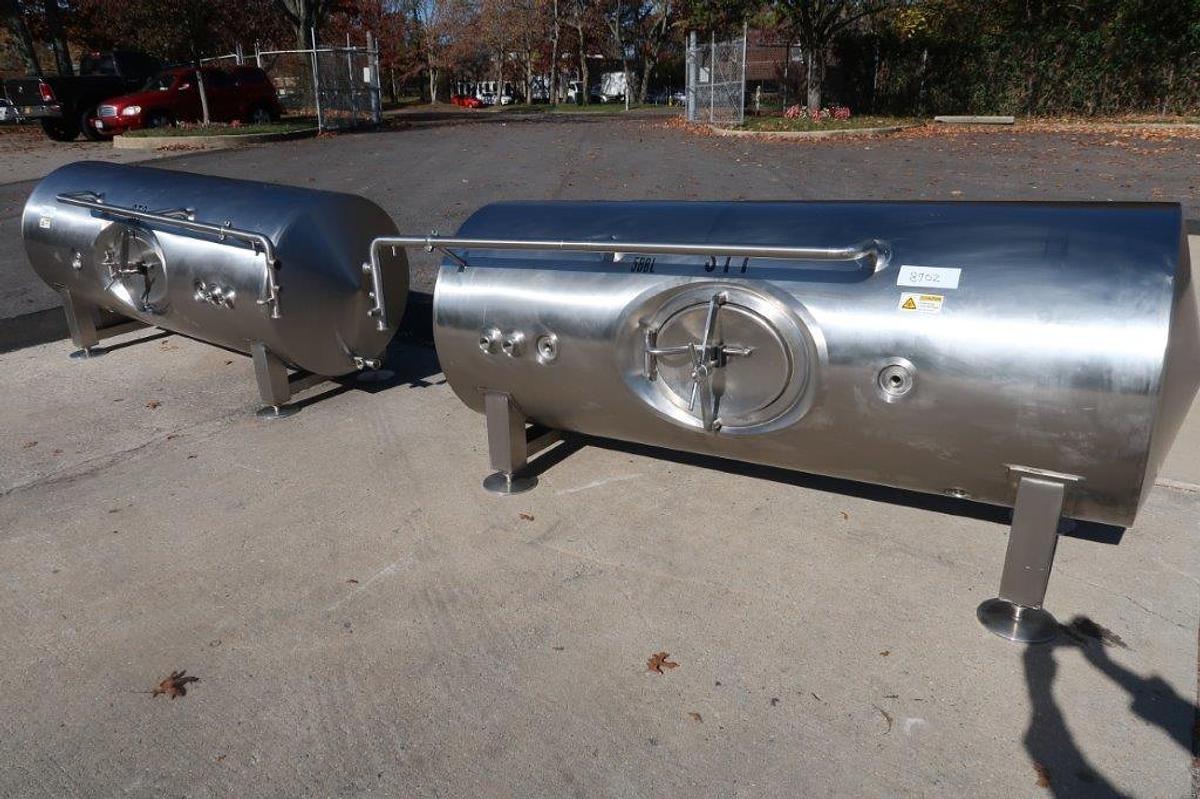
Premier Stainless
Premier Stainless specializes in providing high-quality stainless steel manufacturing equipment primarily for the food and beverage industry. They are well-regarded for their custom fabrication services, particularly in the production of tanks, mixers, and process systems that meet stringent sanitary standards.
FAQ:
What types of equipment does Premier Stainless manufacture?
Premier Stainless builds stainless steel processing equipment aimed primarily at the food, beverage, and brewing industries. Their catalog covers a wide range of vessels and systems, including fermenters, brite tanks, jacketed horizontal tanks, heat exchangers, mixers, pumps, fittings, and complete turnkey brewery or winery setups. The company is particularly well-known for sanitary process systems that meet strict food-grade standards, and their equipment shows up frequently in craft breweries, wineries, and commercial beverage production facilities of varying scale.
Because Premier Stainless has historically served everyone from small craft operations to mid-size commercial producers, their equipment comes in a broad range of capacities. A used Premier Stainless fermenter, for example, might be a 5-barrel vessel suited to a small craft brewery or a much larger jacketed tank pulled from a regional production facility. Buyers shopping the used market will find that the range of available configurations reflects that diverse customer base, so it pays to review the specific dimensions, port placements, and jacket specs of any individual unit rather than assuming uniformity across the product line.
What grade of stainless steel is used in Premier Stainless equipment?
Premier Stainless equipment is typically fabricated from food-grade 304 or 316 stainless steel, both of which are standard alloys in the brewing, winery, and food processing industries. Grade 304 is the more common of the two and offers strong corrosion resistance along with easy sanitization, making it well-suited for tanks and vessels that hold beer, wine, juice, or other beverages. Grade 316 adds molybdenum to the alloy, which improves resistance to chlorides and harsher cleaning chemicals, and is often specified for applications involving more aggressive sanitizing agents or acidic products.
For buyers evaluating used Premier Stainless equipment, confirming the specific alloy grade of a particular vessel is a reasonable step during the inspection process. The grade affects long-term durability, compatibility with certain cleaning protocols, and suitability for specific product types. Most reputable used equipment dealers can provide documentation or direct you to the manufacturer's published specifications for a given model, and consulting Premier Stainless directly about a specific unit's material composition is always an option when that detail matters for your production requirements.
What industries use Premier Stainless equipment?
Premier Stainless equipment is designed with the food and beverage sector in mind, and the bulk of their installations are found in craft breweries, commercial wineries, cideries, kombucha producers, and other fermented beverage operations. Their tanks and process systems are built to sanitary standards that satisfy the handling requirements for consumable products, which is why they have become a recognized name in the craft brewing boom that expanded significantly over the past two decades. Beyond fermentation specifically, their mixers, jacketed vessels, and heat exchangers also appear in dairy processing, juice production, and other food manufacturing environments.
On the used equipment market, Premier Stainless machinery surfaces most often when breweries or wineries close, upgrade to larger capacity systems, or reconfigure their production lines. That means a buyer in the craft beverage space can often find equipment that was already proven in a production environment very similar to their own, which is a meaningful advantage over sourcing from a facility with a completely different application. Buyers outside the beverage industry who need sanitary stainless processing equipment should still evaluate Premier Stainless units on their specifications, since the food-grade construction and corrosion resistance translate well to other processing contexts.
What should buyers know about purchasing used Premier Stainless equipment versus buying from the manufacturer?
Buying used Premier Stainless equipment from a dealer differs from a direct manufacturer purchase in several important ways. The most significant is price: used units typically sell at a substantial discount compared to current production pricing, which can make high-quality stainless fabrication accessible to smaller operations or buyers working within a tighter capital budget. The trade-off is that used equipment comes without the customization options available on a direct order, and the buyer is working with a specific vessel as it currently exists rather than specifying port configurations, sizes, or features from scratch.
Used equipment is sold as-is, which places the responsibility of due diligence squarely on the buyer. That makes the inspection process critical. Reputable used equipment dealers will accommodate in-person visits, video walkthroughs, or photo documentation so buyers can assess a vessel's condition before committing. Checking for weld integrity, surface condition, jacket functionality, and the working state of any fittings or valves are all reasonable inspection priorities. It is also worth contacting Premier Stainless directly to ask about parts availability and technical support for the specific model you are considering, since age and configuration can affect what assistance the manufacturer is able to provide.
How should buyers inspect used Premier Stainless tanks or fermenters before purchasing?
A thorough inspection of any used stainless tank or fermenter should cover both the physical condition of the vessel and the functional state of its components. On the structural side, buyers should look closely at weld seams, particularly on the interior, for signs of pitting, cracking, or repairs that could compromise sanitary integrity. The condition of the surface finish matters too, since scratches or rough areas inside a sanitary vessel can harbor bacteria and complicate cleaning. For jacketed units, confirming that the jacket holds pressure and shows no signs of leaks is an important step, as jacket repairs can be costly.
Reputable used equipment dealers typically offer inspection options that include in-person visits to the storage or production location, live or recorded video walkthroughs, and detailed photo sets. Some units may still be in active production at a plant, in which case the dealer can often coordinate a visit between the buyer and the current facility. Keep in mind that most used equipment dealers do not have the permitting required to run actual product through a vessel, so functional testing in the sense of a full production run is generally not possible. Buyers should use the inspection to verify mechanical condition, confirm dimensions and port specifications match their needs, and ask the dealer about the equipment's history and reason for decommissioning.
What are jacketed tanks, and why are they common in Premier Stainless equipment?
A jacketed tank has a second outer layer, or jacket, built around part or all of the vessel wall, creating a cavity through which a temperature-control medium such as glycol or water can circulate. This design allows operators to heat or cool the tank's contents precisely without direct contact between the medium and the product. In brewing and winemaking, temperature control is fundamental to fermentation quality, which is why jacketed fermenters and conditioning tanks are standard equipment in professional production environments. Premier Stainless builds jacketed vessels as a core part of their lineup, and these units are among the most commonly found Premier Stainless equipment on the used market.
For buyers evaluating a used jacketed Premier Stainless tank, understanding the jacket configuration matters. Some tanks have full-wrap jackets that cover the entire cylindrical wall, while others use dimple-plate or half-pipe jackets that cover a portion of the surface. The inlet and outlet fittings, pressure rating of the jacket, and compatibility with your existing glycol chiller or hot water system are all details worth confirming before purchase. A used jacketed tank in good condition can deliver years of reliable temperature-controlled fermentation or storage, but a jacket with leaks or compromised fittings will require repair before the vessel is production-ready.
Are replacement parts available for used Premier Stainless equipment?
Parts availability for used Premier Stainless equipment depends on the age of the unit and the specific model. Premier Stainless has been producing equipment for the craft brewing and winery markets for a significant number of years, and many of their standard fittings, valves, gaskets, and tri-clamp components are industry-standard parts that can be sourced from multiple suppliers, not exclusively through the manufacturer. This is one advantage of buying equipment built to sanitary industry standards: a lot of the hardware is interchangeable across brands and can be replaced without going back to the original fabricator.
For more specialized components specific to a particular Premier Stainless design, contacting the manufacturer directly is the most reliable way to gauge what is available. Premier Stainless may be able to supply replacement parts, offer technical guidance, or at minimum confirm the specifications needed to source a compatible part elsewhere. Buyers should do this research before finalizing a purchase, particularly for older or discontinued models where support may be more limited. A used equipment dealer with experience in the food and beverage space can often provide useful context about what parts are easy to find and what repairs are realistic for a given unit.
What does the shipping and delivery process look like for used Premier Stainless tanks?
Shipping used stainless tanks involves more logistics than typical freight because of the vessels' size, weight, and the need to protect finished stainless surfaces from damage in transit. Smaller tanks may be palletized and wrapped, while larger vessels often require custom crating or additional bracing to prevent movement and surface contact during transport. The level of packaging directly affects shipping cost, so buyers should ask the dealer for a clear breakdown of what preparation is included and what the freight charges will be based on the destination and carrier selected.
Larger Premier Stainless fermenters or jacketed tanks may also require rigging equipment for loading at the point of origin and unloading at the destination. Rigging, which involves forklifts, cranes, or other heavy-lift equipment, adds cost and needs to be coordinated in advance. Buyers should factor all of these elements, including packaging, rigging, and freight, into their total landed cost calculation before comparing the price of a used unit to alternatives. Dealers experienced in selling brewery and food processing equipment will typically be able to walk buyers through the shipping requirements for a specific piece and provide estimates for each component of the delivery process.
What payment terms do used equipment dealers typically offer for Premier Stainless machinery?
Used equipment dealers in the stainless processing and brewery equipment space generally require full payment before a machine is released for shipping. This is standard practice across the used industrial equipment industry and reflects the nature of the transaction: once a machine ships, the dealer has transferred possession and has limited recourse if payment issues arise later. Buyers should expect to pay in full upfront, and should factor this into their purchasing timeline and financing arrangements if outside capital is involved.
Some dealers extend payment terms to repeat customers or established buyers with a track record, but this is the exception rather than the rule, particularly for first-time transactions. Buyers who need financing for a used stainless tank or processing system may need to arrange that independently through an equipment lender or leasing company before approaching the dealer. Asking the dealer early in the conversation about accepted payment methods and any flexibility on terms is a reasonable step, and a reputable dealer will be straightforward about their policies so there are no surprises when it comes time to close the transaction.
How do buyers choose a reputable dealer when shopping for used Premier Stainless equipment?
Selecting a used equipment dealer for stainless processing machinery is a decision that deserves real scrutiny, particularly because these purchases are made as-is without manufacturer backing. A dealer's track record in the industry is one of the most meaningful indicators of reliability. Dealers who have been selling food and beverage processing equipment for many years, who specialize in the sector rather than handling general industrial machinery, and who can point to a history of completed transactions are generally safer choices than newer or generalist operations. Industry-specific knowledge matters because a dealer familiar with brewery and winery equipment understands what to look for in a used fermenter or jacketed tank in ways that a general reseller may not.
Beyond longevity and specialization, buyers should pay attention to how a dealer handles the inspection process. A reputable dealer will proactively offer inspection options, provide honest information about a machine's condition and history, and answer questions about the equipment's background without evasion. Red flags include dealers who discourage inspections, provide vague or inconsistent information about a unit's history, or pressure buyers to move quickly without adequate due diligence time. Checking for reviews, references, or industry reputation through brewing and food processing communities can also help buyers identify dealers who consistently deliver what they represent.