Category
Manufacturer
Model
Precision Scientific
Precision Scientific offers laboratory equipment and manufacturing solutions, particularly for the pharmaceutical and biotech industries. They focus on precision and compliance with regulatory standards in their equipment.
FAQ:
What types of Precision Scientific laboratory equipment are commonly available on the used market?
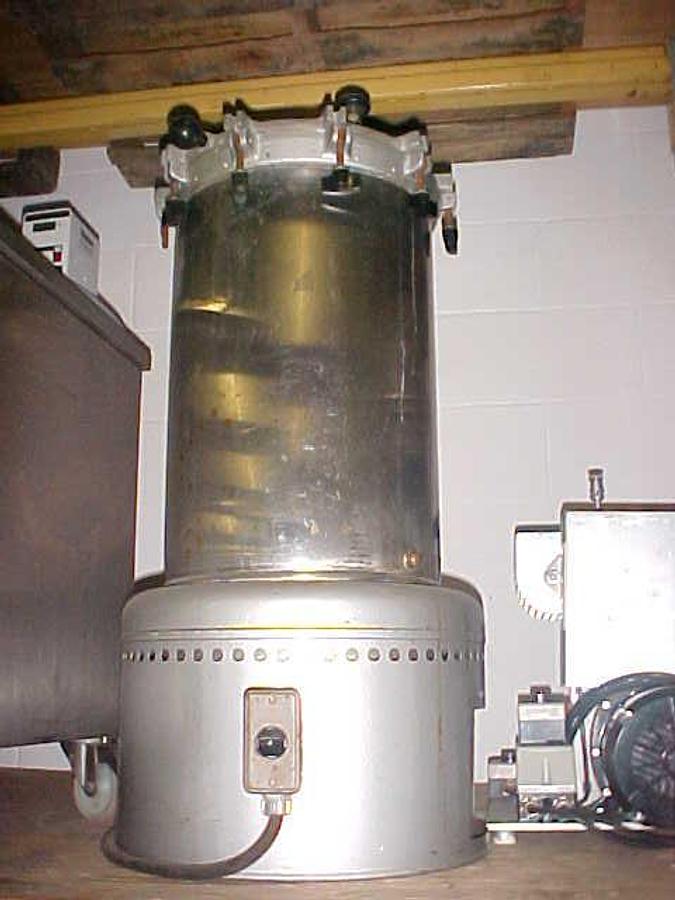
Precision Scientific has a long history of manufacturing a wide range of laboratory instruments, and their equipment turns up regularly in the used market across many categories. The most commonly available units include gravity and mechanical convection ovens, incubators, water baths, centrifuges, autoclaves, and vacuum ovens. Precision Scientific also produced vertical laboratory retorts, which are used in pharmaceutical and biotech processing applications. Because the brand served such a broad range of laboratory environments, including research, clinical, industrial, and pharmaceutical settings, there tends to be a good variety of models available from used equipment dealers at any given time.
The specific models available through any used dealer will vary depending on what has come off production floors or been decommissioned from laboratories. Buyers looking for a particular model or configuration should check with dealers directly, as inventory turns over frequently. It is worth asking whether the dealer specializes in laboratory and scientific equipment, since specialty dealers are more likely to have properly assessed the condition of units and can speak to the equipment's history and application.
Is Precision Scientific equipment suitable for regulated laboratory environments like pharmaceutical or clinical settings?
Precision Scientific built its reputation largely by serving regulated industries. Their instruments were designed with compliance in mind, and many models were manufactured to meet standards relevant to pharmaceutical, biotech, and clinical laboratory environments. Features like precise temperature uniformity, digital control interfaces, and safety certifications such as UL and CE listings made them a common choice for labs operating under FDA oversight, ISO accreditation, or similar regulatory frameworks.
That said, when purchasing used Precision Scientific equipment for a regulated environment, buyers need to think carefully about documentation. A regulated lab will typically need calibration records, service history, and in some cases the original equipment manuals to satisfy internal validation requirements or external audits. Buyers should ask the dealer what documentation is available with the unit before purchasing. It is also worth contacting Precision Scientific or their current authorized service network to understand what level of support, calibration services, or spare parts are available for the specific model being considered, since older models may have more limited manufacturer support.
How do I verify the calibration status of used laboratory equipment before purchasing?
Calibration traceability is one of the most important factors for any laboratory purchasing used instruments, particularly in accredited or regulated settings. When evaluating used Precision Scientific equipment, buyers should ask the dealer whether calibration certificates are available and whether those certificates reference traceability to NIST (National Institute of Standards and Technology) standards. A calibration certificate without a clear chain of traceability may not satisfy the requirements of ISO-accredited labs or regulated pharmaceutical environments.
Keep in mind that even if calibration documentation exists, it reflects the equipment's status at the time it was last calibrated, which may have been before the unit was decommissioned. Most laboratories will need to perform a fresh calibration after installation regardless of what documentation comes with the unit. Buyers should factor the cost of recalibration into their overall budget. Arranging an inspection, either in person or via video, before purchase can also help assess the physical condition of sensors, controls, and displays that directly affect calibration performance.
What should buyers expect when inspecting used Precision Scientific equipment before purchase?
Reputable used equipment dealers will typically offer buyers the opportunity to inspect equipment before committing to a purchase. Inspections can take several forms: an in-person visit to the dealer's facility, a live video walkthrough conducted remotely, or a recorded video of the machine that the buyer can review at their own pace. In some cases, equipment that has not yet been removed from a production facility may be inspected at the plant itself, where it might still be in active use or recently decommissioned.
During an inspection of laboratory equipment like ovens, incubators, or water baths, buyers should look at the condition of heating elements, seals, interior surfaces, control panels, and any sensors or probes. It is reasonable to ask the dealer to power the unit on and demonstrate basic operation. However, buyers should understand that most equipment dealers are not permitted to run actual production processes, since that requires different facility permitting. The inspection is primarily about assessing mechanical and functional condition, not validating production output. Buyers should come prepared with a list of specific questions about the unit's history, prior application, and any known issues.
Are replacement parts and service support available for older Precision Scientific models?
Parts availability is a legitimate concern with any used laboratory equipment purchase, and Precision Scientific is no exception. The brand has gone through ownership changes over the years, and the level of manufacturer support for older models can vary significantly depending on the age and model of the unit. For some models, heating elements, thermostats, gaskets, and control components may still be available through the manufacturer or authorized service providers. For older or discontinued models, buyers may need to rely on third-party parts suppliers or specialty repair technicians who work with legacy laboratory equipment.
Before purchasing, it is worth contacting Precision Scientific or their current service network directly to ask about parts availability and service support for the specific model number in question. A dealer who specializes in laboratory equipment may also be able to advise on parts availability based on their experience with that model. Factoring potential maintenance and parts costs into the total cost of ownership is an important step, especially for equipment that will be used in a critical application where downtime is costly.
How is used laboratory equipment packaged and shipped to prevent damage in transit?
Shipping used laboratory equipment requires more care than standard freight, particularly for sensitive instruments like ovens, centrifuges, and incubators that contain precision components, glass, or delicate control systems. Reputable dealers will package equipment on pallets with appropriate blocking, bracing, and wrapping to prevent movement during transit. For more sensitive or heavier units, custom crating may be required to provide adequate protection. The level of packaging directly affects the landed cost of the equipment, so buyers should ask the dealer specifically what packaging method will be used and what the associated costs are.
Larger or heavier pieces of laboratory equipment may also require specialized rigging for loading at the dealer's facility and unloading at the buyer's location. Rigging services add to the total cost and should be discussed upfront. Buyers should ask for a complete breakdown of packaging, rigging, and freight charges before finalizing a purchase so there are no surprises. Confirming that the receiving facility has the appropriate equipment and dock access to handle delivery is also an important step that buyers sometimes overlook.
What payment terms are typical when purchasing used laboratory equipment?
Most used equipment dealers require full payment before a unit is released for shipping. This is standard practice in the industry and reflects the fact that used equipment transactions involve unique inventory that cannot simply be restocked if a buyer defaults. Payment is typically accepted by wire transfer, though some dealers may accept other methods depending on the transaction size and the buyer's relationship with the dealer. Buyers should confirm accepted payment methods early in the process to avoid delays.
Some dealers extend payment terms to repeat customers or established institutional buyers, but this is not the norm for first-time transactions. Buyers from universities, hospitals, or large pharmaceutical companies who regularly purchase used equipment may be able to negotiate terms over time as a track record is established. Regardless of payment structure, buyers should ensure they receive a detailed invoice that clearly describes the equipment, model number, and any agreed-upon conditions of sale before sending funds.
What documentation should a buyer request when purchasing used Precision Scientific equipment for a regulated lab?
For laboratories operating under regulatory oversight, such as pharmaceutical manufacturers, clinical labs, or ISO-accredited research facilities, documentation is just as important as the physical condition of the equipment. Buyers should ask the dealer for any available service history records, prior calibration certificates, and equipment manuals. Even if the documentation is incomplete, whatever is available can help establish a baseline for the equipment's history and support the validation process after installation.
In many regulated environments, the purchasing lab will need to conduct its own installation qualification (IQ), operational qualification (OQ), and performance qualification (PQ) regardless of what documentation comes with the unit. Having the equipment manual is particularly valuable for this process. If the dealer does not have the manual, buyers can often find them through the manufacturer or third-party documentation services. Buyers should also clarify with the dealer whether the unit was previously used in a regulated environment, as that context can be useful when documenting the equipment's history for internal quality systems.
How does buying used Precision Scientific equipment compare to purchasing current-production laboratory instruments?
The primary advantage of purchasing used Precision Scientific equipment is cost. Well-maintained used laboratory instruments can be acquired at a fraction of the cost of current-production models, making them an attractive option for labs working within tight capital budgets, startups equipping a facility for the first time, or researchers who need a specific instrument for a defined project. Precision Scientific built a strong reputation for durable construction, and many of their instruments have long service lives, meaning a used unit can still provide years of reliable performance when properly maintained and calibrated.
The trade-offs are worth understanding clearly. Used equipment is sold as-is, which means the buyer takes on the responsibility of assessing condition through inspection before purchase. There are no manufacturer warranties on used units. Parts availability for older models may be limited, and the buyer will need to budget for recalibration and potentially some refurbishment after acquisition. For labs that need the latest software integrations, modern connectivity features, or current compliance documentation from the manufacturer, a used unit may not meet those requirements. But for many standard laboratory applications, a used Precision Scientific instrument that has been properly inspected and recalibrated is a practical and cost-effective choice.
How should a laboratory choose a reputable dealer when buying used Precision Scientific equipment?
The dealer you buy from matters as much as the equipment itself when purchasing used laboratory instruments. Because used equipment is sold as-is, the buyer's ability to make a sound purchase depends heavily on the accuracy of the dealer's representation of the equipment's condition. A dealer with a long track record in laboratory and scientific equipment will have the domain knowledge to accurately describe what they are selling, identify potential issues, and answer technical questions about specific models. Buyers should look for dealers who specialize in laboratory equipment rather than general industrial machinery, as the nuances of lab instruments require specific expertise.
It is reasonable to ask a dealer how long they have been in business, what their process is for assessing equipment condition before listing it for sale, and whether they can provide references from past laboratory customers. A dealer who readily accommodates inspection requests, whether in person or via video, and who is transparent about any known issues with a unit, is demonstrating the kind of accountability that protects buyers. Checking for online reviews or asking for references from similar institutional buyers can also help verify a dealer's reputation before committing to a purchase.