Category
Manufacturer
Model
Ppet
Ppet focuses on manufacturing equipment for the pet food industry, offering machines that ensure high-quality production. Their equipment is designed to handle various formulations and maintain product integrity.
FAQ:
What is PPET and what types of equipment does the company manufacture?
PPET is a manufacturer that specializes in equipment designed for the pet food production industry. Their machines are built to handle various product formulations while maintaining the integrity of the finished product throughout the production process. PPET equipment is engineered with the demands of food-grade manufacturing in mind, which means precision, durability, and consistency are central to how these machines are built.
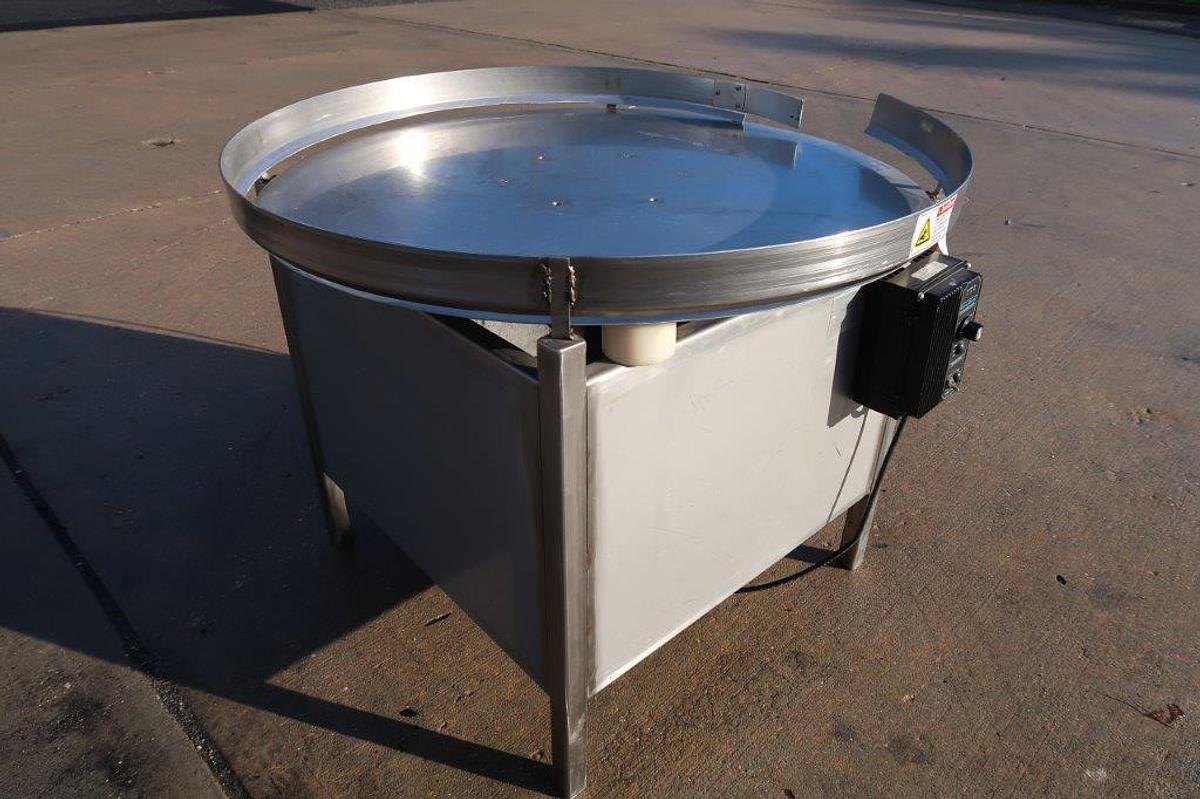
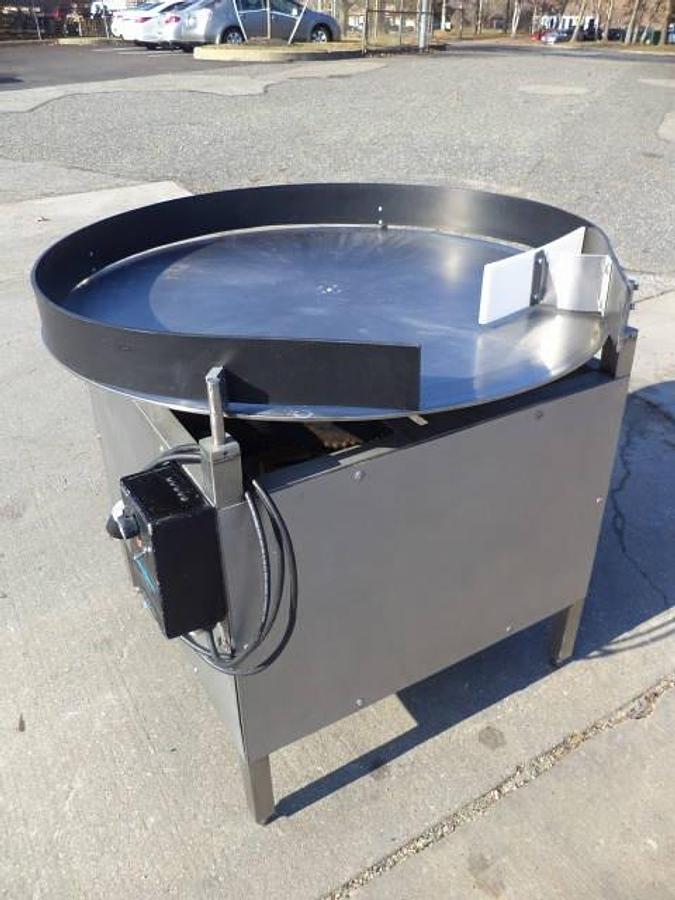
Among the more commonly found PPET machines on the used market are rotary unscrambling and accumulating tables, which play a key role in organizing and moving product containers along a production line. These tables are typically available in stainless steel construction and variable speed configurations, making them adaptable to different line speeds and product types. Sizes vary, with 36-inch and 38-inch diameter tables being examples of what surfaces in the secondary market.
What should I inspect before buying a used PPET rotary accumulating table?
Before purchasing a used PPET rotary accumulating table, the most important areas to examine are the tabletop surface, the drive motor, the speed control mechanism, and the overall structural frame. For stainless steel units, look closely for deep scratches, pitting, or corrosion that could affect sanitation or structural integrity. The variable speed drive should be tested across its full range to confirm smooth, consistent operation without hesitation or unusual noise. Bearings and the central drive assembly are also worth close attention, as wear in these components can be costly to address after purchase.
Beyond the mechanical condition, buyers should verify that the table dimensions match their line requirements. A 36-inch diameter table and a 38-inch diameter table serve different throughput needs, and swapping one for the other mid-line can create bottlenecks. Ask the seller for photos or video of the machine running under power, and if possible, arrange an in-person or virtual inspection. Most reputable used equipment dealers will accommodate either option so buyers can get an accurate picture of the machine's current working condition before committing.
Does used PPET equipment come with a warranty?
Used PPET equipment is typically sold on an as-is basis, which is standard practice across the used industrial machinery market. Warranties are generally only offered by equipment manufacturers on machines sold directly through authorized channels. Once a machine enters the secondary market, that manufacturer coverage has almost always expired or is no longer transferable, so buyers should not expect warranty protection when purchasing through a used equipment dealer.
Because there is no warranty safety net, the inspection process becomes especially important. Buyers should take full advantage of any inspection opportunities offered by the dealer, whether in person, via video call, or through detailed photo documentation. It is also worth contacting PPET directly to ask about parts availability and technical support for the specific model and age of the machine you are considering, since older models may have limited support resources. Choosing a dealer with a long track record in the food processing or packaging equipment space adds another layer of confidence to the transaction.
What types of used pet food production equipment are commonly available on the secondary market?
The used pet food equipment market includes a fairly wide range of machinery, covering everything from mixing and blending equipment to filling, sealing, and conveying systems. Rotary accumulating and unscrambling tables, like those made by PPET, are among the more frequently traded items because they are essential to high-volume container handling on packaging lines. You will also find used extruders, dryers, coaters, and portioning systems from various manufacturers, depending on what segments of the production process a facility is upgrading or decommissioning.
Stainless steel construction is a common thread across most food-grade pet food equipment, since it meets sanitation requirements and holds up well over years of production use. Variable speed capability is another feature buyers tend to prioritize, as it gives operators flexibility to adjust line speed without swapping out components. Buyers sourcing used equipment for pet food applications should pay particular attention to the condition of food-contact surfaces, seals, and any components that are difficult or expensive to source as replacement parts for older machines.
How does the inspection process work when buying used industrial pet food equipment?
Most used equipment dealers offer buyers at least one of three inspection options: an in-person visit to the dealer's facility, a live video walkthrough conducted remotely, or a set of detailed photos and video recordings captured by the dealer. Each option has its place depending on the buyer's location, the value of the machine, and how much certainty is needed before committing. For higher-value machines, an in-person inspection is almost always worth the travel cost, as it allows the buyer to observe operation firsthand and ask questions in real time.
In some cases, the equipment being sold is still installed at a production facility rather than sitting in a dealer's warehouse. When that happens, inspections may be arranged directly at the plant, and the machine might even be running in active production, which gives the buyer a clear view of its current functional state. One thing to keep in mind is that most equipment dealers do not have the permits or production infrastructure to run actual product through a machine during a demonstration. Inspections focus on mechanical operation rather than full production output, so buyers should factor that into how they interpret what they observe.
What are the typical shipping and logistics considerations for used PPET rotary tables?
Rotary accumulating tables from PPET, while not the largest machines in a packaging line, still require careful handling during transit to avoid damage to the tabletop surface, drive components, and speed control electronics. Proper palletization or crating is essential, and the level of packaging required will directly affect the shipping cost. Buyers should ask the dealer specifically how the machine will be prepared for shipment, since a poorly packaged unit can arrive with bent frames or damaged motors that are expensive to repair.
For heavier or more complex machines, rigging may be required for loading at the dealer's location and unloading at the buyer's facility. Rigging is typically an added cost on top of freight, and it is something buyers should clarify upfront to understand the full landed cost of the equipment. Getting a clear breakdown of packaging, rigging, and freight charges before finalizing a purchase helps avoid surprises and makes it easier to compare the total cost of different machines across different sellers.
What payment terms should buyers expect when purchasing used pet food equipment?
The standard payment structure in the used industrial equipment market requires full payment before the machine is released for shipping. This applies to most transactions regardless of the buyer's size or industry, and it reflects the practical reality that used equipment dealers carry significant inventory investment and cannot absorb the risk of shipping machines before funds are confirmed. Wire transfer is the most common payment method for transactions of this type, though some dealers may accept other forms depending on the transaction size.
Repeat buyers with an established relationship with a particular dealer may occasionally be offered payment terms, but this is the exception rather than the rule and is typically negotiated on a case-by-case basis. First-time buyers should plan for full upfront payment and budget accordingly, factoring in not just the machine price but also the shipping, rigging, and any installation costs on their end. Getting a complete cost picture before committing ensures there are no gaps between what was budgeted and what the transaction actually requires.
How do I evaluate whether a used PPET machine is the right fit for my production line?
Fit evaluation starts with the technical specs. For a rotary accumulating or unscrambling table, the key figures are the table diameter, the speed range, and the type of containers the machine is designed to handle. A 36-inch table and a 38-inch table have meaningfully different accumulation capacities, and the right choice depends on your line speed, container size, and the amount of buffer space you need between upstream and downstream equipment. Confirming that the machine's footprint works within your floor layout is also a step that gets overlooked more often than it should be.
Beyond the specs, it is worth thinking about parts and service support for the specific model you are considering. Contacting PPET directly to ask about replacement parts availability and service documentation for that model year gives you a realistic sense of what ongoing maintenance will look like. Older machines may have limited parts availability, which raises the long-term cost of ownership even if the purchase price is attractive. A thorough inspection combined with that parts availability check gives buyers the clearest possible picture of what they are actually acquiring.
What makes stainless steel construction important in used pet food processing equipment?
Stainless steel is the material of choice in food-grade production environments because it resists corrosion, tolerates repeated cleaning with industrial sanitizers, and does not harbor bacteria the way porous materials can. In pet food manufacturing specifically, where moisture, fats, and proteins are part of the production environment, stainless steel surfaces hold up far better over time than painted steel or aluminum alternatives. This is why machines like PPET's rotary accumulating tables are built with stainless steel as a standard feature rather than an upgrade.
For buyers shopping the used market, the condition of the stainless steel surfaces is one of the most important things to evaluate during inspection. Surface pitting, deep scratches, or signs of rust around welds can indicate either heavy use or improper cleaning practices during the machine's prior service life. While minor surface wear is expected on used equipment, more significant damage to food-contact surfaces may require remediation before the machine can be put back into production. Asking for close-up photos of the tabletop and any food-contact areas is a reasonable and standard request when buying remotely.
Why do food production facilities sell used PPET equipment, and is that a concern for buyers?
Equipment ends up on the used market for a wide range of reasons, and most of them have nothing to do with the machine having problems. Facilities frequently sell functioning equipment when they upgrade to higher-capacity machines, change their product mix, consolidate operations, or close a specific production line. In these cases, the machine being sold may be in excellent working condition and simply no longer fits the seller's current needs. This is actually one of the more appealing aspects of the used equipment market for buyers who need reliable machinery without paying the price of a brand-new unit.
That said, buyers are right to ask questions about why a particular machine is being sold and what its service history looks like. A reputable dealer will be transparent about what they know regarding the machine's prior use and condition. Inspections, whether in person or via video, are the most effective tool for cutting through uncertainty. Seeing the machine run under power, reviewing the physical condition of key components, and asking the dealer direct questions about any known issues gives buyers the information they need to make a confident decision.