Category
Manufacturer
Model
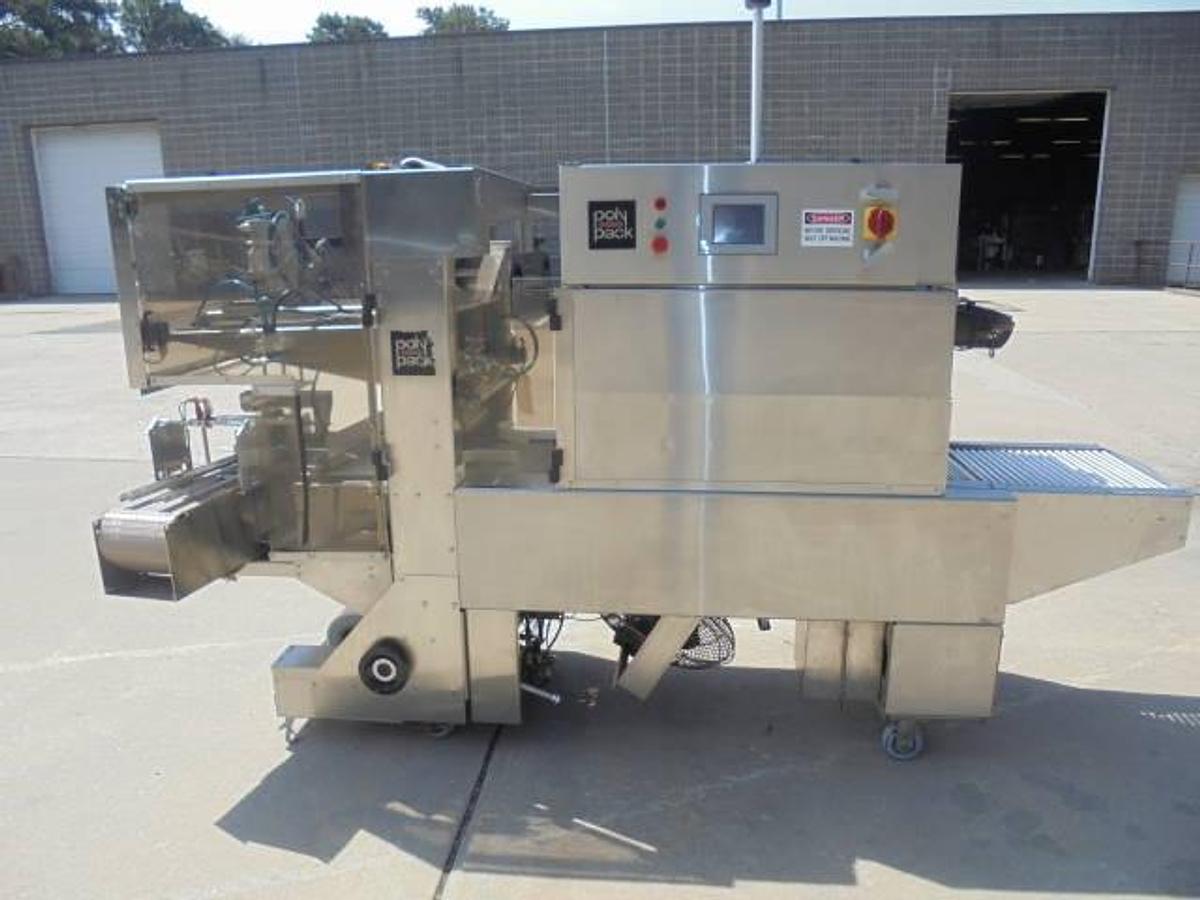
Polypack
Polypack is known for its packaging solutions, particularly shrink wrapping machines. They serve various industries, including food and consumer goods, providing reliable and efficient packaging systems.
FAQ:
What types of shrink wrapping machines does Polypack manufacture?
Polypack produces a broad range of shrink packaging equipment covering several distinct machine categories. Their lineup includes L-bar shrink wrappers, side-seal shrink wrappers, sleeve wrappers, and fully integrated shrink tunnel systems. One of the product types most closely associated with the brand is the shrink bundling machine, which groups multiple products together and wraps them without requiring a tray or secondary packaging material. This tray-free bundling approach is a significant reason why food, beverage, and consumer goods manufacturers have relied on Polypack equipment for decades.
Beyond bundling, Polypack machines are available in both semi-automatic and fully automatic configurations. Semi-automatic models are well suited to smaller production runs where an operator feeds product manually, while fully automatic systems integrate into high-speed production lines with minimal human intervention. The stainless steel construction found on many Polypack models, including their shrink bundling machines with integrated tunnels, makes them a practical choice for food-grade environments where washdown and sanitation standards are a regular part of operations.
What industries use Polypack shrink wrapping equipment?
Polypack has built a long track record serving industries where consistent, high-throughput packaging is essential. Food and beverage operations are among the most common users, particularly for products like bottled water, canned goods, dairy items, and baked goods that benefit from bundled shrink wrapping without trays. Consumer goods manufacturers also rely on Polypack systems for retail-ready packaging that needs to look clean and professional on store shelves. Pharmaceutical and personal care product companies use their equipment as well, particularly where tamper-evident or protective film wrapping is required.
The versatility of Polypack machines across these sectors comes down to their ability to handle a wide variety of product shapes, sizes, and film types. Because the equipment can be configured for different production speeds and automation levels, it fits into operations ranging from regional food producers running a single shift to large-scale industrial facilities running continuous production. This flexibility is one reason Polypack equipment retains strong resale value and continues to be sought after on the used machinery market.
What shrink film types are compatible with Polypack machines?
Polypack shrink wrapping machines are designed to work with the most widely used industrial shrink film materials, giving packaging operations real flexibility in their material sourcing. Polyolefin (POF) film is one of the most common choices, valued for its clarity, strength, and suitability for food-contact applications. Polyethylene (PE) film is frequently used in bundling applications, particularly for heavier or bulkier products like beverage multipacks, because of its durability and lower cost per unit of coverage. PVC shrink film is another compatible option, though it is less common in food environments due to its handling and disposal considerations.
When evaluating a used Polypack machine, it is worth confirming which film types and gauges the specific model was configured to run, since sealing bar materials, tunnel temperatures, and conveyor speeds may be optimized for a particular film category. Consulting with the selling dealer and, where possible, the manufacturer can help clarify whether adjustments are needed to run a different film type than the machine was originally set up for. Film compatibility is a practical detail that affects both operating costs and output quality, so it deserves careful attention before purchase.
How fast can a Polypack shrink wrapping machine process packages?
Processing speed on Polypack shrink wrapping machines varies considerably depending on the model, configuration, and the type of product being packaged. Entry-level semi-automatic models are generally capable of handling lower cycle counts suited to smaller operations, while fully automatic Polypack systems designed for industrial production lines can achieve significantly higher throughput, with some models capable of processing dozens of packages per minute. The specific output rate for any given machine depends on factors like package size, film type, tunnel dwell time, and how the infeed and outfeed systems are configured.
For buyers evaluating a used Polypack machine, the rated speed of the equipment is a useful starting point, but the actual throughput achievable in a specific production environment may differ. Wear on mechanical components, conveyor condition, and the age of the heat tunnel elements can all influence real-world performance. Requesting a video inspection or, where the machine is still in production at a facility, arranging an in-person visit to observe the equipment running is one of the best ways to get an honest picture of current operating speed before committing to a purchase.
What is the difference between a shrink bundler and a traditional L-bar shrink wrapper?
A shrink bundler groups multiple individual products together and wraps them in a single layer of film, creating a multipack without the need for a cardboard tray or secondary container. The film itself provides the structural integrity that holds the bundle together, which reduces material costs and can make the finished package lighter. Polypack is particularly well known for this bundling technology, and their shrink bundling machines with integrated tunnels are a common sight in beverage and food manufacturing facilities. The result is a clean, retail-ready package that uses less packaging material than tray-based alternatives.
An L-bar shrink wrapper, by contrast, uses an L-shaped sealing bar to cut and seal film around individual products or pre-grouped items in a single cycle. The operator or infeed system places the product on the film, the L-bar seals and cuts the film on two sides simultaneously, and the wrapped product then passes through a heat tunnel to shrink the film tightly around it. L-bar machines are extremely versatile for wrapping single items or small groupings across a wide range of product shapes, making them a staple in retail, e-commerce, and light industrial packaging. The choice between a bundler and an L-bar wrapper comes down to whether the primary goal is multipacking or individual product wrapping.
What are the typical power requirements for Polypack shrink wrapping machines?
Polypack shrink wrapping machines, like most industrial packaging equipment, generally require three-phase electrical power, particularly models that include an integrated heat shrink tunnel. Three-phase power delivers the consistent, high-amperage supply needed to maintain stable tunnel temperatures across production runs. The specific voltage and amperage requirements vary by model, with larger, faster machines drawing more power than compact semi-automatic units. Common configurations run on 208-240V or 460-480V three-phase power depending on the machine's age, size, and country of manufacture.
Buyers evaluating used Polypack equipment should confirm the electrical specifications of the specific machine they are considering and verify that their facility's electrical infrastructure can support it. If a machine was manufactured for a different regional electrical standard, a transformer or electrical conversion may be required, which adds to the total cost of installation. Asking the selling dealer for the machine's electrical data plate information or any available documentation is a straightforward way to get this detail before purchase. Factoring in electrical installation costs alongside the equipment price gives a more accurate picture of the true landed and operational cost.
What should buyers look for when inspecting a used Polypack shrink wrapping machine?
A thorough inspection of a used Polypack machine should cover both mechanical and electrical condition. Key areas to examine include the sealing bar and its heating element, since these components wear with use and replacements can be a meaningful expense. The condition of the conveyor belts, both in the infeed section and inside the heat tunnel, is another important checkpoint, as worn or damaged belts affect film feed consistency and finished package quality. The heat tunnel itself should be evaluated for even temperature distribution and the condition of the blower motors, since tunnel performance directly determines shrink quality. Any visible corrosion, especially on stainless steel components in food-grade models, should be noted and discussed with the dealer.
Reputable used equipment dealers will typically offer in-person inspections, virtual walkthroughs, or video captures of the machine to help buyers assess its current condition. Some Polypack machines may still be installed and running at a production facility, which creates an opportunity to observe the equipment operating under real production conditions. Keep in mind that most dealers do not have the permitting or setup to run actual product through a machine at their location, so live product testing at a dealer's warehouse is generally not a realistic expectation. Consulting directly with Polypack or an authorized service technician about the specific model's known wear points and parts availability is also a worthwhile step, particularly for older machines where component support may be more limited.
What is the typical price range for used Polypack shrink wrapping machines?
Used Polypack shrink wrapping machines span a wide price range depending on the model type, age, configuration, and condition of the equipment. Smaller semi-automatic units or older models with basic features tend to be available at lower price points, while fully automatic systems with integrated shrink tunnels, stainless steel construction, and higher throughput capacities command significantly more. The presence of additional features like PLC controls, variable speed drives, or specialized infeed systems also affects pricing. Because Polypack equipment is considered industrial-grade and has a reputation for durability, used machines often retain meaningful resale value compared to lower-tier brands.
Buyers should factor in costs beyond the listed equipment price when budgeting for a used Polypack machine. Shipping and rigging costs can be substantial for larger systems, particularly if heavy-duty crating or specialized loading equipment is required. Electrical installation, any necessary parts replacement identified during inspection, and potential service or calibration work should also be accounted for. Getting a clear picture of the total landed and operational cost before committing to a purchase helps avoid surprises and makes it easier to compare options across different machines and sellers.
Do used Polypack machines come with a warranty?
Used packaging equipment, including Polypack machines, is typically sold on an as-is basis by used equipment dealers. Warranties on used industrial machinery are generally offered only by the original manufacturer on equipment sold through authorized channels, and that coverage does not carry over to subsequent owners on the secondary market. This places the responsibility for evaluating the machine's condition squarely on the buyer, which is why thorough pre-purchase inspection is so important.
Buyers can reduce their risk in several ways. Selecting a used equipment dealer with a long track record in the packaging machinery industry, and one that specializes in this category of equipment, provides a meaningful layer of confidence that the machine has been accurately represented. Taking advantage of inspection options, whether in person, virtually, or through detailed video, is essential. It is also worth contacting Polypack directly to understand what level of technical support, parts availability, and service documentation exists for the specific model being considered, since older or discontinued models may have more limited manufacturer support than more recent ones.
How is a used Polypack machine typically shipped, and what does it cost?
Shipping costs for used Polypack shrink wrapping machines depend on the size and weight of the equipment, the distance being shipped, and the level of packaging required to protect the machine in transit. Smaller machines may ship on a standard pallet with appropriate blocking and bracing, while larger integrated systems with shrink tunnels often require custom crating to prevent damage during freight handling. The cost of crating or palletization is typically the buyer's responsibility and should be clarified with the dealer upfront. Freight charges for heavy industrial equipment can be significant, particularly for cross-country or international shipments, and should be factored into the total acquisition cost.
For larger or heavier Polypack systems, specialized rigging may be required for both loading at the dealer's location and unloading at the buyer's facility. Rigging services involve equipment like forklifts or cranes capable of safely handling the machine's weight and dimensions, and these costs are generally separate from standard freight charges. Buyers should ask the selling dealer for a detailed breakdown of packaging, rigging, and shipping costs before finalizing a purchase so there are no surprises on the back end. Understanding the full landed cost of the equipment, including all logistics expenses, is essential for making an accurate cost comparison between available machines.