Category
Manufacturer
Model
Pmc
Pmc specializes in manufacturing equipment for the pharmaceutical sector, particularly in producing high-precision components. Their machines are designed to meet stringent regulatory standards, ensuring safety and efficacy in drug production.
FAQ:
What types of equipment does PMC manufacture for pharmaceutical production?
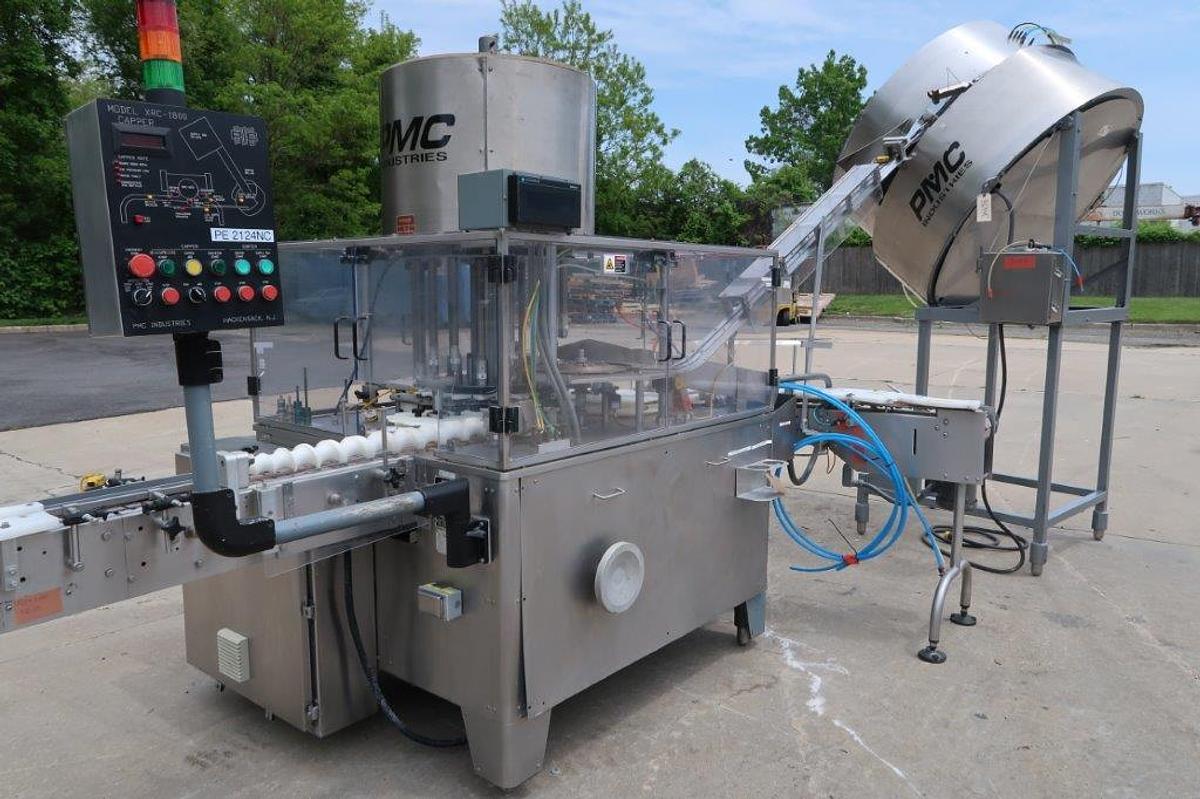
PMC builds equipment specifically for pharmaceutical manufacturing, with a focus on high-precision machinery that meets the strict regulatory demands of drug production. Their product range includes rotary pump placers, automatic sorting systems, tablet presses, capsule filling machines, blenders, granulators, coating machines, and liquid filling systems. A well-known example is the PMC XRC-1800 Automatic Rotary Pump Placer with Sorter, capable of processing up to 300 units per minute, which reflects the high-throughput design philosophy behind their equipment line.
PMC machines are built to handle the exacting tolerances required in pharmaceutical environments, where contamination control, dosing accuracy, and repeatability are non-negotiable. Contact parts are typically constructed from 316L stainless steel to meet material compatibility requirements for drug substances. Because of this specialization, PMC equipment tends to be sought after by manufacturers producing solid-dose forms, liquid pharmaceuticals, and nutraceuticals operating under FDA, EMA, or comparable regulatory frameworks.
What should buyers know about purchasing used PMC pharmaceutical equipment?
Buying used PMC equipment differs meaningfully from purchasing directly through a manufacturer. Used machines are sold in their current condition, which means the buyer takes on the responsibility of verifying the machine's mechanical state, documentation history, and suitability for their production environment before completing a purchase. This makes the inspection process critical. Reputable used equipment dealers will offer in-person inspections, video walkthroughs, or photo documentation so buyers can assess wear, cleanliness, and overall working order before committing.
One practical consideration is that some used PMC machines may still be installed and running at a facility, meaning an in-person inspection can sometimes be arranged at the production site itself. Buyers should also contact PMC directly to understand what level of manufacturer support, spare parts availability, and documentation exists for the specific model and age of the machine they are considering. Older models may have limited parts availability, which affects long-term total cost of ownership. Choosing a dealer who specializes in pharmaceutical equipment, rather than a general industrial reseller, significantly improves the likelihood of getting accurate technical information about the machine.
Is used PMC pharmaceutical equipment cGMP compliant?
cGMP (current Good Manufacturing Practice) compliance is a process and documentation standard, not a permanent fixed property of a machine. A piece of equipment that left the factory meeting cGMP requirements may or may not still satisfy those standards depending on how it was maintained, modified, or used in its previous production environment. For used PMC equipment, buyers need to evaluate the machine's current condition against their own facility's regulatory requirements rather than assuming prior compliance carries forward.
Key compliance factors to assess include the integrity of contact surfaces (typically 316L stainless steel), the availability of IQ/OQ/PQ documentation (Installation Qualification, Operational Qualification, Performance Qualification), and whether the machine's design aligns with current FDA or EMA guidance for the intended application. Some used machines will come with partial validation documentation from their previous owner, which can reduce requalification costs significantly. Buyers should work with their internal quality teams or a validation consultant when evaluating used pharmaceutical equipment to determine what additional qualification work will be required before the machine can be placed into regulated production.
What is the PMC XRC-1800 and what is it used for?
The PMC XRC-1800 is an Automatic Rotary Pump Placer equipped with a sorter, designed for high-speed pharmaceutical production lines. It operates at speeds of up to 300 placements per minute, making it well-suited for facilities that require consistent, high-throughput output with minimal manual intervention. The rotary design allows for continuous cycling, which reduces downtime compared to linear or indexing systems, and the integrated sorter helps manage product flow and reject handling automatically.
In pharmaceutical applications, pump placers like the XRC-1800 are typically used in packaging and assembly lines where precision placement of components is critical to product integrity and regulatory compliance. The machine's automation reduces human contact with the product stream, which supports contamination control objectives. When evaluating a used XRC-1800, buyers should pay particular attention to the condition of the rotary mechanism, sorter components, and any tooling or change parts that come with the unit, as these directly affect the machine's ability to run different product formats.
How does total cost of ownership factor into buying used pharmaceutical equipment?
The purchase price of a used pharmaceutical machine is often just the starting point of the actual investment. Total cost of ownership (TCO) encompasses spare parts availability, ongoing maintenance requirements, energy consumption, and the cost of any validation or qualification work needed before the machine enters regulated production. For older equipment, parts may require custom fabrication or sourcing from specialized suppliers, which can add meaningful expense over the machine's operational life.
Buyers evaluating used PMC equipment should request a full list of wear parts and consumables specific to the model, then research current availability and pricing before finalizing a purchase decision. It is also worth factoring in the cost of any upgrades to controls or safety systems that may be required to meet current facility standards. A machine with a lower purchase price but limited parts support or significant requalification requirements may ultimately cost more than a newer used unit with better documentation and readily available components. Getting this analysis right before purchase is far easier than managing unexpected costs after the machine is installed.
What should buyers inspect before purchasing used PMC equipment?
A thorough pre-purchase inspection of used pharmaceutical equipment should cover both mechanical condition and documentation. On the mechanical side, inspectors should examine contact surfaces for wear, pitting, or corrosion, check the integrity of seals and gaskets, assess the condition of drive components and electrical systems, and verify that all safety guards and interlocks are present and functional. For machines with electronic controls, confirming that software and control systems are operational and that any proprietary interfaces are accessible is equally important.
On the documentation side, buyers should request maintenance logs, prior calibration records, any available validation documentation (IQ/OQ/PQ), and the original operator and maintenance manuals. The absence of documentation does not necessarily disqualify a machine, but it does mean the buyer will need to budget for more extensive qualification work before placing the equipment into production. Most reputable dealers will accommodate both in-person and video-based inspections. Keep in mind that dealers typically do not have the production permits required to run actual pharmaceutical product through the equipment during an inspection, so functional testing is generally limited to dry runs or mechanical cycling rather than full production trials.
What industries beyond pharmaceuticals can use PMC equipment?
While PMC designs its equipment primarily for pharmaceutical manufacturing, many of the machines are applicable across adjacent regulated industries. Nutraceutical and dietary supplement manufacturers often use the same classes of equipment, including filling systems, capsule machines, and sorters, since their production environments share similar cleanliness and precision requirements. Cosmetics and personal care manufacturers, particularly those producing topical or semi-solid products, may also find PMC equipment adaptable to their lines.
Food processing operations that require high-precision filling, portioning, or component placement can sometimes repurpose pharmaceutical-grade equipment, since the material standards (stainless steel construction, easy-clean design) often exceed food industry minimums. Medical device assembly and veterinary pharmaceutical production are other areas where PMC-style machinery has found application. Buyers from non-pharmaceutical industries should still evaluate the equipment against their own regulatory requirements, since a machine built for pharmaceutical use may carry features or documentation standards that go beyond what is strictly necessary, though this is rarely a disadvantage.
How does shipping and logistics work for used pharmaceutical equipment purchases?
Shipping used pharmaceutical equipment involves more complexity than standard freight because these machines are often heavy, precision-built, and sensitive to vibration or impact during transit. Proper packaging is essential. Depending on the size and fragility of the equipment, this may mean custom palletization, foam or blocking inside the crate, or full wooden crating with internal bracing. The level of packaging required directly affects shipping costs, so buyers should ask dealers for a detailed breakdown of packaging, rigging, and freight charges to understand the full landed cost before agreeing to a purchase.
Larger machines, such as rotary systems or multi-component lines, typically require professional rigging for both loading at the origin and unloading at the destination. This is an added cost that is easy to overlook in initial budgeting. Buyers should confirm whether the dealer handles rigging coordination or whether the buyer is responsible for arranging it on both ends. International shipments introduce additional considerations including customs documentation, import duties, and compliance with destination-country equipment regulations. Getting all of these costs in writing before finalizing a purchase prevents surprises at delivery.
What payment terms are typical when buying used pharmaceutical equipment?
Used pharmaceutical equipment dealers generally require full payment before a machine is released for shipping. This is standard practice in the used equipment industry and reflects the nature of transactions involving high-value, specialized machinery where the dealer needs to confirm funds before committing to logistics and transfer of ownership. Wire transfer is the most common payment method for larger purchases, though dealers may accept other forms depending on transaction size and buyer relationship.
Buyers who have an established history with a particular dealer may occasionally be offered extended payment terms, but this is not common for first-time transactions. For buyers who need financing, third-party equipment financing companies can sometimes provide loans or lease arrangements for used pharmaceutical machinery, though approval depends on the buyer's creditworthiness and the appraised value of the specific equipment. It is worth exploring financing options before beginning a search, so that budget and approval amounts are clear when a suitable machine becomes available, since desirable used equipment can sell quickly.
How do buyers find reputable dealers selling used PMC pharmaceutical equipment?
Identifying a trustworthy source for used pharmaceutical equipment comes down to a few practical criteria. Dealers who specialize specifically in pharmaceutical or life sciences machinery tend to have deeper knowledge of the equipment they carry, better access to technical documentation, and more accurate condition assessments than general industrial equipment resellers. A dealer's track record matters considerably. Long-operating dealers with verifiable transaction history in the pharmaceutical space are better positioned to provide accurate machine histories and support informed purchase decisions.
Buyers should look for dealers who are willing to provide detailed inspection access, whether in person or via video, and who can supply whatever documentation exists for the machine. Asking specific technical questions about the equipment is a useful screening tool. A knowledgeable dealer should be able to speak to the machine's configuration, prior use environment, and known condition issues without hesitation. Buyers should be cautious of listings with minimal information or sellers unwilling to accommodate inspection requests, as these are common signals of higher transaction risk in the used equipment market.