Category
Manufacturer
Model
FAQ:
What types of Pitco commercial fryers are available on the used equipment market?
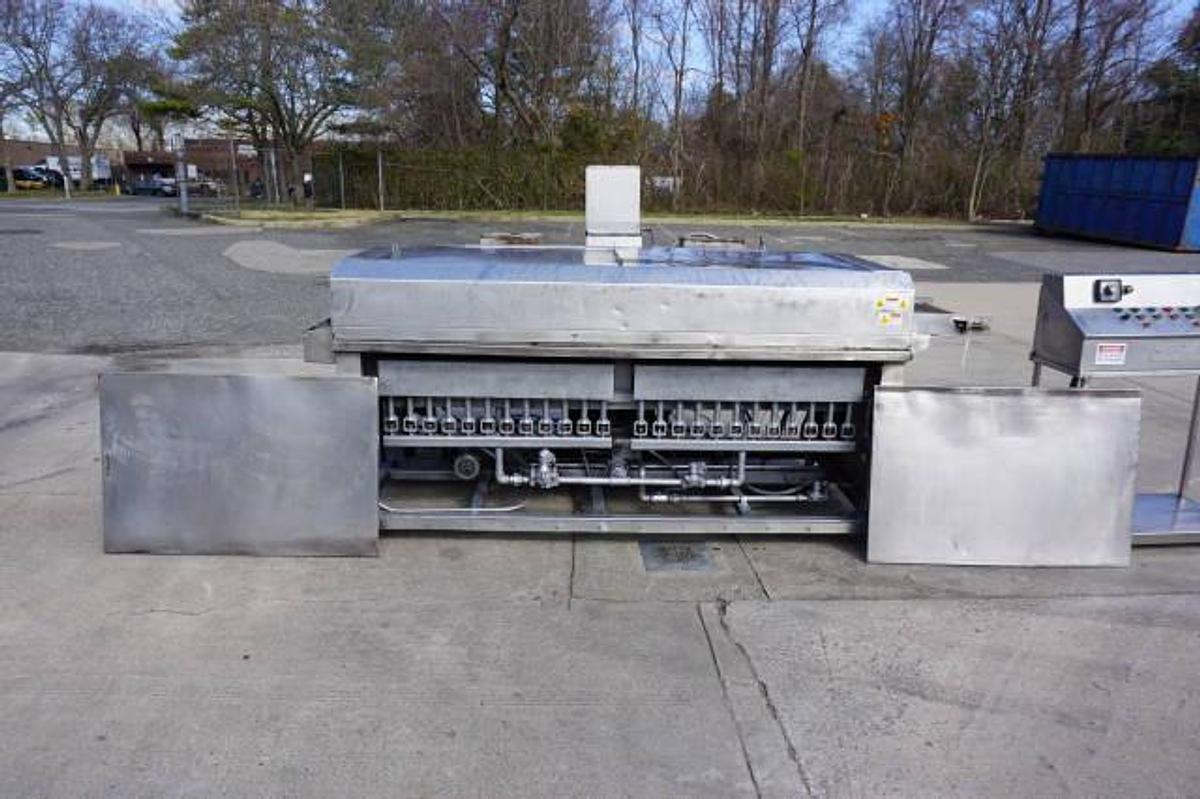
Pitco manufactures a wide range of commercial frying equipment, and used models span nearly the full product lineup. Buyers searching the used market can typically find gas tube fryers, infrared fryers, electric fryers, open pot fryers, high-efficiency models, and continuous fryers like the Pitco 600 Continuous Gas Fired Fryer with Hold Down Belt. Each fryer type serves a different operational purpose. Continuous fryers, for example, are designed for high-volume production environments where product moves through the fryer on a belt rather than being batch-cooked in a basket, making them a common find in food processing and commissary kitchens.
The variety in the used Pitco market reflects just how broad the brand's lineup has been over its more than 100 years of manufacturing history. Popular series like the SG and SSH appear frequently in used inventory, as do specialty configurations built for specific menu applications. Buyers should pay close attention to the model number and gas type (natural gas vs. propane) when evaluating used Pitco fryers, since these specifications directly affect whether a unit is compatible with a given kitchen setup without requiring costly conversions.
How much do used Pitco commercial fryers typically cost?
Pricing for used Pitco commercial fryers varies considerably depending on the model, age, condition, and configuration of the unit. A basic used countertop or floor model gas fryer might be priced anywhere from a few hundred dollars to a couple thousand, while larger or more specialized equipment like continuous belt fryers or high-efficiency floor models can run significantly higher. The Pitco 600 Continuous Gas Fired Fryer, for instance, is a piece of production-scale equipment that commands a much higher price point than a standard single-vat restaurant fryer, reflecting its capacity and complexity.
Several factors push the price up or down on the used market. Units that are in clean, well-maintained condition with intact components will naturally carry a higher asking price than machines that show heavy wear or are missing parts. The availability of replacement parts for a given model also plays into value, since older or discontinued models may be harder to service. Buyers should factor in shipping, rigging, and any reconditioning costs when comparing prices across listings, since the purchase price alone does not represent the full cost to get a machine running in a new facility.
What is the difference between Pitco gas fryers and electric fryers, and which is better for a commercial kitchen?
Gas and electric Pitco fryers both produce excellent frying results, but they suit different kitchen environments and operational priorities. Gas models, which make up the majority of Pitco's commercial lineup, heat oil quickly and tend to have lower per-hour operating costs in regions where natural gas is inexpensive. High-efficiency Pitco gas models in the SG and SSH series can deliver up to 80,000 BTU of output while consuming less fuel than older standard fryers, which is a meaningful advantage in high-volume operations where fryers run for many hours each day. Gas fryers do require proper ventilation and a gas line connection, which can be a constraint in some facilities.
Electric Pitco fryers are a practical choice for kitchens that lack gas infrastructure or where local utility rates favor electricity. They tend to heat more evenly and require less ventilation, making them easier to install in certain settings. On the used market, gas models are generally more common simply because they represent the bulk of Pitco's installed base in commercial foodservice. When evaluating a used unit of either type, buyers should confirm the voltage or gas type, BTU rating, and phase requirements before purchasing to avoid compatibility issues with their existing utilities.
What oil capacity should I look for in a used Pitco fryer, and how does it affect production output?
Pitco commercial fryers span a wide range of oil capacities, typically from around 35 lbs on the smaller end to 110 lbs or more on large floor models and continuous fryers. Oil capacity is directly tied to how much food a fryer can cook per hour. A 35-lb capacity fryer might suit a low-to-moderate volume restaurant cooking french fries and appetizers, while a 50-lb or 75-lb model handles heavier demand in a busy quick-service or casual dining environment. Continuous fryers like the Pitco 600, which use a belt system to move product through heated oil, are designed for even higher throughput and are typically found in food manufacturing or large commissary operations.
A common mistake buyers make is selecting a fryer based on physical size or price without accounting for the oil-to-food ratio. Loading too much cold food into a fryer with insufficient oil capacity causes the oil temperature to drop sharply, leading to greasy, undercooked product and longer recovery times between batches. As a general rule, the fryer's oil capacity should be matched to the expected peak-hour food volume for the operation. Used equipment dealers can typically provide specifications on the models they carry, and Pitco's published documentation for each series includes oil capacity, BTU rating, and hourly production estimates that buyers can use as a reference.
Do Pitco commercial fryers have built-in filtration systems, and why does that matter for used equipment buyers?
Some Pitco models, including units in the Solstice Supreme line, are built with integrated oil filtration systems that filter cooking oil automatically or semi-automatically without requiring the oil to be transferred to a separate filter unit. This is a significant operational feature because filtered oil lasts considerably longer than unfiltered oil. In a high-volume frying operation, extending oil life by even a day or two per cycle translates into meaningful savings on oil costs over the course of a year. Fryers with built-in filtration also tend to produce more consistent food quality, since degraded oil affects color, flavor, and texture.
For buyers shopping the used market, the presence or absence of a filtration system is worth factoring into the purchase decision. A used Pitco fryer with a functioning built-in filtration system may carry a higher asking price than a comparable model without one, but the long-term oil savings can offset that difference relatively quickly in a busy kitchen. Buyers should ask the seller to confirm whether the filtration components are intact and functional, since these systems have moving parts and seals that can wear over time. If the filtration system on a used unit is non-functional, it is worth getting a repair estimate before committing to the purchase.
What is the typical lifespan of a Pitco commercial fryer, and what should buyers look for when evaluating used units?
Pitco commercial fryers are built for heavy-duty use, and well-maintained units commonly last 15 to 20 years or more in active commercial service. The brand's reputation for durability is one reason used Pitco fryers remain in demand long after their initial installation. That said, lifespan varies significantly depending on how heavily the fryer was used, how consistently it was cleaned and maintained, and whether it was serviced promptly when issues arose. A fryer from a low-volume operation that was cleaned daily and had its burners and thermostats checked regularly may be in far better condition than a same-age unit from a high-volume fast food environment that saw minimal maintenance.
When evaluating a used Pitco fryer, buyers should look at the condition of the fry pot itself, since pitting, corrosion, or cracks in the stainless steel are expensive to address and can indicate the unit is near the end of its useful life. Burner condition, thermostat accuracy, and the state of the drain valve and filtration components (if present) are also important checkpoints. Reputable used equipment dealers will typically accommodate in-person inspections or provide detailed video walkthroughs of the machine so buyers can assess condition before purchasing. Requesting photos of the interior fry pot, burner assembly, and any control components gives buyers a clearer picture of what they are getting.
What should buyers know about inspecting a used Pitco fryer before purchasing?
Inspecting a used Pitco fryer before purchase is one of the most important steps a buyer can take to avoid costly surprises. Reputable used equipment dealers typically offer several inspection options: in-person visits to the dealer's facility, virtual walkthroughs via video call, or detailed photo and video documentation of the machine. In some cases, equipment that is still installed at the facility where it was used can be inspected at that location, sometimes while still in active production. Buyers should take advantage of whatever inspection method is available and ask specifically to see the fry pot interior, burner assembly, drain valve, thermostat controls, and any filtration components.
One important limitation to keep in mind is that most used equipment dealers do not have the permits or infrastructure to run full production tests with actual food product. A dealer can confirm that a fryer powers on, that the burners ignite, and that controls respond, but a live frying test in a production environment is rarely possible at the dealer's location. This makes the visual and mechanical inspection all the more critical. Buyers should also consult Pitco's support resources to understand what parts are currently available for the specific model they are considering, since older or discontinued models may have limited parts availability, which affects the long-term serviceability of the unit.
What are the most popular Pitco commercial fryer models, and what makes them well-regarded in the industry?
Among Pitco's most recognized models are the SG Series and SSH Series floor fryers, which have been widely adopted across quick-service restaurants, casual dining chains, and institutional foodservice operations. The SG Series is known for its straightforward tube-style burner design, which heats oil efficiently and is relatively easy to service. The SSH Series builds on that platform with higher efficiency ratings, making it a common choice for operators focused on reducing gas consumption without sacrificing throughput. Both series have been in production long enough that used examples appear regularly on the market, and parts availability for these models tends to be good relative to older or more obscure configurations.
The Pitco Solstice and Solstice Supreme lines represent a more advanced tier of the product range, featuring improved heat transfer, built-in filtration options, and digital controls on some configurations. The Pitco 600 Continuous Gas Fired Fryer occupies a different category entirely, designed for industrial-scale production rather than traditional restaurant use. Its belt-driven design allows for continuous product flow, making it suited to food manufacturers, large commissaries, and contract food processors. Each of these models has a distinct set of specifications and operational requirements, so buyers should match the model to their actual production needs rather than selecting based on brand name or price alone.
How does shipping work for used Pitco commercial fryers, and what costs should buyers anticipate?
Shipping a used commercial fryer involves more logistics than a standard freight shipment, and buyers should expect costs to vary based on the size and weight of the unit, the distance being shipped, and the level of packaging required to protect the equipment in transit. Smaller countertop or single-vat floor fryers can typically be palletized and shipped via standard freight carriers, while larger units like continuous fryers may require custom crating to prevent damage. The seller is responsible for ensuring the equipment is packaged appropriately, but buyers should ask specifically what packaging method will be used and whether crating is included in the quoted price or billed separately.
For heavy or oversized equipment, loading at the origin and unloading at the destination may require a forklift or other rigging equipment, which adds to the total cost. Buyers who do not have a loading dock or forklift at their facility should arrange liftgate service in advance and confirm this with the seller before the shipment is booked. The total landed cost of a used fryer includes the purchase price, packaging, freight, and any rigging or liftgate fees, and comparing quotes without accounting for all of these elements can lead to unexpected expenses. Asking the seller for a fully itemized shipping estimate before finalizing the purchase is the best way to understand the true cost of getting the equipment to its destination.
What payment terms are typical when buying used Pitco commercial fryers from a dealer?
Most used commercial equipment dealers require full payment before a machine is released for shipment. This is standard practice in the industry and reflects the nature of used equipment transactions, where the dealer needs to confirm cleared funds before arranging logistics and loading. Buyers should expect to pay in full prior to shipping unless they have an established relationship with the dealer that has led to extended terms being offered. Common payment methods include wire transfer, credit card, and in some cases financing through third-party equipment lenders, though financing options vary by dealer.
Buyers who are new to purchasing used commercial equipment should factor payment timing into their planning, particularly if the equipment is needed by a specific date. Once payment clears, the dealer will typically coordinate packaging and freight pickup, but transit times can range from a few days to a couple of weeks depending on the carrier and destination. Confirming the expected timeline from payment to delivery at the outset avoids scheduling conflicts, especially for buyers who are planning a kitchen opening or equipment replacement around a specific date. Asking the dealer about their typical lead time from payment to shipment is a straightforward step that can prevent unnecessary delays.