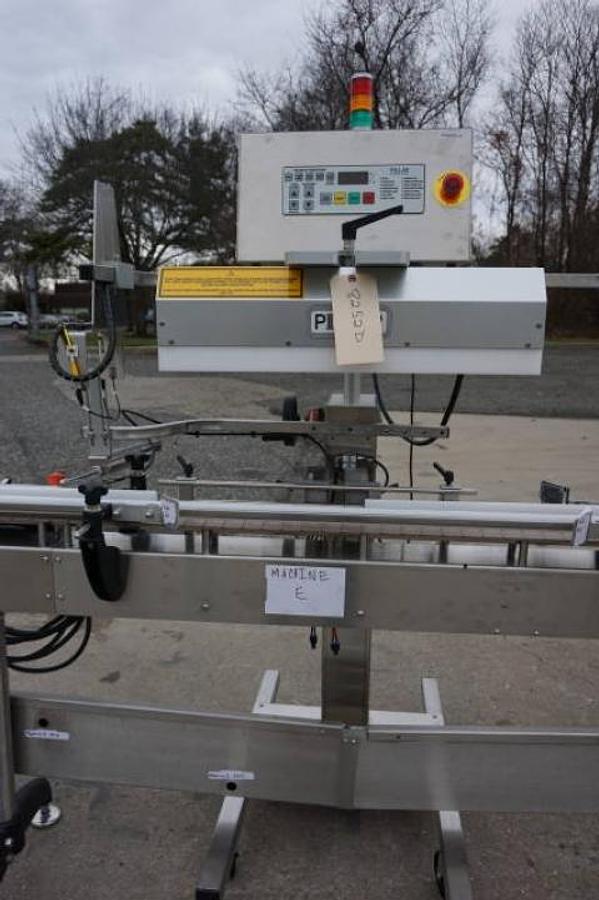
Category
Manufacturer
Model
Pillar Technologies
Pillar Technologies specializes in advanced manufacturing equipment, particularly for the food and beverage industry. They are known for their innovative solutions in automation and process control, helping companies improve efficiency and quality in production lines.
FAQ:
What industries use Pillar Technologies induction sealing equipment?
Pillar Technologies induction sealers are used across a wide range of industries that require tamper-evident, hermetic seals on containers. The most common sectors include food and beverage, pharmaceutical, nutraceutical, chemical, automotive fluids, and cosmetics. Any production environment where product integrity, shelf life, and tamper evidence are priorities tends to rely on induction sealing as a packaging standard.
The versatility of Pillar equipment makes it practical for facilities handling everything from bottled sauces and supplements to motor oil and skincare products. Because induction sealing works with a broad mix of container materials and cap types, manufacturers across these sectors have adopted Pillar systems as a dependable part of their capping lines. Used Pillar induction sealers in good working condition remain in demand precisely because the underlying technology is well-suited to so many different production environments.
What container materials are compatible with Pillar Technologies induction sealers?
Pillar induction sealing equipment is designed to work with a wide variety of container materials, which is one of the reasons the brand has maintained such broad adoption across industries. Common compatible materials include glass, high-density polyethylene (HDPE), polyethylene terephthalate (PET), and polypropylene (PP). The induction process heats the foil liner inside the cap rather than the container itself, so the container material does not need to be conductive.
The main requirement on the container side is that the cap used must include an induction-compatible liner, typically a foil laminate that bonds to the container's lip when heat is applied. Cap diameter and neck finish also factor into compatibility, and Pillar equipment is generally configurable to handle a range of cap sizes. When evaluating a used Pillar sealer for a specific application, it is worth confirming the coil configuration and frequency settings to make sure they align with the liner materials and container dimensions already in use on your line.
What is the difference between Pillar's tunnel-style and flat-head induction sealers?
Tunnel-style induction sealers use an enclosed sealing head that containers pass through on a conveyor. The coil surrounds the cap from multiple sides, which promotes more even energy distribution around the entire circumference of the liner. This design is well-suited to high-speed inline production where consistent, repeatable seals are critical and throughput is measured in hundreds of containers per minute.
Flat-head or flat-coil sealers position the sealing head above the conveyor, and the container passes beneath it. These units tend to be more compact and are often used in lower-speed or more space-constrained production environments. The Pillar "Unifoiler" is an example of an inline cap induction sealing machine designed for integration into a production line, while other Pillar configurations such as air-cooled models may suit different throughput and cooling requirements. When sourcing a used Pillar sealer, understanding which head style matches your line speed, container profile, and available floor space will help narrow down the right model.
What sealing speeds can Pillar Technologies induction sealers achieve?
Pillar Technologies produces induction sealing equipment across a wide performance range, from lower-speed units suited to smaller or specialty production runs up to high-speed automated systems capable of sealing several hundred containers per minute. The actual throughput of any specific machine depends on factors including the model, power output, coil configuration, container size, liner type, and conveyor speed.
For facilities evaluating a used Pillar sealer, it is important to match the machine's rated throughput to the demands of the production line. A unit that was originally installed in a high-volume beverage facility may be overspecified for a smaller nutraceutical operation, while a lower-capacity model may create a bottleneck if placed upstream of faster filling or capping equipment. Reviewing the machine's specifications and, where possible, inspecting it in person or via video can help confirm that the unit's performance characteristics align with your production targets before purchase.
How does induction sealing actually work, and what role does the liner play?
Induction sealing uses electromagnetic energy to bond a foil liner to the lip of a container without any direct contact between the sealing head and the cap. As the capped container passes under or through the induction coil, an alternating magnetic field induces an electrical current in the conductive foil layer of the liner. That current generates heat, which melts a polymer layer in the liner and fuses it to the container's sealing surface. Once the container moves past the coil and cools, the bond is complete.
The liner itself is a laminate structure, typically consisting of a foil layer, a heat-seal layer, and sometimes a backing material that remains inside the cap after the foil is bonded. The quality and consistency of the seal depend on several variables: the liner material and construction, the flatness and surface condition of the container's neck finish, the cap application torque, and the power and dwell time settings on the sealer. Pillar equipment is known for proprietary coil designs intended to deliver even heat distribution across the liner, which reduces the risk of partial seals or overheating on any one area of the foil.
What should buyers look for when inspecting a used Pillar Technologies induction sealer?
A thorough inspection of a used Pillar induction sealer should cover both the mechanical and electrical components of the machine. Key areas to examine include the condition of the sealing coil, the state of the conveyor belt and drive system, the control panel and any programmable settings, cooling system components (particularly on air-cooled models), and the general condition of the frame and housing. Coil condition is especially important because the coil is central to sealing performance and can be costly to repair or replace.
Reputable used equipment dealers will typically offer in-person inspections, video walkthroughs, or recorded footage of the machine so buyers can assess its condition before committing. Some machines may still be installed in an operating facility where a live inspection can be arranged. It is also worth contacting Pillar Technologies directly to ask about parts availability and technical support for the specific model being considered, since the level of manufacturer support can vary depending on the age of the unit. Understanding the full picture of the machine's condition and supportability is the most reliable way to evaluate whether a used sealer represents good value for a specific application.
What power output options are available for Pillar induction sealing equipment?
Pillar Technologies has produced induction sealing equipment across a broad range of power outputs to accommodate different production speeds, liner types, and container sizes. Lower-power units are typically suited to slower lines or smaller container formats where less energy is needed to achieve a proper seal. Higher-power systems are designed for fast-moving production lines where the dwell time under the coil is very short and the machine must deliver sufficient energy in a fraction of a second to complete the seal reliably.
Power output is one of the primary specifications to review when evaluating a used Pillar sealer for a specific application. A machine with insufficient power for a given line speed and liner type will produce inconsistent or incomplete seals, while excessive power can scorch the liner or damage the container's neck finish. When purchasing used equipment, confirming the unit's rated power output and whether it can be adjusted to match your process requirements is an important step before finalizing the purchase.
Can a used Pillar induction sealer be integrated into an existing production line?
Pillar induction sealers are generally designed as inline machines that fit into a conveyor-based production line between the capping station and downstream labeling or packaging equipment. Most models are built to accommodate standard conveyor heights and can be adjusted for different container heights through the sealing head elevation. Air-cooled configurations eliminate the need for external water cooling connections, which can simplify integration in facilities where plumbing modifications would otherwise be required.
That said, integrating any used piece of equipment into an existing line requires careful attention to conveyor speed compatibility, container guide rail adjustments, electrical supply requirements, and control system interfaces. It is advisable to document your line's current specifications, including conveyor speed, container dimensions, and available electrical service, before purchasing a used Pillar sealer. Sharing those details with the equipment dealer during the evaluation process can help identify whether a specific used unit is a practical fit or whether modifications would be needed to make it work within your existing setup.
How does induction sealing compare to other container sealing methods like heat induction versus pressure-sensitive or glued liners?
Induction sealing produces a hermetic, tamper-evident bond between the foil liner and the container's sealing surface that is difficult to replicate with pressure-sensitive or glued liner systems. Pressure-sensitive liners rely on adhesive contact and do not create a true hermetic seal, making them less effective for products that require extended shelf life, protection from oxygen or moisture, or a clear visual indicator of tampering. Glued liners offer better adhesion than pressure-sensitive options but still do not achieve the molecular-level fusion that induction sealing produces.
For products in the food, pharmaceutical, and chemical sectors where regulatory requirements or consumer safety expectations demand a verifiable tamper-evident seal, induction sealing is the standard approach. It also eliminates the need for adhesives or solvents, which can be a concern in food-contact applications. The trade-off is that induction sealing requires compatible foil-laminate liners and the capital investment in sealing equipment, but the reliability and consistency of the seal typically justify those costs for mid- to high-volume production. Used Pillar induction sealers offer a way to access this capability at a lower upfront cost than purchasing equivalent equipment through standard manufacturing channels.
What should buyers understand about shipping and payment when purchasing used Pillar induction sealing equipment?
Used induction sealing equipment, like most industrial machinery, requires careful packaging and handling to prevent damage during transit. Smaller Pillar units may ship on a standard pallet, while larger inline systems often require custom crating to protect the coil assembly, conveyor components, and control panel. Buyers should ask the dealer specifically about how the machine will be packaged, whether rigging is needed for loading, and what the estimated freight costs are to their facility. Larger or heavier machines may require a forklift or crane for unloading on the receiving end, which is an additional cost to factor into the total landed price.
On the payment side, most used equipment dealers require payment in full before a machine ships. Some dealers may extend terms to established repeat customers, but this is not standard practice across the industry. Buyers should request a complete breakdown of all costs, including the machine price, packaging, rigging, and freight, before finalizing any purchase so there are no surprises. Understanding the full landed cost is especially important for induction sealing equipment, where the machine itself may be reasonably priced but shipping a large inline unit across the country can add meaningful expense.