Category
Manufacturer
Model
Pick
Pick specializes in manufacturing machinery for the automotive and aerospace industries, focusing on precision machining tools. They provide equipment that enhances production efficiency and accuracy, catering to manufacturers who require high-quality components. Their technology is designed to support complex manufacturing processes.
FAQ:
What types of Pick machinery are available on the used equipment market?
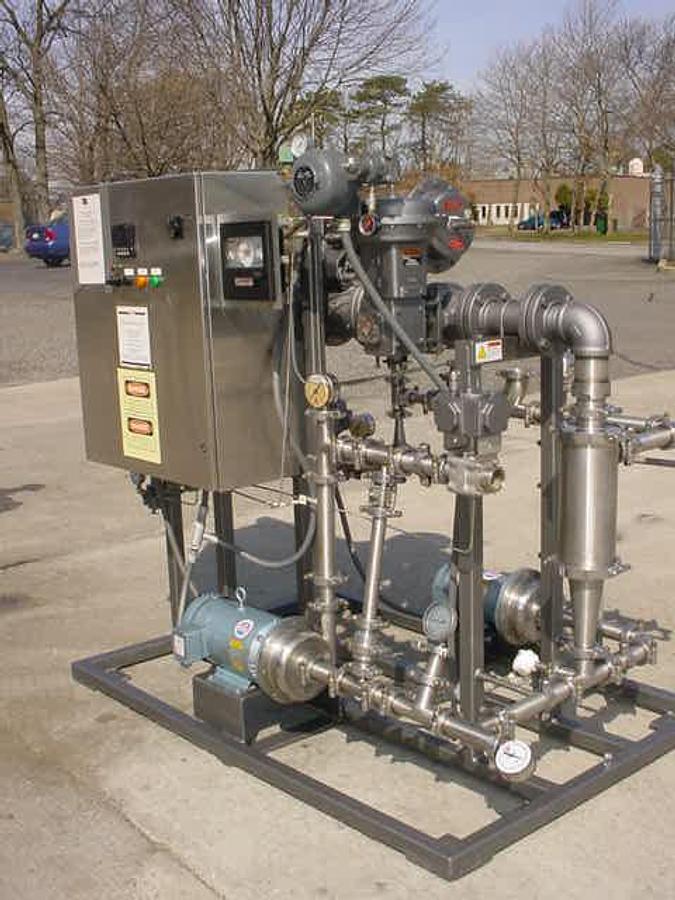
Pick is a manufacturer known for producing precision machining equipment aimed at the automotive and aerospace industries. Their machinery is built to support complex, high-tolerance manufacturing processes where accuracy and production efficiency are critical. On the used equipment market, buyers can find a range of Pick machines including precision machining tools and specialized process systems such as sanitary heating systems with integrated pump configurations, which are commonly used in controlled production environments.
Because Pick machinery spans several industrial applications, buyers should be specific about the production task they need to accomplish before evaluating listings. A machine designed for aerospace component tolerances, for example, will have very different specifications than one suited for general automotive production. Reviewing the full specification sheet for any used Pick machine, and cross-referencing it against your production requirements, is an essential first step before making any purchasing decision.
What industries are Pick machines best suited for?
Pick machinery has historically focused on the automotive and aerospace sectors, two industries where dimensional precision and repeatability are non-negotiable. In automotive manufacturing, Pick equipment supports high-volume production lines where consistent part quality directly affects downstream assembly. In aerospace, the tolerance requirements are even tighter, and the machinery must reliably produce components that meet strict regulatory and safety standards. These two industries represent the core application base for Pick equipment.
That said, used Pick machinery can sometimes be repurposed for adjacent industries that share similar precision requirements, such as medical device manufacturing, defense contracting, or general industrial fabrication. Buyers outside the automotive and aerospace sectors should carefully evaluate whether a specific machine's design parameters align with their own production specs. Consulting with a used equipment dealer who specializes in precision machining can help determine whether a particular Pick machine is a practical fit for a non-standard application.
What should buyers look for when inspecting used Pick machinery before purchase?
Inspecting used precision machining equipment requires a methodical approach. For Pick machinery, buyers should assess the condition of the spindle, tooling interfaces, guideways, and any hydraulic or pneumatic systems. Wear on these components directly affects the machine's ability to hold tolerances, which is the primary reason Pick equipment is purchased in the first place. Surface finish quality, backlash in the drive systems, and the condition of the control unit are all indicators of how hard the machine was run and whether it has been properly maintained.
Most reputable used equipment dealers will accommodate in-person inspections, virtual walkthroughs, or detailed video captures of the machine in its current state. Some machines may still be installed and running at the facility where they were used, which gives buyers a rare opportunity to observe actual operation. Keep in mind that dealers typically cannot run production test parts, as that requires production permits and materials that fall outside the scope of equipment sales. Buyers who want a deeper technical assessment should consider hiring an independent machinery appraiser or a qualified technician familiar with Pick equipment to accompany them during the inspection.
Does used Pick machinery come with a warranty?
Warranties on precision machining equipment are typically issued by the original manufacturer and apply to machines sold through authorized channels. Used equipment is almost universally sold on an as-is basis, meaning the seller makes no representations about the machine's condition beyond what is disclosed at the time of sale. This places the responsibility for due diligence squarely on the buyer, which is why thorough pre-purchase inspection is so important.
Buyers should select dealers with a long track record in the precision machining or industrial equipment space, as reputation is one of the strongest proxies for reliability in the used machinery market. It is also worth contacting Pick directly to understand what level of manufacturer support, service documentation, or parts availability still exists for a specific model and serial number range. Older or discontinued models may have limited factory support, which is a meaningful factor in the total cost of owning and maintaining the equipment over time.
What is the typical price range for used Pick machinery?
Pricing for used Pick machinery varies considerably depending on the machine type, age, configuration, and overall condition. Precision machining equipment built for the automotive and aerospace sectors tends to command higher prices on the secondary market than general-purpose industrial machines, because the engineering tolerances and build quality are significantly more demanding. A well-maintained Pick machine with low hours and a full complement of tooling will naturally fetch more than one that shows heavy wear or is missing key components.
Buyers should also factor in costs beyond the purchase price when evaluating total acquisition cost. Rigging, crating, freight, any refurbishment work, and installation can add meaningfully to the final landed cost of the equipment. Getting itemized quotes for each of these elements from the dealer before committing to a purchase is a practical way to avoid budget surprises. Comparing multiple listings for similar Pick models, when available, gives buyers a realistic benchmark for what the market currently supports.
What are the shipping and freight considerations for buying used Pick machinery?
Precision machining equipment is heavy, often dimensionally large, and sensitive to impact and vibration during transit. Proper packaging is essential to prevent damage, and the level of palletization or custom crating required will vary based on the machine's size, weight, and fragility. Smaller Pick machines may ship on standard pallets with appropriate blocking and bracing, while larger or more complex configurations will require purpose-built wooden crates or skids engineered to distribute load and absorb shock.
For heavy machinery, professional rigging is typically required for both loading at the origin and unloading at the destination. Rigging costs are usually separate from freight charges and should be confirmed with the dealer upfront. Buyers should request a complete breakdown of packaging, rigging, and freight costs before finalizing a purchase so they have a clear picture of the total landed price. International shipments add additional complexity around customs documentation, import duties, and compliance with destination-country regulations, all of which should be addressed before the machine leaves the seller's facility.
What are the power and utility requirements for operating Pick precision machining equipment?
Pick machinery designed for automotive and aerospace applications typically requires three-phase electrical power, with voltage and amperage specifications varying by machine model and the complexity of its drive and control systems. Buyers should obtain the full electrical specifications from the dealer or from Pick's technical documentation before planning an installation, as mismatched power supply is one of the most common and costly post-purchase surprises in used machinery acquisition.
Beyond electrical requirements, many precision machining systems also depend on compressed air for pneumatic clamping, tooling changes, or chip clearing, and some configurations incorporate hydraulic systems that require a dedicated power unit. Coolant systems, chip conveyors, and filtration equipment may also be part of the machine's utility footprint. Mapping out all of these requirements against the available infrastructure at the installation site before purchase prevents installation delays and unplanned facility upgrades.
Are replacement parts and consumables still available for used Pick machines?
Parts availability is one of the most practical factors to investigate before purchasing any used precision machining equipment. For Pick machinery, the availability of replacement components depends heavily on the age of the machine and whether the model is still actively supported by the manufacturer. Newer or more recently discontinued models tend to have better parts support, while older machines may require sourcing components through third-party suppliers, rebuilders, or the used parts market.
Buyers should contact Pick directly to ask about parts availability and lead times for the specific model they are considering. It is also worth asking the selling dealer whether any spare parts, tooling, or consumables are included with the machine, as this can significantly reduce early maintenance costs. Establishing a relationship with a qualified service technician who has experience with Pick equipment is another practical step, particularly for machines that will be running in high-volume production environments where downtime is costly.
What payment terms should buyers expect when purchasing used Pick machinery?
The used industrial equipment market generally operates on payment-in-full terms prior to shipment. This is standard practice across the industry and reflects the nature of used asset transactions, where the seller needs to confirm cleared funds before releasing equipment. Buyers who are new to a particular dealer should plan for full prepayment as the baseline expectation.
Some dealers extend more flexible payment arrangements to established customers with a history of repeat transactions, but this is at the dealer's discretion and not something a first-time buyer should count on. For large purchases, buyers sometimes use equipment financing through third-party lenders, which allows them to satisfy the dealer's prepayment requirement while spreading their own cash outlay over time. Confirming payment logistics, including acceptable payment methods and the exact timing required before the machine is released for shipping, should be part of the purchasing conversation early in the process.
How should buyers evaluate the condition of used Pick machinery listed online?
Listing photos and written descriptions are a starting point, but they rarely tell the complete story of a used machine's condition. For Pick precision machining equipment, buyers should request additional photos of wear-prone areas such as spindle noses, way surfaces, ball screws, and control panels. Video walkthroughs that show the machine powering on, axes moving under control, and any available diagnostic readouts provide a much more useful picture than static images alone.
Beyond visual review, buyers should ask the dealer for any available maintenance records, hours of operation data, or service history. Machines that come with documented maintenance histories are generally lower-risk purchases than those with no paper trail. If the machine is still installed at a production facility, arranging a supervised in-person inspection is strongly advisable, particularly for higher-value acquisitions. Bringing a technician with direct experience on Pick equipment to that inspection adds an additional layer of confidence before committing to the purchase.