Category
Manufacturer
Model
FAQ:
What types of Pharmafill Deitz equipment are commonly available on the used market?
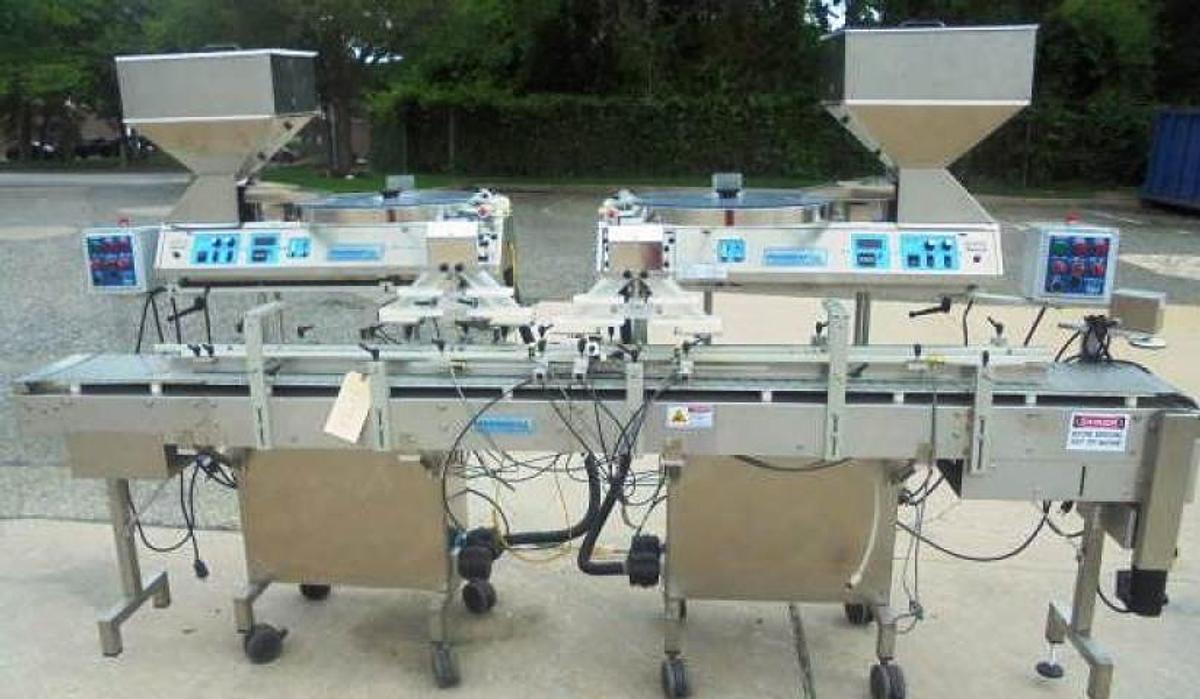
Pharmafill Deitz produces a range of pharmaceutical-grade filling and packaging machinery, and the used market reflects that variety. Buyers can typically find tablet and capsule counters, liquid filling machines, bottle filling lines, and conveyor-integrated counting systems. One example that appears regularly in secondary market listings is the Pharmafill/Deitz Dual Head Tablet-Capsule Counter with Motorized Conveyor, which is designed for high-accuracy counting and packaging of solid dosage forms. These machines are used across pharmaceutical, nutraceutical, and contract packaging operations.
The breadth of the Pharmafill Deitz product line means that buyers sourcing used equipment can often find machinery suited to both small-batch and higher-volume production environments. Liquid filling machines from this manufacturer are known for their stainless steel construction and precision dosing capabilities, making them compatible with sterile or semi-sterile production settings. Because these are used machines, availability at any given time depends on what has come off production lines and entered the secondary market, so working with a dealer who specializes in pharmaceutical equipment is the most reliable way to locate a specific model or configuration.
What products can be filled or processed using Pharmafill Deitz machines?
Pharmafill Deitz equipment is designed to handle a wide range of pharmaceutical and nutraceutical products. Depending on the specific machine, it can process solid dosage forms such as tablets and capsules, as well as liquids ranging from thin, water-like solutions to more viscous formulations like syrups, gels, and suspensions. This versatility makes the equipment useful across multiple sectors including pharmaceuticals, nutraceuticals, cosmetics, and personal care product manufacturing.
The liquid filling machines in the Pharmafill Deitz line are particularly valued for their ability to maintain dosing accuracy across different viscosities, which is critical in regulated industries where fill volume tolerances are tightly controlled. Tablet and capsule counters, such as the dual-head models with motorized conveyors, are built to handle a variety of solid dosage sizes and shapes. Buyers should confirm with the dealer which specific product types a particular used machine was configured for, since some units may have been set up for a narrow product range and could require reconfiguration or tooling changes to accommodate different products.
What should buyers expect regarding FDA compliance and cGMP compatibility when purchasing used Pharmafill Deitz equipment?
Pharmafill Deitz equipment is manufactured to pharmaceutical industry standards, which generally means stainless steel contact surfaces, cleanable design, and construction compatible with current Good Manufacturing Practice (cGMP) environments. However, when purchasing used equipment, compliance is not automatic. The machine's condition, any modifications made by previous owners, and whether it has been properly maintained all affect whether it can be successfully reintegrated into a cGMP-compliant production line.
Buyers in regulated industries should carefully evaluate the equipment's physical condition during inspection and consult with their own quality and validation teams before putting a used machine into production. The FDA does not certify individual pieces of equipment, but manufacturers are responsible for ensuring that any machinery used in drug or supplement production meets applicable standards. Requesting available maintenance records, calibration logs, and any prior validation documentation from the dealer is a reasonable starting point, though the depth of documentation available will vary depending on how the previous owner managed their quality systems. Buyers should plan to conduct their own qualification activities, including installation qualification (IQ), operational qualification (OQ), and performance qualification (PQ), before the equipment is used in a regulated production setting.
What documentation typically comes with used Pharmafill Deitz equipment?
Documentation availability for used pharmaceutical equipment varies considerably depending on the seller and the history of the machine. In the best cases, a used Pharmafill Deitz machine may come with operator manuals, maintenance logs, calibration records, and prior IQ/OQ/PQ validation documentation from its previous production environment. These records are highly valuable in regulated industries because they reduce the time and cost associated with requalifying equipment at a new facility.
In practice, however, used equipment dealers do not always have access to the full documentation package, particularly if the machine changed hands multiple times or if the previous owner did not transfer records at the time of sale. Buyers should ask dealers specifically what documentation is available before purchasing and factor in the cost of any revalidation activities they will need to perform. Contacting the manufacturer directly is also advisable, as Deitz may be able to provide technical manuals or historical specifications for certain models, depending on the age of the equipment and what is still on file.
Does used Pharmafill Deitz equipment come with a warranty?
Used pharmaceutical equipment, including Pharmafill Deitz machines, is typically sold on an as-is basis by secondary market dealers. This is standard practice in the used equipment industry. Warranties, when they exist, are generally offered by the original manufacturer on new equipment and do not transfer through subsequent resales. Buyers should not expect a warranty to accompany a used machine purchase and should plan accordingly.
Because there is no warranty safety net, the inspection process becomes critically important. Reputable used equipment dealers will accommodate in-person inspections, video walkthroughs, or recorded video captures of the machine so that buyers can assess its current condition before committing to a purchase. Buyers should also contact the manufacturer directly to understand what level of technical support, spare parts availability, and service documentation can be expected for a specific model and production year, since older machines may have limited factory support. Choosing a dealer with a long track record in pharmaceutical equipment specifically is one of the most effective ways to reduce risk in a used equipment purchase.
How are used Pharmafill Deitz machines inspected before purchase?
Inspections are a standard part of the used pharmaceutical equipment buying process, and reputable dealers will typically offer multiple options. Buyers can arrange an in-person visit to view the machine directly, or they can request a virtual inspection via video call or pre-recorded video footage that shows the equipment's physical condition, key components, and any visible wear. In some cases, the equipment may still be installed at the facility where it was last in production, which allows buyers to see it in its operating environment.
One important thing to understand is that most used equipment dealers do not have the permits or infrastructure to run actual pharmaceutical production, so functional testing with real product is generally not possible at a dealer's facility. What buyers can typically evaluate during an inspection is the machine's mechanical condition, the state of contact surfaces and seals, the functionality of controls and motors, and any visible signs of damage or heavy wear. Buyers should come to an inspection with a checklist of specific components they want to review, and it is often worthwhile to bring along a qualified technician or engineer who is familiar with the equipment type. The goal is to get as accurate a picture as possible of what the machine will require to return to production.
What filling speeds and capacities does Pharmafill Deitz equipment typically offer?
Pharmafill Deitz equipment spans a range of production capacities, and the specific speed or throughput of a given machine depends on the model and configuration. Tablet and capsule counters, such as dual-head models, are designed to count and fill at speeds appropriate for mid-range pharmaceutical packaging lines, with throughput influenced by factors like tablet size, fill count per bottle, and conveyor speed. Liquid filling machines in the Pharmafill Deitz line are typically configurable for different fill volumes, allowing operators to adjust for various container sizes and dosing requirements.
When evaluating a used machine, buyers should confirm the rated speed and fill range with the dealer and cross-reference that against the machine's actual condition and any known history of performance issues. Production capacity on used equipment can sometimes fall below the manufacturer's rated specifications if components have worn over time or if the machine has not been recently serviced. Asking about the machine's last known production environment and the volumes it was running can give buyers a more realistic sense of what to expect after installation.
Are replacement parts and technical support available for older Pharmafill Deitz models?
Parts and support availability for used Pharmafill Deitz equipment depends significantly on the age and model of the machine. For relatively recent models, the manufacturer may still stock commonly replaced components such as seals, filling nozzles, counting sensors, and conveyor parts. For older machines, some parts may be discontinued, which means buyers would need to source them through third-party suppliers, have custom parts fabricated, or cannibalize other machines of the same model.
Before purchasing a used Pharmafill Deitz machine, it is worth contacting the manufacturer directly to ask about parts availability and whether technical support is still offered for that specific model. This conversation can also reveal whether software updates or control system support are still available, which matters for machines with programmable logic controllers or digital interfaces. Buyers who are considering older equipment should factor potential parts sourcing challenges into their total cost of ownership calculation. A machine purchased at a lower price point may end up costing more if critical components are difficult to find or require custom fabrication.
What are the typical shipping and logistics considerations for used Pharmafill Deitz equipment?
Shipping pharmaceutical filling equipment requires more planning than standard freight because these machines are precision instruments with sensitive components. Proper packaging is essential to prevent damage in transit, and costs will vary depending on whether the machine is palletized, crated, or requires custom packaging. Larger or heavier Pharmafill Deitz machines may need specialized rigging equipment for loading and unloading, which adds to the total logistics cost and requires coordination between the dealer, a rigging company, and the receiving facility.
Buyers should ask dealers for a detailed breakdown of packaging, rigging, and freight costs before finalizing a purchase so they have a clear picture of the total landed cost of the equipment. For international shipments, customs documentation, import duties, and compliance with destination country regulations add another layer of complexity. It is also advisable to confirm that the receiving facility has the appropriate equipment, such as a forklift with adequate capacity, to safely unload and position the machine. Getting all of these logistics details sorted out in advance helps avoid delays and unexpected expenses once the sale is complete.
What payment terms are typical when purchasing used Pharmafill Deitz equipment?
Used pharmaceutical equipment dealers generally require full payment before a machine is shipped. This is standard practice across the secondary equipment market and reflects the fact that dealers are transferring physical assets that cannot be easily returned once shipped. Payment is typically required via wire transfer or other verified methods, and buyers should confirm accepted payment forms with the dealer before proceeding.
Some dealers may offer extended payment terms or other arrangements to repeat customers with whom they have an established relationship, but this is not the norm for first-time buyers. Buyers should also be aware that pricing on used equipment is often negotiable, particularly if a machine has been listed for some time or if the buyer is purchasing multiple units. Factoring in all associated costs, including shipping, rigging, any required refurbishment, and revalidation activities, gives a more accurate picture of the true investment involved in acquiring used Pharmafill Deitz equipment.