Category
Manufacturer
Model
FAQ:
What types of Pfening equipment are commonly available on the used market?
Pfening has built a strong reputation in commercial baking and food processing over several decades, and their equipment covers a wide range of production needs. Common categories found on the used market include spiral mixers, dough dividers, dough handling systems, ingredient storage and conveying equipment, proofers, bread slicers, and dust collectors. Stainless steel fabrication is a hallmark of much of their product line, which holds up well in demanding food production environments and makes used units particularly attractive to buyers looking for durable, food-grade machinery.
Because Pfening equipment is built for industrial and commercial-scale operations, individual pieces tend to have long service lives when properly maintained. This means used listings often include machines that still have considerable productive capacity remaining. Buyers sourcing used Pfening equipment should pay close attention to the specific model and configuration, since Pfening has produced many variations of similar machine types over the years, and capacity, footprint, and compatibility with existing production lines can vary significantly from one unit to the next.
What industries use Pfening equipment?
Pfening equipment is primarily designed for commercial and industrial bakery operations, but its application extends across several related food production sectors. Wholesale bread and roll producers, artisan bakeries scaling up production, pizza dough manufacturers, tortilla producers, and large-scale food processors all rely on Pfening machinery. The equipment is engineered to handle high-volume dough production and ingredient management, making it well suited for any operation where consistency, throughput, and food-safe construction are priorities.
Beyond traditional bread baking, Pfening's ingredient handling and conveying systems are used in facilities that process flour, sugar, and other bulk dry goods at scale. This means a used Pfening dust collector, for example, might be relevant not just to a bakery but to any food processing plant managing airborne particulates from dry ingredient handling. Buyers from a range of food manufacturing backgrounds should evaluate Pfening equipment based on the specific production task rather than assuming it is limited to bread or pastry applications alone.
What should buyers know about purchasing used Pfening equipment versus buying from the manufacturer?
Purchasing used Pfening equipment through a reputable dealer is a well-established path for bakeries and food processors looking to expand or replace production capacity at a lower cost than sourcing directly from the manufacturer. Used equipment dealers specialize in sourcing, inspecting, and reselling machines that have been decommissioned from working facilities, and the price difference compared to manufacturer pricing can be substantial. For operations with tighter capital budgets or those needing a specific machine quickly, the used market is often the most practical option.
The trade-off is that used equipment is sold as-is, without the manufacturer support structure that accompanies a purchase directly from Pfening. Buyers should factor this into their decision by selecting dealers with a long track record in food processing and bakery machinery, arranging thorough inspections before purchase, and contacting Pfening directly to understand what parts and technical support are available for the specific model and age of the machine they are considering. Older models may have limited parts availability, which is a critical detail to confirm before committing to a purchase.
How does the inspection process work when buying used Pfening equipment?
Inspecting used Pfening equipment before purchase is one of the most important steps a buyer can take to assess the machine's condition and suitability for their production needs. Reputable used equipment dealers typically offer in-person inspections at their facility, or they can arrange access to the equipment at the facility where it is currently located if it has not yet been removed from production. Video inspections and detailed photo documentation are also commonly available for buyers who cannot travel, giving a clear view of the machine's physical condition, visible wear, and any obvious mechanical issues.
It is worth understanding that most used equipment dealers are not set up to run full production tests, since operating food production machinery requires permits and a production environment that a resale facility does not maintain. This means buyers should focus their inspection on mechanical condition, completeness of components, signs of wear or damage, and the overall cleanliness and maintenance history of the machine. Consulting with a qualified Pfening technician or an independent equipment mechanic before finalizing a purchase can add another layer of confidence, particularly for high-value or complex systems like spiral mixers or automated ingredient handling lines.
Does used Pfening equipment come with a warranty?
Used Pfening equipment sold through dealers is typically offered on an as-is basis, which is standard practice across the used industrial machinery market. Warranties are generally the domain of the original manufacturer and apply to machines sold through authorized channels at the time of first purchase. When a machine enters the secondary market, that manufacturer warranty coverage does not transfer, and dealers are not in a position to offer the same guarantees a manufacturer would provide on a machine leaving their factory floor.
This places the responsibility of due diligence squarely on the buyer. Choosing a dealer with a strong, verifiable history of selling bakery and food processing equipment is one of the most effective ways to reduce risk. A reputable dealer will be transparent about the machine's known condition, provide inspection access, and have enough industry experience to accurately represent what they are selling. Buyers should also reach out to Pfening directly to understand the level of parts and service support available for the specific model they are considering, since this varies by machine age and configuration.
What is the typical price range for used Pfening bakery equipment?
Pricing for used Pfening equipment varies considerably depending on the type of machine, its age, condition, configuration, and the current supply of comparable units on the market. Smaller items like a stainless steel dust collector might be priced in the low thousands, while larger, more complex systems such as automated dough handling lines, large-capacity spiral mixers, or complete ingredient conveying systems can reach tens of thousands of dollars. Machines that are still in working order and have been well maintained in an active production facility tend to command higher prices than units that have been sitting idle or show significant wear.
Buyers should also account for costs beyond the purchase price itself. Rigging, crating, freight, and any reconditioning or installation work can add meaningfully to the total landed cost of the equipment. Getting a clear picture of all these costs before committing to a purchase helps avoid surprises and allows for a more accurate comparison between different units or sourcing options. Dealers experienced in bakery equipment should be able to provide detailed estimates for packaging and shipping based on the machine's size and the buyer's location.
How is used Pfening equipment typically shipped, and what should buyers expect to pay for freight?
Shipping used Pfening equipment involves more logistical complexity than standard parcel freight, particularly for larger machines. Smaller items may be palletized and shipped via standard LTL (less-than-truckload) freight carriers, while larger or heavier equipment typically requires full truckload shipping and specialized rigging for both loading at the seller's location and unloading at the buyer's facility. The cost of crating or custom packaging varies based on the machine's size, fragility, and the level of protection required to prevent damage in transit.
Buyers should request a detailed breakdown of all shipping-related costs from the dealer before finalizing a purchase. This includes rigging fees, packaging or crating charges, freight costs, and any fees for unloading assistance at the destination. For very large systems, a forklift or crane may be required on the receiving end, and arranging that in advance is the buyer's responsibility. Understanding the full landed cost of the equipment, not just the purchase price, is essential for accurate budgeting and for comparing the value of different units listed at different locations.
What are the payment terms for purchasing used Pfening equipment from a dealer?
Payment terms for used industrial equipment purchases are fairly consistent across the industry. Most dealers require payment in full before the equipment is released for shipping or pickup. This is standard practice for used machinery transactions, where the dealer needs to confirm cleared funds before arranging logistics. Wire transfers are the most common payment method for transactions of this size, though dealers may also accept certified checks or other verified payment forms depending on their policies.
Some dealers extend credit terms or deferred payment arrangements to established customers with a purchase history, but buyers making their first transaction with a dealer should generally expect to pay in full upfront. For buyers concerned about the financial risk of a large as-is purchase, working with a dealer who offers thorough inspection access and has a strong reputation in the bakery equipment sector is the best way to build confidence before funds are transferred. Buyers should confirm all payment expectations in writing before proceeding.
How do I find replacement parts for used Pfening equipment?
Sourcing replacement parts for used Pfening equipment starts with contacting Pfening directly. The company has been active in the commercial baking equipment space for decades and maintains parts support for many of their machine lines, though availability can vary based on the age and model of the specific unit. When reaching out to Pfening, having the model number, serial number, and any visible part numbers from the machine will significantly speed up the process of identifying compatible components.
For older or discontinued models where manufacturer parts are no longer available, buyers have a few additional options. Third-party fabricators can sometimes manufacture replacement components based on worn or damaged originals, particularly for mechanical parts like conveyors, frames, or food-contact surfaces made from stainless steel. Dealers who specialize in bakery equipment often have a network of contacts for hard-to-find parts and may be able to point buyers toward appropriate resources. Building a relationship with a knowledgeable dealer before purchase, rather than after a part fails, is a practical way to reduce downtime risk when operating used machinery.
What should buyers look for when evaluating a used Pfening stainless steel dust collector?
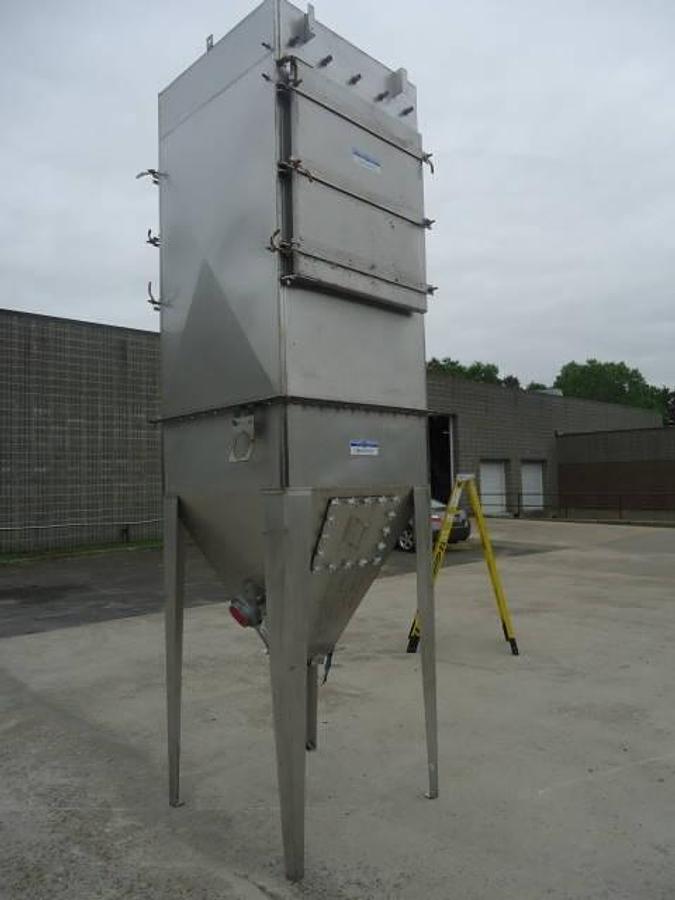
A stainless steel dust collector from Pfening is designed for use in flour and dry ingredient handling environments, where airborne particulate management is both a cleanliness and a safety concern. When evaluating a used unit, buyers should inspect the integrity of the stainless steel housing for dents, corrosion, or weld failures, all of which can compromise the unit's sealing performance. Filter media condition is another key area to assess, since worn or clogged filters reduce collection efficiency and may need to be replaced before the unit is put back into service.
Mechanical components such as fans, motors, and any automated filter-cleaning mechanisms should be examined for wear and proper operation. Buyers should ask the dealer whether the unit was in active service at the time of decommissioning and request any available documentation on maintenance history. Confirming that the unit's airflow capacity and inlet/outlet dimensions are compatible with the intended installation is also essential before purchase. If an in-person inspection is not possible, a detailed video walkthrough covering all major components and connection points is a reasonable alternative.