Category
Manufacturer
Model
FAQ:
What types of equipment does Perry Products manufacture?
Perry Products is a well-established name in industrial process equipment, with a product line that spans mixing and blending equipment, dryers, evaporators, heat exchangers, and a range of other process machinery used across chemical, pharmaceutical, food processing, and related industries. Their ribbon blenders, in particular, are widely recognized in the market. The double ribbon blender design, for example, uses counter-rotating inner and outer ribbon agitators to move material both radially and axially through the mixing chamber, which produces thorough, consistent blends across a wide range of dry and semi-dry materials.
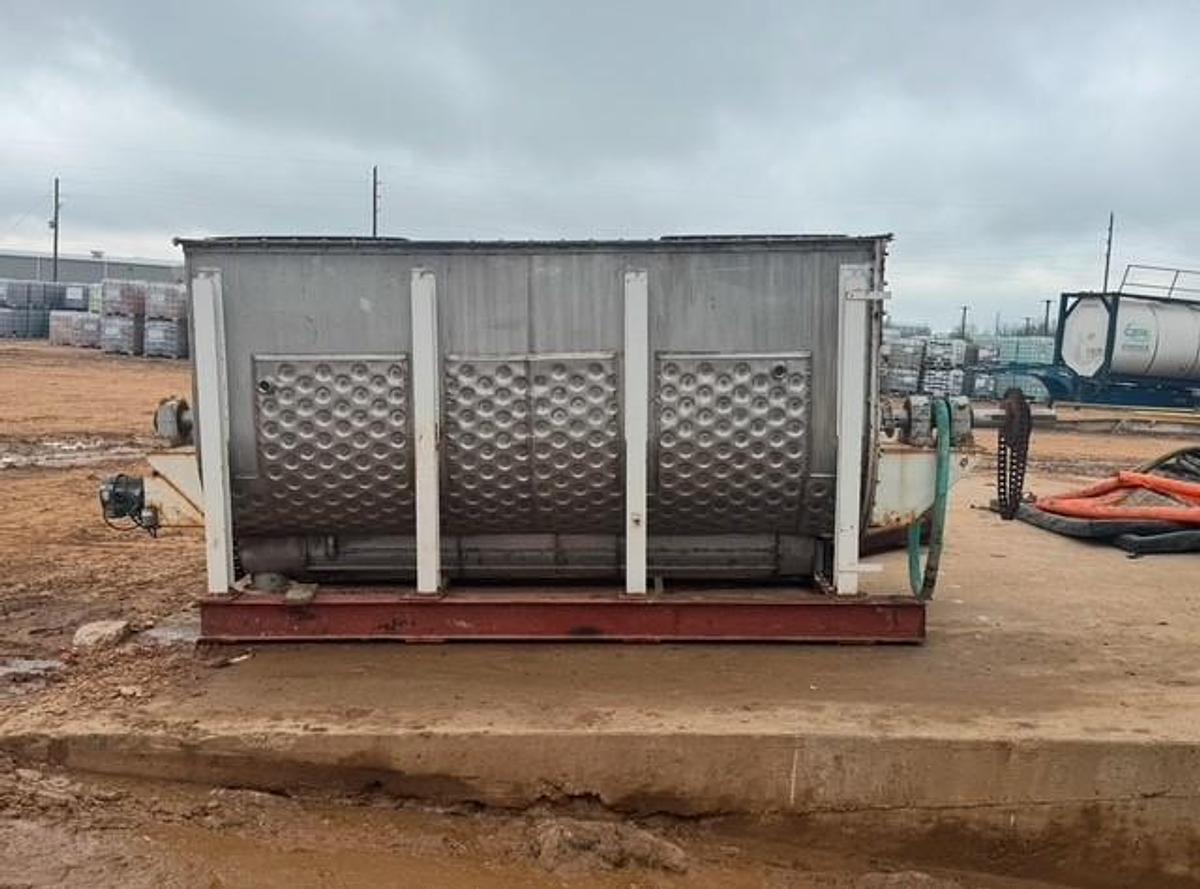
When shopping for used Perry Products equipment, buyers will find models in various configurations, including jacketed vessels for temperature-controlled processing and stainless steel construction for sanitary or corrosion-resistant applications. A 215 cubic foot stainless jacketed double ribbon blender is one example of the scale and specification range available on the used market. Understanding the specific model and configuration matters a great deal, since capacity, material compatibility, and jacketing options all affect whether a given machine fits a particular production process.
What industries commonly use Perry Products ribbon blenders and mixing equipment?
Perry Products mixing equipment sees heavy use across several process-intensive industries. Food and beverage manufacturers rely on ribbon blenders for dry ingredient blending, spice mixing, and powdered product homogenization. Pharmaceutical and nutraceutical producers use them for API blending and excipient mixing, where consistent particle distribution is critical to product quality and regulatory compliance. Chemical manufacturers, agricultural product processors, and plastics compounders also depend on ribbon blenders for large-volume dry and semi-dry mixing applications.
The stainless steel construction found on many Perry Products units makes them particularly well-suited for food-grade and pharmaceutical environments, where sanitation standards are strict and chemical resistance is a priority. Jacketed models add temperature control capability, which opens the door to applications involving heat-sensitive materials or processes that require warming or cooling during blending. Buyers from regulated industries should pay close attention to the documentation history of any used unit they consider, since traceability and maintenance records can be important for internal validation and compliance purposes.
How do I verify the condition of used Perry Products equipment before buying?
Verifying the condition of used industrial equipment takes some diligence, but there are reliable approaches that experienced buyers use consistently. Most reputable used equipment dealers will provide detailed photographs, video walkthroughs, and written condition reports for machinery in their inventory. For a piece of equipment like a large ribbon blender, buyers should look for images of the ribbon agitator for wear or deformation, the shaft seals and end panels for integrity, the discharge valve for condition, and the interior of the vessel for pitting, corrosion, or weld repairs. A jacketed unit should also be evaluated for the condition of the jacket and any associated fittings.
In-person inspections are the gold standard and are typically accommodated by established dealers. Virtual or video inspections are also common and can be arranged when travel is not practical. Keep in mind that most equipment dealers do not have production permits, so live operational testing with actual product is generally not possible at the dealer's facility. If the equipment is still installed at a plant where it remains in production or has recently been decommissioned, the dealer may be able to coordinate an inspection at that location, which can provide a much clearer picture of the machine's working condition. Buyers in regulated industries should also ask specifically about available maintenance records, prior use history, and any modifications made to the unit.
Does used Perry Products equipment come with a warranty?
Used industrial equipment is almost universally sold on an as-is basis, and Perry Products machinery purchased through used equipment dealers is no exception. Warranties are typically a feature of purchases made directly from a manufacturer for equipment being built to order. In the used and surplus market, the buyer takes on the responsibility of thoroughly evaluating the equipment prior to purchase, which is why inspection options are so important.
The practical implication for buyers is that selecting a dealer with a strong track record and deep industry experience matters significantly. A reputable dealer with a long history in process equipment sales will have the expertise to accurately represent the condition of a machine and will typically be transparent about known issues. Buyers should ask pointed questions about the machine's history, request all available documentation, and take full advantage of any inspection opportunity offered before committing to a purchase. Consulting with the original equipment manufacturer about parts availability and service support for a specific model and serial number is also a smart step, since older or discontinued models may have limited support infrastructure.
Can I get replacement parts and service support for used Perry Products equipment?
Parts availability for used industrial equipment varies depending on the age of the machine, the model, and whether the manufacturer still supports that product line. For Perry Products blending equipment, prospective buyers should contact Perry Products directly to ask about parts availability for the specific model and serial number they are considering. Manufacturers can generally indicate whether ribbon agitators, shaft seals, discharge valves, drive components, and other wear items are still stocked or can be fabricated, which is critical information before committing to a purchase.
For older or discontinued models, third-party fabrication shops can often manufacture replacement ribbons, shafts, and structural components to original specifications, particularly for straightforward mechanical parts. Electronic controls and proprietary drive systems can be more challenging to source and may require upgrades or retrofits. Buyers should factor potential parts sourcing costs and lead times into their overall acquisition budget, especially for equipment that has been out of production for many years. Engaging a qualified process equipment service company for a pre-purchase mechanical inspection is another way to get an honest assessment of how much life and service cost to expect from a specific unit.
What should I know about shipping and delivery for large used industrial equipment like ribbon blenders?
Shipping large process equipment requires considerably more planning than standard freight. A unit like a 215 cubic foot ribbon blender is a heavy, oversized piece of machinery that needs proper rigging for loading, appropriate blocking and bracing during transport, and potentially specialized unloading equipment at the destination. The cost of shipping will depend on the distance, the weight and dimensions of the machine, the level of crating or palletization required, and whether heavy-duty rigging services are needed at either end of the move.
Buyers should ask the dealer for a detailed breakdown of all shipping-related costs before finalizing a purchase, including packaging, rigging, freight, and any permits required for oversized loads. Understanding the full landed cost of the equipment is essential for accurate budgeting. On the receiving end, buyers need to confirm they have adequate overhead clearance, floor load capacity, and rigging or forklift capability to safely receive and position the equipment. Coordinating with a local rigging company in advance is strongly recommended for any large blender or mixing vessel.
What are the typical payment terms for purchasing used industrial equipment?
In the used equipment market, full payment prior to shipment is the standard arrangement. Most dealers require cleared funds before a machine leaves their facility or before they coordinate release from a plant where the equipment is stored. This protects the seller from loss on high-value machinery and is a well-established norm across the industry. Buyers who have an established purchasing relationship with a dealer may occasionally be offered extended terms, but that is the exception rather than the rule for first-time transactions.
For buyers who need financing assistance, equipment financing companies and leasing firms that specialize in industrial machinery can sometimes be engaged independently to fund the purchase. It is worth researching those options separately if upfront capital is a constraint. Regardless of payment structure, buyers should ensure they receive clear documentation of the sale, including a bill of sale that accurately describes the equipment by make, model, and serial number, and confirms the terms of the transaction in writing.
What is a jacketed ribbon blender and what processing advantages does it offer?
A jacketed ribbon blender is a ribbon blending unit that includes a hollow outer shell, or jacket, surrounding the mixing trough. Hot water, steam, or chilled fluid can be circulated through this jacket to heat or cool the contents of the blender during the mixing cycle. This design is particularly useful for processes that involve materials requiring temperature control, such as wax-based compounds that need warming to achieve proper flow, heat-sensitive powders that must stay below a certain temperature threshold, or applications where drying or conditioning of the blend is part of the process.
Stainless steel jacketed ribbon blenders, like the 215 cubic foot unit available on the used market, are common in food processing, pharmaceutical manufacturing, and specialty chemical production. The stainless construction resists corrosion and is easier to clean to the sanitary standards those industries require. The double ribbon configuration, where an outer ribbon moves material in one direction and an inner ribbon moves it in the opposite direction, creates a cross-flow mixing action that produces very uniform blends in relatively short cycle times. For buyers evaluating a used jacketed blender, it is worth inspecting the jacket for integrity and confirming that all inlet and outlet fittings are present and undamaged.
How does buying used Perry Products equipment compare to purchasing equivalent new machinery?
The most immediate advantage of purchasing used process equipment is cost. A used ribbon blender in good working condition can be acquired for a fraction of what an equivalent unit would cost if ordered through a manufacturer. Lead times are another factor: equipment built to order can take months to manufacture and deliver, while used inventory is generally available for inspection and purchase immediately. For operations that need to expand capacity quickly or replace a failed unit without a long wait, the used market offers a practical path.
The trade-offs are real and worth understanding clearly. Used equipment comes as-is, with no manufacturer's production warranty, and the buyer takes on responsibility for evaluating condition before purchase. The machine may have wear on mechanical components, and parts sourcing can require more effort for older models. That said, well-maintained process equipment from established manufacturers like Perry Products is built for long service lives, and a unit that has been properly cared for can deliver many additional years of reliable operation. Thorough inspection, honest condition reporting from the dealer, and a clear understanding of parts availability are the key factors in making a confident used equipment purchase.
What documentation should I request when buying used industrial mixing equipment?
Documentation is an often-overlooked part of a used equipment purchase, but it can be critically important depending on the industry and application. At a minimum, buyers should request a bill of sale that clearly identifies the equipment by manufacturer, model, and serial number. If available, original equipment manuals, wiring diagrams, and parts lists are extremely valuable for installation, operation, and future maintenance. These documents can sometimes be obtained directly from the manufacturer if the dealer does not have them, particularly for machines with known serial numbers.
For buyers in regulated industries such as pharmaceuticals or food processing, additional documentation becomes essential. Maintenance records, prior use history, and any records of modifications or repairs help establish a chain of custody and support internal equipment qualification processes. Some buyers also request third-party inspection reports or commission their own inspection by a qualified engineer before finalizing a purchase. The more thoroughly a machine can be documented, the easier it is to integrate into a regulated production environment and the lower the risk of unexpected compliance complications after installation.