Category
Manufacturer
Model
FAQ:
What types of used Perma-San equipment are typically available for sale?
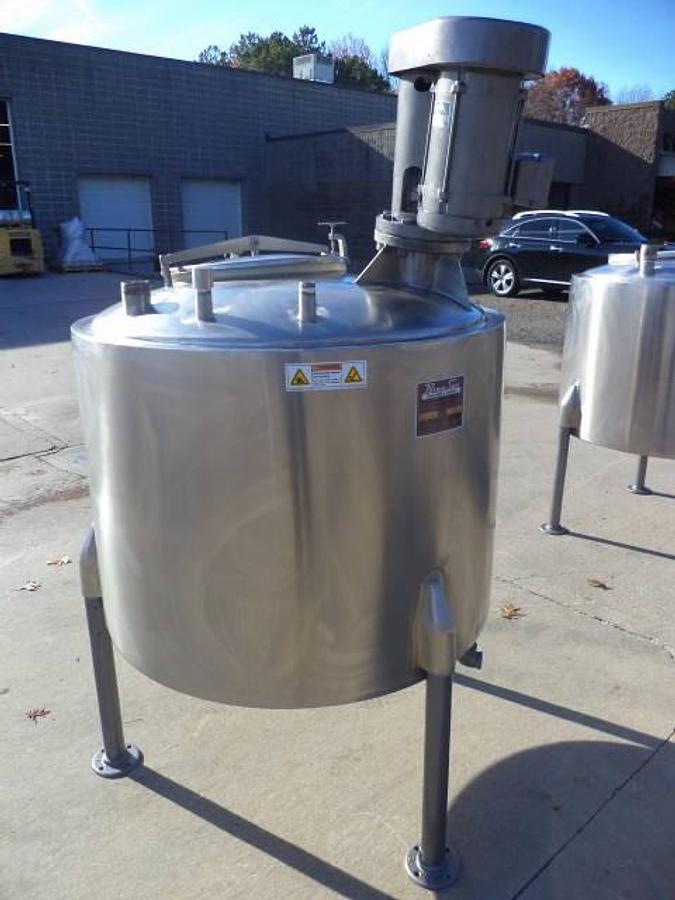
Perma-San built a wide range of sanitary stainless steel processing equipment, and the used market reflects that variety. Common listings include jacketed mix tanks (such as 125-gallon stainless jacketed units with explosion-proof agitators), blending vessels, holding tanks, and other fluid processing equipment designed to meet the hygiene demands of regulated industries. Tanks with XP-rated agitators are particularly sought after because they allow safe operation in environments where flammable vapors may be present, making them suitable for pharmaceutical and specialty chemical applications in addition to food and beverage work.
Beyond tanks and vessels, used Perma-San inventory can include pumps, valves, fittings, and other sanitary process components depending on what becomes available from decommissioned facilities. Because Perma-San built equipment to sanitary standards with polished stainless steel contact surfaces, their machines tend to stay in service for decades, which means used listings span a broad age range. Buyers should clarify the specific model, capacity, jacket rating, agitator type, and any included accessories when evaluating a listing, since configurations vary considerably from one unit to the next.
What industries commonly use Perma-San sanitary processing equipment?
Perma-San equipment was designed to meet the strict hygiene and cleanability requirements of industries where product contact surfaces must be free of contamination risks. The primary industries are food and beverage processing, dairy, pharmaceutical manufacturing, nutraceuticals, biotechnology, and cosmetics. In these sectors, equipment must be capable of thorough cleaning-in-place (CIP) or sterilization-in-place (SIP) procedures, and the polished stainless steel construction Perma-San used supports both approaches effectively.
Because the equipment is built to sanitary standards, it also sees use in specialty chemical processing and personal care product manufacturing where hygiene and corrosion resistance are priorities even if full pharmaceutical-grade compliance is not required. Buyers from regulated industries, particularly pharmaceutical and dairy, should confirm whether a specific used unit was built to 3-A Sanitary Standards, as that certification carries significant weight during facility audits and regulatory inspections. Consulting the manufacturer or a knowledgeable used equipment dealer who specializes in sanitary processing is a practical way to confirm whether a particular Perma-San unit fits a specific application.
How do I verify the condition of used Perma-San equipment before purchasing?
Condition verification is the most important step in buying any used sanitary processing equipment, and reputable dealers will accommodate inspections in person, by video call, or through detailed video footage of the machine. For Perma-San tanks and mix vessels, the key areas to examine are the interior contact surfaces for corrosion, pitting, or scratches that could harbor bacteria, the integrity of gaskets and seals, the condition of any agitator shaft seals and mechanical components, and the state of the jacket if the unit is jacketed. Surface finish matters in sanitary applications, so look closely at welds and any areas that may have been repaired.
Keep in mind that most used equipment dealers do not have production facilities, so they typically cannot run the equipment through a full production cycle during an inspection. What they can demonstrate is mechanical function, motor operation, and visible condition. If the equipment is still installed at the selling facility, an in-person visit may allow you to see it in an active or recently decommissioned state, which provides better context. Buyers should also consult directly with Perma-San or their service network to understand what wear indicators are most critical for the specific model they are considering, since age and configuration affect what to prioritize during review.
Does used Perma-San equipment come with a warranty?
Warranties on used processing equipment work differently than they do on factory-fresh machines. Manufacturer warranties are typically only available on equipment sold directly through authorized channels, and they do not transfer with used sales in most cases. Used equipment dealers generally sell machinery on an as-is basis, which places the responsibility for condition assessment squarely on the buyer. This is standard practice across the used industrial equipment market, not something specific to Perma-San or any one dealer.
Because of this, buyers should take the inspection process seriously and work only with dealers who have a long track record of selling sanitary processing equipment and who specialize in this category. A dealer with deep experience in food and pharmaceutical equipment will be far better positioned to accurately represent a machine's condition than a general industrial liquidator. Before purchasing, it is also worth contacting Perma-San directly to understand what level of technical support and parts availability exists for the specific model you are considering, since older or discontinued units may have more limited manufacturer support than recent production models.
Are replacement parts and gaskets still available for older Perma-San equipment?
Parts availability is one of the most practical concerns when buying used sanitary processing equipment, and it deserves careful attention before committing to a purchase. For Perma-San equipment, the situation depends heavily on the age and model of the unit. Sanitary fittings, tri-clamp connections, and standard gasket materials used in Perma-San construction are often available from third-party sanitary fittings suppliers even when the original manufacturer no longer stocks that specific part, because much of the hardware follows industry-standard dimensions.
However, proprietary components like custom agitator assemblies, specialized shaft seals, or control components tied to a specific model generation may be harder to source if the model has been discontinued. The practical approach is to contact Perma-San before purchasing a used unit and ask specifically about parts support for that model and serial number range. Dealers who specialize in sanitary equipment often have relationships with parts suppliers and can provide guidance on sourcing. Buyers should also consider purchasing any available spare gaskets, seals, or wear parts at the time of the equipment purchase if the dealer has them on hand, since availability can narrow over time for older machines.
What should I look for when evaluating a used jacketed stainless steel mix tank?
A jacketed mix tank is a more complex piece of equipment than a plain vessel because it has two separate systems to evaluate: the process side (the inner tank and agitator) and the utility side (the jacket that carries heating or cooling media). On the process side, inspect the interior surface finish for pitting, corrosion, scratches, or weld defects that could compromise cleanability or product quality. Check the agitator shaft seal for wear or leakage, confirm the motor and gearbox operate smoothly, and verify that the agitator blades are intact and properly secured. For explosion-proof (XP) rated agitators, confirm the XP classification is appropriate for your facility's hazardous area rating.
On the jacket side, look for any signs of leaks, corrosion on external surfaces, or damage to the jacket ports and fittings. If possible, ask whether the jacket has been pressure-tested recently. Capacity, working pressure, and temperature ratings should be verified against your process requirements, and any available documentation such as the original data plate or prior maintenance records adds confidence to the purchase. Used jacketed tanks that have been well maintained in food or dairy service can offer excellent value, but a unit that has been sitting idle for years or used in a chemically aggressive application requires more thorough scrutiny before purchase.
What is the typical price range for used Perma-San sanitary processing equipment?
Pricing for used Perma-San equipment varies considerably based on the type of machine, its capacity, age, condition, and current market demand. A used jacketed stainless mix tank in the 100 to 200 gallon range, for example, might sell anywhere from a few thousand dollars to well over ten thousand depending on the agitator configuration, surface condition, and included accessories. Larger vessels or more complex systems with multiple ports, specialized agitators, and well-documented service histories command higher prices. Equipment in clean, recently serviced condition from a food or pharmaceutical facility will generally price higher than the same unit pulled from long-term storage.
Buyers should also factor in the full landed cost, not just the listed equipment price. Shipping, rigging, crating, and any freight accessorial charges can add meaningfully to the total cost, particularly for heavier tanks that require specialized loading equipment. Requesting a detailed quote from the dealer that covers packaging, rigging, and freight to your location before finalizing a purchase gives a much clearer picture of the actual investment. Comparing a few similar listings from dealers who specialize in sanitary processing equipment is the most reliable way to gauge whether a specific asking price is reasonable for the current market.
What are 3-A Sanitary Standards and why do they matter for used equipment buyers?
3-A Sanitary Standards are a set of equipment design criteria developed collaboratively by equipment manufacturers, regulatory agencies, and industry users to ensure that food and dairy processing equipment can be effectively cleaned and does not harbor pathogenic microorganisms. Equipment built to 3-A standards must meet specific requirements for surface finish, material compatibility, drainage, cleanability, and mechanical design. For buyers in dairy, food processing, and some pharmaceutical applications, 3-A compliance is not just a preference but a practical requirement for passing facility audits and meeting regulatory expectations.
For used equipment, 3-A compliance is tied to the original design and construction of the machine, not to its current condition. A unit built to 3-A standards can lose compliance if it has been modified, repaired with non-conforming materials, or allowed to deteriorate in ways that affect cleanability (such as pitting or damaged welds). When evaluating a used Perma-San unit for a regulated application, buyers should confirm the original 3-A certification status of the model, inspect the unit carefully for any modifications or surface damage that might affect compliance, and consult with their quality or regulatory team before finalizing the purchase. A knowledgeable sanitary equipment dealer can often help clarify whether a specific unit's condition is consistent with 3-A expectations.
How does shipping and rigging work when buying used Perma-San processing equipment?
Shipping used processing equipment involves more logistics planning than typical freight because sanitary tanks and vessels are often heavy, awkwardly shaped, and sensitive to surface damage. The cost and method of packaging depend on the size and fragility of the equipment. Smaller components may be palletized and shrink-wrapped, while larger tanks typically require custom crating or skidding to prevent damage in transit. Buyers should ask the dealer specifically how the equipment will be packaged and what that packaging is designed to protect against, since inadequate packaging is one of the most common causes of transit damage.
For heavier equipment like large jacketed mix tanks, loading at the dealer's facility and unloading at the buyer's location may require a forklift, crane, or specialized rigging service, all of which carry additional costs. These charges are usually not included in the listed equipment price and need to be quoted separately. Before agreeing to a purchase, ask the dealer for a complete breakdown of rigging, packaging, freight, and any fuel or accessorial surcharges so you understand the full delivered cost. Also confirm in advance what unloading equipment will be needed at your facility, since arriving without the right lift capacity can create costly delays.
Can I request documentation or maintenance records for used Perma-San equipment?
Requesting documentation is a reasonable and advisable step when purchasing used sanitary processing equipment, though availability varies depending on the equipment's history and how it was sourced. In some cases, dealers acquire equipment directly from processing facilities and may have access to maintenance logs, calibration records, cleaning validation documents, or the original equipment data sheet. When this documentation exists, it provides useful context about how the machine was used, how often it was serviced, and whether any significant repairs were made.
In other cases, particularly when equipment has changed hands multiple times or was acquired through liquidation, detailed records may not be available. The absence of documentation does not necessarily mean the equipment is in poor condition, but it does mean the buyer needs to rely more heavily on physical inspection to assess the machine's state. If documentation is important for your regulatory or quality requirements, communicate that clearly to the dealer early in the process. Some dealers can also facilitate direct communication with the selling facility if the equipment is still on-site, which may allow for more detailed history to be gathered before the sale is finalized.