Category
Manufacturer
Model
Per-Fil
Per-Fil is renowned for its expertise in the field of powder filling equipment, primarily serving the pharmaceutical and food industries. They manufacture a variety of filling systems that ensure accuracy and consistency in product dispensing. Their machines are designed to handle a wide range of powder types, making them versatile for different applications.
FAQ:
What types of powders can Per-Fil filling equipment handle?
Per-Fil auger filling machines are specifically engineered to handle a wide range of powder types, including materials that are notoriously difficult to fill accurately. This includes fine and dusty powders, sticky or cohesive materials, low-density or fluffy powders, and free-flowing granules. The auger-based filling mechanism gives operators consistent volumetric control regardless of the powder's flow characteristics, which is one of the main reasons Per-Fil equipment is favored across pharmaceutical, nutraceutical, food, cosmetic, and chemical applications.
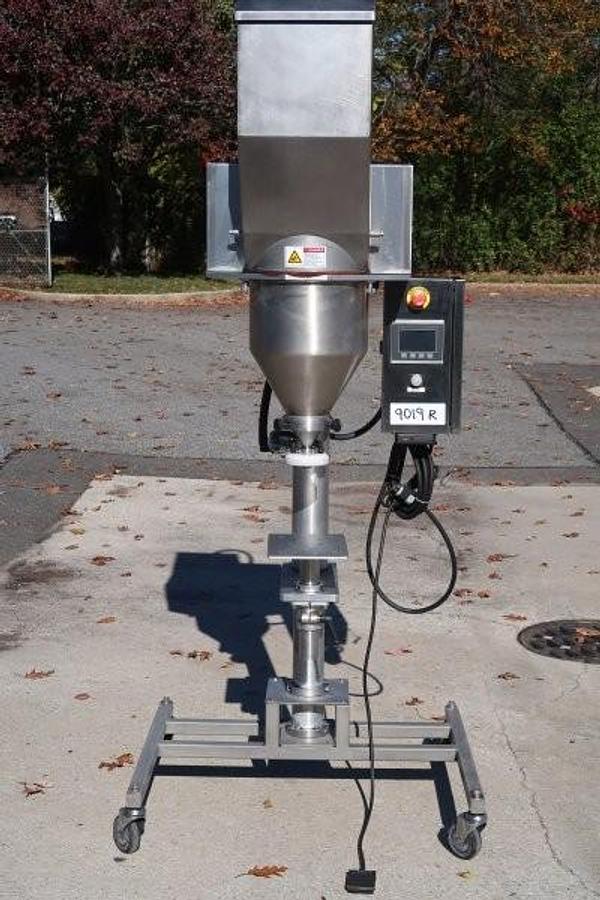
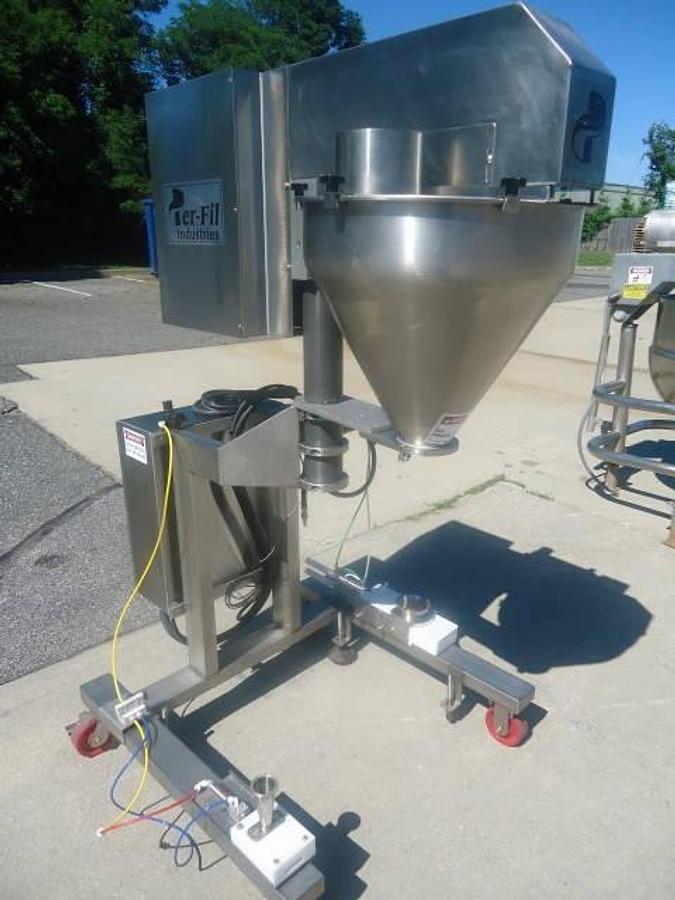
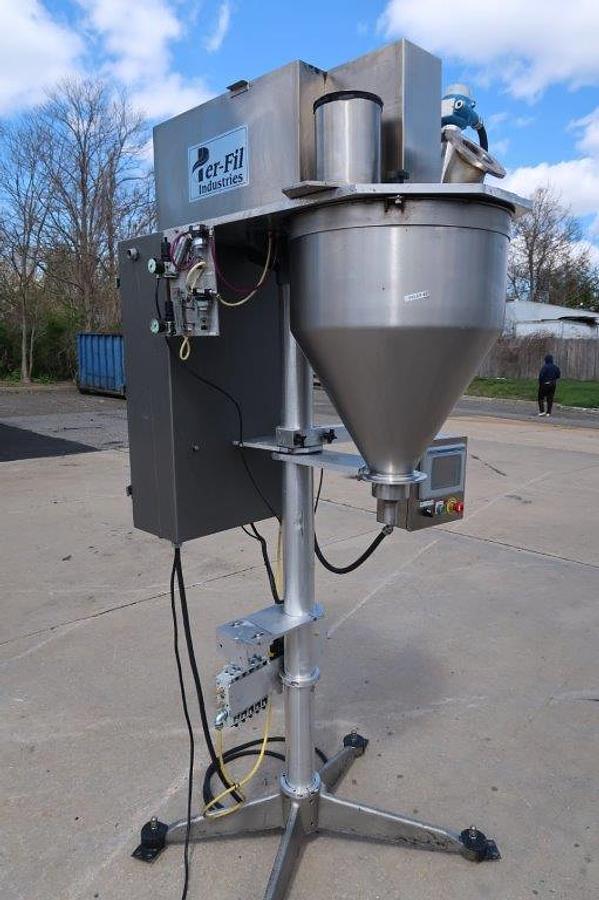
Certain Per-Fil models, such as the MR-1 Single Auger Powder Filler, include an agitated hopper specifically designed to keep hard-to-flow powders moving consistently into the auger chamber. This agitation prevents bridging or compaction inside the hopper, which can otherwise cause fill weight inconsistencies. For buyers evaluating used Per-Fil equipment, confirming which hopper configuration a specific machine includes is an important step, since agitated hopper models command a premium and are better suited for challenging powder types.
What industries commonly use Per-Fil powder filling machines?
Per-Fil powder filling equipment has a long history of use in the pharmaceutical and food industries, where accuracy, cleanliness, and regulatory compliance are non-negotiable. Pharmaceutical manufacturers rely on Per-Fil auger fillers for filling capsules, pouches, bottles, and jars with active ingredients or blended powders. Food producers use them for spices, protein powders, drink mixes, coffee, and other dry goods. Nutraceutical and supplement companies are also heavy users, particularly because the machines can be validated to meet GMP standards.
Beyond those core markets, Per-Fil equipment shows up regularly in cosmetic manufacturing for filling loose powders, foundations, and talc-based products, as well as in chemical and industrial settings for filling specialty compounds. The versatility of the auger filling design, combined with stainless steel construction on many models, makes Per-Fil machines adaptable across regulated and non-regulated production environments. Used Per-Fil machines available through secondary market dealers often come from any one of these industries, so buyers should ask about the machine's prior application to assess compatibility with their intended use.
What is the difference between a tabletop semi-automatic Per-Fil filler and a fully automatic inline system?
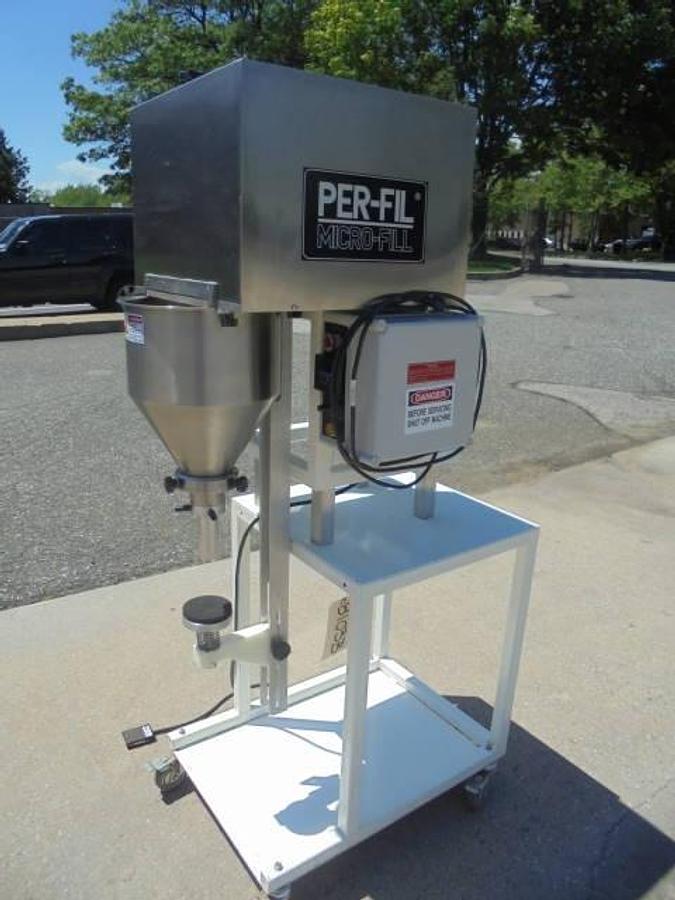
Per-Fil produces filling equipment across a broad range of automation levels to match different production volumes and facility sizes. Tabletop semi-automatic units, like the portable PF-14FG auger filler, are compact machines designed for small-batch or laboratory-scale operations. An operator manually positions containers under the fill head, initiates the fill cycle, and moves containers through the process. These machines are well suited for startups, contract packagers handling short runs, or facilities that need flexibility across many different SKUs without committing to a fixed inline system.
Fully automatic inline Per-Fil systems integrate with conveyor lines and container handling equipment to fill at much higher throughput rates with minimal operator intervention. These machines are built for high-volume production environments where consistent speed and output are critical. The trade-off is that inline systems require more floor space, more complex integration with upstream and downstream equipment, and more involved changeover procedures. When shopping for used Per-Fil equipment, buyers should clearly define their target output rate and container format before selecting a model, since the right automation level has a significant impact on both purchase price and total cost of ownership.
Does Per-Fil equipment meet GMP and FDA regulatory standards?
Per-Fil powder filling machines are designed with GMP-compliant construction in mind, which is a primary reason they are so widely adopted in pharmaceutical and nutraceutical manufacturing. Key design features that support GMP compliance include stainless steel contact surfaces, tool-free or minimal-tool disassembly for cleaning, and smooth internal geometries that reduce product buildup and contamination risk. Many Per-Fil models are built to be validated, meaning manufacturers can document the equipment's performance to meet FDA process validation requirements under 21 CFR Part 211.
Buyers purchasing used Per-Fil equipment for regulated applications should be aware that the machine itself being GMP-capable does not automatically mean it arrives ready for a regulated production environment. Used machines will need to be thoroughly cleaned, inspected, and requalified before being placed into a validated process. Consulting with a validation specialist or equipment qualification firm before purchasing a used Per-Fil filler is advisable for pharmaceutical buyers. Contacting Per-Fil directly to confirm parts availability and manufacturer support for the specific model is also a practical step, since support levels can vary based on the age and model of the machine.
What should buyers look for when inspecting a used Per-Fil powder filling machine?
A thorough inspection is the most important step in purchasing any used powder filling equipment. For Per-Fil machines specifically, buyers should examine the condition of the auger and auger tube, since these are the primary wear components and replacements can be costly if sourced after the fact. Stainless steel surfaces should be checked for pitting, deep scratches, or corrosion that could compromise cleanability or product contact compliance. The hopper, agitator (if present), and all seals and gaskets should be inspected for wear. Electrical components, drive motors, and control panels should be tested to confirm they power up and function as expected.
Reputable used equipment dealers will typically accommodate in-person inspections at their facility, or provide detailed video walkthroughs and photo documentation for remote buyers. Some machines may still be installed at the facility where they were last in production, in which case the dealer can often arrange an inspection at the plant, and the buyer may even be able to observe the machine running live product. Buyers should request as much documentation as possible, including any maintenance records, previous calibration data, or prior validation documentation. Keep in mind that most used equipment dealers do not have the permits or production capabilities to run actual product through a machine during a dealer-site inspection, so testing is generally limited to dry runs or mechanical operation checks.
What is the typical price range for used Per-Fil powder filling equipment?
Pricing for used Per-Fil powder filling machines varies considerably depending on the model, age, configuration, and overall condition of the equipment. Compact semi-automatic tabletop units like the portable PF-14FG tend to be priced lower than fully automatic inline systems, reflecting the difference in capability and original manufacturing cost. A basic used semi-automatic Per-Fil auger filler in good working condition might be found in the range of a few thousand dollars, while larger, more complex automatic systems with stainless steel construction and advanced controls can run significantly higher.
Beyond the purchase price, buyers should factor in the full landed cost of the equipment, which includes freight, any rigging or crating charges, and the cost of any refurbishment, parts replacement, or requalification needed before the machine goes into production. Larger Per-Fil machines may require specialized rigging equipment for loading and unloading, which adds to the total acquisition cost. Getting a clear picture of all these costs upfront from the dealer before committing to a purchase is the best way to avoid surprises and accurately compare the total investment against the cost of purchasing a different machine or configuration.
What are the fill weight capabilities of Per-Fil auger filling machines?
Per-Fil auger fillers are designed to cover a practical range of fill weights suited to pharmaceutical, food, and nutraceutical packaging formats. Depending on the specific model and the auger tooling installed, these machines can typically handle fill weights ranging from just a few grams up to several hundred grams per fill cycle. The auger size, pitch, and rotation speed are the primary variables that determine fill weight, and most Per-Fil machines allow operators to make adjustments to dial in the target weight for a given product and container.
For buyers evaluating used Per-Fil equipment, it is worth confirming which auger tooling is included with the machine, since different auger configurations are optimized for different fill ranges and powder types. A machine sold without its full complement of tooling may require additional investment to cover the buyer's intended fill range. Asking the dealer for a complete inventory of included tooling and spare parts is a practical step before finalizing a purchase. Contacting Per-Fil directly to confirm tooling availability for the specific model can also help buyers assess whether the machine can be fully equipped for their application.
How does an auger powder filler work, and why is it used for pharmaceutical and food applications?
An auger powder filler uses a rotating helical screw (the auger) housed inside a tube to meter a controlled volume of powder into a container below. When the auger rotates a set number of turns, it displaces a specific volume of powder, which is then dispensed into the waiting container. The fill weight is controlled by adjusting the auger speed, the number of rotations per cycle, and in some cases the compression of the powder in the hopper. Because the fill is volumetric rather than purely gravity-fed, auger fillers maintain much better consistency with powders that do not flow freely on their own.
Pharmaceutical and food manufacturers favor auger fillers because the enclosed filling mechanism reduces dust generation and product exposure to the environment, which matters for both product quality and operator safety. The design is also well suited to sanitary construction standards, since the auger, tube, and hopper can be disassembled and cleaned thoroughly between product runs. Per-Fil in particular has built a reputation for producing auger fillers with straightforward mechanical designs that are durable over long production lifespans, which is part of why used Per-Fil machines remain in demand on the secondary market long after their initial production use.
What are the shipping and logistics considerations when buying a used Per-Fil powder filling machine?
Shipping used powder filling equipment requires careful planning to prevent damage in transit. Smaller tabletop Per-Fil units like the portable PF-14FG are relatively straightforward to palletize and ship via standard freight carriers, though proper blocking, bracing, and wrapping are still essential. Larger automatic inline Per-Fil systems may require custom crating or heavy-duty skidding to protect the machine's frame, controls, and fill head components during transport. Buyers should ask the dealer specifically what packaging and crating is included in the quoted price, and what additional charges may apply for heavier rigging or custom crating.
For larger machines, loading at the dealer's facility and unloading at the buyer's site may require a forklift or crane, and in some cases specialized rigging contractors. These costs can add meaningfully to the total landed price of the equipment and should be factored into the purchase decision upfront. Buyers outside the continental U.S. or in locations with limited freight access should discuss logistics details with the dealer early in the process to avoid delays or unexpected costs. Most reputable used equipment dealers will work with the buyer to coordinate freight and provide documentation needed for customs clearance if international shipping is involved.
What payment terms are typical when purchasing used Per-Fil equipment from a dealer?
The standard practice among used equipment dealers is to require full payment before the machine is released for shipment. This applies to most transactions, particularly for first-time buyers purchasing from a dealer for the first time. Payment is typically accepted by wire transfer, though some dealers may accept other methods depending on the transaction size and the buyer's location. Buyers should confirm accepted payment methods and the exact timing of payment relative to shipping when discussing terms with the dealer.
Some dealers offer extended or flexible payment terms to repeat customers or buyers with an established purchasing history, but this is not universal and should not be assumed. Because used equipment is sold without the guarantees that come with a manufacturer sale, buyers are encouraged to conduct thorough due diligence before submitting payment, including completing any desired inspections and confirming the machine's condition to their satisfaction. Selecting a dealer with a long track record in the packaging and processing equipment industry is one of the most reliable ways to reduce risk in a used equipment transaction.