Category
Manufacturer
Model
FAQ:
What types of Paxiom Weighpack equipment are commonly available on the used market?
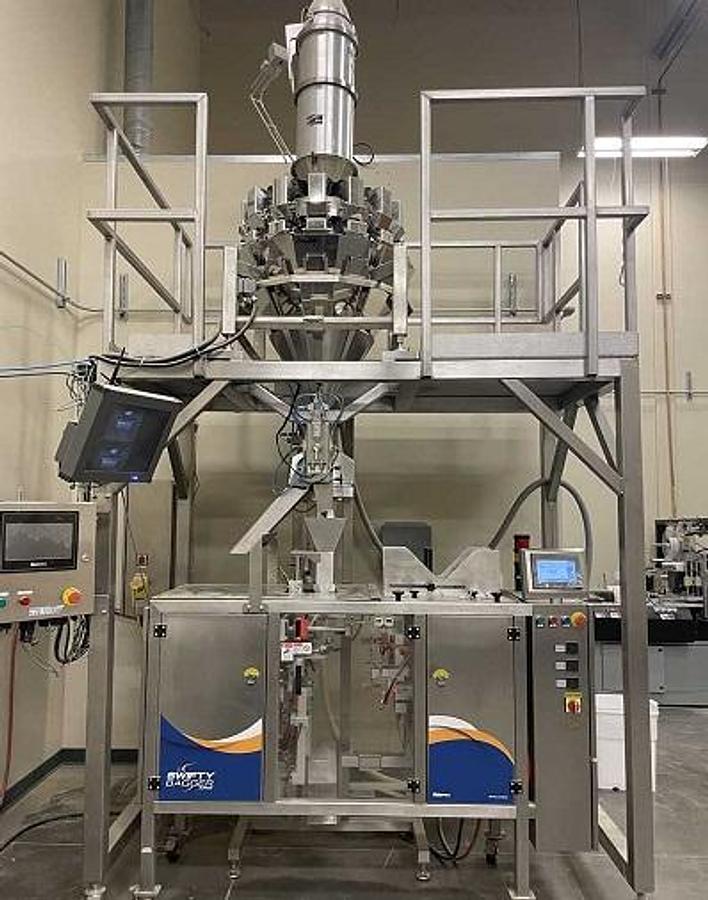
Paxiom Weighpack produces a broad range of packaging machinery across several sub-brands, and used versions of these machines appear regularly on the secondary market. The most commonly available types include multihead combination weighers, vertical form-fill-seal (VFFS) baggers, horizontal baggers, pouch filling and sealing machines, and complete integrated packaging lines. One specific example of equipment that surfaces on the used market is the WeighPack PrimoCombi Multi-Head Filler/Bagging System, which combines a multihead weigher with a bagging unit in a single integrated configuration.
Beyond combination systems, buyers can also find standalone WeighPack multihead weighers, Swifty Bagger machines, and various Harpak-ULMA flow wrappers and thermoformers, all of which fall under the Paxiom group of brands. Because Paxiom positions itself as a full-line packaging solutions provider, it is not uncommon to find multiple complementary machines from the same manufacturer available together, which can simplify integration when building or expanding a packaging line. Buyers should work with a reputable used equipment dealer who specializes in packaging machinery to identify which specific models are currently in stock and best suited to their production requirements.
What industries use Paxiom Weighpack packaging equipment?
Paxiom Weighpack equipment is designed with versatility in mind, and as a result it has found adoption across a wide range of industries. The food and snack sector is probably the most prominent user base, with applications in nuts, dried fruit, candy, confectionery, chips, popcorn, frozen vegetables, and fresh produce. Pet food manufacturers also rely heavily on Paxiom multihead weighers and baggers due to the irregular shapes and varying densities of kibble and treat products. Beyond food, the pharmaceutical, nutraceutical, and supplement industries use Paxiom filling and sealing equipment for tablets, capsules, and powders, while hardware and fastener companies use it for small parts counting and bagging.
The reason Paxiom equipment crosses so many industry lines comes down to the flexibility built into its weighing and filling technology. Multihead combination weighers, for example, can be configured with different head counts, bucket sizes, and timing gate settings to handle products ranging from sticky gummies to rigid bolts. When purchasing used Paxiom equipment, buyers should confirm that the specific model and configuration they are considering is appropriate for their product type, since tooling, contact surfaces, and software settings can vary significantly between machines that appear similar on the outside. A used equipment dealer with packaging industry experience can help match the right machine to the right application.
What weighing and filling capacities do Paxiom Weighpack multihead weighers typically support?
Paxiom Weighpack multihead combination weighers are built for high-speed, high-accuracy performance, and the specific capacity of any given machine depends on the number of heads, the product being weighed, and the target weight per portion. Entry-level configurations typically start with 10 or 14 heads and can achieve speeds in the range of 40 to 60 weighments per minute for products like nuts or candy. Higher-end models with 20 or more heads can reach speeds exceeding 100 weighments per minute on free-flowing products. Target weights generally range from a few grams up to several kilograms depending on the bucket volume installed.
For used machines, the rated capacity on the specification sheet reflects the machine's design potential, but actual throughput in a buyer's facility will depend on factors like product characteristics, the condition of the machine, and how well it is calibrated after installation. Buyers evaluating a used Paxiom multihead weigher should request the model number and head count, then consult the manufacturer's published specifications to understand the intended performance envelope. It is also worth asking the dealer about the machine's production history and whether it was running at or near its rated capacity, as this context can help set realistic expectations for performance after recommissioning.
What bag formats and packaging styles do Paxiom Weighpack baggers support?
Paxiom Weighpack bagging equipment covers a wide range of bag styles, which is one of the reasons these machines are popular across so many product categories. Vertical form-fill-seal machines in the Paxiom lineup can produce pillow bags, gusseted bags, quad seal bags, and flat-bottom bags depending on the forming tube and film path configuration. Stand-up pouches with zipper closures are also supported on certain models, making them a popular choice for premium retail packaging in snack and pet food applications. Horizontal baggers and pouch machines in the line add support for pre-made pouches, flow-wrapped products, and specialty formats.
When buying a used Paxiom bagger, it is important to confirm which bag formats the specific machine is set up to run, since not every model supports every style. Some machines come with multiple forming tubes or changeover kits that allow switching between formats, while others are configured for a single format. Buyers should also verify the film width range and seal jaw dimensions, as these directly determine the bag sizes the machine can produce. Asking the dealer for any available changeover parts or tooling that accompanies the machine can add significant value to the purchase, particularly if production requires flexibility across multiple SKU sizes.
What should buyers know about purchasing used Paxiom Weighpack equipment instead of sourcing directly from the manufacturer?
Buying used Paxiom Weighpack equipment through a secondary market dealer is a fundamentally different transaction than purchasing through the manufacturer's sales channel. Used machines are sold as-is, meaning the buyer takes on the responsibility of evaluating the machine's condition before committing to the purchase. There are no manufacturer-backed warranties on used equipment, so the quality of the transaction depends heavily on the reputation and specialization of the dealer. Buyers should prioritize dealers with a long track record in packaging machinery specifically, since industry expertise directly affects how accurately a dealer can describe a machine's condition, history, and suitability for a given application.
The financial case for used equipment is often compelling. Depending on the age, model, and condition, used Paxiom Weighpack machines can be acquired at a fraction of the cost of a comparable machine purchased through standard channels. This makes the used market attractive for startups, contract packagers expanding capacity, and established manufacturers looking to add redundancy to their lines. The trade-off is that buyers must invest more time in due diligence, including requesting inspection opportunities, reviewing available documentation, and consulting with the manufacturer about parts availability and support for the specific model under consideration. Age and model generation can significantly affect what level of technical support and spare parts a buyer should expect going forward.
How can buyers inspect a used Paxiom Weighpack machine before purchasing?
Inspection is one of the most important steps in any used packaging equipment purchase, and reputable dealers will typically offer multiple options to accommodate buyers who cannot travel to see a machine in person. In-person inspections are the most thorough approach, allowing a buyer or their technician to physically examine the machine, check wear on contact parts, review electrical panels, and assess overall cleanliness and maintenance history. When in-person visits are not practical, dealers can often arrange video calls or provide detailed video walkthroughs that show the machine in its current state, including any visible wear, missing components, or cosmetic damage.
It is worth noting that most used equipment dealers do not have active production facilities, so running a machine with actual product during an inspection is generally not possible. Testing is typically limited to dry cycling or powered-on demonstrations that confirm basic mechanical and electrical function. Some machines may still be located at the facility where they were last used, in which case the dealer can sometimes arrange an inspection at the plant, and the machine may even be in active production at the time. Buyers should ask specifically about this possibility when evaluating a machine, as seeing it run in a production environment provides a much higher level of confidence than a static inspection. Regardless of the inspection format, buyers should document what they observe and use that information alongside any available service records to make an informed purchasing decision.
What are typical price ranges for used Paxiom Weighpack equipment?
Pricing for used Paxiom Weighpack equipment varies considerably based on the type of machine, its age, configuration, and overall condition. Simpler standalone machines such as a single-head bagger or a basic Swifty Bagger unit might be available in the range of a few thousand dollars for older models in as-is condition. Mid-range machines like a standard VFFS bagger with moderate use could fall anywhere from $10,000 to $40,000 depending on specifics. More sophisticated systems such as a WeighPack PrimoCombi Multi-Head Filler/Bagging System, which integrates a multihead weigher with a bagging unit, can command prices well above that range given the complexity and capability involved.
Because used equipment pricing is driven by market conditions, machine history, and negotiation, published list prices are not always the final word. Buyers should also factor in the total landed cost of the machine, which includes shipping, any required rigging for loading and unloading, and the cost of any reconditioning or parts replacement needed after arrival. Getting a clear picture of these additional costs before finalizing a purchase prevents surprises and allows for a more accurate comparison between different machines at different price points. Consulting with a dealer who specializes in packaging equipment is the most reliable way to understand whether a given asking price reflects fair market value for that specific machine.
What shipping and logistics considerations apply when buying used Paxiom Weighpack machinery?
Shipping packaging machinery requires more planning than shipping standard freight, and buyers should expect to work through several logistics details with their dealer before a machine is released. Proper packaging is essential to prevent damage in transit. Depending on the size and weight of the machine, this can range from basic palletization with stretch wrap and corner protection to full custom crating with internal bracing. The level of packaging required directly affects shipping costs, and dealers will typically quote these charges separately from the machine price. Buyers should ask for a detailed breakdown of what packaging is included and what the associated costs are before committing.
Larger Paxiom Weighpack systems, particularly integrated multihead filler and bagging lines, can be substantial in size and weight, requiring specialized rigging equipment for loading at the origin and unloading at the destination. Rigging services are an additional cost that buyers need to account for in their total budget. Freight carriers experienced with industrial machinery should be used, as standard LTL carriers may not have the equipment or protocols to handle heavy packaging machinery safely. Buyers should confirm with the dealer whether they handle freight coordination or whether the buyer is responsible for arranging transport, and they should clarify who bears responsibility for damage that occurs in transit so there are no ambiguities if an issue arises upon delivery.
What payment terms are typical when purchasing used Paxiom Weighpack equipment from a dealer?
Payment practices in the used packaging equipment market follow conventions that are fairly consistent across reputable dealers. In most cases, full payment is required before a machine is released for shipping. This protects the dealer against non-payment after the machine has been prepared and loaded, and it is standard practice across the industry regardless of machine price. Buyers who are new to a particular dealer should expect to pay in full upfront, typically via wire transfer, though some dealers may accept other payment methods depending on the transaction size and circumstances.
For buyers with an established purchasing history with a specific dealer, some flexibility on payment terms may be available, though this is at the dealer's discretion and is not a standard offering. Buyers interested in financing or leasing options for used equipment should explore third-party equipment financing companies, as many lenders specialize in used industrial machinery and can structure loans or leases around a specific purchase. It is worth arranging financing pre-approval before identifying a machine, since used equipment inventory moves quickly and having funding ready allows a buyer to act decisively when the right machine becomes available.
How should buyers evaluate the long-term support and parts availability for a used Paxiom Weighpack machine?
One of the practical concerns with any used packaging machine is whether support and spare parts will be accessible after the purchase. For Paxiom Weighpack equipment, the first step is to contact the manufacturer directly with the specific model number and serial number of the machine under consideration. Paxiom can typically advise on whether that model is still supported, what parts are available through their service network, and whether their technicians can provide remote or on-site support for that generation of equipment. Age matters here: a machine that is five years old is likely to have strong parts availability, while a machine that is fifteen or more years old may have limited support depending on how long that model was in production.
Beyond the manufacturer, buyers should also assess the availability of common wear parts and consumables through third-party suppliers, since multihead weighers and baggers have components like timing belts, sealing jaws, film drive rollers, and load cells that wear over time and need periodic replacement. Machines with widely used components from recognized suppliers are generally easier and less expensive to maintain than those with highly proprietary parts. Working with a used equipment dealer who has experience with Paxiom machinery can also be valuable after the sale, as they may be able to source parts or provide referrals to service technicians familiar with the equipment. Building a relationship with a knowledgeable dealer before the purchase is therefore useful not just for the transaction itself but for the ongoing support of the machine.