Category
Manufacturer
Model
Paxall
Paxall specializes in providing automation solutions for the packaging industry, focusing on efficiency and reliability. Their machines are designed to streamline production lines for various sectors.
FAQ:
What types of Paxall packaging machines are commonly available on the used equipment market?
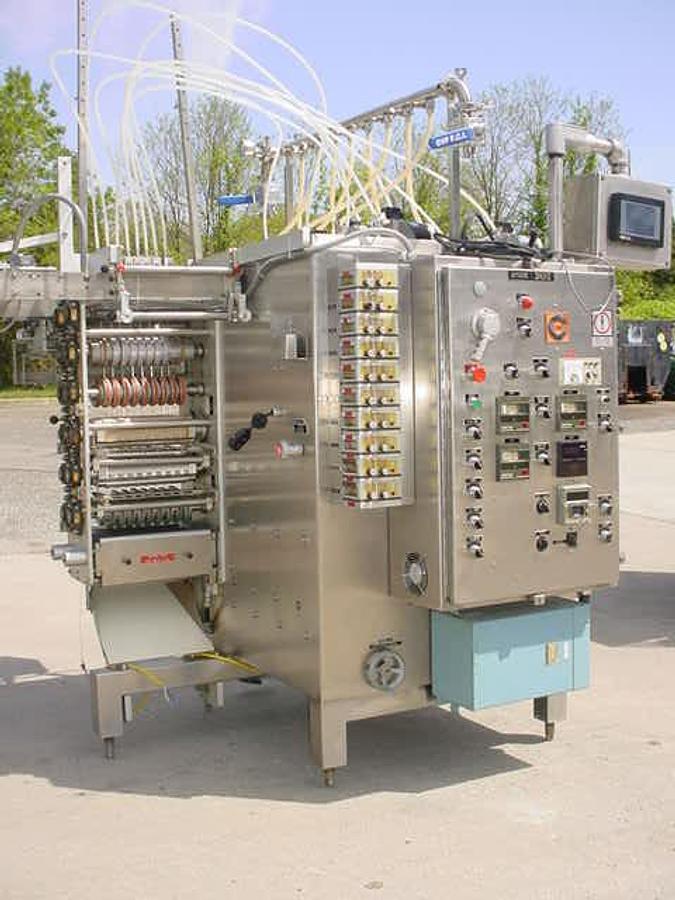
Paxall built a strong reputation across several packaging machine categories, and used units turn up regularly on the secondary market because so many were manufactured and installed over the decades. The most frequently traded types include horizontal form-fill-seal (HFFS) machines, sleeve wrappers, multi-pack bundlers, and carton packaging systems. A specific example of what surfaces in used inventory is the Paxall/Circle V12h8s Form/Fill/Seal machine, which uses positive displacement gear pumps and represents the kind of mechanical, production-ready equipment the brand was known for.
Beyond form-fill-seal, Paxall was particularly well regarded for its multi-pack and bundling machinery, which groups multiple individual products into retail-ready packs. These machines were widely adopted across food and beverage, personal care, pharmaceutical, and household products manufacturing. Because Paxall equipment was built to run in demanding production environments, many units remain operational long after their original installation, which is a key reason the brand continues to appear in used equipment searches.
What industries use Paxall packaging machinery?
Paxall packaging equipment found a home in a wide range of industries, largely because the machines were designed around multi-pack and bundling applications that cut across many consumer product categories. Food and beverage manufacturers were historically among the largest users, relying on Paxall equipment to bundle canned goods, bottles, pouches, and other retail formats. Personal care and household products companies also adopted Paxall machinery extensively for grouping items like soap, cleaning supplies, and health products into multi-unit retail packs.
Pharmaceutical and nutraceutical manufacturers have also used Paxall equipment, particularly where consistent, repeatable packaging of unit-dose or bottled products is required. The mechanical reliability of Paxall machines made them attractive in regulated environments where downtime is costly and machine behavior needs to be predictable. Buyers searching for used Paxall equipment today often come from these same industries, either replacing aging units with like-for-like machines or sourcing a proven platform at a lower capital cost than purchasing comparable modern equipment.
What packaging formats and bag styles can Paxall form-fill-seal machines handle?
Paxall form-fill-seal machines were designed to handle flexible packaging in a horizontal configuration, which means they work with rollstock film that is formed into pouches or bags around the product as it moves through the machine. Common formats include pillow pouches, fin-seal bags, and gusseted styles depending on the specific model and tooling configuration. The use of positive displacement gear pumps on certain models, such as the V12h8s, indicates capability for liquid or semi-liquid fills, making those machines suitable for sauces, condiments, lotions, and similar products.
The exact range of bag styles and film types a specific used machine can run depends on the model, the tooling installed at the time of sale, and any modifications made during its production life. Buyers should ask the selling dealer for details on the forming tube sizes, sealing jaw configurations, and film width capacity of any specific unit. Since these are used machines, the tooling included with the sale can vary, and additional tooling for different formats may need to be sourced separately.
What is the typical production speed of used Paxall packaging equipment?
Production speeds for Paxall machines vary considerably depending on the model, the packaging format, and the product being run. Paxall form-fill-seal and multi-pack machines were generally engineered for mid-to-high volume production environments, with many models capable of running several hundred to over a thousand cycles per minute depending on pack size and product type. Sleeve wrappers and bundlers in the Paxall range were often rated for high-throughput lines in food and beverage facilities where continuous operation was the norm.
For any specific used machine, the rated speed listed by the manufacturer reflects ideal conditions, but actual achievable speed on a used unit will depend on its current mechanical condition, the film or material being run, and how well the machine has been maintained. Buyers evaluating used Paxall equipment should ask for any available production records and, where possible, arrange an inspection to observe the machine running or review video footage of it in operation. A machine that has been well maintained and recently serviced may perform close to its rated specifications, while one that has sat idle or received minimal upkeep may require reconditioning before reaching full speed.
Are replacement parts still available for Paxall packaging machines?
Parts availability is one of the more practical concerns for buyers considering used Paxall equipment, and it requires some research before committing to a purchase. Paxall as an independent brand has changed ownership over the years, which means OEM parts availability through the manufacturer's direct channel is not guaranteed for all models. For older machines in particular, buyers may find that certain components are no longer stocked by the current brand owner and need to be sourced through third-party suppliers or fabricated to spec by a machine shop.
That said, Paxall machines have a reputation for mechanical straightforwardness, which works in buyers' favor. Many of the wear components, drive parts, and electrical components used in Paxall equipment are common industrial parts that can be sourced through general industrial distributors rather than relying exclusively on the OEM. Prospective buyers are well advised to consult with the current manufacturer or an authorized service provider before purchasing to understand what support level they can expect for the specific model and age of machine they are considering. A reputable used equipment dealer who specializes in packaging machinery can also often advise on parts sourcing based on their experience with the equipment.
How do I verify the condition of a used Paxall machine before buying?
Verifying the condition of any used packaging machine before purchase is critical, and Paxall equipment is no exception. Reputable used equipment dealers will typically offer some form of inspection, either in person at their facility, via live video call, or through detailed video footage of the machine. If the machine is still installed and running at a production facility, it may be possible to arrange an inspection at the plant where it is currently in use, which gives buyers the best opportunity to see it operating under real conditions. Buyers should ask the dealer specifically what inspection options are available and what the machine's current operational status is.
During an inspection, key things to assess include the condition of the sealing jaws and forming components, the state of the drive systems and chains, the condition of the electrical panel and controls, and any visible signs of wear, corrosion, or prior repairs. Keep in mind that most used equipment dealers do not have the permits or production infrastructure to run actual product through a machine for a live demonstration, so inspections typically focus on mechanical operation rather than full production trials. Buyers should also ask about the machine's service history if records are available, and consider consulting an independent packaging machinery technician to accompany them during an in-person inspection for a more technical assessment.
What should buyers know about shipping and rigging costs for used Paxall machinery?
Shipping costs for used packaging machinery like Paxall equipment can vary significantly and should always be factored into the total acquisition budget before finalizing a purchase. The landed cost of a machine includes not just the purchase price but also the cost of properly packaging or crating the equipment, rigging it for loading at the seller's location, freight charges to the destination, and unloading at the buyer's facility. Larger or heavier Paxall machines, particularly multi-pack bundlers or full form-fill-seal lines, may require specialized rigging equipment and flatbed or enclosed freight transport, all of which add to the total cost.
Buyers should ask the selling dealer for a detailed breakdown of packaging, rigging, and shipping costs before agreeing to a purchase so there are no surprises. Proper crating and palletization are important for protecting the machine in transit, and the level of packaging required will affect the cost. Buyers receiving large machinery should also confirm they have adequate unloading equipment at their facility, such as a forklift with sufficient capacity, or arrange for a rigging company at the receiving end. Getting clarity on all these logistics upfront helps avoid delays and unexpected expenses once the transaction is complete.
What are the typical payment terms for purchasing used Paxall packaging machinery?
Payment practices in the used packaging machinery market follow fairly standard conventions. Most used equipment dealers require full payment before a machine is released for shipping. This protects the dealer against non-payment on equipment that has already been prepared for transport, and it is the norm across the industry rather than specific to any one seller. Buyers who are working with a dealer for the first time should expect to pay in full upfront, typically by wire transfer or other agreed-upon method.
Some dealers do offer payment terms or financing arrangements to established repeat customers, but this is at the dealer's discretion and not something first-time buyers should assume will be available. Buyers who need financing for larger equipment purchases may want to explore third-party machinery financing options through equipment lenders, which can sometimes be arranged independently of the dealer. Before sending payment, buyers should make sure they have completed any desired inspection of the machine and have a clear written agreement covering the equipment description, condition, included tooling or accessories, and shipping arrangements.
Are used Paxall machines compatible with modern control systems or automation upgrades?
Many Paxall machines were built during an era when programmable logic controllers (PLCs) were either just becoming standard or had not yet been widely adopted, which means some older units run on relay-based or early-generation PLC controls. This is not necessarily a barrier to continued use, but it is something buyers should evaluate carefully. Upgrading the controls on a Paxall machine to a modern PLC platform is technically feasible in most cases and can extend the useful life of the machine significantly while also making troubleshooting and spare parts sourcing easier. The mechanical platforms on many Paxall machines are sound enough to justify a controls retrofit.
For buyers who need to integrate a used Paxall machine into a modern automated production line, compatibility with current HMI interfaces, network connectivity, and line control systems will depend on the specific model and what upgrades have already been made. Some used machines on the market have already been retrofitted with updated controls by previous owners, which can be a selling point. Buyers should ask the dealer about the current control system on any machine they are considering and consult with a packaging machinery integrator or electrician who has experience with similar equipment to assess what upgrades might be needed and what that would cost before finalizing a purchase decision.
Why do buyers choose used Paxall machines over other packaging equipment options?
Paxall built a long-standing reputation for mechanical durability, and that reputation is a primary reason buyers continue to seek out used Paxall equipment on the secondary market. Many Paxall machines have been running in production facilities for decades, which is a testament to the build quality of the equipment. For buyers who need a proven platform for multi-pack bundling, sleeve wrapping, or form-fill-seal applications, a well-maintained used Paxall machine can deliver reliable production at a fraction of the capital cost of comparable modern equipment.
The relative mechanical simplicity of many Paxall designs is another factor that attracts buyers, particularly smaller manufacturers or operations with in-house maintenance staff. Machines that are easier to understand and service reduce dependency on specialized technicians and can lower the total cost of ownership over time. Buyers also benefit from the fact that Paxall equipment has a long track record in the field, which means there is often a community of experienced technicians and operators familiar with the machines, and information about common maintenance issues is more readily available than for more obscure or proprietary platforms.