Category
Manufacturer
Model
FAQ:
What types of equipment does Paul Mueller Company manufacture?
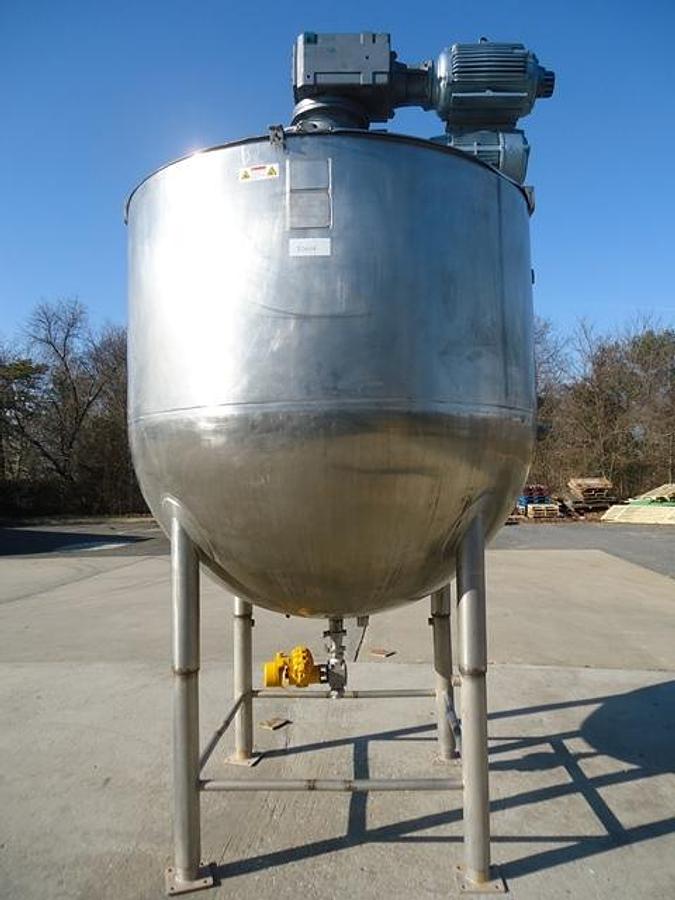
Paul Mueller Company, headquartered in Springfield, Missouri, is a long-established manufacturer of stainless steel processing equipment serving a wide range of industries. Their product line includes farm milk cooling tanks, bulk milk coolers, heat exchangers, pressure vessels, storage tanks, scraper kettles, and custom-fabricated stainless steel process systems. One specific example of equipment that appears on the used market is the 1,000 Gallon Mueller Hemispherical Dual Action Scraper Kettle with a 40 PSI jacket, which gives a good sense of the complexity and engineering quality that goes into their builds.
The company's equipment is built primarily from high-grade stainless steel, typically 304 or 316L alloys, using precision welding techniques that meet strict industry specifications. This level of construction quality is a major reason why Paul Mueller equipment holds up well over years of heavy use in demanding production environments, and why used units continue to attract serious interest from buyers across multiple industries.
What industries use Paul Mueller Company equipment?
Paul Mueller Company equipment is designed to serve industries where sanitary processing, temperature control, and stainless steel construction are non-negotiable. The dairy industry has historically been one of their core markets, with farm milk cooling tanks and bulk milk coolers being among their most recognized product categories. Beyond dairy, their equipment is widely used in food and beverage processing, pharmaceutical manufacturing, biotechnology, and general industrial processing applications.
The common thread across all of these industries is the need for equipment that can handle sensitive products under controlled conditions without contamination risk. Paul Mueller's adherence to 3-A Sanitary Standards and FDA regulations makes their tanks and vessels suitable for direct contact with food, dairy, and pharmaceutical products. This cross-industry applicability is part of why used Paul Mueller equipment tends to find buyers relatively quickly on the secondary market, since demand comes from multiple sectors rather than just one.
What certifications and standards does Paul Mueller Company equipment meet?
Paul Mueller Company equipment is built to comply with several of the most recognized standards in sanitary and pressure vessel manufacturing. ASME (American Society of Mechanical Engineers) certification is common on their pressure vessels and jacketed tanks, which means the equipment has been designed and tested to meet specific pressure ratings and safety requirements. For food, dairy, and pharmaceutical applications, compliance with 3-A Sanitary Standards is particularly significant, as these standards govern the hygienic design of equipment that comes into contact with consumable products.
FDA regulations also factor into the design of equipment intended for pharmaceutical and food-grade applications, particularly regarding materials of construction and surface finishes. When buying used Paul Mueller equipment, it is worth confirming which certifications applied to a specific unit and whether the relevant documentation, such as ASME data reports or 3-A certificates, is available. Consulting directly with Paul Mueller Company can also help buyers understand what level of documentation and support to expect for a particular model and age of equipment.
Why does used Paul Mueller Company equipment retain strong resale value?
Several factors contribute to the durability of Paul Mueller equipment's resale value on the secondary market. The most fundamental is the quality of materials and fabrication. Stainless steel, particularly 304 and 316L grades, is highly resistant to corrosion, easy to clean, and capable of maintaining structural integrity over decades of use when properly maintained. Paul Mueller's precision welding and engineering standards mean that even older units often remain structurally sound and functionally capable long after leaving their first production environment.
Brand reputation also plays a meaningful role. Paul Mueller Company has built a track record over many decades in demanding industries like dairy, pharmaceutical, and food processing, where equipment failures carry serious consequences. Buyers in these industries tend to trust established names, and that trust extends to the used market. A well-maintained Mueller tank or heat exchanger carries an implied level of quality assurance simply by virtue of who made it, which keeps demand steady and prices relatively firm compared to lesser-known manufacturers.
How should a buyer verify the condition of used Paul Mueller Company equipment before purchasing?
Verifying condition is one of the most important steps in any used equipment purchase, and reputable dealers will typically offer multiple ways to do this. In-person inspections are the most thorough option, allowing a buyer or their technician to physically examine welds, surface finishes, jacket integrity, mechanical components, and any visible wear or damage. Some equipment may still be installed and operating at a facility, in which case the dealer can often arrange an inspection at the actual plant where the machine is in use or has recently been decommissioned.
For buyers who cannot travel, video inspections and detailed photo documentation are commonly available alternatives. Keep in mind that most used equipment dealers do not have the production permits or facilities required to run actual product through a machine during an inspection, so functional testing in a true production sense is generally not possible at the dealer's location. Buyers should also contact Paul Mueller Company directly to understand what parts, service support, and technical documentation are available for the specific model and age of equipment they are considering, since support levels can vary based on how long ago a unit was manufactured.
What is a Paul Mueller hemispherical dual action scraper kettle, and what is it used for?
A hemispherical dual action scraper kettle is a specialized type of jacketed processing vessel designed for mixing, heating, cooling, or cooking viscous or heat-sensitive products. The hemispherical bottom design promotes efficient heat transfer and makes it easier to fully empty the vessel, which is particularly valuable in food and pharmaceutical applications where product loss and cleanability matter. The dual action scraper agitator combines a rotating outer scraper blade that continuously removes product from the heated vessel wall with an inner agitator that moves product toward the center, creating a thorough and consistent mixing and heat transfer action.
These kettles are commonly used in the production of sauces, confections, dairy products, creams, gels, and pharmaceutical compounds where precise temperature control and uniform mixing are critical. A jacketed design, such as the 40 PSI jacket found on the 1,000 gallon Mueller unit available on the used market, allows steam or hot water to circulate around the vessel wall to apply heat indirectly without scorching the product. Used scraper kettles from established manufacturers like Paul Mueller are sought after because the agitator mechanism and jacketed construction are expensive to fabricate, making a quality used unit a cost-effective alternative to purchasing similar equipment manufactured today.
What should buyers know about shipping and rigging used Paul Mueller Company equipment?
Paul Mueller tanks, kettles, and vessels tend to be large and heavy pieces of industrial equipment, which means shipping logistics require careful planning. Proper packaging is essential to prevent damage in transit, and costs will vary depending on the level of crating or palletization required for a specific unit. Smaller components may ship on standard pallets, while larger vessels often need custom crating or skidding to protect fittings, agitator shafts, and other protruding components during transport.
For heavier equipment, professional rigging is typically required for both loading at the seller's facility and unloading at the buyer's destination. Rigging services involve specialized equipment like forklifts, cranes, or hydraulic trailers, and these costs are generally separate from freight charges. Buyers should ask dealers for a detailed breakdown of packaging, rigging, and freight costs before committing to a purchase, so the full landed cost of the equipment is understood upfront. Failing to account for these costs is one of the more common surprises buyers encounter in used industrial equipment transactions.
What are the typical payment terms for purchasing used Paul Mueller Company equipment?
Payment practices in the used industrial equipment market are fairly consistent across reputable dealers. In most cases, full payment is required before equipment is released for shipping. This protects the seller and is standard practice given the value of the machinery involved and the logistical complexity of returning large industrial equipment if a transaction falls through after shipping has begun. Buyers should expect to wire funds or arrange another agreed-upon payment method prior to scheduling pickup or freight.
Some dealers extend payment terms to repeat customers or established buyers with a documented purchasing history, but this is the exception rather than the rule for first-time transactions. Buyers who are new to a particular dealer should plan for full payment upfront and factor that into their cash flow planning. It is also worth clarifying with the dealer exactly when title transfers and what the process looks like if equipment is damaged in transit, so expectations on both sides are clear before the transaction is finalized.
Are replacement parts and service support available for older Paul Mueller Company equipment?
The availability of parts and technical support for used Paul Mueller equipment depends significantly on the age and model of the unit in question. Paul Mueller Company has a long manufacturing history, and while they are known for producing durable, long-lasting equipment, support for older or discontinued models can vary. Buyers should contact Paul Mueller Company directly before purchasing a used unit to ask specifically about parts availability, service documentation, and whether technical support is offered for that particular model.
For some components, such as agitator seals, gaskets, fittings, and standard hardware, third-party suppliers may be able to provide compatible replacements even if the manufacturer no longer stocks them. Stainless steel vessels themselves often require less frequent part replacement than mechanical systems, but buyers of scraper kettles or heat exchangers with moving parts should pay particular attention to the condition of agitator assemblies, drive components, and seals during inspection. Choosing a dealer who specializes in food processing or dairy equipment, rather than a general industrial equipment reseller, can also help buyers get more informed guidance on parts and maintenance considerations specific to Mueller equipment.
How does buying used Paul Mueller Company equipment compare to purchasing similar equipment manufactured today?
The primary appeal of buying used Paul Mueller equipment is cost. High-quality jacketed stainless steel vessels, scraper kettles, and heat exchangers are expensive to fabricate, and a well-maintained used unit can deliver the same processing capability at a fraction of the price of a comparable unit coming off a fabrication line today. For operations that need to expand capacity quickly or work within a tight capital budget, the used market offers access to equipment that would otherwise be financially out of reach.
The trade-offs are worth understanding clearly. Used equipment is sold as-is, without manufacturer warranties, which means the buyer assumes responsibility for assessing condition and understanding any wear or limitations before purchase. Lead times are another consideration: a used unit that is already built and available can often be installed and running much faster than a custom-fabricated vessel, which may involve a lengthy production queue. For industries like dairy, food processing, and pharmaceuticals where Paul Mueller equipment is commonly used, the combination of the brand's build quality and the cost advantages of the secondary market makes used Mueller equipment a practical and popular choice for many operations.