Category
Manufacturer
Model
Paul Mueller
Paul Mueller Company specializes in manufacturing equipment for the dairy and food industries. They are particularly known for their high-quality processing tanks and thermal systems that ensure product safety and quality.
FAQ:
What types of Paul Mueller processing equipment are commonly available on the used market?
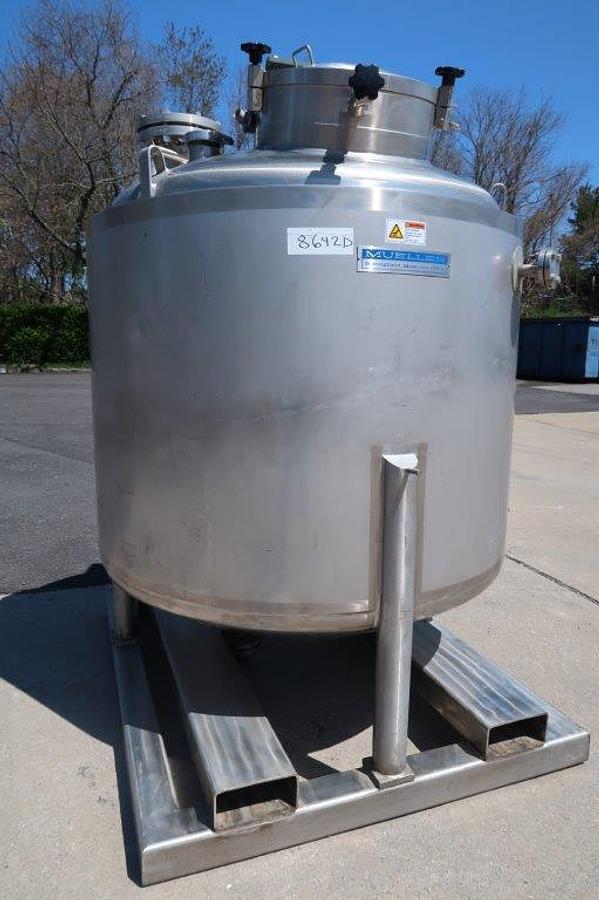
Paul Mueller Company produces a broad range of stainless steel processing equipment, and many of these product lines circulate regularly on the secondary market. The most commonly available used units include jacketed tanks, agitated reactors, pressure vessels, and thermal processing systems. Mueller's Temp-Plate heat exchangers and spiral heat exchangers are particularly sought after, as are their dairy bulk milk coolers, pharmaceutical-grade vessels, and sanitary storage tanks. Capacities vary widely, from smaller lab-scale vessels in the 50 to 100 gallon range up to large industrial tanks exceeding several thousand gallons.
Buyers searching for used Paul Mueller equipment will also encounter vacuum-jacketed reactors, blend tanks, and custom-configured systems built to 3-A or ASME standards for specific industries. Because Mueller builds to demanding specifications, their equipment tends to stay in service for many years, which means a good variety of models and configurations show up on the used market at any given time. Reviewing listings carefully for model numbers, vessel ratings, jacket configurations, and agitator specs will help narrow down which units fit a specific process application.
What industries use Paul Mueller processing equipment?
Paul Mueller equipment has a strong reputation across several process-intensive industries, largely because of the company's focus on sanitary design and high-grade stainless steel construction. The dairy industry has historically been one of Mueller's core markets, with their bulk milk cooling tanks and pasteurization systems widely used on farms and at processing facilities. Food and beverage manufacturers rely on Mueller tanks and heat exchangers for mixing, heating, cooling, and storage of liquid products. The pharmaceutical and biotechnology sectors also use Mueller vessels extensively, particularly for applications that require cGMP-compliant or FDA-suitable equipment.
Beyond food and pharma, Mueller equipment appears in chemical processing, cosmetics manufacturing, and specialty industrial applications where corrosion resistance and precise thermal control matter. Their heat exchanger product lines, including the Temp-Plate design, are used in applications ranging from wort cooling in craft brewing to solvent recovery in chemical plants. This cross-industry versatility is one reason used Paul Mueller equipment holds its value reasonably well and attracts buyers from a wide range of backgrounds.
What certifications should I look for when buying used Paul Mueller equipment for food or pharmaceutical use?
Certification documentation is one of the most important things to verify before purchasing any used processing equipment destined for a regulated application. For food and dairy use, 3-A Sanitary Standards compliance is the primary benchmark to look for. Equipment built to 3-A standards is designed to be cleanable, with smooth internal surfaces, minimal dead legs, and materials that resist contamination. Mueller has manufactured equipment to 3-A standards for decades, but buyers should confirm that the specific unit in question carries the appropriate certification and that the certification documentation is available.
For pharmaceutical and biotechnology applications, cGMP (current Good Manufacturing Practice) compliance and FDA suitability of materials are the key considerations. ASME certification matters for any pressure vessel, as it confirms the unit was built and tested to recognized pressure codes. When purchasing used equipment, ask the seller whether original certification paperwork, data plates, or mill certificates accompany the machine. If documentation has been lost over the years, buyers may need to consult directly with Paul Mueller Company or a qualified inspector to assess whether the equipment still meets the standards required for their specific process and regulatory environment.
How long do Paul Mueller tanks and heat exchangers typically last?
Paul Mueller equipment is built to demanding industrial standards using 304 and 316 stainless steel, which gives it an unusually long service life compared to equipment made from less durable materials. Many Mueller tanks, heat exchangers, and pressure vessels remain in productive service for 20 to 30 years when they have been properly maintained and operated within their design parameters. This longevity is a primary reason the brand commands attention on the secondary market. A well-maintained Mueller vessel from the 1990s or early 2000s can still perform reliably in the right application.
That said, actual condition varies significantly depending on the process the equipment was used in, the cleaning chemicals it was exposed to, and how well it was maintained between uses. Acidic or highly caustic processes can accelerate wear on internal surfaces, and equipment that sat idle for extended periods may have developed corrosion or seal degradation. Inspecting the interior surfaces, welds, jacket integrity, and any mechanical components like agitators or seals before purchase is essential. The long potential lifespan of Mueller equipment makes it a sound candidate for the used market, but condition inspection is what determines whether any individual unit lives up to that potential.
How can I verify the condition of used Paul Mueller equipment before buying?
Most reputable used equipment dealers will accommodate inspections, either in person at their facility or through video walkthroughs and photo documentation. For Paul Mueller tanks and vessels, a thorough inspection should cover the condition of internal surfaces, looking for pitting, weld repairs, or signs of corrosion. Agitator shafts and mechanical seals deserve close attention, as these components see significant wear. Jacket integrity is also worth checking, particularly on vacuum-jacketed or pressure-rated vessels, since jacket failures can be costly to repair. If the equipment is still installed at a production facility, some dealers can arrange access for an inspection at the plant site.
It is worth noting that most used equipment dealers do not have the permitting or infrastructure to run actual production tests with product. Buyers should factor this into their evaluation and, where possible, request any available maintenance records, prior inspection reports, or documentation of the last operating conditions. For high-value purchases or equipment intended for regulated industries, hiring an independent equipment inspector or a qualified engineer to assess the unit is a reasonable step. Consulting with Paul Mueller Company directly about a specific model can also help buyers understand what wear patterns to look for and what parts or support they can expect to access.
Are replacement parts and technical support available for older Paul Mueller equipment?
Paul Mueller Company has been manufacturing processing equipment for decades, and support availability for older units depends heavily on the specific model, its age, and whether that product line is still active. For many of their core product lines, including heat exchangers and sanitary tanks, standard replacement components like gaskets, seals, and fittings are often available through Mueller directly or through aftermarket suppliers who specialize in sanitary processing equipment. Agitator components, mechanical seals, and instrumentation are typically the parts that require the most attention over a machine's service life.
Before committing to a purchase, prospective buyers are strongly encouraged to contact Paul Mueller Company to ask about parts availability and technical support for the specific model they are considering. Age and model can significantly affect what level of support is available. Some discontinued product lines may have limited or no factory support, which shifts the burden to third-party repair shops or fabricators who can custom-fabricate replacement components. Understanding the support landscape before buying, rather than after, is one of the most practical steps a buyer can take to avoid unexpected maintenance costs down the road.
What is the typical price range for used Paul Mueller processing equipment?
Pricing for used Paul Mueller equipment spans a wide range depending on the type of equipment, vessel size, configuration, age, and overall condition. Smaller sanitary tanks in the 100 to 500 gallon range might be found in the low thousands of dollars, while larger jacketed reactors, multi-thousand gallon storage tanks, or specialized heat exchanger systems can run from $10,000 to $50,000 or more. Highly specialized units with complex agitation systems, custom jacket configurations, or pharmaceutical-grade documentation tend to command higher prices than simpler storage vessels of comparable size.
The secondary market price for Mueller equipment also reflects the brand's reputation for durability. Because the equipment holds up well over time, sellers often price it at a meaningful premium compared to lesser-known brands of similar age and capacity. Buyers should also account for the full landed cost of a purchase, which includes shipping, rigging, crating, and any reconditioning or installation costs. A unit that appears affordable at the listed price can become significantly more expensive once freight and rigging for a large vessel are factored in. Getting a complete cost picture before committing to a purchase is the right approach.
What should I know about shipping and rigging used Paul Mueller tanks and vessels?
Shipping heavy processing equipment like Paul Mueller tanks and reactors requires more planning than standard freight. Smaller vessels may ship on standard pallets with appropriate blocking and bracing, but larger tanks, jacketed reactors, or heat exchanger assemblies often require custom crating or skidding to protect them during transit. The cost of packaging varies based on the size and fragility of the equipment and the level of protection required for the shipping method being used. Buyers should ask sellers specifically what packaging will be provided and what that packaging is designed to protect against.
For larger Mueller vessels, rigging at both the origin and destination is a significant cost consideration. Loading a multi-thousand-gallon tank onto a flatbed trailer requires a crane or forklift rated for the load, and unloading at the destination requires the same. Buyers who do not have rigging equipment on site will need to arrange and pay for that service separately. It is good practice to ask the seller for a detailed breakdown of all shipping-related costs, including rigging, freight, and any special handling fees, so the full landed cost of the equipment is clear before the purchase is finalized.
What payment terms are standard when purchasing used Paul Mueller equipment?
Payment practices in the used industrial equipment market tend to be fairly consistent across dealers. Most sellers require full payment before the equipment is released for shipping. This protects the seller from loss in a transaction where the equipment is being transferred to a buyer they may not have a prior relationship with. Wire transfers are the most common payment method for larger purchases, though some dealers accept credit cards or other payment forms for smaller transactions. Buyers should confirm accepted payment methods with the seller before proceeding.
Some dealers extend payment terms to established customers with whom they have done business before, but this is the exception rather than the rule for first-time buyers. If financing is needed, buyers typically arrange that independently through equipment financing companies or their own banking relationships, rather than through the dealer. Before sending any payment, it is reasonable to request detailed photos, inspection access, and a clear description of what is included with the purchase, so both parties have a shared understanding of the transaction.
Can used Paul Mueller tanks or heat exchangers be modified or reconfigured after purchase?
Used Paul Mueller vessels and heat exchangers can often be modified after purchase, but the feasibility and cost depend on what changes are needed and the construction of the specific unit. Common modifications include adding or relocating nozzles and ports, upgrading agitator drives, replacing mechanical seals, adding new instrumentation connections, or re-jacketing a vessel. Stainless steel fabrication shops with sanitary welding experience can perform many of these modifications, and Paul Mueller's use of quality stainless steel generally makes the material cooperative for welding and modification work.
However, buyers should be aware that modifications to ASME-rated pressure vessels can affect the vessel's certification status. Any alteration to a pressure vessel may require re-inspection and re-stamping by an authorized inspector to maintain compliance with applicable pressure codes. For equipment going into food or pharmaceutical applications, modifications also need to be evaluated against 3-A or cGMP standards to ensure the altered design still meets sanitary requirements. Consulting with a qualified fabricator and, if necessary, a regulatory compliance specialist before planning modifications is the practical way to avoid surprises after the purchase.