Category
Manufacturer
Model
FAQ:
What types of equipment does Paterson Industries manufacture?
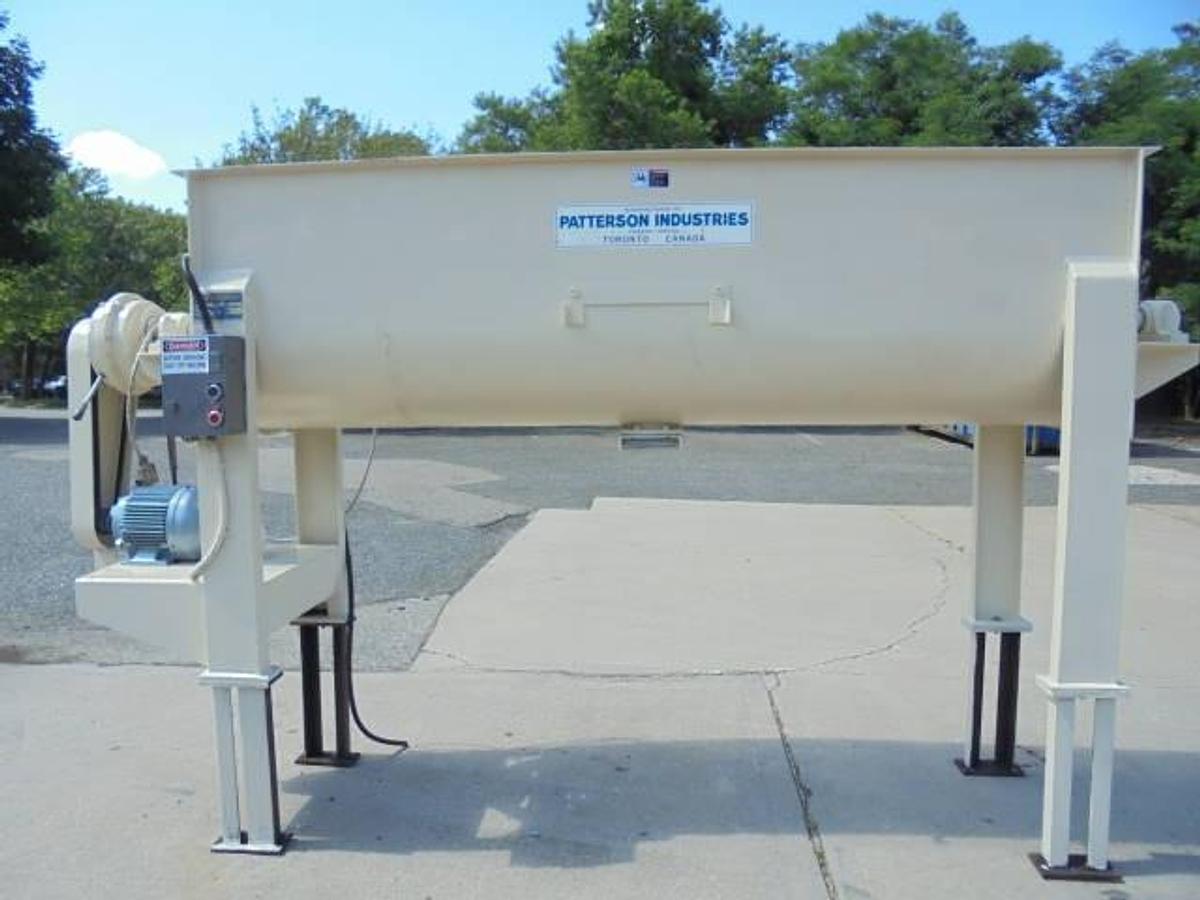
Paterson Industries is a Canadian manufacturer best known for producing bulk material handling and processing equipment. Their product line includes screw conveyors, bucket elevators, ribbon blenders, and other industrial mixing and conveying systems. A common example seen on the used market is their double ribbon blender, which is available in various capacities such as 10 cubic feet and is typically powered by motors in the range of 3 HP and above, depending on the application.
Their equipment is designed to handle dry and semi-dry bulk materials across a wide range of industrial settings. Because Paterson Industries has been producing this type of equipment for decades, their machines have accumulated a strong reputation for durability, which is a significant reason why used units continue to change hands regularly among industrial buyers.
What industries use Paterson Industries equipment?
Paterson Industries equipment is used across several industries that require reliable bulk material handling and processing. The most common sectors include agricultural processing, food manufacturing, chemical production, and general industrial applications. Their ribbon blenders and screw conveyors are particularly well-suited for facilities that need to move or blend dry powders, granules, or other free-flowing bulk materials at consistent volumes.
Because their equipment is built for heavy-duty, repetitive use in demanding production environments, it translates well when purchased on the used market. A food processor looking for a reliable ribbon blender, for example, or a chemical plant needing a screw conveyor, will often find that a well-maintained used Paterson Industries machine meets their specifications at a fraction of the cost of sourcing equivalent equipment elsewhere.
Is used Paterson Industries equipment reliable?
Paterson Industries equipment has a strong reputation for durability and longevity, which is one of the main reasons used units hold their value and remain in demand. Machines that have been properly maintained in a production environment can continue to perform reliably for many years after their initial installation. This is especially true for their ribbon blenders and conveying systems, which are built with heavy-gauge construction and relatively straightforward mechanical designs that are easier to service over time.
That said, reliability in a used machine depends heavily on how it was operated and maintained by the previous owner. Buyers should always request a thorough inspection before purchasing, and should verify the model number and approximate year of manufacture to understand what parts and support may be available. A reputable used equipment dealer will typically facilitate in-person or video inspections so buyers can assess the machine's current condition before committing to a purchase.
What should I look for when buying used Paterson Industries equipment?
When evaluating a used Paterson Industries machine, start by confirming the model number, approximate age, and the specific configuration of the unit. Ribbon blenders, for example, come in different capacities and drive configurations, so making sure the unit matches your production volume and material requirements is essential before anything else. Ask the dealer for detailed photos or video of the interior ribbon flights, the drive assembly, seals, and any discharge valves, as these are the areas most likely to show wear.
Beyond the physical condition of the machine, buyers should also contact the manufacturer directly to understand what level of support is available for that particular model and age. Parts availability can vary depending on how long ago a specific design was produced. Working with a used equipment dealer who specializes in industrial processing and handling equipment gives buyers the best chance of getting accurate information about the machine's history and current working order.
Does used Paterson Industries equipment come with a warranty?
Warranties on used industrial equipment are handled very differently than those on equipment purchased directly from a manufacturer. Used equipment dealers typically sell machines on an as-is basis, meaning there is no manufacturer warranty transferred with the sale. The responsibility for assessing the condition of the machine falls on the buyer, which is why thorough pre-purchase inspection is so important.
Buyers are encouraged to select dealers with a long track record of selling industrial machinery and who specialize in the relevant equipment category. Before finalizing a purchase, it is also worth reaching out to Paterson Industries directly to understand what technical support, documentation, or replacement parts might be available for the specific model being considered, since older or discontinued models may have more limited support options than more recent production runs.
How does a ribbon blender work, and what is it used for?
A ribbon blender is a type of industrial mixing equipment that uses a double-helical ribbon agitator mounted on a horizontal shaft inside a trough-shaped vessel. The outer ribbon moves material in one direction along the length of the trough, while the inner ribbon moves it in the opposite direction. This counter-directional movement creates a thorough, consistent blend across the entire batch. The process is efficient and gentle enough to handle fragile materials without causing excessive particle breakdown.
Ribbon blenders are widely used in food processing, pharmaceuticals, chemicals, plastics, and agriculture for blending dry powders, granules, and other bulk solids. They are particularly valued for their ability to produce homogeneous mixtures in relatively short cycle times. A 10 cubic foot unit, like those seen on the used market, is well-suited for mid-scale production operations or pilot batch applications where space and throughput requirements fall in a moderate range.
How do I inspect used industrial mixing or blending equipment before buying?
Most reputable used equipment dealers offer buyers the option to inspect machinery in person, through a live video call, or via detailed video recordings of the machine. For blending equipment like ribbon blenders, an inspection should cover the condition of the ribbon flights and welds, the integrity of the trough interior and any liners, the seals around the shaft ends, the discharge valve operation, and the drive components including the motor, gearbox, and coupling. Wear or damage in any of these areas can affect both performance and the cost of getting the machine ready for production.
Keep in mind that most used equipment dealers are not set up to run production tests, as operating a blender with actual product requires different permitting and facility conditions than a typical equipment yard or warehouse. What a dealer can usually demonstrate is that the machine turns freely, the drive operates correctly, and there are no obvious mechanical issues. Buyers who need a more thorough functional evaluation may want to arrange an inspection at the facility where the equipment is currently located, particularly if the machine is still in active production.
What does shipping used industrial equipment typically involve?
Shipping used industrial equipment like blenders or conveyors involves more planning than standard freight. The machine needs to be properly secured, palletized, or crated depending on its size, weight, and fragility. Smaller units such as a 10 cubic foot ribbon blender can often be skidded and shrink-wrapped, while larger machines may require custom crating or engineered rigging to load and unload safely. The level of packaging required directly affects the shipping cost, so buyers should ask the dealer for a detailed breakdown before agreeing to a purchase.
For heavier equipment, a forklift or crane may be needed at both the origin and destination, which adds to the total landed cost. Buyers should factor in all of these costs, including freight, rigging, and any required permits for oversized loads, to get an accurate picture of what the equipment will actually cost to receive at their facility. A good dealer will walk buyers through these logistics and provide estimates upfront so there are no surprises at delivery.
What payment terms are typical when buying used industrial equipment?
The standard practice among used industrial equipment dealers is to require full payment before the machine is released for shipping. This applies to most transactions, particularly for buyers who are purchasing from a dealer for the first time. Payment is typically accepted by wire transfer, though specific accepted methods will vary by dealer. Buyers should confirm payment requirements and any applicable processing fees before finalizing a purchase agreement.
Some dealers may extend payment terms to established customers with a prior purchasing history, but this is not a standard offering and should not be assumed. Because used equipment transactions involve significant sums and machines that have already been inspected and agreed upon, dealers generally do not hold equipment without a deposit or full payment. Buyers should be prepared to move quickly once a price is agreed upon, especially for desirable or hard-to-find models, as used industrial equipment can attract multiple interested buyers.
How do I find replacement parts for Paterson Industries equipment?
Finding replacement parts for Paterson Industries equipment generally starts with contacting the manufacturer directly. Because Paterson Industries is a Canadian-based company with a history of producing bulk handling and processing machinery, they may be able to supply parts or technical documentation for many of their models. Having the model number, serial number, and approximate year of manufacture on hand will significantly speed up this process and help confirm what is available.
For older or discontinued models, parts availability can be more limited, and buyers may need to work with a machinist or fabricator to reproduce specific components. Some wear parts, like seals, bearings, and drive components, are often standard industrial items that can be sourced from industrial supply distributors regardless of the machine's age. This is one reason why consulting with the manufacturer before purchasing a used unit is a smart step, as it gives buyers a realistic picture of long-term support and maintenance costs.