Category
Manufacturer
Model
Parts Feeders
Parts Feeders specializes in automated feeding systems for manufacturing lines, serving industries such as automotive and electronics. Their machines enhance the efficiency of production processes by ensuring precise component delivery.
FAQ:
What is a parts feeder and how does it work?
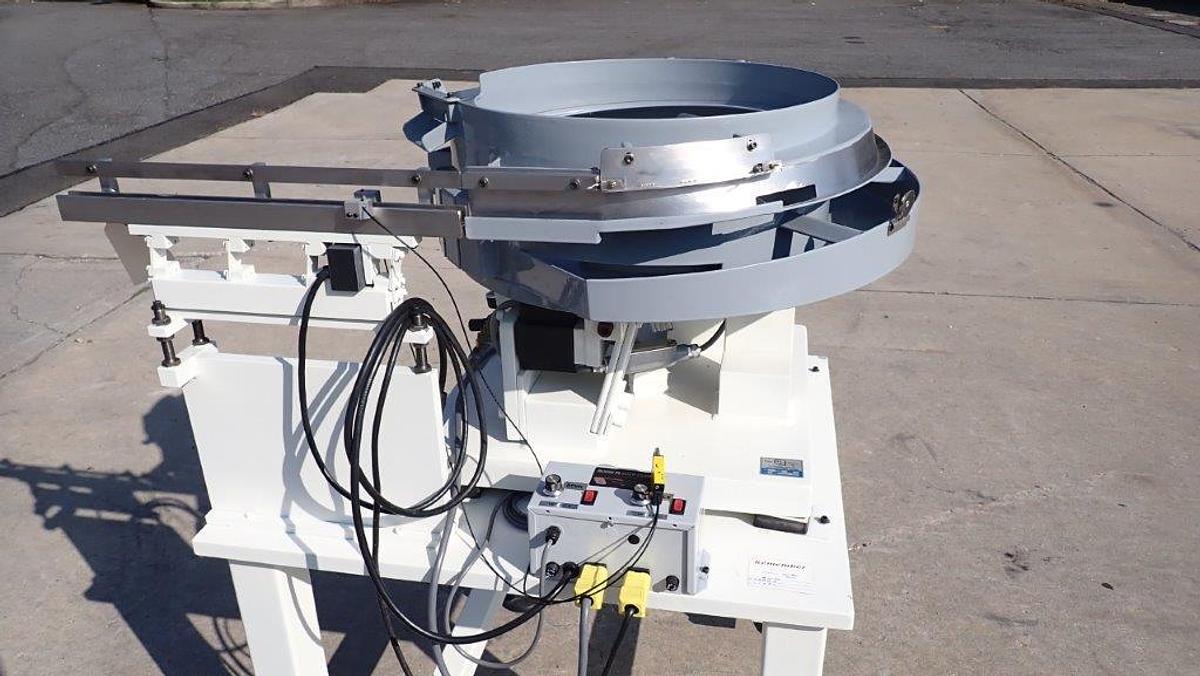
A parts feeder is an automated device used in manufacturing and assembly lines to orient, sort, and deliver small components to the next stage of production in a consistent, repeatable way. The most widely used design is the vibratory bowl feeder, which uses electromagnetic vibration to move parts along a helical track inside a bowl. As parts travel up the track, tooling built into the bowl selects only those in the correct orientation and returns the rest to the bottom for another pass. The result is a steady, controlled stream of correctly oriented parts feeding directly into the assembly or processing equipment downstream.
Beyond vibratory bowl feeders, other common designs include centrifugal feeders, linear feeders, flex feeders, and step feeders. Each type is suited to different part geometries, weights, and production speeds. Centrifugal feeders, for example, handle higher throughput applications and work well with parts that are more fragile or prone to tangling. Linear feeders are often used in tandem with bowl feeders to extend the delivery path. The right choice depends on the specific part being handled, the required feed rate, and how sensitive the part is to vibration or impact.
What types of parts feeders are available on the used equipment market?
The used equipment market offers a broad range of parts feeder types, with vibratory bowl feeders being the most commonly available. These come in a range of bowl diameters, from compact units handling small electronic components to larger bowls designed for heavier automotive parts. Variable speed models are particularly sought after because they allow operators to fine-tune feed rates without mechanical adjustments. Used vibratory bowl feeders from established manufacturers are frequently available as manufacturers upgrade their lines or shift production.
Beyond vibratory bowls, used centrifugal feeders, linear feeders, and step feeders also appear on the market with regularity. Centrifugal feeders are often found in lots from facilities that previously ran high-volume assembly operations. Step feeders, which use a series of ascending steps to elevate and orient parts, show up from electronics and hardware manufacturing plants. When sourcing used parts feeders, buyers should pay close attention to bowl diameter, drive unit condition, and whether the existing tooling matches their specific part geometry, since tooling modifications can add cost after purchase.
How do I determine the right size parts feeder for my production line?
Sizing a parts feeder correctly comes down to three main factors: the physical dimensions and weight of the part being fed, the required feed rate measured in parts per minute, and the space available on the production line. Bowl diameter is the most commonly referenced sizing parameter for vibratory feeders. A general rule is that the bowl diameter should be roughly 10 to 15 times the longest dimension of the part being handled. So a part that is two inches long would typically require a bowl in the 20 to 30 inch diameter range, though this varies by part geometry and required throughput.
Feed rate requirements also drive sizing decisions. Larger bowls generally produce higher throughput because they hold more parts and have longer track paths. However, part shape, surface finish, and weight all affect how quickly parts can be oriented and discharged, so two feeders of identical bowl size can perform very differently depending on what they are running. When evaluating a used parts feeder, buyers should confirm the bowl diameter, the condition of the drive unit, and whether the existing tooling can be adapted to their part. Consulting with a feeder specialist before purchasing a used machine is a practical step that can prevent costly mismatches.
What materials and part types can parts feeders handle?
Parts feeders are used across a wide range of industries and can handle an equally wide range of materials, including metal stampings, plastic molded components, screws, nuts, bolts, springs, electrical contacts, and small assemblies. The key variables are part size, weight, surface finish, and fragility. Hard metal parts with consistent geometry are generally the easiest to feed reliably. Soft, flexible, or irregularly shaped parts require more careful bowl design and tooling to achieve consistent orientation.
Some parts require special bowl coatings or liners to prevent damage during the feeding process. Delicate electronic components, for instance, are often run through bowls lined with polyurethane to reduce impact and prevent scratching. Sticky or oily parts can present challenges for vibratory feeders because they tend to clump or adhere to the bowl surface, and in those cases centrifugal or flex feeders may be a better fit. When purchasing a used feeder, buyers should verify that the bowl material and any existing liners or coatings are compatible with the parts they intend to run.
What feed rates can a typical parts feeder achieve?
Feed rates for parts feeders vary enormously depending on feeder type, bowl size, part geometry, and part weight. On the low end, a small vibratory bowl feeder handling a complex or delicate part might deliver 20 to 50 parts per minute. On the high end, centrifugal feeders running small, simple parts like screws or washers can achieve several thousand parts per minute. Most mid-range vibratory bowl feeders used in general assembly applications operate somewhere between 100 and 600 parts per minute under normal conditions.
Variable speed drive units give operators the ability to adjust feed rates to match the pace of the downstream assembly equipment, which is an important feature to look for in a used machine. Running a feeder faster than necessary increases part wear and can cause jams, while running too slowly creates a bottleneck. When evaluating a used parts feeder, asking about the original production application and the part it was tooled for can give a useful benchmark for the feed rates that machine was designed to sustain.
How much does a used parts feeder typically cost?
Pricing for used parts feeders depends heavily on bowl diameter, feeder type, brand, age, and overall condition. Small used vibratory bowl feeders with bowl diameters in the 6 to 12 inch range can be found for a few hundred dollars in basic condition. Mid-size feeders with bowl diameters in the 18 to 24 inch range, which are among the most common in general manufacturing, typically sell in the range of $1,000 to $5,000 depending on the manufacturer and the condition of the drive unit and tooling. Larger or more specialized feeders from well-known manufacturers can command significantly higher prices.
Beyond the base price of the machine, buyers should factor in the cost of any tooling modifications needed to run their specific part, shipping and rigging costs, and any refurbishment or maintenance work required before the feeder goes into production. Used parts feeders are generally a fraction of the cost of comparable equipment purchased directly from a manufacturer, which makes the used market an attractive option for companies looking to automate without a large capital outlay. Getting a clear picture of total landed cost before committing to a purchase is the practical way to evaluate whether a particular used feeder represents good value.
What should I inspect before buying a used parts feeder?
A thorough inspection of a used parts feeder should cover the drive unit, the bowl itself, the tooling, and the control system. The drive unit is the heart of a vibratory feeder, and worn or damaged coils, springs, or mounts can be expensive to repair. Buyers should look for signs of excessive wear on the spring mounts, check that the drive operates smoothly across its speed range, and listen for any unusual noise or vibration patterns that suggest mechanical problems. The bowl should be examined for cracks, dents, worn track surfaces, and deteriorating liners or coatings.
Most used equipment dealers will accommodate in-person inspections or arrange video inspections so buyers can assess the machine before committing to a purchase. Some feeders may still be installed and running at the facility where they are being decommissioned, which gives buyers the best possible look at actual operating condition. Keep in mind that most dealers do not have the production permits or setup required to run parts through a feeder during a dealer-side inspection, so buyers should ask detailed questions about the machine's history, the parts it was running, and how recently it was last in production. Reviewing that history alongside a physical inspection gives the most accurate picture of what a used feeder will need before it is production-ready.
Can the tooling on a used parts feeder be modified for a different part?
Tooling modification is one of the most common steps buyers take after purchasing a used parts feeder, particularly when the machine was originally configured for a part that differs from what the new owner intends to run. The tooling on a vibratory bowl feeder consists of the tracks, gates, wiper blades, and orienting features built into or attached to the bowl that control how parts are selected and oriented as they move along the track. These features are specific to the part geometry the feeder was designed for, and running a different part without modification typically results in poor orientation rates or jams.
Modifying existing tooling is often more cost-effective than building a completely custom bowl from scratch, but the feasibility depends on how different the new part is from the original. A feeder specialist or tooling engineer can evaluate whether the existing bowl and track geometry can be adapted through relatively simple changes like adding or removing guides, or whether more substantial rework is needed. Buyers should get a tooling assessment before finalizing a purchase if they know the part they intend to run differs significantly from what the feeder was originally built for, since tooling costs can sometimes rival the cost of the machine itself.
What should buyers understand about shipping a used parts feeder?
Shipping a used parts feeder requires careful attention to packaging and handling because the drive units, bowls, and spring assemblies are sensitive to impact and rough handling in transit. Smaller feeders can typically be palletized and stretch-wrapped with adequate blocking and bracing to protect the drive unit and bowl. Larger feeders, or those with fragile tooling features, may require custom crating to prevent damage. The level of packaging required directly affects shipping costs, so buyers should ask dealers for specifics on how the machine will be prepared for transit before finalizing the purchase.
Larger or heavier feeders may also require specialized rigging equipment for loading at the dealer's facility and unloading at the buyer's location. Rigging costs are typically an added expense on top of freight charges and should be factored into the total landed cost calculation. Buyers should confirm with the dealer whether rigging is included or billed separately, and whether the machine will be shipped via common carrier freight or requires a dedicated flatbed or specialized transport. Getting a full breakdown of packaging, rigging, and freight costs upfront prevents surprises and allows for an accurate cost comparison between different machines being considered.
What level of manufacturer support can buyers expect for used parts feeders?
Support availability for used parts feeders varies considerably depending on the age of the machine, the manufacturer, and the specific model. Many established parts feeder manufacturers continue to supply replacement parts and technical documentation for older machines, but this is not universal. Buyers are well advised to contact the manufacturer directly before purchasing a used feeder to ask about parts availability, whether service manuals are still accessible, and whether the company's technical staff can provide support for that particular model. The answers to those questions can significantly affect the long-term cost of ownership.
Used equipment is typically sold as-is, which means the responsibility for evaluating condition and estimating future maintenance needs falls on the buyer rather than the seller. Selecting a used equipment dealer with a strong track record in industrial automation and parts feeding equipment is one of the most practical ways to reduce risk in this process. An experienced dealer can provide accurate information about a machine's history and condition, help identify potential maintenance needs, and point buyers toward appropriate manufacturer resources. Age and model generation are the two biggest factors in determining how much manufacturer support a buyer can realistically expect, so those details should be confirmed before any purchase decision is made.