Category
Manufacturer
Model
Parke Davis
Parke Davis is known for its historical contributions to pharmaceutical manufacturing equipment. They specialize in high-quality machinery that supports the production of various medication forms.
FAQ:
What is a Parke Davis capsule filling machine and what is it used for?
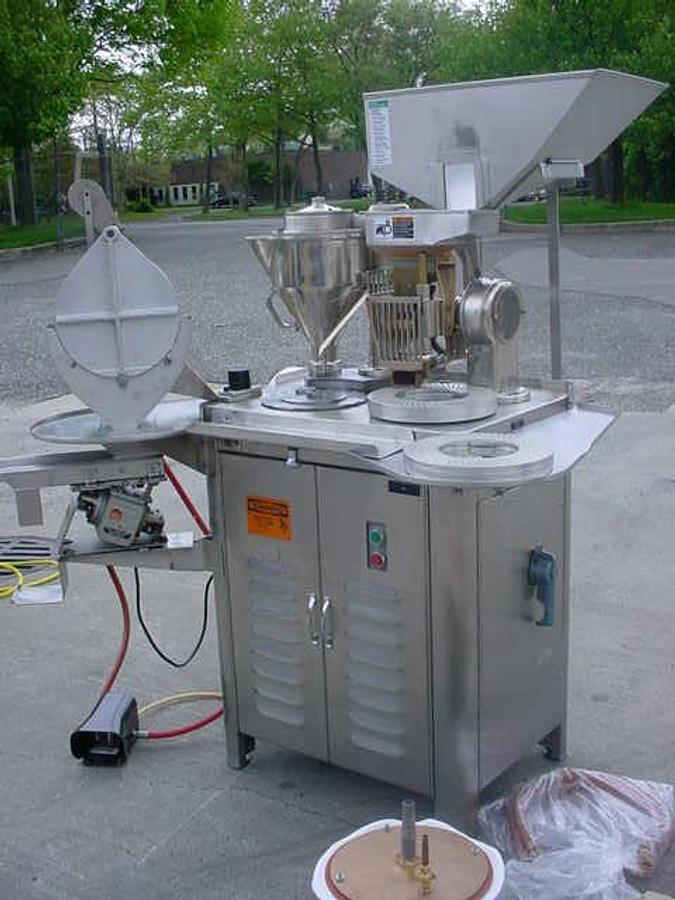
Parke Davis capsule filling machines are manual or semi-manual pharmaceutical devices designed to fill empty hard-gelatin capsules with measured doses of powders, granules, pellets, or other fill materials. They were built for professional use in compounding pharmacies, small-scale pharmaceutical manufacturing, and research settings where precise, repeatable dosing is essential. The machines work by holding a set number of capsule bodies in a plate or tray, allowing an operator to fill them uniformly before capping. This hands-on process gives the operator direct control over fill weight and consistency, which is particularly valuable in compounding environments where batch sizes are smaller and formulations vary.
Parke Davis has a well-regarded history in pharmaceutical manufacturing equipment, and their capsule fillers earned a strong reputation for durability and build quality. Even decades after production, these machines continue to be sought after by compounding pharmacies and small manufacturers because of how reliably they perform when properly maintained. The machines available through used equipment dealers are pre-owned units, so buyers should inspect them carefully and confirm the machine's current working condition before purchasing. They are not suited for high-volume industrial production lines, but for low-to-medium batch filling operations, they remain a practical and cost-effective choice.
What capsule sizes are compatible with Parke Davis capsule filling machines?
Parke Davis capsule filling machines are typically designed around specific capsule sizes, and compatibility depends on the model and the tooling that comes with it. Hard-gelatin capsules are manufactured in standard sizes ranging from 000 (the largest) down to size 5 (the smallest), and most Parke Davis machines are configured for one or a limited range of those sizes. The plates or trays that hold the capsule bodies are size-specific, meaning a machine set up for size 0 capsules will not work correctly with size 1 or size 00 capsules without the appropriate tooling change.
Buyers shopping for a used Parke Davis capsule filler should pay close attention to what tooling is included with the machine. Some listings include miscellaneous tooling, which may cover multiple sizes, while others may only come with the tooling installed at the time of decommissioning. Before purchasing, it is worth confirming exactly which capsule sizes the included tooling supports, and whether additional size-specific plates or accessories are available separately. Sourcing replacement or supplemental tooling for older Parke Davis models can be challenging, so understanding what is included upfront helps avoid compatibility issues after the machine arrives.
How many capsules can a Parke Davis capsule filling machine fill per batch?
The batch capacity of a Parke Davis capsule filling machine depends on the specific model and its tray or plate configuration. Manual Parke Davis machines typically fill capsules in batches based on the number of holes in the filling plate, which commonly ranges from around 100 to 300 capsules per cycle depending on the model. The Type 8, for example, is a manually operated unit designed for professional compounding use, and its throughput reflects that context. These machines are not designed for continuous high-speed production; instead, they are built for controlled, batch-by-batch operation where the operator fills, levels, and caps each set before moving to the next.
For a compounding pharmacy or small-scale manufacturer, this batch-oriented approach is often exactly what is needed. It allows for careful quality control at each stage, and the operator can adjust fill weight or technique between batches if needed. Buyers evaluating a used Parke Davis machine for production planning purposes should confirm the plate capacity for the specific model they are considering, as this directly affects how many capsules can be produced per hour when factoring in operator speed and the time required for filling, tamping, and capping each batch.
What types of fill materials can be used with Parke Davis capsule filling machines?
Parke Davis capsule filling machines are primarily designed to handle dry fill materials, with free-flowing powders and granules being the most common. The manual filling process involves spreading or pouring the fill material across the capsule body plate, then using a tamping tool or spreader to ensure each capsule body receives a consistent fill before the caps are pressed on. This method works well for powders that flow reasonably well and do not clump or pack unevenly. Granules and small pellets can also be filled using this approach, though very fine or electrostatically charged powders may require extra care to achieve uniform dosing.
Filling capsules with liquids or semi-solid materials is generally not practical with manual Parke Davis-style machines, as the design does not include the sealing or banding mechanisms that liquid-fill capsule systems require. Some operators have used these machines with powder blends that include lubricants or flow aids to improve consistency, and pre-blended or pre-granulated formulations tend to perform better than raw, unprocessed powders. Anyone planning to fill an unusual or challenging material should consider requesting an inspection of the machine to assess whether the tooling and plate configuration are appropriate for their specific application before committing to a purchase.
What is the difference between a manual and semi-automatic Parke Davis capsule filling machine?
Manual Parke Davis capsule filling machines require the operator to perform every step of the filling process by hand, including separating the capsule bodies from the caps, loading them into the filling plate, spreading and tamping the fill material, and pressing the caps back onto the filled bodies. This approach gives the operator full control over each stage and requires no electrical connections or mechanical drives. The Type 8 is an example of a manually operated Parke Davis unit, and machines in this category are valued for their simplicity, ease of cleaning, and suitability for small batch compounding work where precision matters more than speed.
Semi-automatic versions introduce mechanical assistance for one or more steps in the process, such as motorized tamping or automated cap separation, which reduces operator fatigue and can improve throughput compared to fully manual operation. However, semi-automatic machines are also more mechanically complex, which means there are more components that can wear or require servicing over time. For buyers considering a used machine in either category, the key factors to evaluate are the condition of the filling plates and tooling, the smoothness of any mechanical components, and whether the machine has been properly maintained. Both types require trained operators and are suited for professional pharmaceutical or compounding environments rather than casual or home use.
Are Parke Davis capsule filling machines suitable for small compounding pharmacies?
Parke Davis capsule filling machines have historically been a strong fit for compounding pharmacies because they were built specifically for professional pharmaceutical environments. Their construction is more substantial than consumer-grade capsule fillers, and the precision of the tooling supports the kind of consistent dosing that compounding work demands. A small compounding pharmacy that produces custom formulations in batches of a few hundred capsules at a time will find the manual operation of a Parke Davis machine practical and manageable. The batch-by-batch workflow also aligns well with the need to document and verify each compounded preparation separately.
That said, buyers should approach the purchase of a used Parke Davis machine with the same diligence they would apply to any pre-owned pharmaceutical equipment. The machine should be inspected, either in person or through a detailed video inspection arranged with the dealer, to confirm that all plates, tooling, and mechanical components are in good working order. It is also worth consulting with the manufacturer or a qualified technician to understand what level of support and parts availability can be expected for the specific model being considered, since older machines may have limited parts support. A reputable used equipment dealer who specializes in pharmaceutical machinery will be able to provide documentation and inspection access to help buyers make a well-informed decision.
Are replacement parts and accessories still available for Parke Davis capsule filling machines?
Sourcing replacement parts for Parke Davis capsule filling machines can be a real challenge, and it is one of the most important factors to investigate before purchasing a used unit. These machines have not been in active production for many years, which means parts are not readily available through standard pharmaceutical equipment supply channels. Replacement filling plates, tamping tools, and other wear components may need to be sourced through specialized used equipment dealers, machined to specification by a fabrication shop, or found through other owners of similar equipment. The availability of parts varies significantly depending on the model and the specific component needed.
Before committing to a purchase, buyers are strongly encouraged to contact the manufacturer directly to ask about parts support for the specific model they are considering. The manufacturer can clarify whether any components are still produced or stocked, and what the realistic options are for maintaining the machine long-term. Buyers should also ask the selling dealer whether any spare parts or extra tooling are included with the machine, as this can add meaningful value to a used purchase. Machines sold with a complete set of tooling and any available spare components are generally a better long-term investment than those sold with only the minimum configuration.
How should a used Parke Davis capsule filling machine be inspected before purchase?
Inspecting a used Parke Davis capsule filling machine before buying is an essential step that protects the buyer from unexpected costs or operational issues after delivery. Reputable used equipment dealers will typically offer inspection options that include in-person visits, live video walkthroughs, or recorded video captures of the machine. An in-person inspection is ideal when possible, as it allows the buyer to physically examine the condition of the filling plates, check for wear or damage to the tooling, verify that all components are present, and assess the overall cleanliness and maintenance history of the machine. Some machines may still be located at the facility where they were last used, which can provide additional context about how the equipment was operated and stored.
During an inspection, buyers should pay particular attention to the condition of the capsule body plates and cap plates, the fit and finish of the tamping tools, and any signs of corrosion, cracks, or deformation in the metal components. It is also worth asking whether the machine was decommissioned from active production or has been in storage, since storage conditions can affect the condition of seals and metal surfaces. Keep in mind that most equipment dealers do not have pharmaceutical production permits, so they will not be able to run a live capsule-filling demonstration with actual product. The inspection is focused on mechanical condition and completeness rather than a production test, so buyers should factor that into their evaluation process.
What should buyers know about shipping a Parke Davis capsule filling machine?
Shipping a used Parke Davis capsule filling machine requires careful planning to make sure the equipment arrives without damage. These machines contain precision-machined plates and tooling that can be damaged if the unit is not properly secured during transit. Dealers will typically palletize or crate the machine before shipment, and the level of packaging required can vary based on the size and weight of the unit and the shipping method being used. Buyers should ask the dealer specifically how the machine will be packaged and what the associated crating or palletization costs are, since these charges are usually separate from the freight quote and can affect the total landed cost of the purchase.
For larger or heavier machines, rigging may be required for loading at the dealer's location and unloading at the buyer's facility. Rigging involves specialized equipment and labor to safely move heavy machinery, and this is typically an added cost that buyers should confirm in advance. Freight costs will vary based on distance, carrier, and the dimensions and weight of the crated machine. Getting a clear breakdown of packaging, rigging, and freight costs before finalizing a purchase helps avoid surprises and allows buyers to accurately compare the total cost of acquiring the equipment.
What are typical payment terms for purchasing a used Parke Davis capsule filling machine?
Payment terms for used pharmaceutical equipment purchases, including Parke Davis capsule filling machines, tend to follow standard practices in the used machinery industry. Most dealers require full payment before the machine is shipped, which means the buyer pays in full and then the equipment is prepared for shipping and dispatched. This is the norm rather than the exception in the used equipment market, and buyers should plan their purchasing process accordingly. Wire transfers and other secure payment methods are commonly used for transactions of this type given the value of the equipment involved.
Some dealers may offer extended terms or payment arrangements to established customers with a history of prior purchases, but this is not standard for first-time buyers. Buyers who are new to a particular dealer should expect to pay in full prior to shipment. Before sending payment, it is a good practice to confirm all details in writing, including the machine's description, condition, included tooling and accessories, packaging method, and estimated shipping timeline. Having a clear written record of what was agreed upon protects both parties and helps ensure the transaction goes smoothly from payment through delivery.