Category
Manufacturer
Model
FAQ:
What types of equipment does Packaging Technologies manufacture?
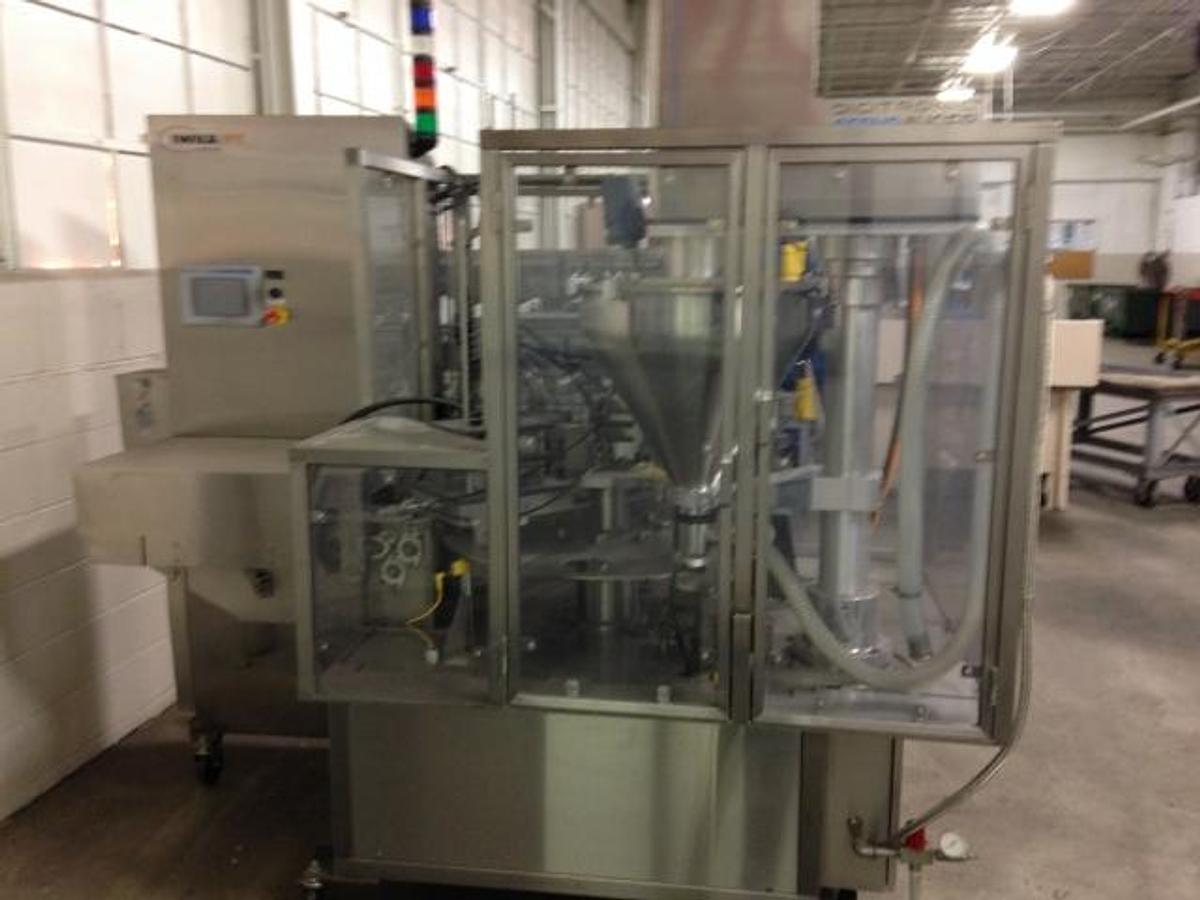
Packaging Technologies produces a range of packaging machinery used across food processing, pharmaceutical, and industrial applications. Their product line includes horizontal and vertical form-fill-seal machines, shrink wrap systems, automated bagging equipment, and powder filling systems. One specific example is the RO-A7 Powder Cup Filling and Sealing System with auger filling, which is designed for precise dispensing of powdered products into cups that are then sealed for distribution or retail.
The auger filling mechanism in systems like the RO-A7 is particularly valued in industries where accurate, consistent powder measurement is critical, such as nutritional supplements, spices, and pharmaceutical powders. These machines typically combine filling, sealing, and sometimes labeling functions into a single integrated line, which reduces labor requirements and increases throughput compared to manual or semi-automated alternatives.
What should buyers know about purchasing used Packaging Technologies equipment?
Used Packaging Technologies machines are sold through specialized used equipment dealers rather than directly from the manufacturer. Because these are pre-owned machines, they are typically sold as-is, meaning there is no manufacturer warranty transferred to the buyer. This places the responsibility of due diligence squarely on the purchaser, which makes choosing a reputable, experienced dealer with a long track record in packaging machinery an important first step.
Before committing to a purchase, buyers should request an inspection, either in person or via video, to assess the machine's current condition and working order. It is also worth contacting Packaging Technologies directly to understand what level of technical support, spare parts availability, and service documentation can be expected for the specific model and age of the machine being considered. Older models may have limited parts availability, which can affect long-term serviceability.
How do you evaluate the total cost of ownership for used packaging equipment?
The purchase price of a used packaging machine is only one part of the overall investment. Buyers who focus exclusively on sticker price often underestimate the downstream costs that determine whether a piece of equipment is truly cost-effective. The main factors to consider beyond purchase price include energy consumption, expected maintenance frequency, the cost and availability of spare parts, and the potential cost of production downtime if the machine requires repair or refurbishment after purchase.
For powder filling and sealing equipment specifically, wear components like auger screws, sealing elements, and drive belts tend to require periodic replacement. Requesting service history from the dealer, if available, can help estimate how much maintenance the machine has received and what may be due. Machines with PLC controls and touchscreen HMI interfaces generally offer faster changeovers between product sizes and reduced operator error, which can lower labor costs and waste over time, contributing positively to total cost of ownership.
What industries commonly use Packaging Technologies filling and sealing machines?
Packaging Technologies equipment serves a broad range of industries where consistent, automated filling and sealing of products is required. The food and beverage sector is one of the largest users, relying on these machines for portioning spices, coffee, powdered drink mixes, protein supplements, and similar products. Pharmaceutical and nutraceutical manufacturers also use powder cup filling systems to package capsule contents, vitamin powders, and other measured doses where accuracy is a regulatory requirement.
Industrial and chemical applications represent another segment, where powdered or granular materials need to be measured and sealed for distribution. Regardless of the industry, buyers in regulated sectors such as food and pharmaceuticals should verify that any used machine they consider meets applicable compliance standards, including FDA regulations in the United States and CE marking requirements for equipment used in European markets. Confirming compliance history with the dealer before purchase is advisable.
What does the inspection process look like when buying used packaging machinery?
Reputable used equipment dealers typically offer buyers the option to inspect machinery in person, through a live video call, or via pre-recorded video documentation of the machine. The goal of any inspection is to get an accurate picture of the equipment's current mechanical condition, including the state of sealing components, drive systems, controls, and any visible wear or damage. For machines like powder cup fillers, it is useful to observe the auger mechanism, the cup indexing system, and the sealing station during the inspection.
It is worth noting that most used equipment dealers do not have production facilities, so they cannot run actual product through a machine during an inspection. Testing with live product requires production permits and infrastructure that dealers generally do not maintain. Some machines may still be installed and running at the facility where they were originally used, in which case the dealer can sometimes arrange an inspection at that location. Buyers should ask dealers upfront about what inspection options are available and document everything observed during the review process.
How does auger filling work in a powder cup filling and sealing system?
An auger filler uses a rotating helical screw, called an auger, housed inside a fill tube to measure and dispense powder into containers. As the auger rotates, it moves a controlled volume of powder downward through the tube and into the cup or container below. The number of auger rotations per fill cycle determines the amount of product dispensed, which allows operators to fine-tune fill weights by adjusting rotation counts. This mechanism is particularly well-suited for free-flowing and semi-free-flowing powders because it delivers consistent fill weights without requiring the powder to flow by gravity alone.
In a complete cup filling and sealing system, the auger filler is integrated with a cup indexing conveyor and a heat sealing station. Empty cups are fed into the system, indexed under the fill tube, filled with the measured powder dose, and then moved to the sealing station where a foil or film lid is applied and sealed. The entire sequence is automated and controlled by the machine's PLC, which manages timing, fill weight, and sealing temperature. Throughput capacity, measured in cups per minute, varies by model and is one of the primary specifications buyers should evaluate when comparing equipment.
What are the most important specifications to review before buying a used powder filling machine?
Several technical specifications directly affect whether a used powder filling machine will meet production requirements. Fill weight range and accuracy are the starting points, as the machine needs to handle the target fill weights with acceptable tolerance. Cup or container size compatibility matters as well, since tooling and changeover parts are often specific to certain cup diameters and depths. Throughput capacity in units per minute should align with production volume demands, and buyers should confirm whether the listed speed reflects the machine's actual tested output or its theoretical maximum.
Control system type is another practical consideration. Machines equipped with PLC controls and HMI touchscreens are generally easier to operate, troubleshoot, and program for multiple SKUs compared to older relay-based systems. Buyers should also ask about the availability of the operator manual and any existing tooling sets included with the machine. For regulated industries, confirming that the machine's design and materials are compatible with FDA or other applicable standards is an important step before finalizing a purchase.
What are typical payment terms when buying used packaging equipment from a dealer?
Most used packaging equipment dealers require full payment before a machine is released for shipping. This is standard practice in the industry and applies to buyers purchasing through established dealers. Some dealers may offer extended payment terms to customers with whom they have an established purchasing history, but this is handled on a case-by-case basis and is not a standard offering for first-time buyers.
Buyers should clarify payment terms, accepted payment methods, and any deposit requirements at the beginning of the purchasing conversation rather than at the end. It is also worth asking whether the quoted price is inclusive of any preparation, cleaning, or loading costs, or whether those are billed separately. Understanding all costs upfront, including payment structure, helps avoid surprises and allows for accurate budgeting before committing to a purchase.
How is used packaging machinery typically shipped, and what does it cost?
Shipping costs for used packaging equipment depend on the size and weight of the machine, the distance being shipped, and the level of packaging or crating required to protect it in transit. Smaller benchtop or semi-automatic machines may ship on a standard pallet, while larger integrated filling and sealing lines often require custom wooden crates to prevent damage during handling. Buyers should ask the dealer specifically what packaging method will be used and whether crating or palletization costs are included in the quoted price or billed separately.
For heavier equipment, rigging is often required for both loading at the dealer's location and unloading at the buyer's facility. Rigging involves the use of forklifts, cranes, or specialized equipment to safely move and position machinery, and these services carry their own costs. Buyers should request a full breakdown of freight, rigging, and packaging charges to understand the complete landed cost of the machine before agreeing to purchase. Freight damage claims on used machinery can be difficult to resolve, so proper crating is worth the added expense.
How do used packaging machines compare in value to buying new equipment?
Used packaging equipment typically sells at a significant discount compared to the cost of purchasing the same model new from a manufacturer. For buyers with tighter capital budgets or those scaling up production incrementally, used machinery can provide access to capable, industrial-grade equipment at a fraction of the replacement cost. Machines from established manufacturers like Packaging Technologies are often built to last well beyond their initial production runs, meaning a well-maintained used machine can deliver years of additional service life.
The trade-off is that used machines come without the assurances that accompany new equipment purchases. Buyers assume more risk regarding the machine's condition, parts availability, and remaining service life. Mitigating that risk requires thorough inspection, research into parts and support availability for the specific model, and sourcing from dealers with verifiable experience in packaging equipment. For many buyers, particularly those with in-house maintenance capabilities, the cost savings of buying used outweigh the added due diligence required.