Category
Manufacturer
Model
FAQ:
What industries use Pack Line filling and sealing machines?
Pack Line filling and sealing machines are used across a broad range of industries where high-speed, automated packaging is critical to production efficiency. The most common applications are in food and beverage manufacturing, where the machines fill cups, trays, and containers with products like yogurt, dairy, sauces, juices, and condiments. Beyond food, these machines are widely used in pharmaceuticals, cosmetics, personal care, and industrial chemicals, where precise fill volumes and hermetic seals are essential for product safety and shelf life.
The versatility of Pack Line equipment makes it attractive to contract packagers as well, since a single machine can often be configured to handle multiple product types with format changeovers. The machines are built with hygiene as a core design consideration, typically featuring stainless steel construction and compatibility with clean-in-place (CIP) sanitation systems, which is a requirement in regulated industries like food processing and pharmaceuticals. Buyers sourcing used Pack Line machines should confirm which product types a specific unit was previously used for, as this can affect sanitation requirements and the condition of product-contact components.
What is the production speed of a Pack Line cup filling and sealing machine?
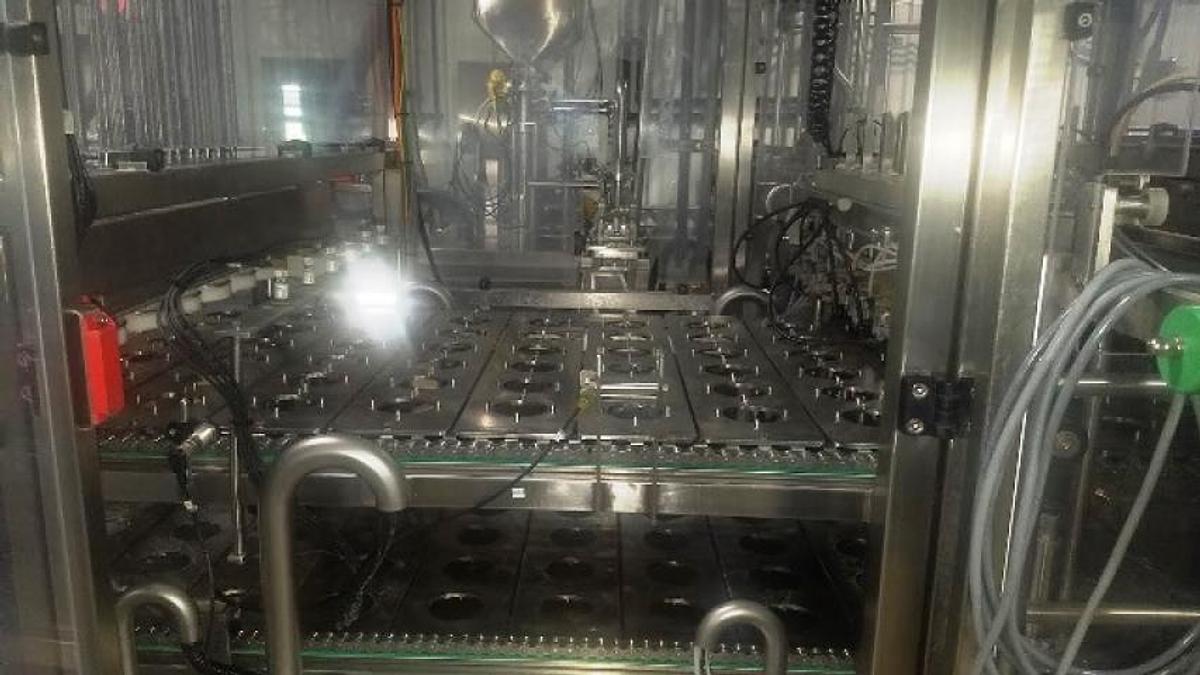
Production speed varies significantly depending on the machine model, the number of filling lanes, and the container format being used. Multi-lane Pack Line machines are among the fastest cup filling systems available in the industry. For example, a 6-lane Pack Line auto cup filling and sealing machine can reach output rates of up to 270 cups per minute, which translates to over 16,000 cups per hour under optimal conditions. That level of throughput is well-suited for high-volume dairy, beverage, or food production environments.
When evaluating a used Pack Line machine, it is worth noting that actual production speed in a buyer's facility may differ from the rated maximum, depending on factors like product viscosity, cup size, sealing film type, and line integration. Buyers should ask the equipment dealer for documentation on the specific model's speed range and, if possible, review any available production history. Understanding the realistic output for your application is an important part of calculating return on investment when purchasing used filling and sealing equipment.
What types of containers can Pack Line filling and sealing machines work with?
Pack Line machines are primarily designed around rigid and semi-rigid container formats, with cup filling being the most common application. These machines can handle a variety of cup and tray sizes made from materials such as polypropylene (PP), polyethylene terephthalate (PET), polystyrene (PS), and aluminum foil trays. The container dimensions and depth that a specific machine can accommodate depend on the tooling and format parts installed, and many machines can be retooled to handle different cup sizes with the appropriate changeover parts.
Beyond standard cups, some Pack Line configurations support other container types depending on the model and its original design intent. Buyers sourcing used equipment should verify the specific tooling that comes with a machine and whether additional format parts are included in the sale. If a buyer needs to run a container size or style that differs from the machine's current setup, they should factor in the cost of sourcing compatible tooling, which may be available through the manufacturer or third-party suppliers. Consulting with the equipment dealer about the machine's history and current tooling is a practical first step before committing to a purchase.
Can Pack Line machines handle both liquid and viscous products?
Pack Line filling and sealing machines are designed to handle a range of product consistencies, from free-flowing liquids like juices and broths to thicker, more viscous products such as yogurt, pudding, cream-based sauces, and similar semi-solid foods. The filling system type on the machine determines how well it handles different viscosities. Piston fillers are commonly used for viscous or chunky products, while volumetric or flow-based systems are better suited to thin liquids. Buyers should confirm which filling mechanism is installed on any specific used machine before purchasing.
For products with particulates or chunks, the size and design of the fill nozzles and valves become important factors. Some machines are configured specifically for smooth, homogeneous products and may require modifications to handle products with larger inclusions. When inspecting a used Pack Line machine, it is advisable to ask the dealer about the product types the machine was originally running, as this gives a clear indication of its capability and helps identify any wear patterns on product-contact components that may be specific to certain product types.
What fill volume ranges do Pack Line filling and sealing machines typically support?
The fill volume range of a Pack Line machine depends on the specific model, the filling mechanism installed, and the tooling configuration. Most cup filling and sealing machines in this category are designed to handle volumes ranging from small single-serve portions of around 30 to 60 milliliters up to larger containers in the 500 to 1,000 milliliter range. The fill volume is typically adjustable within the machine's designed range, often through settings on the PLC control system, allowing operators to fine-tune fill weights or volumes to meet production specifications.
For buyers purchasing used equipment, it is important to understand that fill volume adjustability is only meaningful within the physical limits of the machine's current tooling and container format parts. A machine set up for 150ml cups, for instance, may not be suitable for 500ml containers without significant retooling. Requesting the full specifications sheet for the specific unit being considered, and discussing the machine's current setup with the dealer, will help buyers determine whether the equipment aligns with their intended application before making a purchasing decision.
How do Pack Line machines compare to manual or semi-automatic filling operations?
Fully automated Pack Line filling and sealing machines offer substantial advantages over manual or semi-automatic alternatives in terms of speed, consistency, and labor costs. A manual filling line might require multiple operators per shift to achieve a few hundred units per hour, while a 6-lane automated Pack Line machine can produce over 16,000 cups per hour with minimal operator intervention. That difference in throughput directly affects cost per unit and the ability to meet large-scale production demands. Automated systems also reduce human error in fill volumes, seal quality, and container handling, which is critical in regulated industries.
Semi-automatic machines occupy a middle ground, requiring an operator to load containers or initiate cycles, which limits speed and introduces variability. Fully automated Pack Line equipment integrates container feeding, filling, sealing, and often coding or labeling into a single continuous process. For companies that have outgrown semi-automatic equipment or are looking to reduce labor dependency, purchasing a used automated Pack Line machine can be a cost-effective path to higher capacity without the capital expense of buying equipment at full retail pricing.
What control systems are typically found on Pack Line filling and sealing machines?
Modern Pack Line machines are generally equipped with programmable logic controller (PLC) based control systems paired with touchscreen human-machine interfaces (HMI). These controls allow operators to store and recall product recipes, adjust fill volumes, monitor machine status, and manage fault diagnostics from a single interface. PLC-based systems from manufacturers like Siemens, Allen-Bradley, or similar industrial brands are common on this type of equipment, and the availability of support and spare parts for these control platforms is generally good, which is a practical consideration for used equipment buyers.
When buying a used Pack Line machine, the condition and functionality of the control system is one of the most important things to assess during an inspection. Buyers should confirm that the HMI display is functioning, that stored recipes or programs are intact, and that there are no active fault codes or known electrical issues. If the machine has an older control system, it may be worth consulting with an automation technician about the cost of upgrading or replacing components, as control system repairs can be a significant expense on older equipment.
What should buyers look for when inspecting a used Pack Line machine before purchasing?
A thorough inspection of a used Pack Line filling and sealing machine should cover mechanical condition, electrical systems, product-contact components, and the overall state of the frame and guarding. Key mechanical areas to examine include the sealing station (checking for even heat distribution and seal head condition), the filling nozzles and valves (looking for wear, corrosion, or residue buildup), the conveyor and container transport system, and any indexing or star wheel components that control container movement. Worn or damaged sealing tooling and fill heads can be expensive to replace, so their condition should factor heavily into the valuation.
Inspections on used equipment are typically offered by dealers in person, virtually, or through detailed video walkthroughs of the machine. Some machines may still be installed at a production facility where an in-person inspection can be arranged. Keep in mind that most equipment dealers are not set up to run actual product through a machine during an inspection, as production-level testing requires permitting and facilities that dealers generally do not have. The goal of the inspection is to get an accurate picture of the machine's current mechanical and electrical condition, which is the buyer's primary protection when purchasing used equipment sold as-is.
What is the typical price range for used Pack Line filling and sealing machines?
Pricing for used Pack Line filling and sealing machines varies considerably based on factors like the number of filling lanes, production speed, machine age, condition, and included accessories or tooling. Entry-level or older single-lane machines may be available for a few thousand dollars, while high-speed multi-lane systems like a 6-lane cup filler capable of 270 units per minute can command prices ranging from tens of thousands to well over one hundred thousand dollars depending on condition and configuration. Machines that come with multiple sets of format tooling, intact control systems, and documented service history tend to command higher prices.
Buyers should also account for costs beyond the purchase price when budgeting for used equipment. Shipping, rigging, and crating can add meaningfully to the total landed cost, particularly for large or heavy machines that require specialized loading and unloading equipment. Installation, electrical hookup, and any refurbishment or parts replacement needed to bring the machine to production-ready condition should also be factored in. Getting a full picture of these ancillary costs before finalizing a purchase helps avoid surprises and makes it easier to compare the true cost of different machines being considered.
What are the shipping and logistics considerations for buying a used Pack Line machine?
Shipping a used Pack Line filling and sealing machine requires careful planning, as these are large, heavy pieces of industrial equipment that can be damaged in transit if not properly secured. Machines should be thoroughly cleaned, all moving parts secured, and the equipment palletized or crated to a standard appropriate for the size and weight of the unit. Larger machines often require custom wooden crating rather than simple pallet wrapping, and the cost of that packaging will vary based on the machine's dimensions and the level of protection needed for the shipping method being used.
Loading and unloading a large filling machine typically requires a forklift or crane, and if the buyer's facility does not have that equipment on-site, arranging a rigger or a freight delivery with a liftgate truck will add to the overall cost. Buyers should request a detailed breakdown of packaging, rigging, and freight costs from the dealer before finalizing the purchase, so the full landed cost is understood upfront. For international shipments, customs documentation, import duties, and compliance with destination country regulations are additional factors that need to be addressed before the machine ships.