Category
Manufacturer
Model
Pac Strapping Products
Pac Strapping Products focuses on manufacturing strapping and packaging solutions for various industries, including logistics and manufacturing. They are known for their durable polypropylene and polyester strapping systems that improve load stability.
FAQ:
What types of PAC strapping products are available on the used equipment market?
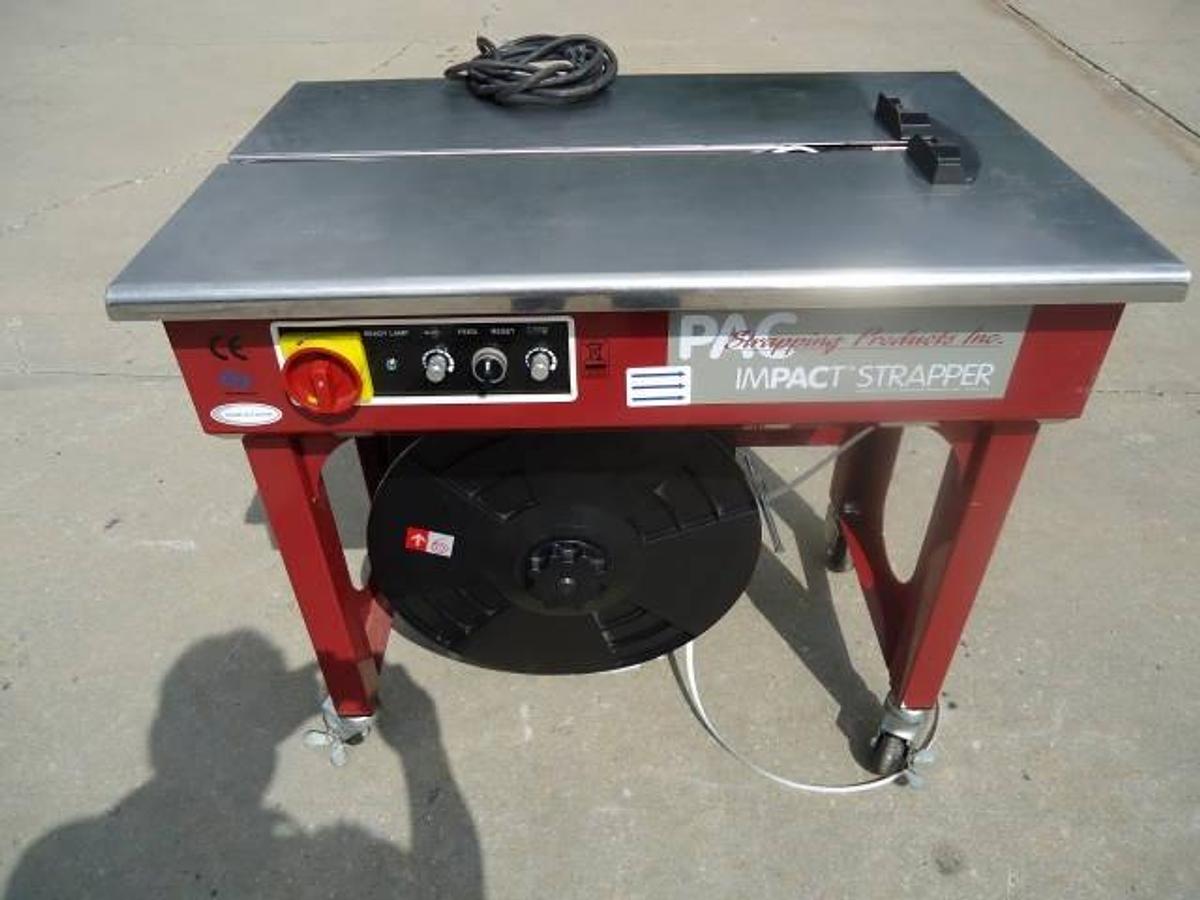
PAC Strapping Products manufactures a broad range of strapping and packaging equipment, and used versions of their machines show up regularly on the secondary market. The most common categories include portable impact strappers, semi-automatic strapping machines, and fully automatic inline strapping systems. Portable units like the PAC Impact Strapper are popular because they give operators flexibility on the floor without requiring a fixed workstation. Semi-automatic and automatic machines are typically found in higher-volume distribution and manufacturing environments where throughput and consistency matter.
Beyond the machines themselves, PAC is also well known for the consumable strapping materials that run through their equipment, including polypropylene (PP) and polyester (PET) strapping in a range of widths and thicknesses. When shopping the used market, buyers will often find individual machines listed separately from any tooling or accessories, so it pays to ask the dealer exactly what is included with a given listing. Checking whether the machine comes with tensioning tools, sealers, or spare parts can significantly affect the overall value of the purchase.
What is the difference between polypropylene (PP) and polyester (PET) strapping?
Polypropylene strapping is the more economical of the two materials and is widely used for light-to-medium duty bundling and packaging. It has good flexibility, which makes it forgiving on loads that may shift slightly during transit, and it is compatible with a wide variety of manual tools and strapping machines. Because of its lower cost per foot, PP strapping tends to be the go-to choice for high-volume, lower-weight applications like bundling boxes, securing cartons, or palletizing lighter goods.
Polyester strapping, on the other hand, delivers significantly higher tensile strength and better elongation recovery, meaning it can absorb impact and return closer to its original tension after a load shifts. This makes PET strapping the preferred choice for heavy, dense, or irregularly shaped loads such as steel coils, lumber, bricks, or large industrial components. PET strapping also holds tension over longer periods, which is important for loads that may sit in storage or transit for extended time. When selecting between the two materials, the weight, density, and fragility of the load are the primary deciding factors, along with the capabilities of the strapping machine being used.
What tensile strength options are typically available for PAC strapping?
PAC strapping products are manufactured across a wide spectrum of tensile strength ratings to accommodate everything from light retail packaging to heavy industrial bundling. Polypropylene strapping generally ranges from around 100 pounds of break strength on the lighter end up to roughly 600 pounds for heavier-duty PP grades. Polyester strapping pushes well beyond that range, with some grades rated at 1,000 pounds of break strength or higher, making it suitable for securing very dense or heavy loads.
The tensile strength of any given strap is directly tied to its width and thickness. Wider, thicker strapping carries more load but also requires a machine capable of handling those dimensions. When evaluating used PAC strapping equipment, buyers should confirm what strap widths and thicknesses the machine is rated to run, and cross-reference that against the tensile strength requirements of their specific application. A dealer specializing in strapping equipment can usually help match the machine specifications to the strapping grade needed.
What width and thickness options does PAC strapping typically come in?
PAC strapping is produced in a range of standard widths, most commonly from 3/8 inch up to 3/4 inch, though some heavy-duty applications use wider strap. The most frequently used widths in general industrial and logistics settings are 1/2 inch and 5/8 inch, as they strike a practical balance between strength and machine compatibility. Thickness varies by product grade, with lighter-duty strapping running thinner profiles and heavy-duty grades being noticeably thicker to achieve the required tensile ratings.
For buyers purchasing used PAC strapping machines, the width and thickness specifications of the machine's feed channel and tensioning mechanism are critical details to verify before buying. A machine configured for 1/2-inch strap cannot simply run 3/4-inch strap without modification or adjustment. Asking the dealer for the machine's strap width range and any documentation or spec sheets that may still be available with the unit is a good practice. Even on used equipment, knowing the exact strap compatibility prevents costly mismatches between the machine and the consumable strapping material.
Are PAC strapping machines compatible with strapping from other manufacturers?
In general, PAC strapping machines are designed to run PAC-branded strapping, but many units are also compatible with third-party strapping materials that meet the same dimensional specifications. The key variables are strap width, thickness, and material type (PP vs. PET). If a third-party strap matches those parameters, it will typically run through the machine without issue. That said, some machines have tighter tolerances or are calibrated for specific strap stiffness and surface texture, which can affect feeding and sealing performance when using off-brand materials.
For buyers of used PAC strapping equipment, this compatibility question is worth investigating before committing to a consumable supplier. Testing the machine with the intended strap material during an inspection, if the machine is still operational at the seller's facility, is the most reliable way to confirm compatibility. If a live test is not possible, consulting with a strapping materials supplier about whether their product is known to run well on the specific PAC machine model is a reasonable alternative. Dealers who specialize in strapping equipment are often a good resource for this kind of guidance.
How do I choose the right PAC strapping machine for my packaging operation?
Selecting the right strapping machine starts with understanding the throughput requirements and load characteristics of the operation. Portable battery-powered or pneumatic units like the PAC Impact Strapper work well in environments where the operator needs to move around the facility or where loads cannot easily be brought to a fixed station. Semi-automatic tabletop or arch machines are better suited to moderate-volume operations where a consistent strapping point can be established. Fully automatic inline systems are designed for high-speed production lines where manual intervention would create a bottleneck.
Beyond throughput, buyers should consider the type and size of loads being strapped, the strap width and material required, and the available power supply at the facility. On the used equipment market, it is also worth factoring in the age and condition of the machine, the availability of parts and service support from the manufacturer, and whether the seller can provide an inspection (in person or via video) to assess the machine's current working order. Choosing a dealer with specific experience in strapping and packaging equipment, rather than a general machinery reseller, tends to result in a better-matched purchase and more useful guidance through the selection process.
What should buyers know about inspecting used PAC strapping machines before purchasing?
Inspecting used strapping equipment before purchase is one of the most important steps a buyer can take to avoid surprises after delivery. Reputable used equipment dealers will typically offer inspection options that include in-person visits, live video calls, or recorded video walkthroughs of the machine. The goal of any inspection is to get an accurate picture of the machine's current condition, including the state of the feed mechanism, tensioning components, sealing head, and any electronic controls. Visible wear on the strap chute, sealing jaws, or feed wheels can indicate heavy use and potential near-term maintenance needs.
It is worth noting that most used equipment dealers do not have the permits or production infrastructure to run actual strapping tests with product, so buyers should not expect a full production demonstration. What a good inspection can reveal is whether the machine powers on, whether moving parts operate smoothly, and whether there is obvious damage or missing components. Buyers are also encouraged to contact PAC Strapping Products directly to ask about parts availability and service support for the specific model being considered, since older or discontinued models may have limited support options. Understanding these factors before purchase leads to a much more informed buying decision.
What are typical shipping considerations when buying used PAC strapping equipment?
Shipping used strapping machinery requires careful planning, particularly for larger semi-automatic or automatic units that can be heavy and awkwardly shaped. Smaller portable strappers can often be palletized and shipped via standard freight carriers with minimal special handling, but larger arch-style or inline machines may require custom crating to prevent damage in transit. The level of packaging directly affects shipping cost, so buyers should ask dealers for a clear breakdown of palletization or crating charges in addition to the freight rate.
For heavier machines, loading and unloading at either end of the shipment may require a forklift or other rigging equipment, which adds to the total landed cost. Buyers who do not have a loading dock or forklift at their facility should discuss lift-gate delivery options with the dealer in advance. Most used equipment dealers require full payment before a machine ships, and shipping terms (who bears responsibility if damage occurs in transit) should be clearly understood before the transaction is finalized. Getting a complete picture of all costs, including freight, crating, and any rigging fees, allows for an accurate comparison between different machines listed at different price points.
What warranty or quality assurance should buyers expect when purchasing used PAC strapping machines?
Used strapping equipment is typically sold on an as-is basis, which is standard practice across the used machinery industry. Warranties are generally only offered by the original equipment manufacturer on machines sold through their authorized channels, and that coverage does not transfer to secondary market sales. This means the responsibility for assessing the condition and suitability of a used machine falls squarely on the buyer, which is why thorough inspections and working with experienced dealers are so important.
To reduce risk, buyers should prioritize dealers who have a long track record in the strapping and packaging equipment space, as their reputation depends on accurately representing the machines they sell. Asking detailed questions about the machine's history, any known issues, and what was done to prepare it for resale can reveal a lot about a dealer's transparency. It is also advisable to reach out to PAC Strapping Products directly before purchasing an older model to understand what level of technical support, parts, and documentation the manufacturer can still provide. Age and model generation can significantly affect how much support a buyer can expect going forward.
What industries commonly use PAC strapping equipment?
PAC strapping machines and materials are used across a wide range of industries where load stability and secure bundling are priorities. Logistics and distribution operations rely heavily on strapping to unitize pallets and secure cartons before shipment. Manufacturing facilities use strapping to bundle raw materials, finished goods, and components at various stages of production. Industries with particularly demanding strapping requirements include building materials (lumber, roofing, brick), paper and printing, metals, and food and beverage.
The versatility of PAC's product line, spanning lightweight portable tools to heavy-duty automatic systems, means their equipment shows up in facilities of very different scales and operational profiles. A small regional distributor might use a portable PAC Impact Strapper for occasional pallet securing, while a large industrial manufacturer might run a fully automatic PAC system inline with a production conveyor. This broad applicability is one reason used PAC strapping equipment holds its value reasonably well on the secondary market and why buyers from many different sectors actively seek it out.