Category
Manufacturer
Model
FAQ:
What types of products can Orics filling and sealing machines handle?
Orics filling and sealing machines are built to handle a wide range of food and non-food products across multiple industries. Common applications include dairy products like yogurt, sour cream, and cottage cheese, as well as deli items, fresh produce, snacks, pet food, and certain pharmaceutical or nutraceutical products. The machines are designed to work with both liquid and semi-solid products, making them adaptable to production lines where product consistency and fill accuracy are critical.
Beyond food categories, Orics equipment is frequently used by contract packagers who need a single machine capable of running different product types across shifts. The flexibility built into many Orics models, particularly the rotary cup fillers, allows operators to switch between product types without extensive retooling. This makes them a practical choice for facilities that produce a variety of SKUs rather than a single dedicated product line.
What is the Orics R50 Rotary Cup Filling, Sealing and Lidding Machine?
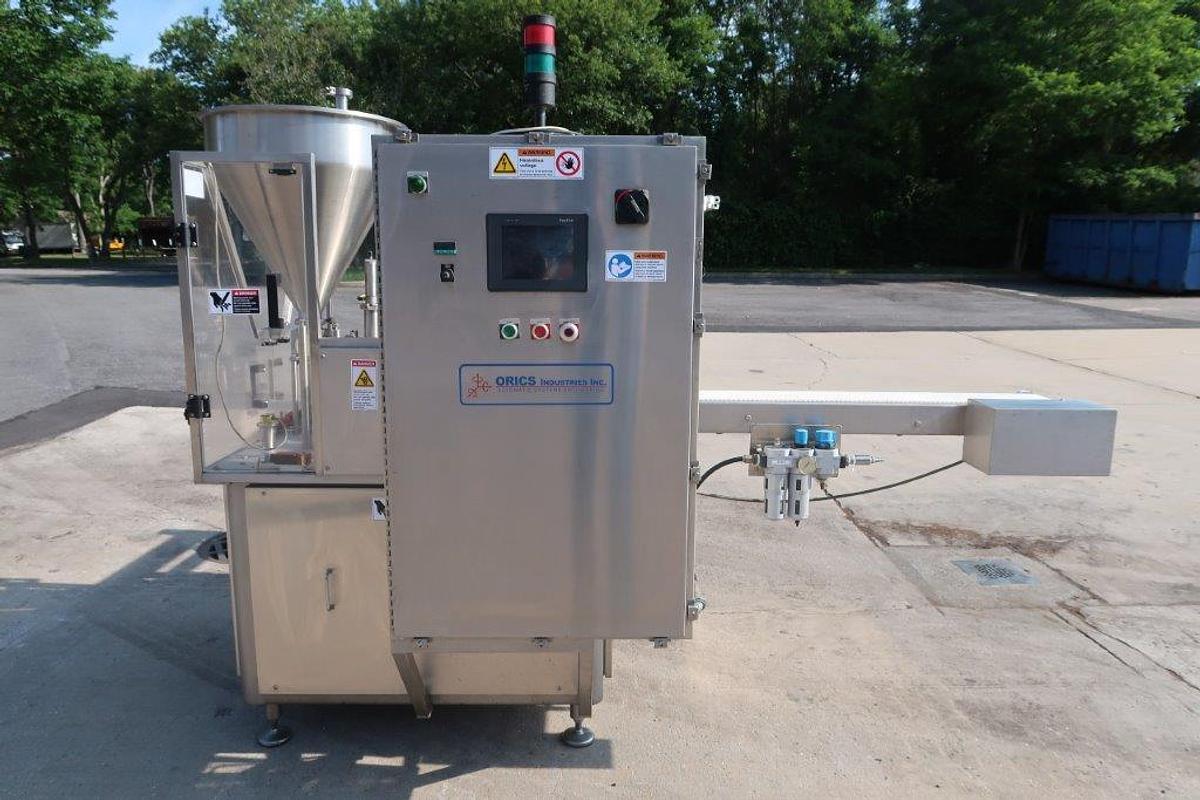
The Orics R50 is a rotary-style machine designed to fill, seal, and lid cups in a continuous production cycle. Rotary cup fillers like the R50 are valued for their ability to maintain consistent fill weights and seal integrity at moderate to high production speeds, making them well-suited for dairy, deli, and snack applications where portion accuracy matters. The rotary indexing system moves cups through filling, sealing, and lidding stations in sequence, reducing the need for manual intervention between steps.
Used Orics R50 machines appear on the secondary market periodically, typically sourced from food manufacturers that have upgraded their lines or consolidated production. Buyers considering a used R50 should pay close attention to the condition of the sealing tooling, the filling heads, and the drive components, as these are the areas that accumulate the most wear in rotary cup filling applications. Inspecting the machine in person or via video before purchase is strongly recommended to assess current operating condition.
What is the typical production speed or output capacity of Orics filling and sealing machines?
Production speed on Orics filling and sealing machines varies depending on the model, the container format, and the product being filled. Smaller benchtop or semi-automatic models may run anywhere from 10 to 30 cups per minute, while larger rotary systems like the R50 series are capable of significantly higher throughput, often reaching 60 to 120 cups per minute or more under optimal conditions. Actual output in a production environment depends on factors like fill volume, product viscosity, sealing film type, and operator efficiency.
When evaluating a used Orics machine, it is worth asking the seller about the speeds the machine was running at its previous facility, since machines that were pushed near their rated capacity for extended periods may show more wear than those used at moderate speeds. Speed ratings listed in manufacturer specifications reflect ideal conditions, so buyers should factor in a realistic production buffer when sizing a machine for their line.
Are Orics machines compatible with different container types such as cups, trays, and pouches?
Orics produces distinct machine lines for different container formats, so compatibility depends on the specific model. Cup filling and sealing machines, including rotary systems like the R50, are designed primarily for rigid or semi-rigid cups. Orics also manufactures tray sealers built to handle preformed trays, which are common in fresh produce, deli, and ready-meal applications. Pouch filling is generally handled by separate equipment, and Orics machines are not typically cross-compatible between cups, trays, and pouches without significant retooling or a different machine altogether.
For buyers purchasing used Orics equipment, it is important to confirm which container sizes and materials the specific machine was configured for at its previous facility. Many Orics machines are delivered with tooling sized for particular cup or tray dimensions, and switching to a different container format may require purchasing additional tooling or change parts. Sellers of used equipment can often clarify what tooling is included with the machine and whether the format matches the buyer's production requirements.
Do Orics filling and sealing machines support Modified Atmosphere Packaging (MAP) or vacuum sealing?
Many Orics models are built with MAP capability, which allows the machine to flush a container with a specific gas mixture, typically a combination of nitrogen, carbon dioxide, and oxygen, before sealing. This is particularly valuable in fresh produce, dairy, deli meat, and ready-meal applications where extending shelf life without preservatives is a priority. Vacuum sealing is also supported on certain Orics tray sealer configurations, where air is evacuated from the package before the seal is applied.
When shopping for a used Orics machine with MAP capability, buyers should verify that the gas manifold, flushing heads, and associated plumbing are intact and in serviceable condition. MAP components can degrade or be removed when a machine is decommissioned, so confirming their presence and condition during an inspection is an important step. A machine listed as MAP-capable should be inspected specifically for those components rather than assumed to be fully equipped based on the model designation alone.
What is the typical price range for used Orics filling and sealing machines?
Used Orics filling and sealing machines vary considerably in price depending on the model, age, condition, included tooling, and current market availability. Entry-level or older semi-automatic models can sometimes be found in the range of a few thousand dollars, while larger rotary systems or machines with MAP capability in good working condition can command prices well into the tens of thousands of dollars. Orics is generally regarded as a mid-to-premium tier manufacturer in the U.S. food packaging equipment market, and that reputation tends to hold value on the secondary market.
Buyers should factor in costs beyond the purchase price when budgeting for a used Orics machine. Shipping, rigging, any required tooling changes, and the cost of any parts or service needed to bring the machine up to production-ready condition can add meaningfully to the total landed cost. Getting a clear picture of what is included in the sale, what condition the machine is in, and what it will take to integrate it into an existing line is essential before committing to a purchase price.
What industries commonly use Orics filling and sealing equipment?
Orics filling and sealing machines have a strong presence in the food industry, with particularly deep adoption in dairy processing, deli and prepared foods, fresh produce, and snack manufacturing. Pet food producers, especially those packaging wet or refrigerated products in cups or trays, also use Orics equipment regularly. On the non-food side, certain pharmaceutical and nutraceutical packagers use Orics machines for portion-controlled packaging of supplements or medical foods where fill accuracy and seal integrity are tightly regulated.
Contract packagers represent another significant user group for Orics equipment, since the machines' flexibility and compact footprint make them practical for facilities running multiple product types for different clients. The relatively small floor space requirement compared to some competing systems makes Orics machines accessible to small and mid-size producers who cannot dedicate large areas of their facility to packaging lines. This broad base of industries means used Orics machines appear on the secondary market from a variety of sources, including plant closures, line upgrades, and production consolidations.
What should buyers look for when inspecting a used Orics filling and sealing machine?
A thorough inspection of a used Orics machine should cover both mechanical and operational aspects. Key areas to examine include the condition of the sealing station, specifically the sealing dies, platens, and heating elements, since these components are subject to significant wear and can be costly to replace. The filling heads, nozzles, and any metering or dosing components should be inspected for wear, corrosion, or damage, particularly if the machine was used with acidic or abrasive products. Drive systems, chains, belts, and bearings should also be checked for signs of fatigue or deferred maintenance.
Reputable used equipment dealers will typically offer in-person inspections, virtual walkthroughs, or detailed video of the machine in its current state. Some machines may still be installed at the facility where they were last used, allowing for an inspection while the equipment is in or near production condition. Buyers should also consult with the Orics manufacturer directly to understand parts availability and support options for the specific model and production year they are considering, since older or discontinued models may have more limited parts support than current production machines.
How does purchasing a used Orics machine differ from buying directly from the manufacturer?
Buying a used Orics machine through the secondary market is fundamentally different from a factory purchase in several important ways. Used machines are sold as-is, meaning the buyer takes on responsibility for assessing the machine's condition prior to purchase. There are no manufacturer warranties on used equipment sold through dealers, and the machine's history, including how it was maintained, what products it ran, and how many hours it has logged, may not always be fully documented. This is why inspection, whether in person or via video, is so critical before committing to a purchase.
On the other hand, used Orics machines offer a significant cost advantage over purchasing comparable equipment new from a manufacturer, and lead times are typically much shorter since the machine already exists and is ready to ship. For buyers who need to get a line running quickly or who are working within a tighter capital budget, the used market can be a practical path to acquiring quality packaging equipment. Selecting a dealer with a verifiable track record in food and packaging machinery, and one who can provide detailed condition information and facilitate a proper inspection, goes a long way toward reducing the risks associated with a used equipment purchase.
What are the shipping and logistics considerations when buying a used Orics filling and sealing machine?
Orics filling and sealing machines range from relatively compact benchtop units to larger rotary systems that require careful handling during transport. Packaging requirements will vary based on machine size and the level of protection needed for transit, with options ranging from standard palletization to full custom crating for larger or more complex systems. Buyers should ask the seller specifically what packaging method will be used and whether the cost is included in the listed price or billed separately, since crating costs alone can run into hundreds or even thousands of dollars for larger machines.
For heavier rotary systems or machines with significant weight and footprint, rigging equipment may be required for both loading at the seller's facility and unloading at the buyer's location. Rigging costs are typically the buyer's responsibility and should be arranged in advance, particularly if the destination facility does not have a loading dock or forklift access. Getting a complete breakdown of all shipping, rigging, and handling costs before finalizing a purchase is the best way to avoid surprises and accurately calculate the total landed cost of the equipment.