Category
Manufacturer
Model
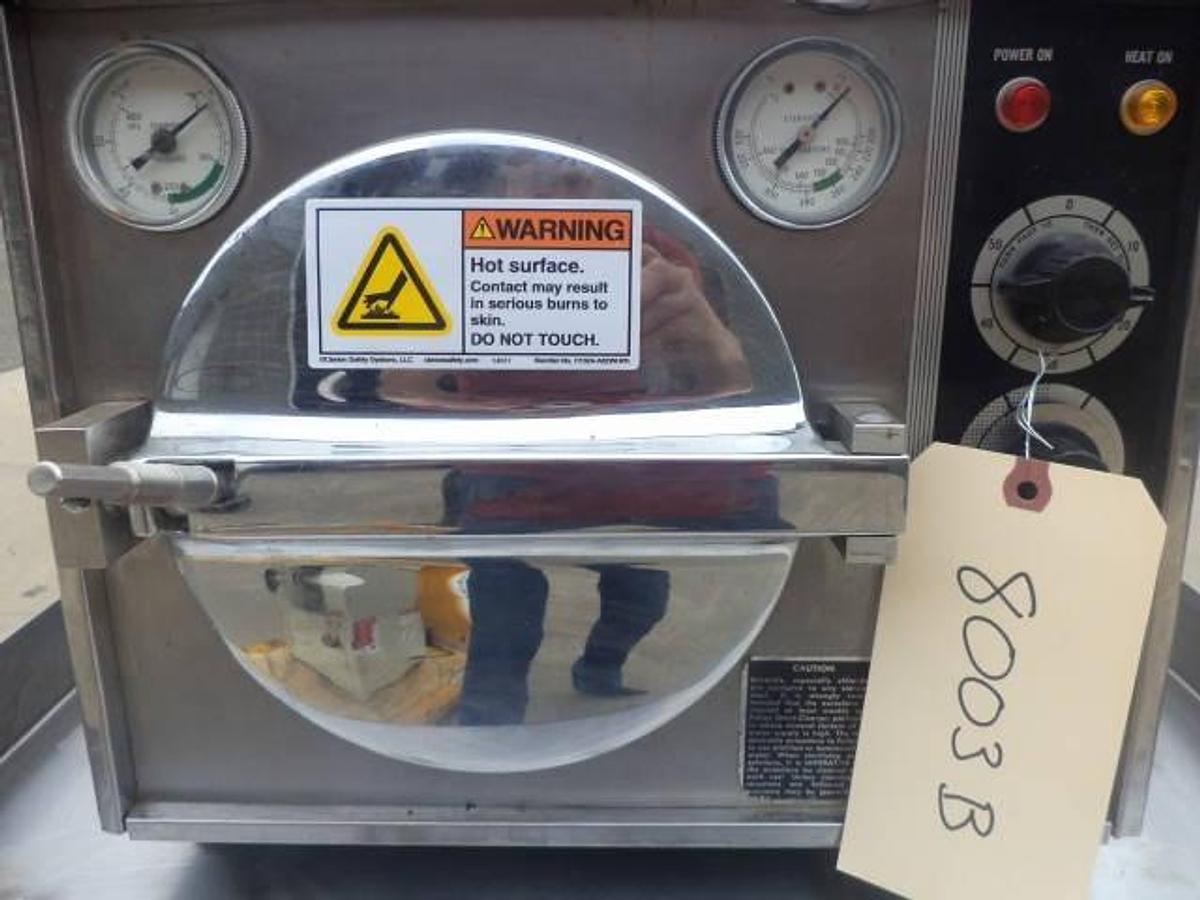
Omni-Clave
Omni-Clave provides innovative solutions for the pharmaceutical and biotechnology industries. Their focus is on manufacturing equipment like autoclaves and sterilizers that meet stringent regulatory standards for cleanliness and safety.
FAQ:
What is an Omni-Clave autoclave and what industries use them?
Omni-Clave is a manufacturer focused on sterilization equipment, including autoclaves and sterilizers designed for the pharmaceutical, biotechnology, dental, and medical sectors. Their machines are built to meet stringent regulatory standards for cleanliness and safety, making them a practical choice for facilities where sterility is non-negotiable. The brand is particularly well known for tabletop and benchtop models that fit comfortably in smaller clinical or laboratory environments without requiring major infrastructure changes.
In practice, Omni-Clave autoclaves show up in dental offices, tattoo studios, small medical clinics, and research laboratories. The appeal across these settings is consistent: reliable steam sterilization in a compact footprint, with controls simple enough that staff can operate the machine without extensive training. Models like the OCM Lab Sterilizer/Autoclave run on standard 115-volt power, which further reduces setup complexity for facilities that cannot accommodate industrial electrical requirements.
What types of materials and instruments can be sterilized in an Omni-Clave autoclave?
Omni-Clave autoclaves use steam under pressure to achieve sterilization, which is effective against bacteria, viruses, spores, and fungi. This method is suitable for a wide range of instruments and materials, including stainless steel surgical and dental tools, reusable metal instruments, glass labware, wrapped packs, and certain heat-tolerant plastics. The steam sterilization process is the most widely validated method in clinical and laboratory settings, which is why it remains the standard for facilities that need documented sterility assurance.
Materials that cannot tolerate high heat or moisture, such as certain electronics, some rubber compounds, and heat-sensitive plastics, are not compatible with steam autoclave sterilization. Before loading any item, operators should verify that the material is rated for the temperature and pressure conditions of the sterilization cycle, typically around 121 to 134 degrees Celsius depending on the cycle type. Manufacturers and instrument suppliers usually publish compatibility data for their products, and consulting those guidelines is the safest approach when sterilizing items for the first time.
How does steam autoclave sterilization work?
Steam autoclaves sterilize by exposing items to saturated steam at elevated temperatures and pressures for a defined period of time. The two most common cycle types are gravity displacement and pre-vacuum (also called dynamic air removal). In a gravity cycle, steam enters the chamber and pushes air out through a drain at the bottom; this is the simpler of the two methods and works well for unwrapped solid instruments and most labware. Pre-vacuum cycles use a vacuum pump to remove air from the chamber before steam is introduced, which allows steam to penetrate porous loads and wrapped packs more effectively.
The sterilization parameters, primarily temperature, pressure, and exposure time, are what determine whether a cycle is effective. A standard gravity cycle typically runs at 121 degrees Celsius for 15 to 30 minutes, while pre-vacuum cycles at 134 degrees Celsius can achieve sterilization in as little as 3 to 4 minutes of exposure time. After the sterilization phase, the chamber goes through a drying phase to remove residual moisture from the load. Biological and chemical indicators are used routinely to confirm that the cycle parameters were met and that sterilization was actually achieved, which is a requirement in most regulated clinical environments.
What sizes and chamber capacities are typically available for tabletop autoclaves like the Omni-Clave?
Tabletop and benchtop autoclaves are generally available in chamber sizes ranging from roughly 6 liters on the smaller end up to around 25 to 30 liters for larger countertop units. Smaller chambers in the 6 to 10 liter range are common in tattoo studios and single-chair dental practices where instrument volume per cycle is low. Mid-range chambers in the 16 to 23 liter range are more typical in multi-operatory dental offices, small medical clinics, and laboratory settings where throughput demands are higher. The right size depends on the volume and type of instruments being processed per cycle and how frequently sterilization needs to happen throughout the day.
When evaluating chamber size, it is worth considering not just the raw liter capacity but also the usable tray dimensions and how many standard cassettes or pouches can be loaded at once. A chamber that is nominally larger but has an awkward shape can end up being less practical than a slightly smaller but better-proportioned unit. For facilities processing large or irregularly shaped instruments, checking the actual internal dimensions against the instrument dimensions is more useful than relying on liter capacity alone.
What is the typical price range for used Omni-Clave autoclaves?
Pricing for used tabletop autoclaves varies considerably based on chamber size, model age, condition, and included accessories. Smaller benchtop units in good working condition can be found in the range of a few hundred to around two thousand dollars on the used market. Larger or more recently manufactured units with advanced cycle options and digital controls tend to command higher prices, sometimes reaching three thousand dollars or more depending on the configuration and the seller's assessment of the machine's condition.
Buyers should factor in more than just the listed price when calculating the total cost of acquisition. Shipping, crating or palletization, and any rigging required for loading and unloading can add meaningful costs, particularly for heavier units. It is also worth budgeting for any consumables or replacement parts that may be needed after purchase, such as door gaskets, trays, or filters. Getting a clear picture of the full landed cost before committing to a purchase helps avoid surprises and makes it easier to compare options across different sellers.
Are Omni-Clave autoclaves compliant with medical and laboratory sterilization standards?
Omni-Clave designs its sterilization equipment with pharmaceutical and biotechnology regulatory requirements in mind, and the brand's products are positioned for use in environments where cleanliness and safety standards are closely monitored. In the United States, autoclaves used in medical and dental settings are generally expected to meet ANSI/AAMI standards for steam sterilization, and FDA clearance is relevant for devices used in direct patient care contexts. Buyers evaluating a specific used unit should research the particular model's original compliance documentation and confirm whether the model was cleared or listed for the intended application.
For laboratory settings, the relevant standards may differ from those applied in clinical environments, and compliance requirements can vary by industry and jurisdiction. Consulting with the equipment manufacturer directly about the compliance history of a specific model is advisable, particularly for regulated industries. Age and model can also affect the level of support and documentation available from the manufacturer, so it is worth contacting Omni-Clave before purchasing a used unit to understand what technical resources are still accessible for that particular model.
Does a tabletop autoclave require professional installation or special plumbing?
One of the practical advantages of tabletop autoclaves is that most models do not require permanent plumbing connections. They operate using a built-in reservoir that the user fills with distilled or deionized water before each use, or in some cases with a replaceable water cartridge system. This self-contained design means the unit can typically be placed on a countertop, plugged into a standard electrical outlet (115 volt for many models), and put into service without a plumber or electrician. That simplicity is a big part of why small practices and laboratories favor this category of equipment.
That said, there are still practical setup considerations. The unit needs to be placed on a stable, level surface capable of supporting its weight when fully loaded. Adequate ventilation around the machine is important because autoclaves exhaust steam during operation. Some facilities also install a small drain or collection system nearby to manage condensate. While none of these requirements typically involve major construction, reviewing the manufacturer's installation guidelines for the specific model is the right starting point before putting a used unit into service.
What should buyers look for when inspecting a used Omni-Clave autoclave before purchasing?
A thorough inspection of a used autoclave should cover both the mechanical and cosmetic condition of the unit. Key areas to examine include the door seal and gasket (wear or cracking here can prevent the chamber from holding pressure), the chamber interior for corrosion, pitting, or mineral scale buildup, and the control panel for proper function of all displays and cycle settings. The heating element and pressure relief valve are also critical components, and any visible signs of prior repairs or non-standard modifications should be noted and questioned. Asking the seller for any available service history or maintenance records adds useful context.
Reputable used equipment dealers will typically accommodate in-person inspections, virtual walkthroughs, or video captures of the machine so buyers can assess its condition before committing to a purchase. Some equipment may still be in active use at a facility, in which case an inspection can sometimes be arranged at the operating location. Keep in mind that most dealers are not set up to run full production sterilization cycles during an inspection, so the evaluation focuses on the physical and mechanical state of the machine rather than processing actual product. Buyers who have specific concerns about a unit's performance should factor that into their assessment and pricing expectations accordingly.
Are replacement parts and consumables readily available for used Omni-Clave autoclaves?
Parts availability for used autoclaves depends heavily on the age and model of the specific unit. Common consumables like door gaskets, chamber trays, and filters are generally the items that need periodic replacement regardless of how well a machine has been maintained, and for many models these are available through the manufacturer or third-party suppliers. Contacting Omni-Clave directly before purchasing a used unit is a practical step, as the manufacturer can confirm which parts are still stocked and what level of technical support is available for that particular model and production year.
For older or discontinued models, parts availability can become a limiting factor in the long-term usability of the machine. This is worth weighing carefully during the buying decision, especially if the unit will be used in a high-throughput environment where downtime is costly. Some buyers in this situation choose to purchase a second unit as a backup source of parts, though that approach adds to the overall investment. Understanding the parts landscape before purchase is one of the more important due diligence steps when buying used sterilization equipment.
What should buyers understand about shipping and payment when purchasing a used autoclave?
Used autoclaves, even tabletop models, require careful packaging to prevent damage during transit. Sellers will typically crate or palletize the unit, and the cost of that packaging is usually passed on to the buyer. Larger or heavier units may also require specialized rigging for loading at the seller's location and unloading at the destination, which adds to the total freight cost. Buyers should ask sellers for a detailed breakdown of packaging, rigging, and shipping costs before finalizing a purchase so the full landed cost is clear upfront. Freight quotes can vary significantly based on distance, carrier, and the level of packaging required.
On the payment side, most used equipment dealers require full payment before the machine ships. Some dealers extend payment terms to repeat customers or established accounts, but that is not the standard for first-time buyers. Wire transfer is a common payment method for equipment transactions of this size. Buyers should work only with dealers who have a verifiable track record in the industry, as the combination of full prepayment and the absence of a manufacturer warranty on used equipment makes seller reputation an important factor in the purchasing decision.