Category
Manufacturer
Model
Oliver
Oliver is a leading manufacturer of food processing equipment, particularly known for their slicing and dicing machines. Their products are widely used in the meat, poultry, and vegetable processing industries, where precision and consistency are crucial.
FAQ:
What types of food processing equipment does Oliver manufacture?
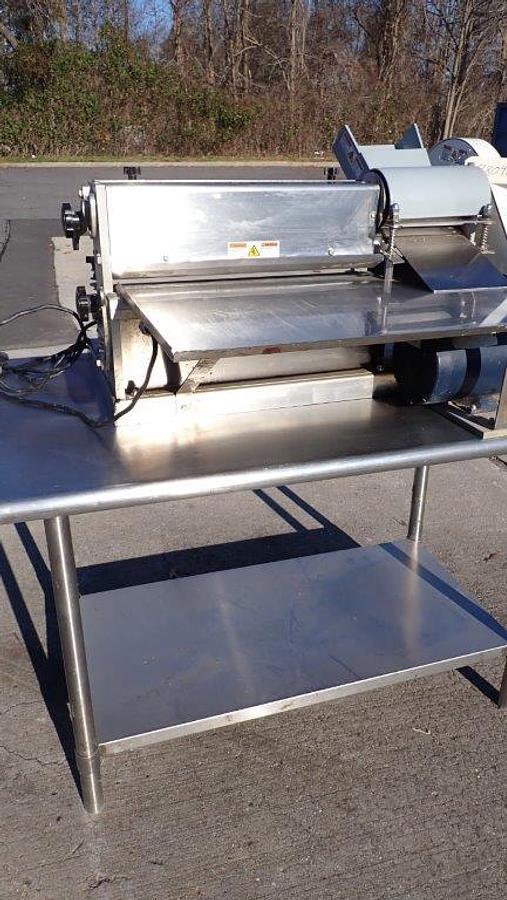
Oliver is a well-established manufacturer with roots going back to 1890, and the brand is best known for commercial bread slicers and bakery equipment. Their lineup covers a broad range of food processing needs, including slicing machines, dicing machines, and dough rollers. The Oliver 641-21 tabletop dough roller is one example of the smaller-footprint equipment they produce alongside their larger commercial slicing units.
Beyond bakery applications, Oliver equipment is widely used in meat, poultry, and vegetable processing operations where consistent cut dimensions and repeatable output matter. Commercial bakeries, grocery store delis, restaurants, and food production facilities all rely on Oliver machines. The brand has built its reputation on heavy-duty construction that holds up under continuous production demands, which is why used Oliver equipment remains in high demand long after the machines leave the factory floor.
What should buyers know about purchasing used Oliver food processing equipment?
Buying used Oliver equipment is a practical way to get professional-grade food processing machinery at a fraction of the cost of purchasing something straight from a distributor. Oliver's reputation for durability means many of their machines have long service lives, and well-maintained units can continue performing reliably for years after their initial installation. That said, buyers should approach any used equipment purchase with due diligence, since machines are typically sold as-is without manufacturer backing.
The most important step is working with a reputable used equipment dealer that specializes in food processing machinery and has a verifiable track record. Buyers should request an inspection, either in person or via video, to assess the machine's current condition before committing to a purchase. It's also worth contacting Oliver directly to ask about parts availability and support for the specific model being considered, since age and model generation can affect what service resources are still accessible.
What is the blade capacity and slice thickness range on Oliver commercial slicers?
Oliver bread slicers are designed with adjustable slice thickness settings, which is one of the features commercial buyers consistently highlight. This adjustability allows operators to run different bread types, from dense rye loaves to lighter sandwich bread, through the same machine without swapping out major components. Slice thickness ranges vary by model, so buyers should review the specifications for the particular unit they are evaluating to confirm it matches their production requirements.
When buying used, it's especially important to verify that the blade assembly is in good condition and that the adjustment mechanism operates smoothly across its full range. Blades are wear components, and a machine that has seen heavy production use may need blade replacement before it returns to optimal performance. Asking the dealer about the blade condition during an inspection is a straightforward way to factor potential maintenance costs into the total purchase price.
How easy is it to clean and maintain Oliver food processing equipment?
Ease of cleaning is a major consideration for any commercial food processing environment, and Oliver has designed many of their machines with sanitation in mind. Bread slicers and slicing equipment in general need to be cleaned frequently to prevent crumb buildup, blade contamination, and the kind of residue accumulation that can become a food safety issue. Oliver machines are generally regarded as accessible for routine cleaning, with components that can be removed or accessed without specialized tools in most models.
For buyers purchasing used Oliver equipment, it's worth asking the dealer about the machine's maintenance history and whether it has been cleaned and serviced before being listed for sale. A machine coming out of active production may have residue or wear that isn't immediately obvious in photos. Requesting a video inspection or an in-person walkthrough gives buyers a much clearer picture of the actual condition, and dealers who specialize in food processing equipment are typically familiar with what to look for on these machines.
Are replacement parts and blades readily available for Oliver equipment?
Parts availability is one of the most practical questions to resolve before purchasing any used food processing equipment, and Oliver is a brand with enough market presence that parts support tends to be better than with more obscure manufacturers. Blades, in particular, are considered consumable components on slicing equipment and are generally easier to source than internal mechanical parts. However, availability can vary depending on the model's age and whether Oliver still actively supports that generation of equipment.
The best approach is to contact Oliver directly before finalizing a purchase and ask specifically about parts and service support for the model number in question. Dealers who specialize in food processing equipment can also be a useful resource here, since they often have practical knowledge about which models are well-supported and which may require more effort to maintain. Factoring in parts availability upfront helps buyers avoid situations where a machine is purchased and then sits idle waiting for a component that's difficult to find.
What safety features are included on Oliver bread slicers and food processors?
Oliver commercial slicers are built for professional environments where operator safety is a baseline requirement, not an afterthought. Common safety features on commercial bread slicers include blade guards, interlocked housings that prevent the machine from operating when access panels are open, and feed mechanisms that keep hands away from the cutting zone during operation. The specific safety features vary by model and production era, so buyers evaluating a used machine should review the original equipment documentation if it's available.
For used equipment, it's worth inspecting safety guards and interlocks closely during any pre-purchase inspection. These components can wear or become damaged over time, and verifying that they function correctly before the machine goes back into production is important for both operator safety and regulatory compliance. A dealer who is familiar with Oliver equipment should be able to walk through the safety components during a video or in-person inspection and answer questions about whether any guards or mechanisms have been replaced or repaired.
What is the production throughput capacity of Oliver commercial slicers?
Oliver commercial slicers are designed for professional production environments, and throughput capacity varies significantly across their model range. Larger commercial units are built to handle continuous high-volume slicing in bakery and grocery production settings, while smaller tabletop models like the Oliver 641-21 dough roller are suited for lower-volume or space-constrained operations. When evaluating a specific used machine, the model number is the starting point for understanding rated capacity.
Buyers should keep in mind that actual throughput on a used machine may differ from the manufacturer's rated specifications depending on the condition of the blades, drive components, and feed mechanisms. An inspection is the best way to gauge whether a machine is operating at its intended capacity. If the equipment is still in active production at a facility, some dealers can arrange for an in-person inspection where the machine can be observed running, which gives buyers a much more accurate sense of real-world output than specifications alone.
How does the inspection process work when buying used Oliver equipment?
Used equipment dealers typically offer inspections in one of three formats: in person at the dealer's facility, virtually via live video call, or through recorded video footage of the machine. Each option gives buyers a different level of detail. In-person inspections are the most thorough, allowing a buyer or their technician to physically examine the machine, check for wear, test controls, and assess overall condition directly. Virtual and video inspections are a practical alternative when travel isn't feasible, and a good dealer will walk through the machine methodically and answer questions in real time.
It's worth noting that most used equipment dealers are not licensed food production facilities, which means they generally cannot run actual product through a machine during an inspection. What they can demonstrate is whether the machine powers on, whether mechanical components move freely, and whether obvious wear or damage is present. If a machine is still installed at a production facility prior to being decommissioned, the dealer may be able to arrange an inspection at that location, where the equipment might still be running. Buyers should ask specifically about what the inspection will cover before scheduling one.
What are typical shipping and logistics considerations for used Oliver food processing equipment?
Shipping used food processing equipment involves more planning than a standard freight shipment, and the costs can vary considerably based on machine size, weight, and the level of packaging required. Smaller units like tabletop dough rollers can often be palletized and shipped via standard freight carriers, while larger commercial slicers may require custom crating to prevent damage in transit. Buyers should ask the dealer specifically what packaging will be used and whether crating costs are included in the quoted price or billed separately.
For heavier equipment, rigging may be needed for loading at the dealer's location and unloading at the destination. Rigging costs are typically an additional expense and depend on the equipment's weight and the facilities involved. Getting a clear breakdown of all costs, including packaging, rigging, freight, and any delivery services, before finalizing a purchase helps buyers understand the true landed cost of the machine. Surprises at the freight dock are avoidable with a straightforward conversation with the dealer upfront.
What payment terms do used food processing equipment dealers typically offer?
Most used equipment dealers require payment in full before a machine is released for shipping. This is standard practice in the industry and reflects the fact that used equipment transactions don't carry the same financing infrastructure as purchases through authorized distribution channels. Buyers should expect to pay prior to the machine leaving the dealer's facility, and should confirm the accepted payment methods, whether that's wire transfer, ACH, or another form, before the transaction moves forward.
Some dealers extend terms to repeat customers or buyers with an established relationship, but this is not the norm for first-time transactions. For buyers who need financing, third-party equipment financing companies do work in the used machinery space, and it may be worth exploring that route independently before approaching a dealer. Having financing arranged in advance also puts buyers in a stronger position to move quickly when the right piece of equipment becomes available, since desirable used Oliver machines can sell without much lead time.