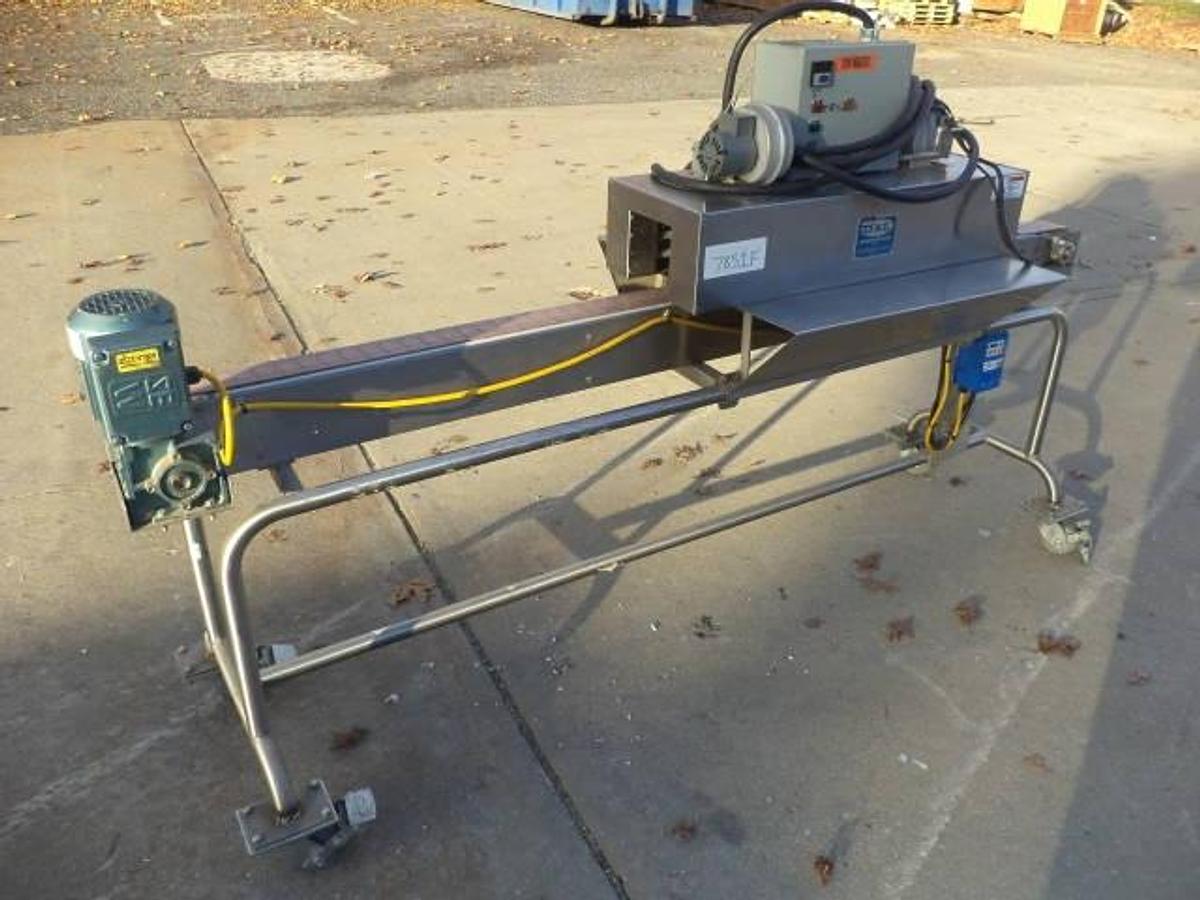
Category
Manufacturer
Model
Oal
OAL is recognized for its innovative automation solutions, particularly in the food processing and packaging sectors. They specialize in providing integrated systems that enhance production efficiency and reduce labor costs. OAL’s commitment to sustainability and innovation has positioned them as a leader in the industry.
FAQ:
What types of food processing equipment does OAL manufacture?
OAL builds industrial-scale food processing and packaging systems aimed at high-volume manufacturers. Their product lineup includes steam infusion cookers, continuous cookers, depositors, shrink tunnels with motorized conveyors, and integrated automation systems. One of their more notable developments is the APRIL robotic production system, which is designed to automate repetitive, labor-intensive tasks on food production lines. OAL has built a reputation specifically around ready meals, soups, sauces, and prepared food applications, where consistent throughput and food safety compliance are critical.
The equipment is engineered for commercial and industrial-scale operations rather than small or artisan producers. This means the machines are built to handle demanding production environments, with stainless steel construction throughout and designs that align with strict hygiene requirements. Buyers looking at used OAL equipment will typically find machines that were originally installed in large food manufacturing facilities, which gives a useful indication of the duty cycles and production volumes the equipment was built to handle.
What industries and food categories is OAL equipment best suited for?
OAL equipment is primarily designed for high-care, high-volume food manufacturing environments. The product range is particularly well matched to producers of ready meals, soups, sauces, gravies, and other prepared or convenience foods. The cooking and depositing systems are built around the specific challenges of these categories, including precise temperature control, consistent portion accuracy, and the ability to handle viscous or particulate-heavy products without quality loss.
Beyond cooking and filling, OAL's automation and packaging systems are used across a broader range of food sectors where labor reduction and production efficiency are priorities. Their equipment is generally found in facilities that operate under BRC, HACCP, or similar food safety frameworks, so the machines are designed with cleanability and traceability in mind. Buyers from outside the ready meal sector, such as those producing pet food, sauces for foodservice, or meal kit components, have also found OAL systems to be a practical fit given the overlap in process requirements.
How does OAL's steam infusion technology compare to traditional jacketed kettles?
Steam infusion cooking works by introducing the product into a steam-filled chamber rather than heating it through a jacketed vessel wall. This approach transfers heat extremely quickly and uniformly throughout the product, which reduces cook times significantly compared to conventional jacketed kettles. The practical result is faster throughput and, because the product spends less time at high temperatures, better retention of texture, color, and nutritional quality. OAL has marketed the energy efficiency of this method extensively, citing lower energy consumption per batch relative to traditional indirect heating methods.
For buyers considering used OAL steam infusion equipment, the energy and quality arguments still hold from a process standpoint, but it is worth understanding the specific model and age of the machine to gauge parts availability and manufacturer support. Steam infusion systems also tend to have more complex control and hygiene systems than a basic jacketed kettle, so prospective buyers should factor in the cost and availability of technical support when evaluating a used unit. Consulting OAL directly about support for a particular model is a practical step before purchase.
What should buyers know about purchasing used OAL food processing equipment?
Used OAL equipment is sold on an as-is basis, which places the responsibility for assessing condition squarely on the buyer. This is standard practice across the used industrial machinery market. Because OAL machines are built for demanding production environments, a thorough inspection is essential before committing to a purchase. Reputable used equipment dealers will typically offer in-person inspections, video walkthroughs, or photo documentation of the machine's current state. Some equipment may still be installed and running at a production facility, which offers the opportunity to see it operating under real conditions.
Buyers should also contact OAL directly to understand what level of technical support, spare parts, and documentation is available for the specific model they are considering. Age and model generation can significantly affect parts availability and the manufacturer's ability to provide service support. Choosing a used equipment dealer with a track record in the food processing sector adds an additional layer of confidence, as specialists in this space are more likely to accurately represent the condition and capability of the machines they list.
What is the typical price range for used OAL food processing equipment?
Pricing for used OAL equipment varies considerably depending on the type of machine, its age, condition, and the complexity of the system. Smaller peripheral equipment such as shrink tunnels or conveyor systems will generally sit at a lower price point than complete integrated cooking or depositing lines. Large-scale continuous cookers, steam infusion systems, or robotic automation platforms like the APRIL system represent a significantly higher investment, even on the used market, because of their original manufacturing cost and the value they deliver in production environments.
Buyers should treat the listed machine price as a starting point and factor in additional costs including shipping, rigging, any required refurbishment, installation, and commissioning. For complex OAL systems, the cost of getting a machine properly reinstalled and validated in a new facility can be a meaningful portion of the total investment. Requesting a detailed quote from the dealer that covers packaging, freight, and any known condition issues gives a much clearer picture of the true landed cost before making a purchasing decision.
How is used food processing equipment typically inspected before purchase?
Dealers handling used food processing equipment generally offer buyers three main inspection options: an in-person visit to the dealer's facility or the machine's current location, a live video call walkthrough, or a recorded video and photo package of the equipment. Each approach has its merits depending on the buyer's location and the complexity of the machine. For high-value or technically complex equipment like OAL cooking systems or automation lines, an in-person inspection is usually worth the travel cost, as it allows a qualified technician to assess the machine's mechanical and electrical condition directly.
It is worth noting that most used equipment dealers do not have the permits or infrastructure to run actual food production, so functional testing in the context of processing real product is rarely possible. What dealers can typically demonstrate is that motors run, conveyors move, controls respond, and there are no obvious signs of damage or excessive wear. Buyers with specific process requirements should bring their own technical staff or hire an independent machinery assessor to conduct a thorough evaluation. The goal is to build as accurate a picture as possible of the machine's current working order before the sale is finalized.
What are the food safety and hygiene design features common in OAL equipment?
OAL designs its equipment with food safety as a central engineering consideration rather than an afterthought. The machines are typically constructed from food-grade stainless steel throughout contact and near-contact surfaces, with smooth profiles, minimized crevices, and drainage features that support effective cleaning and sanitation. This design philosophy aligns with the requirements of BRC Global Standards, HACCP principles, and EU and UK food safety regulations, which are the frameworks most large food manufacturers operate under.
For buyers of used OAL equipment, these hygienic design features remain relevant because they affect how easily the machine can be cleaned and validated in a new facility. A machine with well-documented hygiene design is easier to qualify under a food safety management system than one with unclear construction standards. Buyers should request any available technical documentation, cleaning protocols, or validation records from the seller, as this paperwork can meaningfully reduce the time and cost of getting a used machine approved for production in a new environment.
What are the typical shipping and logistics considerations for used OAL equipment?
Used food processing equipment from OAL, particularly larger cooking systems, automation lines, or conveyor-integrated units, requires careful planning to move safely. The weight, dimensions, and fragility of industrial food machinery mean that standard freight handling is rarely sufficient. Proper palletization or custom crating is usually required to protect the machine during transit, and the level of packaging directly affects shipping costs. Buyers should ask the dealer specifically what packaging will be provided and whether any disassembly is needed before the machine can be safely loaded.
For heavier or more complex machines, specialized rigging equipment is needed for loading at the origin and unloading at the destination. This is an additional cost that buyers need to account for when calculating the total landed price of the equipment. International buyers also need to factor in customs clearance, import duties, and any compliance documentation required in their country. Getting a fully itemized freight and logistics quote before finalizing a purchase avoids surprises and ensures the economics of buying used equipment still make sense once all costs are included.
What payment terms do used equipment dealers typically offer for food processing machinery?
The standard practice among used equipment dealers is to require full payment before a machine is released for shipping. This applies across most transactions regardless of the equipment type or value. The rationale is straightforward: once a machine leaves the dealer's facility, their ability to manage any disputes or issues is significantly reduced. For buyers, this means having financing or capital in place before entering into a purchase agreement is essential to avoid delays once a deal is agreed upon.
Some dealers will offer payment terms or staged arrangements to repeat customers or buyers with an established purchasing history, but this is the exception rather than the rule for first-time transactions. Buyers who need financing assistance should explore equipment financing options through their bank or a specialist lender before approaching a dealer, as having financing pre-arranged puts them in a stronger position to move quickly when the right machine becomes available. Wire transfer is the most common payment method for used industrial machinery transactions.
What is the APRIL robotic system from OAL and what problem does it solve?
The APRIL system, which stands for Automated Processing and Robotic Ingredient Loading, is OAL's answer to one of the most persistent challenges in industrial food production: the manual loading of ingredients into cooking vessels. In a traditional ready meal or sauce production environment, workers are required to physically handle and add ingredients throughout the cooking process. This is labor-intensive, introduces variability, and creates ergonomic and food safety risks. APRIL uses robotics and automated ingredient handling to take over this process, allowing a single operator to oversee production tasks that would previously have required multiple people.
For buyers evaluating used APRIL systems or OAL automation equipment, the key consideration is understanding the software version, integration requirements, and the level of support OAL currently provides for that generation of the system. Robotic automation platforms have more complex support requirements than purely mechanical equipment, and the availability of software updates, technical support, and spare components is worth verifying directly with the manufacturer before purchase. A used APRIL system that is well-documented and supported can still deliver significant labor and efficiency benefits in the right production environment.