Category
Manufacturer
Model
FAQ:
What types of Norfab equipment are commonly available on the used market?
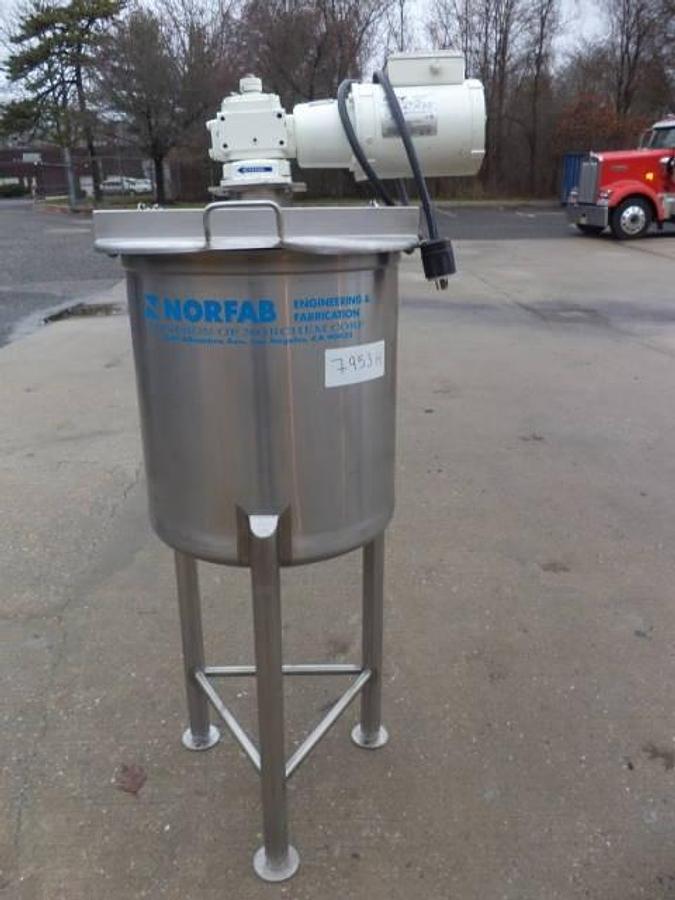
Norfab produces a wide range of industrial equipment, and the used market reflects that variety. Buyers searching for surplus or secondhand Norfab machinery will most often encounter dust collectors in baghouse, cartridge, and cyclone pre-separator configurations, along with modular spiral ductwork systems and mix tanks with agitators. Stainless steel mix tanks, such as 30-gallon units with agitators, also surface regularly and are popular in food processing, chemical blending, and pharmaceutical applications where sanitary construction is a requirement.
Beyond the core dust collection lineup, Norfab's modular ductwork components, including spiral pipe fittings and branch connections, are frequently sold as standalone pieces or as part of complete ventilation packages. Buyers looking to expand an existing Norfab system often source used components to keep costs down while maintaining compatibility with equipment already installed on their floor. Checking with specialized used industrial equipment dealers is usually the most reliable way to find specific models, as general auction sites tend to offer limited technical context about the machines listed.
What industries use Norfab equipment?
Norfab built its reputation primarily by serving industries where airborne particulate control is a regulatory and operational necessity. Woodworking shops and cabinet manufacturers rely heavily on Norfab dust collectors to manage fine wood dust, which poses both fire and respiratory hazards. Metalworking facilities, plastics processors, and general manufacturing plants are also major users, particularly for cartridge-style collectors that handle fine metallic or synthetic dusts that would quickly blind a fabric bag system.
Beyond those core markets, Norfab equipment shows up in food and beverage processing, chemical blending, and pharmaceutical manufacturing, especially the stainless steel mix tanks and agitator systems designed for sanitary or corrosion-resistant applications. The modular nature of Norfab's ductwork systems makes the equipment adaptable across a broad range of facility layouts, which is part of why the brand has maintained a presence across so many different production environments. Buyers from almost any manufacturing sector can find Norfab products that were originally spec'd for conditions similar to their own.
Is used Norfab equipment a reliable purchase?
Norfab has a strong reputation for building equipment from heavy-gauge steel with long service lives, which is exactly why used Norfab machinery holds up well as a secondhand purchase. The durability that makes the brand appealing when the equipment is first installed also means that a well-maintained unit can continue performing reliably for years after its initial deployment. Buyers in cost-sensitive environments, including smaller shops and facilities expanding their dust collection capacity, regularly source used Norfab equipment as a practical alternative to buying directly from a manufacturer.
That said, reliability on the used market depends heavily on the condition of the specific machine and the diligence of the buyer. Used equipment is sold as-is, so it is the buyer's responsibility to assess condition thoroughly before committing to a purchase. Requesting an in-person or video inspection is strongly recommended, and buyers should ask the dealer detailed questions about the machine's operating history, any visible wear on filter media or structural components, and whether replacement parts are still available for that model. Consulting Norfab directly about parts availability and technical support for a particular model and age is also a smart step before finalizing any purchase.
What should I inspect when buying used Norfab dust collection equipment?
A thorough inspection of used Norfab dust collection equipment should cover both the structural and mechanical condition of the unit. On the structural side, examine the housing for corrosion, dents, or weld cracks, particularly around inlet and outlet connections where stress concentrates. For baghouse collectors, check the condition of the filter bags themselves since worn or torn bags will need immediate replacement and that cost should factor into your offer. Cartridge collectors should be inspected for cartridge integrity and housing seal condition. The hopper, discharge valve, and any rotary airlock components deserve close attention since these are high-wear areas that affect overall system performance.
On the mechanical side, verify that the fan motor runs smoothly, listen for unusual bearing noise, and check the condition of the fan wheel for dust buildup or erosion. Pulse-jet cleaning systems on cartridge collectors should be tested to confirm that solenoid valves and the compressed air manifold are functioning. Most reputable used equipment dealers will accommodate in-person inspections or provide detailed video walkthroughs of the machine. Keep in mind that dealers typically do not have production permits that would allow them to run actual material through a dust collector during a demonstration, so the inspection will focus on mechanical operation rather than full production testing.
How do I choose the right Norfab dust collector size and configuration for my application?
Selecting the correct dust collector size comes down to a few core variables: the volume of air that needs to be moved (measured in cubic feet per minute, or CFM), the type and particle size of the dust being captured, and the number of pickup points in the system. Norfab offers baghouse collectors suited to coarser, heavier dusts and cartridge collectors designed for fine, sub-micron particulate where high filtration efficiency is critical. Cyclone pre-separators are often added upstream to knock out larger chips and debris before they reach the primary collector, which extends filter life considerably in high-volume woodworking or metalworking environments.
When buying used, the challenge is matching a machine's rated capacity to your actual airflow requirements. A collector that was spec'd for a large facility may be oversized for a smaller shop, leading to reduced air velocity and poor dust transport through the ductwork. Conversely, an undersized unit will struggle to maintain adequate suction across all pickup points. If you are unsure about sizing, reviewing the original equipment specifications with a ventilation engineer or contacting Norfab's technical team for guidance on a specific model is worth the effort before committing to a purchase.
Does Norfab equipment come with a warranty when purchased used?
Manufacturer warranties are tied to the sale of equipment directly from the manufacturer or an authorized dealer and do not transfer through the secondary market. Used Norfab equipment sold through independent dealers is sold on an as-is basis, which is standard practice across the used industrial machinery industry. This means there is no coverage for mechanical failure or defects after the sale, and the responsibility for evaluating condition sits entirely with the buyer prior to purchase.
Because of this, choosing a reputable used equipment dealer with a long track record in industrial machinery is one of the most important decisions a buyer can make. A dealer who specializes in the relevant equipment category will typically know more about what to look for during intake inspection and will be more transparent about known issues. Buyers should also contact Norfab directly to ask about parts availability and technical support for the specific model they are considering, since older or discontinued models may have limited support infrastructure regardless of condition.
What are the key features that make Norfab dust collectors stand out?
Norfab built a strong following in industrial ventilation by focusing on construction quality and system flexibility. The equipment is known for heavy-gauge steel fabrication that holds up in demanding production environments where lighter-duty collectors tend to fail prematurely. Cartridge-style Norfab collectors are frequently cited for high filtration efficiency, with some models rated at 99.9% capture efficiency at sub-micron particle sizes, which matters significantly in applications where fine metallic dust or chemical particulate poses health or explosion risks.
The modular design philosophy is another standout characteristic. Norfab's spiral pipe and ductwork components are engineered to connect consistently, which makes it straightforward to expand a system as a facility grows or reconfigure a layout when production lines change. This modularity also benefits buyers on the used market, since individual components can be sourced separately to supplement or repair an existing installation. The combination of durability and adaptability is a large part of why Norfab equipment retains value and continues to circulate on the secondary market long after its initial installation.
What is a stainless steel mix tank with agitator used for in industrial settings?
A stainless steel mix tank with agitator is a vessel designed to blend, suspend, or homogenize liquid or semi-liquid materials under controlled conditions. The stainless steel construction makes these tanks suitable for applications where corrosion resistance, cleanability, or sanitary compliance is required, which is why they appear frequently in food and beverage processing, pharmaceutical manufacturing, chemical blending, and cosmetics production. The agitator, which is the motorized mixing assembly inside the tank, keeps materials in suspension and ensures consistent blending throughout the batch.
Tank capacity and agitator configuration vary depending on the application. A 30-gallon unit, for example, is well suited to smaller batch operations, pilot production runs, or facilities that need a dedicated mixing vessel for a specific ingredient or compound without committing to large-scale production infrastructure. When evaluating a used stainless steel mix tank, buyers should inspect the interior surface for pitting, weld integrity, and any residue from previous materials that might indicate incompatibility with their intended use. The agitator shaft seal and motor should also be checked for wear, as these are the components most likely to require attention on a unit that has seen extended service.
What should buyers expect regarding shipping and logistics for used Norfab equipment?
Shipping used industrial equipment involves more planning than a standard freight shipment, and the costs can vary significantly based on machine size, weight, and destination. Smaller items like ductwork components or a 30-gallon mix tank can often be palletized and shipped via standard LTL freight, but larger dust collectors may require custom crating or specialized packaging to prevent damage in transit. Buyers should ask the dealer specifically what packaging will be used and whether that cost is included in the quoted price or billed separately.
Larger and heavier Norfab equipment, such as industrial baghouse collectors or complete duct systems, may require rigging services for both loading at the dealer's location and unloading at the destination. Rigging costs are typically the buyer's responsibility and should be factored into the total landed cost of the equipment before committing to a purchase. It is worth getting a complete breakdown of freight, packaging, and any rigging fees upfront so there are no surprises when the equipment arrives. Payment in full before shipment is standard practice among used equipment dealers.
Can used Norfab ductwork components be integrated with an existing ventilation system from another manufacturer?
Norfab's spiral pipe and modular ductwork components are manufactured to standard industrial dimensions, which means they can often be integrated with ventilation systems from other manufacturers as long as the diameters and connection styles are compatible. Standard round duct diameters follow common industrial sizing conventions, so a Norfab spiral pipe section can typically connect to fittings or collectors from other brands using standard transitions or adapters. This flexibility is one reason why used Norfab ductwork components are popular as replacement or expansion pieces in facilities that did not start with an all-Norfab system.
That said, buyers should verify dimensional compatibility before purchasing used components for an integration project. Measure existing duct diameters and connection types carefully, and confirm that the gauge and construction of the used Norfab components match the airflow and pressure requirements of the existing system. A ventilation engineer or sheet metal contractor familiar with industrial dust collection can help assess compatibility if there is any uncertainty. Getting the specs right before the equipment ships avoids the cost and delay of returns or modifications after the fact.