Category
Manufacturer
Model
FAQ:
What types of labeling machines does NJM manufacture?
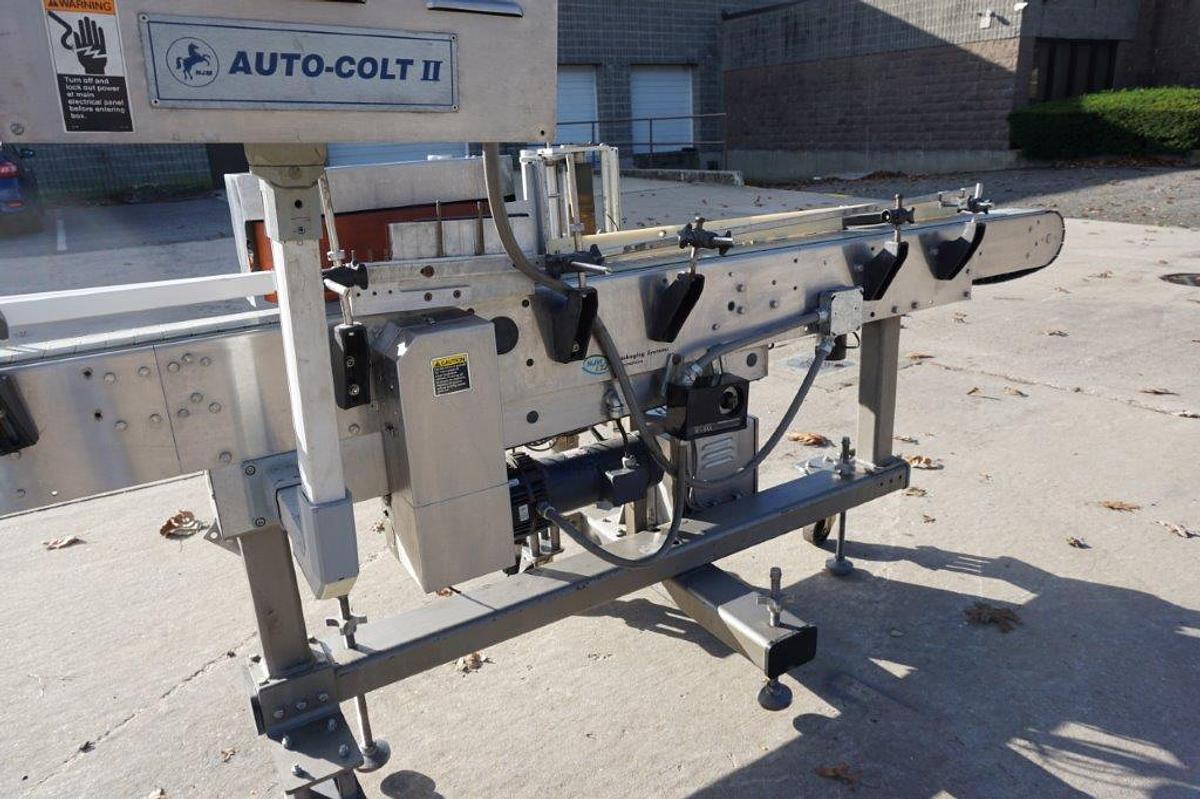
NJM Packaging produces a broad range of labeling equipment designed to cover most production needs across regulated industries. Their lineup includes pressure-sensitive labelers, hot melt glue labelers, sleeve labelers, and print-and-apply systems. One of the more commonly found models on the used market is the NJM Auto Colt II, a pressure-sensitive labeler capable of spot labeling and wrap-around labeling on a single machine. This flexibility makes it a practical choice for facilities that run different container formats on the same line.
Beyond labeling, NJM also manufactures filling, capping, and serialization equipment, so their machines are often found as part of a larger integrated packaging line. Because the brand targets mid-to-large scale production environments, their equipment is built to industrial-grade specifications with precision components. Buyers shopping the used market will find that NJM machines tend to hold up well over time, which is part of why they appear regularly in secondary equipment markets.
What industries are NJM labeling machines designed for?
NJM Packaging built its reputation primarily by serving highly regulated industries, with pharmaceutical manufacturing being the clearest example. Their machines are engineered to meet GMP (Good Manufacturing Practice) standards and FDA requirements, which makes them a go-to choice for drug makers, nutraceutical producers, and medical device packagers who cannot afford labeling errors or compliance failures. The precision and audit trail capabilities built into NJM equipment reflect those strict requirements.
Outside of pharma and nutraceuticals, NJM labeling machines are also widely used in cosmetics and personal care, as well as food and beverage production. Any industry that requires accurate, repeatable label placement at production speeds will find NJM equipment relevant. Because of this cross-industry applicability, used NJM machines attract buyers from a fairly wide range of manufacturing sectors, not just pharmaceutical companies. That broad demand also tends to support the resale value of these machines compared to more niche labeling brands.
What is the labeling speed and throughput of NJM machines?
NJM labeling machines are built for industrial production environments, and their throughput reflects that. Specific speeds vary by model and configuration, but NJM pressure-sensitive labelers like the Auto Colt II are designed to handle continuous production runs at speeds appropriate for mid-to-large scale facilities. Throughput is influenced by factors including container size, label dimensions, the complexity of label placement (spot vs. wrap-around), and how the machine is integrated into the broader packaging line.
When evaluating a used NJM machine, buyers should ask the seller about the model's rated speed under its original specifications and whether the machine has been modified or reconfigured from its original setup. It is also worth noting that actual throughput in a production setting depends on upstream and downstream equipment keeping pace with the labeler. Sellers of used NJM equipment can typically provide the model number and original spec sheets, which allow buyers to cross-reference performance data directly with NJM or through technical documentation.
Are used NJM labeling machines a practical option for buyers?
Used NJM labeling machines are a well-regarded option in the secondary equipment market, largely because NJM builds to a high mechanical standard and their machines tend to remain functional well past their initial production deployment. For buyers who need pharmaceutical-grade or food-grade labeling capability without the capital outlay of purchasing equipment directly from a manufacturer, the used market offers a meaningful cost advantage. Models like the Auto Colt II appear with some regularity and represent a reliable entry point into NJM's pressure-sensitive labeling technology.
That said, buying used industrial equipment requires careful due diligence. Used machines are sold as-is, which means the condition, wear history, and any prior modifications are the buyer's responsibility to assess before purchase. Reputable used equipment dealers will offer in-person inspections, virtual walkthroughs, or video documentation of the machine's current condition. Buyers should also contact NJM directly to understand what level of parts and technical support is available for the specific model and age of machine they are considering, since older models may have limited parts availability.
Can NJM labeling machines handle multiple label sizes and shapes?
Many NJM labeling machines are designed with changeover flexibility in mind, which is particularly important for facilities that run multiple SKUs or container formats. The Auto Colt II, for example, supports both spot labeling and wrap-around labeling on the same platform, giving operators the ability to handle different label configurations without switching to an entirely different machine. Changeover typically involves adjusting guide rails, label feed settings, and sensor positions, with the complexity depending on how different the new format is from the previous run.
For buyers evaluating a used NJM machine, it is worth asking the seller which label sizes and container types the machine was most recently configured for, and whether any tooling or change parts are included with the sale. Change parts are often specific to a container diameter or label width, and having the right parts on hand significantly reduces downtime during format changes. If the machine has been configured for a narrow range of products, buyers may need to source additional change parts separately, which is a cost that should factor into the overall purchase decision.
What should buyers inspect before purchasing a used NJM labeling machine?
A thorough inspection is the most important step in any used industrial equipment purchase, and NJM labeling machines are no exception. Key areas to evaluate include the condition of the label applicator head and peel plate, the state of the drive belts and rollers, the functionality of any sensors or vision systems, and the overall condition of the electrical cabinet and controls. If the machine has a print-and-apply head, the printhead condition and any associated software should be reviewed carefully. Physical wear on high-contact components is expected on used equipment, but excessive wear or signs of deferred maintenance are red flags.
Reputable dealers will accommodate in-person inspections at their facility, or in some cases the machine may still be located at the production facility where it was last used, allowing buyers to see it in its operational environment. Virtual inspections and video walkthroughs are also commonly offered when travel is not practical. Keep in mind that most used equipment dealers do not have the permits or production infrastructure to run actual product through a machine during an inspection, so buyers should set realistic expectations about what a functional demonstration can show. Consulting with NJM's technical team about the specific model can also help buyers understand what to look for and what parts may be approaching end of service life.
What is the typical price range for used NJM labeling machines?
Pricing for used NJM labeling machines varies considerably based on model, age, configuration, and overall condition. NJM equipment is positioned at the premium end of the industrial labeling market, and that tends to be reflected in resale values even for older machines. Entry-level used models in fair condition might be found at a fraction of the cost of comparable current-production equipment, while well-maintained machines with recent upgrades or specialized configurations can command significantly higher prices.
Buyers should factor in more than just the purchase price when calculating total acquisition cost. Shipping, rigging, any required refurbishment or replacement parts, and integration into an existing line all contribute to the final landed cost. Larger NJM machines may require specialized rigging equipment for loading and unloading, which adds to freight costs. Getting a clear picture of all these costs upfront, before committing to a purchase, is the standard approach for experienced buyers of used packaging equipment. Sellers should be able to provide itemized estimates for packaging, freight, and any rigging requirements upon request.
How does NJM labeling equipment compare to other industrial labeling brands on the used market?
NJM Packaging occupies a distinct position in the labeling equipment landscape because of its deep focus on regulated industries. Compared to more generalist labeling brands, NJM machines are typically built to tighter tolerances and are designed with compliance documentation and validation support in mind. For pharmaceutical and nutraceutical buyers in particular, that regulatory pedigree carries real value, since equipment used in those environments often needs to be validated and qualified as part of the production process.
On the used market, this translates to NJM machines generally holding their value better than mid-tier brands, though they may also carry a higher price tag than comparable used equipment from less specialized manufacturers. For buyers whose production environment does not require pharmaceutical-grade compliance, a used NJM machine can still be an excellent choice because of its build quality and precision, but it may represent more capability than strictly necessary. Buyers in food, cosmetics, or general consumer goods packaging often find that the durability and accuracy of NJM equipment justifies the cost even outside of a regulated context.
What should buyers know about shipping a used NJM labeling machine?
Shipping industrial labeling equipment requires more planning than standard freight. NJM machines, depending on the model, can be substantial in size and weight, which means proper palletization or crating is essential to prevent damage in transit. The level of packaging required will affect shipping costs, and buyers should ask the seller specifically what packaging method will be used and whether crating is included in the quoted price or billed separately. Inadequate packaging is one of the most common causes of damage to used machinery during transport, so this is not a detail to overlook.
For larger machines, specialized rigging may be needed at both the origin and destination to safely load and unload the equipment. Forklift access, overhead crane availability, and dock height at the receiving facility are all factors that should be confirmed before the machine ships. Buyers are responsible for ensuring their facility can receive the equipment safely. Total landed cost, meaning the purchase price plus all shipping, rigging, and packaging charges, should be calculated before finalizing any purchase agreement. Sellers experienced in machinery sales can typically provide a freight estimate once the destination and facility details are known.
What payment terms are typical when buying used NJM labeling machines from a dealer?
Most used equipment dealers require full payment before a machine ships. This is standard practice in the industry and reflects the nature of used machinery transactions, where the equipment is often sold as-is and the seller needs payment confirmed before releasing inventory. Wire transfer is the most common payment method for transactions of this size, though dealers may accept other forms depending on the arrangement. Buyers should clarify accepted payment methods early in the process to avoid delays.
Some dealers extend payment terms to established customers with a prior purchase history, but this is not the norm for first-time buyers. If financing is needed, buyers typically arrange that independently through equipment financing companies or their own banking relationships, then pay the dealer in full from those funds. Before making payment, buyers should ensure they have completed any inspections they intend to conduct and are satisfied with the machine's represented condition, since used equipment sales are generally final once payment is made and the machine ships.