Category
Manufacturer
Model
FAQ:
What is a Nima Cavalla tube filling and sealing machine?
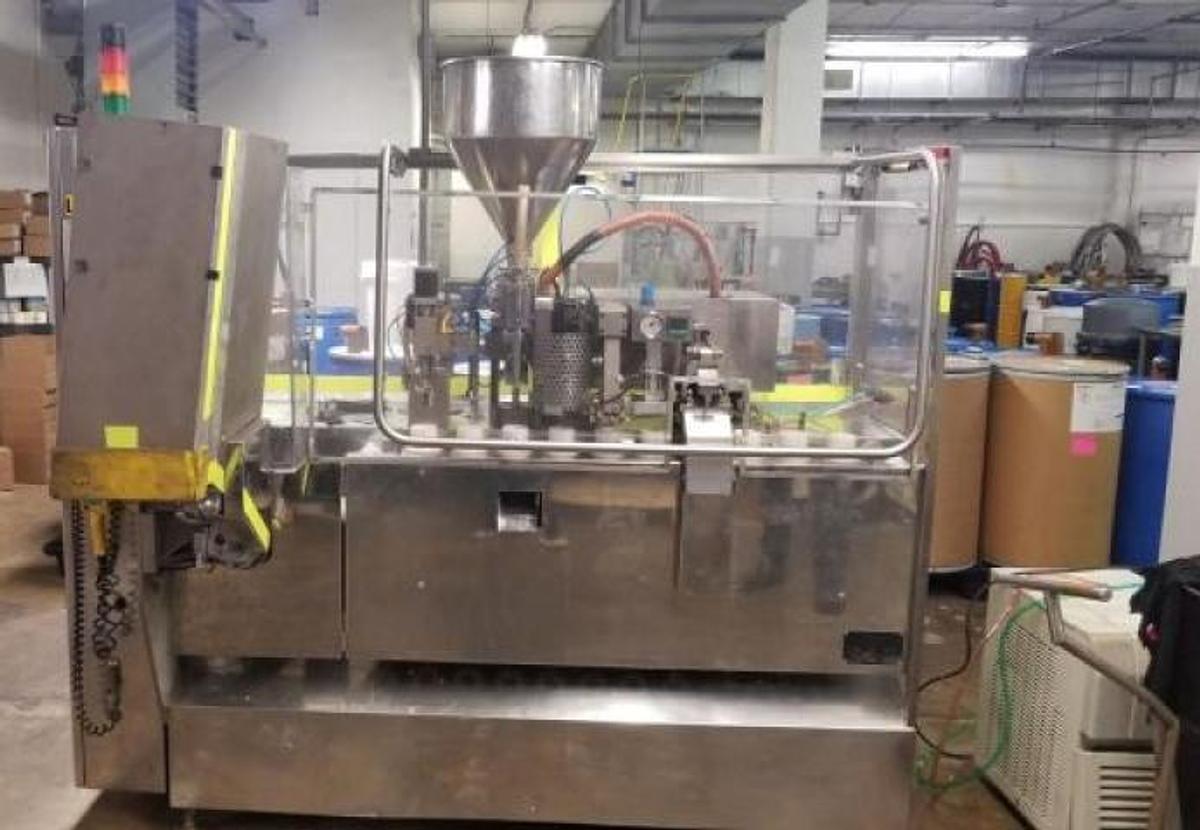
The Nima Cavalla is a brand of automatic tube filling and sealing equipment used in packaging operations across cosmetic, pharmaceutical, food, and industrial markets. These machines are designed to fill a measured dose of product into a tube, then seal the open end using heat, hot air, or mechanical jaw methods, depending on the model. The Cavalla line is particularly associated with hot air sealing technology for plastic tubes, which creates a clean, consistent seal without the need for adhesives or additional materials.
These machines are built for medium to high-volume production environments and are recognized in the packaging industry for their mechanical reliability and straightforward operation. The hot air sealing method used in certain Cavalla models works by directing controlled heat to the tail end of a filled plastic tube, softening the material and pressing it flat to form a permanent seal. This approach is well-suited for plastic laminate tubes commonly used in cosmetics, toothpaste, pharmaceutical creams, and similar products.
What is the production speed of the Nima Cavalla hot air tube filling and sealing machine?
The Nima Cavalla hot air plastic tube filling and sealing machine is rated at up to 100 tubes per minute. This output places it firmly in the high-speed production category, making it appropriate for manufacturers with significant volume requirements rather than small-batch or artisan-scale operations. At full capacity, a single machine can process 6,000 tubes per hour, which is a meaningful throughput for a cosmetic, pharmaceutical, or personal care production line.
Actual production speed in practice will depend on several variables including tube size, product viscosity, fill volume, and how well the machine has been maintained over its service life. When evaluating a used Cavalla machine, buyers should ask the seller about the operating conditions under which the machine was previously run, and whether the rated speed was consistently achieved in production. A machine that was regularly serviced and operated within its design parameters is more likely to perform close to its rated capacity than one that saw irregular maintenance or was pushed beyond its intended specifications.
What types of tubes can the Nima Cavalla machine handle?
The Nima Cavalla hot air model is specifically designed for plastic tubes, including single-layer polyethylene (PE) tubes and multi-layer plastic laminate tubes. These are the most common formats in cosmetic and personal care packaging, used for products like lotions, creams, gels, toothpaste, and similar formulations. The hot air sealing method is particularly effective with plastic and laminate materials because it fuses the tube material itself rather than applying an external adhesive, resulting in a clean, tamper-evident finish.
Aluminum tubes require a different sealing method, typically a crimping or fold-seal mechanism, so the hot air Cavalla model is not the right fit for all-aluminum tube formats. Buyers who need to run aluminum tubes should look for machines equipped with mechanical jaw or fold-seal systems rather than hot air. When purchasing a used Cavalla machine, it is worth confirming with the seller which tube diameters and lengths the machine is set up for, and whether change parts are included for different tube sizes, as this directly affects how flexible the machine will be across different product lines.
What products can be filled using a Nima Cavalla tube filling machine?
Tube filling machines in the Cavalla class are designed to handle a broad range of product viscosities, from relatively thin creams and gels to thick pastes. Common applications include cosmetic creams and lotions, toothpaste, pharmaceutical topical preparations such as ointments and gels, food condiments like mustard or tomato paste, and industrial products such as adhesives, sealants, and lubricants. The key factor is that the product must be pumpable and compatible with the filling nozzle and product contact materials used in the machine.
For regulated applications such as pharmaceutical or cosmetic manufacturing, it is important to verify that the product contact parts of the machine are made from materials appropriate for the formulation, typically stainless steel and food-grade or pharma-grade polymers. When buying a used machine, buyers should ask the seller what products were previously run through the machine, as this can provide useful context about wear patterns, residue risk, and whether the machine is likely to be compatible with the intended application. A thorough cleaning and inspection of the filling head and product pathways is standard practice before introducing a new product on a used machine.
Is the Nima Cavalla tube filling machine suitable for small businesses?
A machine rated at 100 tubes per minute is generally best suited for mid-to-large scale manufacturing operations rather than small businesses or startups producing limited quantities. At that speed, the machine is designed to run continuously on production lines where high throughput justifies the capital cost and the operational overhead of setup, changeover, and maintenance. Small businesses producing a few hundred or a few thousand tubes per day would likely find this level of automation more than they need, and the return on investment calculation may not work in their favor.
That said, a used Nima Cavalla machine purchased at a fraction of the cost of comparable new equipment can sometimes make sense for a growing business that anticipates scaling production significantly in the near term. The economics depend heavily on the purchase price, the condition of the machine, and the realistic production volume the buyer can commit to. Prospective buyers at smaller operations should honestly assess their current and projected volumes before committing, and factor in the cost of installation, operator training, and ongoing maintenance when calculating total cost of ownership.
What should buyers inspect when purchasing a used Nima Cavalla tube filling machine?
Buying used packaging machinery requires a structured approach to inspection. For a tube filling and sealing machine like the Cavalla, the key areas to examine include the condition of the filling pump and nozzles, the sealing mechanism and heating elements, the tube indexing and transport system, and the control panel and drive components. Wear on the filling head and product contact parts is particularly important to assess, as these components are subject to constant exposure to the product being filled and can degrade over time depending on the formulation.
Reputable used equipment dealers will typically offer in-person inspections, video walkthroughs, or video captures of the machine so buyers can evaluate its current condition before committing to a purchase. Some machines may still be installed at the facility where they were last in production, which can allow for a more complete assessment of how the machine runs. Keep in mind that most used equipment dealers do not have the permitting or facilities to run actual product through a machine during inspection, so functional testing is usually limited to mechanical operation without live product. Buyers should also contact the manufacturer directly to understand what level of technical support, documentation, and spare parts availability they can expect for the specific model and production year they are considering.
How does hot air sealing work on a plastic tube filling machine?
Hot air sealing is a method used to close the open end of a filled plastic or laminate tube by directing a precisely controlled stream of heated air at the tube tail. The heat softens the plastic material at the open end, and a set of sealing jaws then presses the softened material together, fusing it into a flat, permanent seal. The process is fast, clean, and does not require any additional sealing materials or adhesives, which simplifies the production line and reduces consumable costs.
The quality of the seal depends on consistent temperature control, proper jaw pressure, and correct dwell time, all of which are managed by the machine's control system. Hot air sealing is well-established for polyethylene and laminate tubes used in cosmetics, personal care, and pharmaceutical packaging. One practical consideration when evaluating a used hot air sealing machine is the condition of the heating elements and sealing jaws, as these components are subject to thermal cycling and mechanical wear over time. Worn or misaligned jaws can result in inconsistent seals, which is a quality and safety concern for any regulated product.
What factors affect the price of a used Nima Cavalla tube filling machine?
Pricing for used tube filling and sealing equipment in this class is influenced by several factors: the age and model of the machine, its mechanical condition, how many hours it has run, whether it comes with change parts for different tube sizes, and current market demand for that type of equipment. Machines that have been well-maintained, recently serviced, or that come with documentation and spare parts will generally command higher prices than those sold with limited history or in unknown condition.
Buyers should also factor in the total landed cost rather than just the purchase price. Shipping a machine of this size typically requires professional rigging for loading and unloading, and packaging costs will vary depending on whether the machine is palletized, crated, or requires custom bracing for transit. International buyers need to account for freight, customs, and any applicable import duties. Getting a clear breakdown of all costs from the seller before finalizing a purchase helps avoid surprises and allows for a more accurate comparison between different machines or suppliers.
What are the typical shipping and logistics considerations for a tube filling machine like the Cavalla?
Tube filling and sealing machines of this type are substantial pieces of industrial equipment, and shipping them requires more planning than standard freight. The machine will need to be properly secured to a pallet or placed in a custom crate to prevent movement and damage during transit. The level of packaging required, and therefore the cost, depends on the shipping distance, the mode of transport (ground, ocean freight, air freight), and the specific dimensions and weight of the machine. Buyers should ask sellers for detailed information on how the machine will be packaged and what that cost covers.
For larger machines, professional rigging is typically required at both the origin and destination to safely load and unload the equipment. This involves specialized lifting equipment and trained personnel, and it represents an added cost that buyers should budget for separately from the freight itself. Buyers arranging their own freight should ensure their carrier has experience with industrial machinery and that the insurance coverage is appropriate for the value of the equipment. Most used equipment dealers require full payment prior to shipping, and the buyer takes on responsibility for the machine once it leaves the seller's facility, which makes proper packaging and insurance coverage especially important.
Is GMP compliance a consideration when buying a used Nima Cavalla machine for pharmaceutical or cosmetic production?
GMP (Good Manufacturing Practice) compliance is a significant factor for any manufacturer producing pharmaceutical, cosmetic, or food products in a regulated environment. GMP requirements address the design and condition of equipment, including cleanability, material compatibility, and the ability to validate the machine's performance. A used machine can potentially be used in a GMP-compliant operation, but it requires thorough qualification, including installation qualification (IQ), operational qualification (OQ), and performance qualification (PQ), which document that the machine is installed correctly, operates as intended, and consistently produces output meeting specifications.
Buyers in regulated industries should carefully assess the condition of a used Cavalla machine with GMP requirements in mind. Key considerations include the state of the product contact surfaces, whether the machine can be adequately cleaned and sanitized, and whether the control system provides the data logging and traceability functions required by the applicable regulations. It is also worth consulting with the manufacturer about the availability of technical documentation, such as equipment manuals and validation support materials, for the specific model being purchased, since older machines may have limited documentation available. Working with a used equipment dealer who has experience supplying machinery to regulated industries can help buyers navigate these requirements more effectively.